Types of Student Loans
Explore federal and private student loans, their key differences, eligibility rules, and strategies for smart borrowing to fund your education.
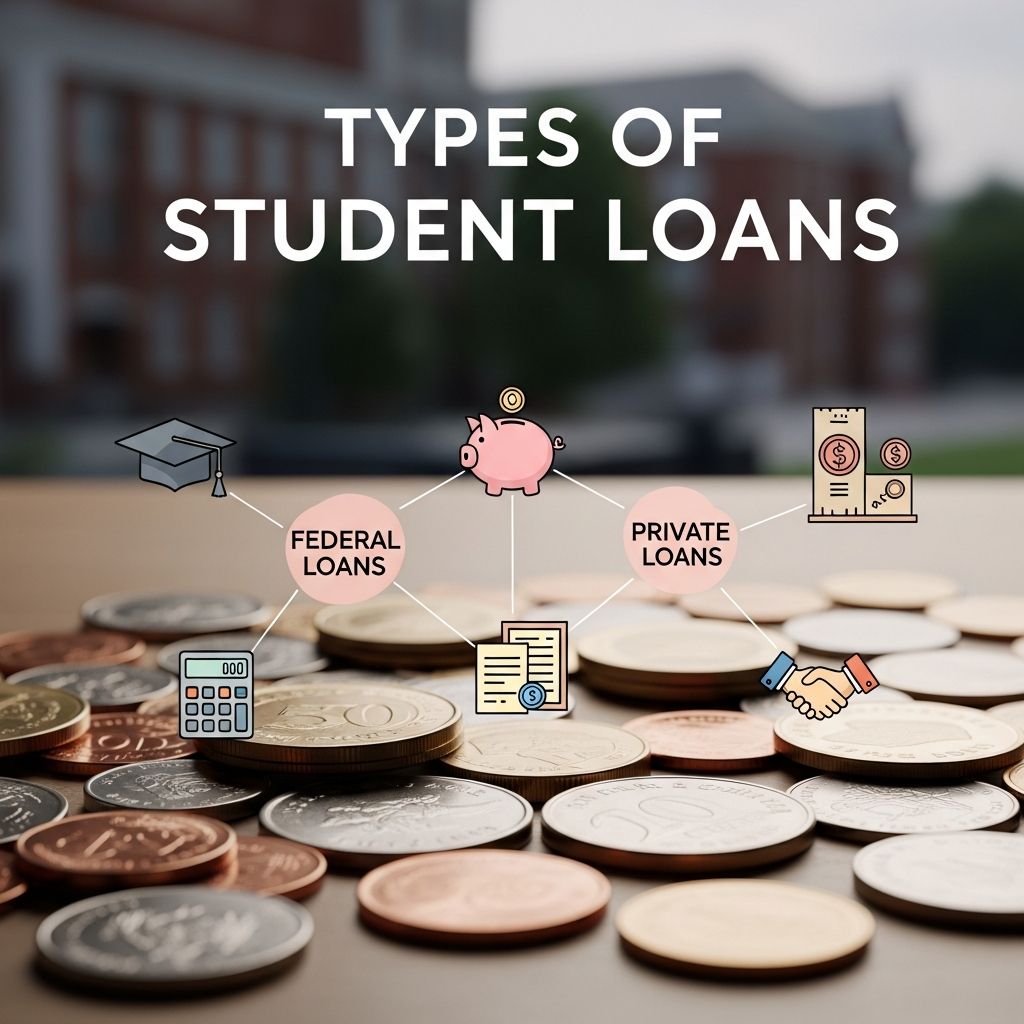
Student loans provide essential funding for higher education, but understanding their varieties is crucial for effective financial planning. Primarily, they divide into federal loans, issued by the U.S. Department of Education, and private loans from banks or lenders. Federal loans offer standardized terms, flexible repayment, and forgiveness options, while private loans depend on creditworthiness and may provide competitive rates for strong borrowers.
Overview of Federal Student Loans
Federal loans dominate the market due to accessibility and borrower protections. They require the Free Application for Federal Student Aid (FAFSA) and feature fixed rates set annually by Congress. No credit check is needed for most, except PLUS loans. Current offerings focus on Direct Loans, with legacy programs like FFEL and Perkins phased out but still relevant for older borrowers.
Direct Subsidized Loans
These need-based loans target undergraduates with demonstrated financial need. The government covers interest during school (at least half-time), the six-month grace period, and deferments. For 2025-2026, the rate is 6.39% with a 1.057% fee. Annual limits range from $3,500 to $5,500, capped at $23,000 aggregate.
Direct Unsubsidized Loans
Available to undergraduates and graduates without need requirements, these accrue interest from disbursement. Borrowers can make payments in school to curb growth. Rates match subsidized at 6.39% for undergrads and 7.94% for grads (2025-2026), with similar fees. Limits are higher: $5,500-$7,500 annually for undergrads ($31,000-$57,500 aggregate), $20,500 for grads ($138,500 aggregate).
Direct PLUS Loans
Designed for parents of dependent undergrads (Parent PLUS) or graduate/professional students (Grad PLUS). They cover costs beyond other aid, up to attendance minus aid received. An adverse credit check applies, though appeals exist. Rates are 8.94% with 4.228% fees for 2025-2026. Repayment spans 10-30 years.
Discontinued Federal Loan Programs
While no longer issued, older loans impact many borrowers. FFEL Loans (pre-2010) include subsidized/unsubsidized Stafford and PLUS variants, often held commercially. Perkins Loans, for high-need students, ended in 2017 but offer low 5% rates. Consolidation loans combine federal debts into one payment.
Private Student Loans Explained
Private loans fill gaps after exhausting federal aid, offered by entities like Sallie Mae, SoFi, or College Ave. They demand good credit or a cosigner, with variable/fixed rates from 2.85%-17.99%. Terms vary (5-25 years), often with fewer protections but higher limits. Ideal for internationals or those maxing federal options.
Key Differences: Federal vs. Private
The table below compares major types for 2025-2026:
| Feature | Direct Subsidized | Direct Unsubsidized | Direct PLUS | Private |
|---|---|---|---|---|
| Best For | Low-income undergrads | All students | Grads/Parents | Strong credit borrowers |
| Rate (2025-26) | 6.39% | 6.39%/7.94% | 8.94% | 2.85%-17.99% |
| Fee | 1.057% | 1.057% | 4.228% | Varies |
| Term | 10-30 years | 10-30 years | 10-30 years | 5-25 years |
| Annual Limit | $3,500-$5,500 | $5,500-$20,500 | Cost minus aid | Varies |
Federal loans prioritize via income-driven plans and forgiveness (e.g., PSLF), absent in private loans.
Borrowing Limits and Eligibility
Federal limits prevent overborrowing: dependents cap at $31,000 total, independents higher. Private limits hinge on credit/income. All federal loans need U.S. citizenship/eligible non-citizen status, half-time enrollment, and FAFSA. Private requires credit pulls; cosigners boost approval.
Interest Accrual and Capitalization
Subsidized loans pause interest government-side; unsubsidized and private accrue immediately, capitalizing (adding to principal) post-grace/deferment. This amplifies debt—pay interest early to minimize.
Repayment Strategies
- Standard: 10 years, fixed payments.
- Extended/Graduated: 25 years, lower initial payments rising later.
- Income-Driven: 10-25 years, 10-20% discretionary income; forgiveness after.
Private offers fewer options, often refinancing for better rates.
Graduate and Parent-Specific Options
Grads access unsubsidized up to $20,500/year, then Grad PLUS. Parents use Parent PLUS without lifetime caps. Private graduate loans may defer during residency.
Pros and Cons of Each Loan Type
- Federal Pros: Forgiveness, deferment, no credit check (mostly).
- Federal Cons: Borrowing caps, fixed higher rates.
- Private Pros: Potentially lower rates, flexible amounts.
- Private Cons: Credit-based, variable rates, limited relief.
Steps to Choose the Right Loan
- Complete FAFSA for federal max.
- Pursue grants/scholarships first.
- Compare private APRs with cosigner if needed.
- Calculate total cost with repayment simulator.
- Borrow only essentials.
Frequently Asked Questions (FAQs)
What is the difference between subsidized and unsubsidized loans?
Subsidized loans don’t accrue interest in school/grace for need-based undergrads; unsubsidized do for all.
Do parents need good credit for federal loans?
Yes, for Parent PLUS; adverse history may disqualify unless appealed.
Can I consolidate private and federal loans?
No; federal consolidation keeps benefits. Private refinancing merges but loses federal perks.
Are there loans for international students?
Federal no; private yes, often with U.S. cosigner.
What if I can’t afford payments?
Federal: Income-driven plans, deferment. Private: Refinance or forbearance per lender.
Managing Student Debt Long-Term
Average debt exceeds $30,000; prioritize federal first. Track via studentaid.gov. Refinance private if rates drop, but cautiously. Public Service Loan Forgiveness aids qualifying nonprofit workers after 120 payments.
Understanding these options empowers informed choices, minimizing post-grad burden. Always verify latest rates/limits via official sources.
References
- Types of Federal Loans – Student Loan Borrowers Assistance — Student Loan Borrowers Assistance. 2023. https://studentloanborrowerassistance.org/for-borrowers/basics-of-student-loans/understanding-your-student-loan-situation/types-of-federal-loans/
- Types Of Student Loans & How To Choose One | Bankrate — Bankrate. 2025. https://www.bankrate.com/loans/student-loans/types-of-student-loans/
- BestColleges’ Guide to Student Loans — BestColleges. 2024. https://www.bestcolleges.com/resources/college-loans/
- Student Loans 101: Understanding the Types of Student Loans — NC Assist. 2024. https://www.ncassist.org/paying-for-college-101/blog/student-loans-101/
- Student Loan Guide | Sallie Mae — Sallie Mae. 2025. https://www.salliemae.com/student-loan-guide/
- Federal Student Aid – Loans — U.S. Department of Education. 2026-03-01. https://studentaid.gov/understand-aid/types/loans
Similar Articles








Read full bio of medha deb