Employment Separation: 15 Types And Key Legal Implications
Explore voluntary, involuntary, and mutual employment separations and their implications.
Understanding Employment Separation
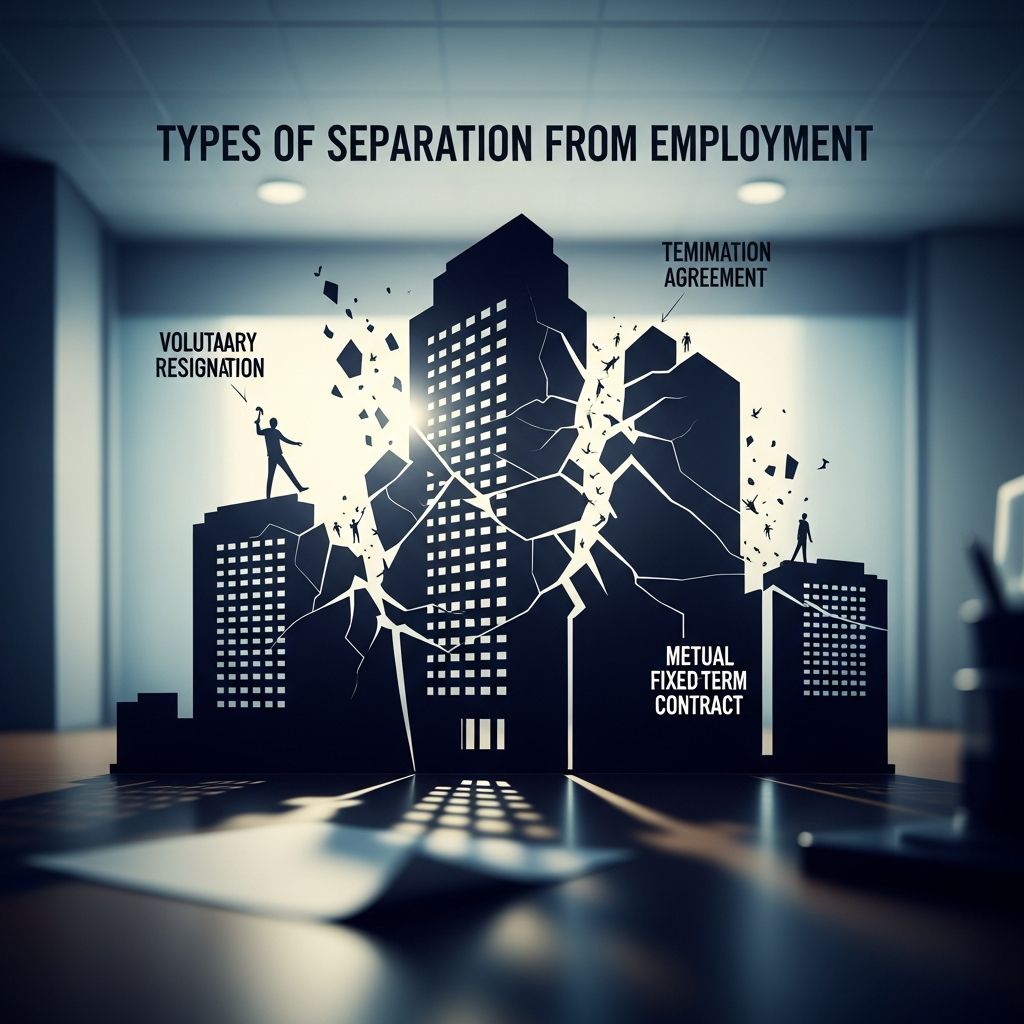
Employment separation refers to the end of an employment relationship between an employee and an employer. This can occur for various reasons and may be initiated by either party or through mutual agreement. Understanding the different types of employment separations is crucial for both employers and employees, as each type carries distinct legal implications, benefits eligibility, and procedural requirements. The manner in which an employee leaves a job can significantly impact unemployment benefits, severance pay, future employment references, and even legal standing in disputes.
Voluntary Separations
Voluntary separations occur when an employee initiates the decision to leave their employment. These separations are entirely within the employee’s control and typically do not result in legal disputes or challenges to benefits eligibility. However, employers may still require specific procedures or notice periods to be followed.
Resignation with Advance Notice
A resignation with advance notice is the most common form of voluntary separation. The employee provides their employer with oral or written notification of their intention to leave, typically allowing the employer time to find a replacement or transition responsibilities. The standard notice period is often two weeks, though some industries or positions may require longer notification. Providing advance notice demonstrates professionalism and maintains positive relationships, which can be beneficial for future employment references.
Resignation Without Advance Notice
In some cases, employees may resign without providing advance notice to their employer. This can occur when the employee gives notice only at the time of separation or resigns with minimal warning. While this is technically a voluntary separation, employers may view it negatively, and it could affect future employment prospects or references. However, employees are generally not required by law to provide notice, though company policies may encourage it.
Resignation Without Notice (Job Abandonment)
Job abandonment occurs when an employee stops attending work without providing any notice to the employer. Most companies define this as absence without notice for three or more consecutive days. While technically initiated by the employee, this form of separation can complicate unemployment benefits and may be considered misconduct in the employment record. Employers typically must document the absence and make reasonable efforts to contact the employee before formally treating it as a separation.
Retirement
Retirement is a special form of voluntary separation where an employee leaves employment after reaching a certain age or fulfilling service requirements. This separation often involves accessing pension benefits or retirement accounts and may be supported by company retirement plans. Some employers offer phased retirement options that allow employees to gradually reduce their work hours before complete separation, easing the transition for both parties.
Phased Retirement
Phased retirement plans allow eligible employees to reduce their work hours gradually before fully retiring from their position. This approach benefits both employees, who can ease into retirement, and employers, who maintain continuity and have time to train replacements. The arrangement typically includes reduced pay and benefits corresponding to the reduced hours.
Involuntary Separations
Involuntary separations occur when the employer initiates the employment termination. In these situations, the employee typically has little control over the timing or fact of separation, and the employer bears the burden of proving valid reasons in unemployment disputes. These separations often qualify employees for unemployment benefits unless specific conditions apply.
Termination for Cause (Discharge)
Termination for cause, also known as discharge, occurs when an employer fires an employee due to misconduct, poor performance, or violation of company policies. This type of separation typically involves documented performance issues or policy violations. Employers must usually follow established progressive discipline procedures and document the reasons for termination. Employees terminated for cause may face challenges in obtaining unemployment benefits, though this varies by jurisdiction and the severity of the misconduct.
Termination for Gross Misconduct
Gross misconduct represents severe violations such as illegal activities, theft, or violence in the workplace. Employees terminated for gross misconduct may be ineligible for certain benefits, including COBRA continuation coverage and may have difficulty finding future employment. Employers must have clear policies defining what constitutes gross misconduct and must follow proper documentation procedures.
Layoffs and Reductions in Force
A layoff, also called a reduction in force or downsizing, occurs when an employer terminates employment due to economic inability to retain the employee, business restructuring, or lack of available work. Unlike termination for cause, layoffs are not based on employee performance or misconduct. Employees laid off typically qualify for unemployment benefits and may receive severance packages. Mass layoffs may trigger notice requirements under the Worker Adjustment and Retraining Notification (WARN) Act.
End of Temporary Employment or Contract
When a temporary job or employment contract reaches its predetermined end date, the employment relationship terminates by operation of contract law. Both parties are typically aware of the final employment date in advance. These separations usually occur on good terms and may allow the possibility of rehiring in the future. If the employee is not offered contract renewal despite expectations, this is generally considered an involuntary separation.
Disability-Related Separation
When an employee cannot continue working due to a medical condition or disability, employment may be terminated. However, employers must comply with the Americans with Disabilities Act (ADA) and provide reasonable accommodations when possible. Simply being unable to perform job duties is insufficient grounds for termination without first exploring accommodation options.
Forced Retirement
Forced retirement occurs when employers require employees to retire based on age or organizational needs. Most mandatory retirement policies are illegal under the Age Discrimination in Employment Act (ADEA), with limited exceptions for certain positions. Some employers may offer incentives for early retirement as an alternative to layoffs.
Death of Employee
The employment relationship ends naturally when an employee passes away. Employers must handle the separation administratively and typically provide appropriate benefits to the employee’s estate or beneficiaries as outlined in company policy or employment contracts.
Mutual Agreement Separations
Mutual agreement separations occur when both the employer and employee consent to the employment termination. This category includes several specific scenarios where both parties have agreed to the separation terms.
Termination by Mutual Agreement
This type of separation occurs when the employee and employer jointly agree that the employment relationship should end. Both parties consent to the separation, though this doesn’t necessarily mean both are entirely satisfied with the outcome. Mutual agreement separations can take various forms and may include negotiated severance packages or special arrangements benefiting both parties.
Resignation in Lieu of Discharge
Resignation in lieu of discharge occurs when an employer offers an employee the option to resign rather than be terminated for cause. This arrangement can provide a face-saving option for the employee and may result in more favorable references or severance terms. While technically initiated by the employee, this is generally treated as an involuntary separation for unemployment and benefits purposes.
Constructive Discharge
Constructive discharge happens when working conditions become so intolerable that a reasonable employee would feel forced to resign. Examples include discrimination, harassment, unsafe conditions, or a hostile work environment. For unemployment purposes, this is typically considered a voluntary separation, though for legal discrimination or retaliation claims, it may be treated as an involuntary termination. Employees in this situation must demonstrate that conditions were truly unbearable and that they had no effective choice but to leave.
Employment-at-Will Considerations
In the United States, most employment relationships are “at-will,” meaning either party can terminate employment at any time without cause or notice. However, this principle has important limitations. Employers cannot terminate employees for illegal reasons such as discrimination based on race, color, religion, sex, national origin, age, or disability. Additionally, public policy exceptions may prevent at-will termination in cases involving jury duty, family medical leave, or workers’ compensation claims.
Legal and Administrative Implications
The type of employment separation significantly affects several important outcomes. For voluntary separations, employees must typically prove “good cause” to qualify for unemployment benefits, and employers must provide final pay by the next regularly scheduled payday. For involuntary separations, employers must prove misconduct connected to work as the reason for discharge, shifting the burden of proof. Post-termination benefits eligibility, including health insurance continuation under COBRA, may be affected by the separation type, particularly if the discharge was for gross misconduct.
Important Considerations for Employers
Employers should maintain clear documentation of all separations, including performance reviews, disciplinary actions, and written policies defining causes for termination. Proper procedures ensure compliance with employment laws and reduce the risk of wrongful termination claims. Additionally, employers should consider the impact of separation methods on remaining employees, company culture, and potential rehiring of separated employees in the future.
Important Considerations for Employees
Employees should understand the implications of their separation type regarding unemployment benefits, severance pay, and references. When possible, providing appropriate notice when resigning allows for better transitions and typically results in more positive references. Employees facing potential termination should familiarize themselves with company policies, documentation, and their rights under employment law.
Frequently Asked Questions
Q: What is the difference between voluntary and involuntary separation?
A: Voluntary separation is initiated by the employee, such as resignation or retirement. Involuntary separation is initiated by the employer through termination or layoff. This distinction affects unemployment benefits eligibility and legal burdens of proof.
Q: Do employees qualify for unemployment benefits after all types of separation?
A: No. Employees who voluntarily resign typically must prove good cause for leaving, while those involuntarily terminated may qualify automatically unless terminated for gross misconduct. Constructive discharge may allow unemployment benefits depending on jurisdiction and circumstances.
Q: What is job abandonment?
A: Job abandonment occurs when an employee stops attending work without providing notice, typically defined as three or more consecutive days of absence without communication. While technically initiated by the employee, it may complicate unemployment benefits.
Q: Can an employer force retirement?
A: Mandatory retirement is generally illegal under the Age Discrimination in Employment Act for most positions. Exceptions exist for certain roles with specific age requirements, such as airline pilots or law enforcement in some jurisdictions.
Q: What is constructive discharge?
A: Constructive discharge occurs when working conditions become so intolerable that a reasonable employee would feel forced to resign, such as situations involving discrimination, harassment, or hostile work environments.
Q: What should employees do when providing notice of resignation?
A: Employees should provide written notice following company policy, typically giving at least two weeks’ notice. The notice should include the resignation effective date and be delivered to the appropriate manager or HR department.
Q: How does employment-at-will affect termination?
A: Under employment-at-will, employers can terminate employees without cause or notice, with limited exceptions for illegal reasons such as discrimination, retaliation, or violations of public policy.
References
- What Are the Different Types of Separation from Employment? — Swartz Legal. 2024. https://swartz-legal.com/what-are-the-different-types-of-separation-from-employment/
- Types of Work Separations – TEXAS GUIDEBOOK FOR EMPLOYERS — Texas Workforce Commission. 2024. https://efte.twc.texas.gov/types_of_work_separations.html
- What Is Employment Separation? (Definition and Types) — Indeed.com. 2024. https://www.indeed.com/career-advice/finding-a-job/employment-separation
- What Is Employee Separation? — INTOO. 2024. https://www.intoo.com/us/blog/what-is-employee-separation/
- Termination of Employment — U.S. Department of Labor. 2024. https://www.dol.gov/general/topic/termination
- What Are the Different Types of Termination of Employment? — ScoutLogics Screening. 2024. https://www.scoutlogicscreening.com/blog/different-types-of-termination-of-employment/
Similar Articles








Read full bio of medha deb