Most Popular Cryptocurrencies: 12 Types Explained For Investors
Explore the 12 most popular cryptocurrencies by market cap and their unique use cases.
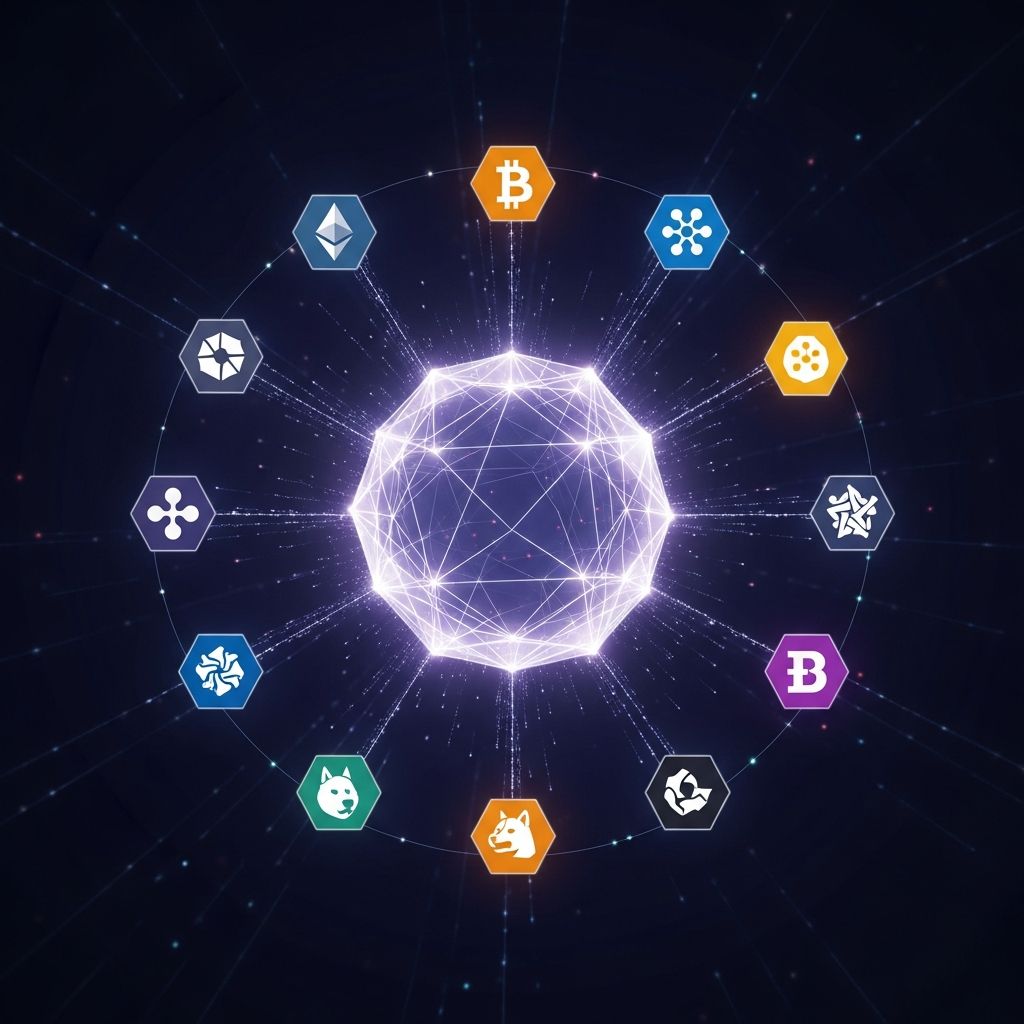
Understanding the Most Popular Types of Cryptocurrency
The cryptocurrency market has evolved dramatically since Bitcoin’s inception, with thousands of digital currencies now available to investors. While the sheer volume of cryptocurrencies can seem overwhelming, understanding the most popular types by market capitalization helps investors make more informed decisions. Market cap, calculated by multiplying a coin’s current price by its total circulating supply, serves as a key indicator of a cryptocurrency’s value and adoption level. This guide explores the 12 most popular cryptocurrencies, their characteristics, and what makes each unique in the rapidly expanding digital asset landscape.
What Defines a Cryptocurrency
Before diving into specific cryptocurrencies, it’s important to understand what classifies as a cryptocurrency. A cryptocurrency is a digital currency designed to act as a medium of exchange over the internet, operating on decentralized networks using blockchain technology. Unlike traditional currencies controlled by central banks, cryptocurrencies are typically decentralized, offering users the ability to conduct transactions with relative anonymity. The appeal of cryptocurrency extends beyond simple transactions—many cryptocurrencies serve specific purposes, from enabling smart contracts to facilitating cross-border payments, creating a diverse ecosystem of digital assets.
The Largest Cryptocurrencies by Market Capitalization
Understanding the market leaders provides valuable context for cryptocurrency investing. The following table outlines the 12 most popular cryptocurrencies based on their market capitalization:
| Rank | Cryptocurrency | Ticker | Price (USD) | Market Cap (USD) |
|---|---|---|---|---|
| 1 | Bitcoin | BTC | Varies | $2.4 Trillion+ |
| 2 | Ethereum | ETH | $4,390.28 | $529.94 Billion |
| 3 | XRP | XRP | $2.87 | $170.96 Billion |
| 4 | Tether | USDT | $1.00 | $161 Billion |
| 5 | BNB | BNB | $862.14 | $120 Billion |
| 6 | Solana | SOL | Varies | Varies |
| 7 | Bitcoin Cash | BCH | $530.71 | $10.57 Billion |
| 8 | TRON | TRX | $0.3398 | $32.17 Billion |
| 9 | Cardano | ADA | $0.8365 | $29.89 Billion |
| 10 | Chainlink | LINK | $23.50 | $15.94 Billion |
| 11 | Hyperliquid | HYPE | $45.26 | $15.10 Billion |
Bitcoin (BTC): The Original Cryptocurrency
Bitcoin remains the largest and most recognized cryptocurrency in the world, with a market capitalization exceeding $2.4 trillion. Created as a peer-to-peer electronic cash system, Bitcoin’s primary purpose is to enable digital money transfers without requiring intermediaries. However, despite its original intent, Bitcoin adoption as a currency for everyday transactions remains limited, with relatively few merchants accepting it as payment. Additionally, Bitcoin transactions process slower compared to other modern payment networks. Nevertheless, Bitcoin’s established position, network security, and first-mover advantage make it a foundational cryptocurrency for many investors entering the digital asset space.
Ethereum (ETH): Smart Contracts and Decentralized Applications
Ethereum represents the second-largest cryptocurrency by market capitalization at $529.94 billion. The Ethereum platform differs fundamentally from Bitcoin by enabling smart contracts—self-executing agreements that automatically enforce their terms when predetermined conditions are met. This innovation has made Ethereum the foundation for thousands of decentralized applications (dApps), from decentralized finance (DeFi) platforms to non-fungible tokens (NFTs). The native currency, ether (ETH), powers these transactions and interactions on the network, making it essential for developers and users participating in the Ethereum ecosystem.
XRP (XRP): Fast International Money Transfers
Created by Ripple in 2012, XRP offers a distinctive approach to cross-border payments. With a market capitalization of $170.96 billion, XRP powers RippleNet, a system designed to facilitate fast and efficient international money transfers. The platform’s efficiency in some cases surpasses traditional systems like SWIFT, which currently dominates global interbank transfers. XRP’s trust-less mechanism enables direct payments across different real-world currencies without extensive intermediaries. However, the nature of XRP’s blockchain infrastructure has led some to question whether it technically qualifies as a traditional cryptocurrency, contributing to ongoing discussions about its classification within the broader digital asset ecosystem.
Tether (USDT): Stablecoin Stability
Tether holds the position as the most popular stablecoin with a market capitalization of $161 billion. Unlike volatile cryptocurrencies whose values fluctuate with market sentiment, Tether’s value remains pegged to the U.S. dollar, providing price stability for users and traders. Stablecoins have gained significant popularity in recent cryptocurrency investing strategies, particularly for traders seeking to hold value without exposure to extreme price volatility. The stability of coins like USDT makes them particularly valuable for cross-border transactions and as trading pairs on cryptocurrency exchanges. Major corporations like Visa have adopted stablecoins, with Visa utilizing USDC on the Solana blockchain to accelerate and reduce costs for cross-border payments.
BNB (Binance Coin): Exchange Utility Token
BNB functions as the native cryptocurrency of Binance, one of the world’s largest cryptocurrency exchanges, with a market capitalization of $120 billion. Originally developed as a utility token providing trading discounts on the Binance platform, BNB has evolved significantly. Today, users can employ BNB for general payments, purchasing goods and services, and powering applications across Binance’s multiple blockchains. The expansion of BNB’s use cases beyond its original discount mechanism demonstrates how utility tokens can develop genuine value and adoption over time. BNB’s integration throughout Binance’s ecosystem positions it as a central currency for the exchange’s expanding services.
Solana (SOL): High-Speed Blockchain Network
Solana operates as a high-performance blockchain network designed for speed and scalability. The platform’s architecture enables rapid transaction processing and lower fees compared to many competing networks. Solana’s growing ecosystem includes numerous decentralized applications, NFT projects, and DeFi protocols, making SOL an increasingly important cryptocurrency for developers and investors seeking efficient blockchain infrastructure. The network’s technical capabilities have attracted significant developer interest and institutional investment.
TRON (TRX): Decentralized Content Platform
Established in 2017, TRON functions as a decentralized blockchain designed for creating applications, with TRX serving as its native token. TRON’s market capitalization stands at $32.17 billion. A significant milestone in TRON’s development occurred in 2018 when the Tron Foundation acquired BitTorrent, the renowned peer-to-peer network. This acquisition enabled TRON to expand into content distribution and data sharing, differentiating it from many other cryptocurrency platforms. TRON’s focus on decentralized application development and content platforms provides a specific use case within the cryptocurrency ecosystem.
Cardano (ADA): Smart Contracts with Academic Rigor
Cardano was created by Charles Hoskinson, co-founder of Ethereum, bringing academic rigor and peer-reviewed research to cryptocurrency development. With a market capitalization of $29.89 billion, Cardano operates as a cryptocurrency platform powering ada, its native currency. Like Ethereum, Cardano enables smart contracts for automated contract execution. Additionally, Cardano supports identity management applications, providing solutions for verifying and managing digital identities on the blockchain. The platform’s development has emphasized sustainability and scalability, distinguishing it within the competitive smart contract cryptocurrency landscape.
Chainlink (LINK): Oracle Network for Smart Contracts
Chainlink operates a decentralized oracle network with significant importance for the broader cryptocurrency and DeFi ecosystem. With a market capitalization of $15.94 billion, Chainlink enables smart contracts to access real-world data by connecting them to external information sources. Network operators receive LINK tokens as compensation for providing this crucial service. Chainlink’s infrastructure proves essential for decentralized finance applications, which depend on accurate real-world price feeds and data to function properly. This specialized role has established LINK as a critical utility token within the cryptocurrency ecosystem.
Bitcoin Cash (BCH): Modified Bitcoin Protocol
Bitcoin Cash emerged in 2017 when developers identified inefficiencies in Bitcoin’s original blockchain. By modifying aspects of Bitcoin’s protocol, Bitcoin Cash offers faster transaction times and substantially lower fees than its predecessor. With a market capitalization of $10.57 billion, Bitcoin Cash represents an alternative approach to digital currency that prioritizes transaction speed and affordability. The creation of Bitcoin Cash demonstrates how the cryptocurrency community engages in ongoing technical evolution and debates regarding blockchain design principles and optimization.
Hyperliquid (HYPE): Decentralized Exchange Innovation
Hyperliquid operates as a decentralized exchange built on its own dedicated blockchain, bringing advanced trading capabilities to cryptocurrency investors. With a market capitalization of $15.10 billion, Hyperliquid’s HYPE token serves as the platform’s native coin. The platform distinguishes itself through sophisticated features including perpetual futures trading, which allows investors to take leveraged positions, and margin trading capabilities. These advanced trading instruments appeal to experienced traders and investors seeking complex trading strategies in a decentralized environment.
Types of Cryptocurrency Tokens
Understanding different token categories helps investors recognize various cryptocurrency types and their purposes:
Intrinsic Tokens (Native Tokens)
Intrinsic or native tokens function as digital currency with value derived entirely from market demand. These tokens do not represent ownership of underlying assets but exist solely as currency. Bitcoin and Ethereum exemplify intrinsic tokens, possessing value based on adoption and market dynamics rather than backing by tangible assets.
Utility Tokens
Utility tokens serve specific functions within their respective ecosystems, typically raising capital for new projects while providing access to products or services. Examples include Basic Attention Token (BAT), used for payments in publishing systems, and Golem (GNT), which enables users to rent computing power. These tokens create value through their functional utility rather than representing ownership stakes.
Equity Tokens
Equity tokens represent ownership stakes in underlying assets, typically company stock or property equity, with terms recorded on the blockchain. These tokenized securities function similarly to traditional stocks but utilize blockchain registration instead of traditional databases or paper certificates. Voting rights accompany equity tokens, delivered through blockchain mechanisms, making them digital equivalents of conventional equity ownership.
The Rise of Stablecoins
Stablecoins have emerged as one of the most significant cryptocurrency trends, with several achieving positions among the most popular cryptocurrencies by market capitalization. These digital assets maintain fixed values by linking to external assets, typically fiat currencies like the U.S. dollar or euro. Stablecoins address cryptocurrency volatility concerns, making them particularly attractive for merchants, traders, and institutions requiring price predictability. The three most popular stablecoins include Tether (USDT) at $161 billion market cap, USD Coin (USDC) at $64.8 billion, and Ethena USDe (USDe) at $5.7 billion. While stablecoins lack the “get rich quick” appeal of volatile cryptocurrencies, they provide essential infrastructure for practical cryptocurrency adoption in commerce and finance.
Cryptocurrency Investment Considerations
When researching cryptocurrencies for potential investment, several important factors warrant attention. Larger, more established cryptocurrencies like Bitcoin and Ethereum enjoy significant advantages through widespread adoption by major trading platforms and payment processors, lending them greater stability compared to smaller, lesser-known coins lacking sufficient liquidity. Additionally, understanding a cryptocurrency’s specific use case and technology proves essential for informed decision-making. Some coins serve particular functions within specialized ecosystems, while others pursue broader adoption as general-purpose currencies. Investors should thoroughly research projects before investing, considering the team’s credentials, technology fundamentals, and realistic adoption prospects.
Frequently Asked Questions
Q: What determines a cryptocurrency’s market capitalization?
A: Market capitalization is calculated by multiplying a cryptocurrency’s current price by its total circulating supply. This figure represents the total market value assigned to a particular cryptocurrency and helps investors compare relative sizes of different digital assets.
Q: Why do some cryptocurrencies serve specific purposes rather than functioning as general currency?
A: Many cryptocurrencies developed for specific ecosystem functions. Ethereum enables smart contracts, Chainlink provides oracle services, and BNB powers exchange transactions. These specialized purposes create genuine utility that drives adoption within their respective networks.
Q: Are stablecoins safer investments than other cryptocurrencies?
A: Stablecoins offer price stability by pegging values to external assets like the U.S. dollar, reducing volatility compared to cryptocurrencies whose values fluctuate significantly. However, stablecoins still carry risks related to reserve backing and regulatory changes.
Q: What should beginners know before investing in cryptocurrency?
A: Beginners should start small with money they can afford to lose, research projects thoroughly before investing, and understand the specific technology and use cases behind cryptocurrencies. Larger, more established coins like Bitcoin and Ethereum generally carry less risk than smaller alternatives.
Q: How do utility tokens differ from equity tokens?
A: Utility tokens provide access to specific services or functions within an ecosystem, while equity tokens represent ownership stakes in underlying assets like company stock or property. Equity tokens include voting rights and ownership benefits, while utility tokens serve functional purposes.
References
- 12 Most Popular Types Of Cryptocurrency — Bankrate. 2025-11-29. https://www.bankrate.com/investing/types-of-cryptocurrency/
- Cryptocurrency: What It Is And How It Works — Bankrate. 2025-11-29. https://www.bankrate.com/investing/what-is-cryptocurrency/
- What Are Stablecoins? — Bankrate. 2025-11-29. https://www.bankrate.com/investing/stablecoin-cryptocurrency/
- Cryptocurrency Statistics 2024: Investing In Crypto — Bankrate. 2025-11-29. https://www.bankrate.com/investing/cryptocurrency-statistics/
- 5 Tips For Researching And Analyzing A Cryptocurrency — Bankrate. 2025-11-29. https://www.bankrate.com/investing/researching-and-analyzing-crypto/
- Best Crypto In 2025: 8 Top-Performing Cryptocurrencies Year-To-Date — Bankrate. 2025-11-29. https://www.bankrate.com/investing/top-performing-crypto/
Similar Articles








Read full bio of Sneha Tete