Types of Business Loans
Discover the best business loan options to fuel your company's growth, from term loans to SBA-backed financing.
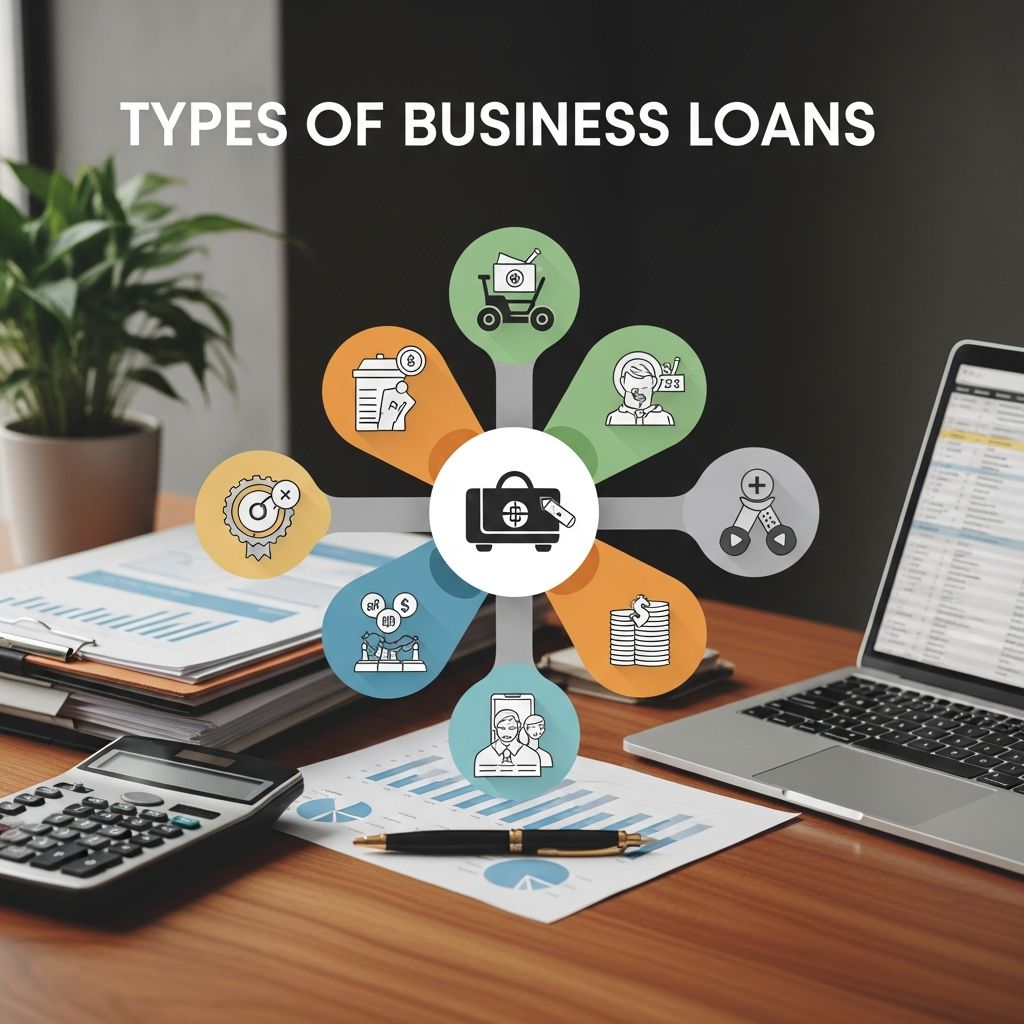
Business loans provide essential capital for startups, expansions, equipment purchases, and cash flow management. With options ranging from traditional term loans to government-backed SBA programs, understanding each type helps entrepreneurs select the most suitable financing based on their needs, credit profile, and business goals.
What Are Business Loans?
Business loans are funds borrowed from lenders such as banks, credit unions, online platforms, or government programs, repaid with interest over time. They can be secured (requiring collateral like equipment or property) or unsecured (based on creditworthiness). Lenders assess factors including business revenue, credit score, time in operation, and debt-to-income ratio. Repayment terms vary from months to 25 years, with fixed or variable rates.
Secured loans often feature lower rates due to reduced lender risk, while unsecured options provide quicker access but higher costs. Common uses include working capital, inventory, real estate, or debt consolidation.
Term Loans
**Business term loans** deliver a lump-sum payment repaid in fixed monthly installments over a set period, typically 1-10 years. They suit major investments like expansions, equipment, or facility upgrades. Rates range from 6-30%, depending on credit and collateral.
Fixed-rate term loans offer payment predictability, ideal for budgeting. Short-term loans (under 1 year) address temporary needs, while long-term ones fund durable assets. Banks provide competitive rates for established businesses, but online lenders approve faster with higher rates.
- Pros: Predictable payments, large amounts (up to $5M+), builds business credit.
- Cons: Strict qualifications, prepayment penalties, collateral often required.
Best for: Long-term projects where repayment aligns with revenue growth.
Business Lines of Credit
A
business line of credit
functions like a credit card, offering revolving access to funds up to an approved limit (e.g., $10K-$250K). Borrow, repay, and reuse as needed, paying interest only on drawn amounts. Terms last 6 months to 5 years, renewable.Ideal for cash flow gaps, seasonal expenses, or emergencies. Rates are variable, often 7-60% APR. Secured lines use assets for better terms; unsecured suit strong-credit businesses.
- Pros: Flexibility, no overuse fees, interest savings.
- Cons: Variable rates rise with markets, annual fees, draw limits.
| Use Case | Why Line of Credit? |
|---|---|
| Cash flow fluctuations | Draw only what’s needed |
| Payroll/Inventory | Quick access without full loan |
| Unexpected costs | Revolving availability |
Best for: Ongoing operational needs.
SBA Loans
**SBA loans**, guaranteed by the U.S. Small Business Administration, reduce lender risk, offering favorable terms for small businesses. Primary programs include 7(a), 504, and microloans.
SBA 7(a) Loans
The flagship program provides up to $5M for working capital, equipment, real estate, or debt refinance. Terms: 10 years (working capital), 25 years (real estate); rates ~8-13% variable/fixed. Eligibility: U.S.-based, profitable, meets size standards.
SBA 504 Loans
Target fixed assets like equipment or real estate via Certified Development Companies. Up to $5M, 10-25 year terms, fixed rates ~4-6%. Requires 10% down payment, job creation.
SBA Microloans
Up to $50K through nonprofits for startups/underqualified businesses. Average ~$14K, terms <6 years, rates 8-13%. Excludes real estate/debt consolidation.
- Pros: Low rates, long terms, counseling support.
- Cons: Lengthy approval (30-90 days), fees, documentation.
Best for: Small businesses seeking affordable, long-term financing.
Equipment Financing
**Equipment financing** funds machinery, vehicles, or tech purchases, with the asset as collateral. Loans or leases up to 100% of equipment value, terms 2-7 years matching useful life. Rates 4-30%.
No down payment for qualified borrowers; repossession risk if default. Vendors often partner with lenders for streamlined approval.
- Pros: Easier approval, tax-deductible, preserves capital.
- Cons: Limited to equipment, higher rates for poor credit.
Best for: Manufacturing, construction, or tech-heavy operations.
Invoice Financing / Accounts Receivable Financing
**Invoice financing** advances 70-90% against unpaid B2B invoices, improving cash flow. Factoring sells invoices outright (1-5% fee); factoring companies collect. Terms: 30-90 days.
Suits service firms with slow-paying clients. Credit-based on customer quality, not yours.
- Pros: Fast funding (24-72 hours), no debt on balance sheet.
- Cons: Fees reduce profits, customer notification in factoring.
Best for: Seasonal or credit-extending businesses.
Merchant Cash Advances
**Merchant cash advances (MCAs)** provide lump sums repaid via daily/weekly sales percentage (10-20%) holdbacks. Factor rates 1.1-1.5 (effective APR 50-350%). Funds in 1-3 days, holds until repaid.
Not true loans; based on card sales volume. Early payoff discounts available.
- Pros: Instant approval, no collateral, flexible repayments.
- Cons: High costs, daily deductions strain cash.
Best for: Retail/high-sales businesses in a pinch.
Commercial Real Estate Loans
**Commercial real estate loans** finance property purchase, refinance, or renovation. Terms 5-20 years, LTV up to 80%, rates 4-8%. SBA 504 enhances options.
- Pros: Builds equity, tax benefits.
- Cons: Property appraisal, personal guarantees.
Best for: Office, retail, or warehouse expansions.
Commercial Vehicle Loans
**Commercial vehicle loans** cover fleets, trucks, or vans, with vehicles as collateral. Terms 3-7 years, rates 5-15%.
Best for: Logistics/delivery-dependent firms.
Other Types
- C&I Loans: For manufacturing/distribution; equipment/facility funding.
- Microloans: Small amounts for startups (covered under SBA).
How to Choose the Right Business Loan
Match loan to purpose: Equipment? Use equipment financing. Cash flow? Line of credit. Consider rates, terms, fees, and eligibility. Compare lenders: banks for low rates, online for speed.
| Loan Type | Avg. Term | Best For |
|---|---|---|
| SBA Loan | 5-25 years | Expansion/Real Estate |
| Term Loan | 3-10 years | Major Investments |
| Line of Credit | Months-Years | Cash Flow |
| MCA | 3-18 months | Quick Funds |
Prepare strong financials, business plan. Prequalify multiple options.
Frequently Asked Questions (FAQs)
What is the easiest business loan to get?
Merchant cash advances or invoice financing approve fastest based on sales/invoices, not credit.
Do business loans require collateral?
Secured loans do; unsecured rely on credit but cost more.
How long does SBA loan approval take?
30-90 days due to documentation.
Can startups get business loans?
Yes, via SBA microloans or online lenders, though higher rates apply.
What credit score is needed for business loans?
680+ for best rates; 500+ possible with alternatives.
References
- Loans | U.S. Small Business Administration — SBA.gov. 2025-01-01. https://www.sba.gov/funding-programs/loans
- How Do Business Loans Work? A Complete Guide — Square. 2024-06-15. https://squareup.com/us/en/the-bottom-line/starting-your-business/a-guide-to-business-loans
- A Guide to Business Loans — Infuze Credit Union. 2024-03-20. https://www.infuzecu.org/connect/business-loan-tips
- Types of Business Loans: Your Different Options Explained — NBC Banking. 2024-11-10. https://www.nbcbanking.com/business-banking/business-lending-guide/types-of-business-loans/
- Your Guide to Business Loans: How to Finance Growth — Sound Credit Union. 2024-09-05. https://www.soundcu.com/blog/your-guide-to-business-loans/
Similar Articles








Read full bio of medha deb