Types of Bonds: Complete Guide to Bond Investing
Master bond investing with our comprehensive guide to different bond types, characteristics, and investment strategies.
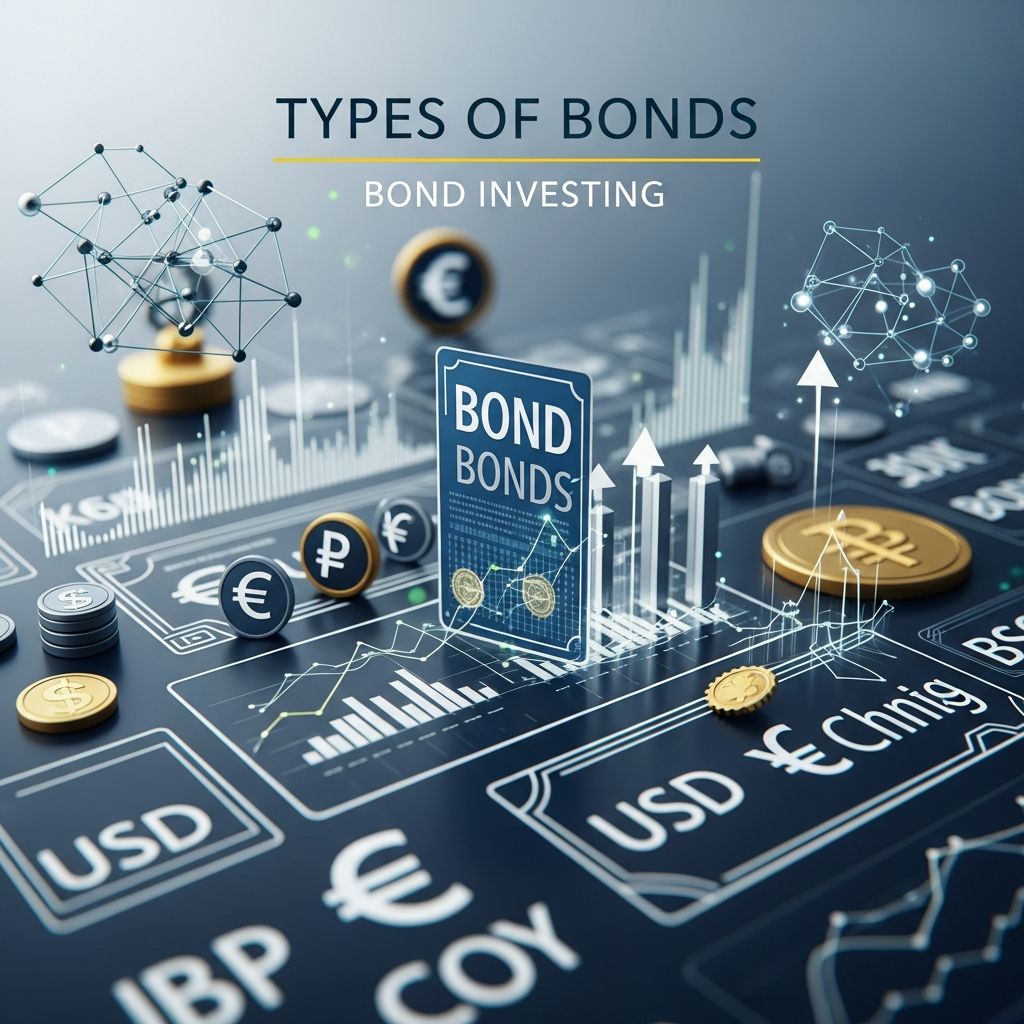
Bonds represent one of the fundamental investment vehicles available to both individual and institutional investors. A bond is essentially a fixed-income security that represents a loan agreement between an investor and an issuer, whether that issuer is a government, corporation, or municipality. When you purchase a bond, you are lending money to the issuer in exchange for periodic interest payments and the return of your principal at maturity. Understanding the different types of bonds available is crucial for building a well-balanced investment portfolio that aligns with your financial goals and risk tolerance.
The bond market offers numerous options, each with distinct characteristics, risk profiles, and potential returns. From the relative safety of government bonds to the higher yields offered by corporate bonds, bonds serve various purposes in an investment strategy. Whether you are seeking income generation, capital preservation, or long-term growth, there is likely a bond type that suits your needs. This comprehensive guide explores the major categories of bonds and their specific characteristics.
Understanding Bond Basics
Before diving into specific bond types, it’s important to understand how bonds work. When you invest in a bond, you receive periodic interest payments called coupon payments, typically paid semi-annually or annually. The coupon rate is determined by the issuer’s creditworthiness and prevailing market conditions. At the bond’s maturity date, you receive the face value or principal amount of the bond. The price you pay for a bond can differ from its face value depending on interest rate movements and the issuer’s credit quality.
One critical factor that differentiates bond types is the issuer’s creditworthiness. Rating agencies such as Moody’s and Standard & Poor’s evaluate the likelihood that an issuer will repay its debt obligations. Higher-rated bonds indicate lower default risk and typically offer lower interest rates, while lower-rated bonds compensate investors for increased risk with higher yields. This relationship between risk and return is fundamental to bond investing.
Treasury Bonds and Government Securities
U.S. Treasury bonds are considered the safest bonds available because they are backed by the full faith and credit of the U.S. government. Treasury securities come in several varieties, each with different maturity periods and characteristics. These bonds form the foundation of many investment portfolios due to their low default risk and liquidity.
Treasury Bills
Treasury bills, commonly referred to as T-bills, are short-term debt obligations with maturities ranging from 4 weeks to 1 year. Unlike most other bonds, Treasury bills do not pay periodic interest. Instead, they are issued at a discount to their face value. When the bill reaches maturity, you receive the full face value, with the difference between your purchase price and the face value representing your return. Treasury bills are ideal for investors seeking short-term, liquid investments with minimal risk.
Treasury Notes
Treasury notes have intermediate maturity periods ranging from 2 years to 10 years. Like other coupon-bearing bonds, Treasury notes make interest payments every six months. They offer slightly higher yields than Treasury bills while maintaining the security of government backing. Treasury notes are popular among investors seeking a balance between liquidity and yield.
Treasury Bonds
Treasury bonds, or T-bonds, are long-term government securities with maturities between 10 and 30 years. These bonds pay coupon interest every six months and offer higher yields compared to shorter-term Treasury securities, reflecting the longer time period and additional risks associated with extended maturity. Treasury bonds appeal to investors with long-term investment horizons and those seeking stable, predictable income streams.
Treasury Inflation-Protected Securities (TIPS)
Treasury Inflation-Protected Securities are unique government bonds designed to protect investors from inflation risk. The principal value of TIPS adjusts based on changes in the Consumer Price Index, and interest payments fluctuate accordingly. TIPS are available in maturities of 5, 10, and 30 years. These securities are particularly valuable for investors concerned about inflation eroding their purchasing power over time.
Corporate Bonds
Corporate bonds are issued by companies to raise capital for business operations, expansion, and capital investments. The credit risk associated with corporate bonds varies depending on the issuer’s financial health and industry. Corporate bond interest is taxable at both federal and state levels, and yields are generally higher than government bonds because they carry greater default risk.
Investment-Grade Corporate Bonds
Investment-grade corporate bonds are issued by financially stable companies with strong credit ratings, typically above BBB- on the Standard & Poor’s scale. These bonds offer lower yields than riskier alternatives but provide greater security and stability. Companies in sectors such as telecommunications, utilities, and consumer goods frequently issue investment-grade corporate bonds. These securities appeal to conservative investors prioritizing capital preservation and reliable income.
High-Yield Corporate Bonds (Junk Bonds)
High-yield bonds, often called “junk bonds,” are issued by companies with lower credit ratings and higher default risk. These bonds offer substantially higher yields to compensate investors for the increased risk of default. While the elevated returns can be attractive to risk-tolerant investors, high-yield bonds exhibit greater price volatility and carry a more speculative nature. These bonds are suitable for investors with higher risk tolerance seeking maximum income potential.
Municipal Bonds
Municipal bonds are issued by state and local governments, regions, cities, and other public entities to fund infrastructure and public projects. These bonds often provide tax advantages, making them particularly attractive to investors in higher tax brackets. Interest income from municipal bonds is typically exempt from federal income taxes and may be exempt from state and local taxes if you reside in the issuing jurisdiction.
General Obligation Bonds
General obligation bonds are secured by the full faith and credit of the issuing government and are backed by the issuer’s taxing power. These bonds represent an obligation of the entire municipality and are considered relatively safe investments. The issuer pledges its full resources to ensure debt repayment, making these bonds attractive to conservative investors.
Revenue Bonds
Revenue bonds are repaid using revenue generated by specific projects that the bonds financed. For example, bonds issued to finance a toll road would be repaid from toll revenues. Revenue bonds carry higher default risk than general obligation bonds because repayment depends on the project’s financial performance. However, they often offer higher yields to compensate for this additional risk.
Specialty Bond Types
Zero-Coupon Bonds
Zero-coupon bonds, also called “accrual bonds,” operate differently from traditional coupon-bearing bonds. These bonds make no periodic interest payments. Instead, they are issued at a substantial discount to their face value, and the full face value is paid at maturity. The difference between the purchase price and the face value represents the investor’s return. Zero-coupon bonds tend to fluctuate in price more than coupon-bearing bonds and are ideal for long-term investors who do not need regular income but seek a significant lump sum at maturity. These bonds can be issued by the U.S. Treasury, corporations, and municipal governments.
Convertible Bonds
Convertible bonds are corporate bonds that can be converted into a predetermined number of shares of the issuing company’s stock under specified conditions. These securities offer the benefit of fixed income combined with the potential for equity participation if the company’s stock price appreciates significantly. Convertible bonds appeal to investors seeking both income and growth potential, providing a hybrid security that combines bond and equity characteristics.
Debenture Bonds
Debenture bonds are unsecured bonds backed only by the credit and reputation of the issuer rather than physical collateral. Treasury bonds are examples of debenture bonds, as they rely on the U.S. government’s creditworthiness rather than specific assets. Corporate debentures depend entirely on the issuing company’s financial strength and ability to service debt.
Bearer Bonds
Bearer bonds are an uncommon form of bond where the buyer, or “bearer,” owns the bond directly. Bearer bonds come with coupons attached that owners redeem for interest payments. The holder of the bearer bond receives payments without needing to be registered with the issuer, though this can create accounting and tracking challenges.
Choosing the Right Bonds for Your Portfolio
Selecting appropriate bonds for your investment portfolio depends on several factors, including your financial goals, risk tolerance, time horizon, and income needs. Different bond types serve different purposes within a diversified portfolio.
Capital Preservation Strategy
If your primary objective is preserving capital, particularly during uncertain economic times, government bonds such as U.S. Treasury securities or UK gilts may be appropriate choices. These bonds are considered low-risk and are backed by government authority, providing security for your investment. They offer modest returns but excellent stability and protection of principal.
Income Generation Strategy
Investors focused on generating steady income might consider corporate bonds or municipal bonds. Investment-grade corporate bonds offer higher yields than government bonds while maintaining reasonable safety, while municipal bonds provide tax-advantaged income especially beneficial for those in higher tax brackets. These options balance yield with manageable risk levels.
Long-Term Growth Strategy
Investors with long-term horizons might consider convertible or high-yield corporate bonds. Convertible bonds offer potential equity appreciation if the issuing company performs well, while high-yield bonds provide higher returns with acknowledged increased risk. These options suit investors willing to accept volatility for enhanced growth potential.
Risk Tolerance Considerations
Conservative investors with low risk tolerance should focus on government or investment-grade corporate bonds, which offer lower default risk and stable returns. Moderate-risk investors might consider agency bonds or municipal bonds that provide balance between safety and yield. High-risk-tolerance investors can explore high-yield corporate bonds or emerging market sovereign bonds for maximum yield potential, accepting higher default risk in exchange for enhanced returns.
Bond Market Considerations
When investing in bonds, understand that bond prices move inversely to interest rates. When interest rates rise, existing bond prices fall, and vice versa. Longer-maturity bonds experience greater price fluctuations than shorter-maturity bonds. If you need to sell a bond before maturity, you may receive less than the face value if interest rates have risen since purchase.
You can purchase Treasury bonds directly from the U.S. government through programs like TreasuryDirect, eliminating broker fees. Other bonds can be purchased directly from issuers or through brokers. Many bonds also trade on secondary markets, providing liquidity for existing bond holders.
Frequently Asked Questions
What is the difference between a bond and a stock?
Bonds are debt securities where you loan money to an issuer and receive interest payments plus principal repayment. Stocks represent ownership in a company. Bonds typically offer more stable, predictable returns with lower risk, while stocks offer growth potential but with greater volatility and risk. Bonds have priority in bankruptcy proceedings over stockholders.
What is the safest type of bond?
U.S. Treasury bonds are generally considered the safest bonds because they are backed by the full faith and credit of the U.S. government. Other government bonds from stable nations are also very safe. Investment-grade corporate bonds with high credit ratings are relatively safe but carry more risk than Treasury bonds.
How do interest rates affect bond prices?
Bond prices move inversely to interest rates. When interest rates rise, existing bond prices fall because new bonds offer higher yields, making older bonds with lower yields less attractive. Conversely, when interest rates fall, existing bond prices rise because their higher yields become more valuable relative to newly issued bonds.
What is a bond rating and why does it matter?
Bond ratings assess the likelihood that an issuer will meet its debt obligations. Higher ratings indicate lower default risk and typically correlate with lower interest rates, while lower ratings suggest higher risk and higher yields. Rating agencies like Moody’s and Standard & Poor’s provide these ratings to help investors evaluate credit risk.
Can I sell a bond before maturity?
Yes, many bonds can be sold on the secondary bond market before maturity. However, the price you receive may differ from the face value depending on interest rate changes and market conditions. If interest rates have risen since purchase, you may sell at a discount; if rates have fallen, you may sell at a premium.
What are the tax implications of bond investments?
Interest income from Treasury bonds is subject to federal income tax but exempt from state and local taxes. Corporate bond interest is taxable at federal, state, and local levels. Municipal bond interest is typically exempt from federal taxes and potentially from state and local taxes depending on residency. Zero-coupon bonds are taxed on the imputed interest annually, even though no cash payments are received until maturity.
References
- Types of Bonds and How They Work — Saxo. 2024. https://www.home.saxo/learn/guides/bonds/types-of-bonds-and-how-they-work
- What Is a Bond? Types, How They Work — NerdWallet. 2024. https://www.nerdwallet.com/investing/learn/what-is-a-bond
- What Types of Bonds Are Available? — The MPM Group, LLC. https://www.thempmgroupllc.com/What-Types-of-Bonds-Are-Available.c71.htm
- Types of Bonds — SmartAsset. 2024. https://smartasset.com/investing/types-of-bonds
- What is a Bond and How do they Work? — Vanguard. 2024. https://investor.vanguard.com/investor-resources-education/understanding-investment-types/what-is-a-bond
Similar Articles








Read full bio of medha deb