Types of Bankruptcy Explained
Discover the key bankruptcy chapters, eligibility rules, processes, and impacts to make informed financial recovery decisions.
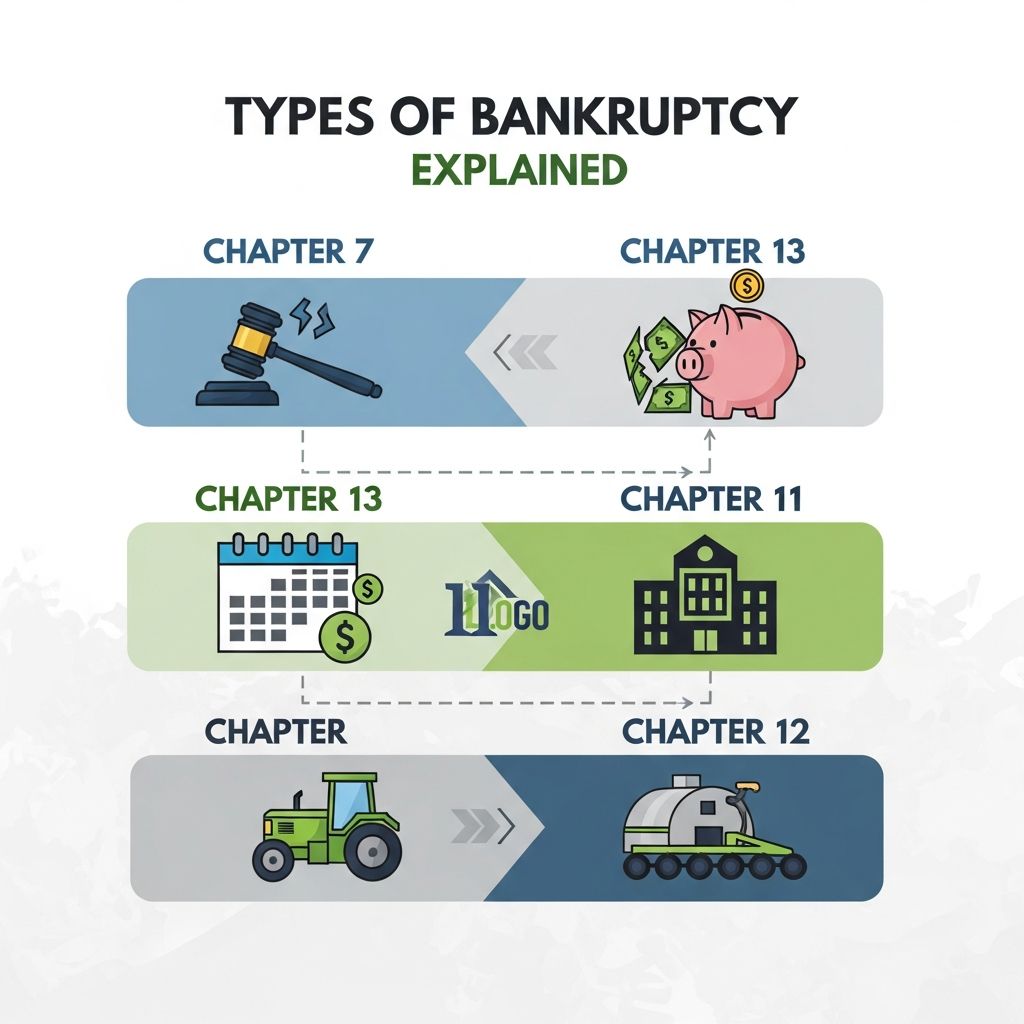
Bankruptcy provides a structured legal pathway for individuals and businesses overwhelmed by debt to regain financial stability. Governed by the U.S. Bankruptcy Code, it allows courts to oversee debt repayment or discharge while protecting certain assets. The choice of chapter depends on income, assets, debt type, and goals—whether liquidation or reorganization.
Understanding Bankruptcy Fundamentals
Bankruptcy filings trigger an automatic stay, halting creditor collections, foreclosures, and lawsuits. A trustee manages the case, distributing assets or payments to creditors. Most cases resolve in months for Chapter 7 or years for repayment plans. In 2024, over 517,000 personal bankruptcies occurred, predominantly Chapter 7 (60%) and Chapter 13 (around 30%).
Key factors influencing type selection include regular income availability, asset value, secured vs. unsecured debts, and business status. Unsecured debts like credit cards may be discharged; secured debts (e.g., mortgages) often require reaffirmation or surrender.
Chapter 7: Straight Liquidation Bankruptcy
Chapter 7, the most filed type, liquidates non-exempt assets to pay creditors, discharging remaining eligible unsecured debts. Over 95% of cases are “no-asset,” meaning filers retain property as exemptions cover essentials.
Eligibility Criteria
- Pass the means test: Monthly income below state median or disposable income too low for repayment.
- No recent Chapter 7 discharge (every 8 years).
- Primarily for low-income individuals; businesses exempt from means test.
Process Overview
- File petition and schedules listing assets, debts, income.
- Attend 341 meeting with trustee and creditors.
- Trustee sells non-exempt assets (rare); discharge after 60-90 days.
Exemptions vary by state/federal rules, protecting homes (up to equity limits), vehicles, retirement accounts, household goods.
Non-Dischargeable Debts
- Student loans, recent taxes, child support, alimony.
- Fraud-related debts, court fines.
Chapter 13: Wage Earner Reorganization
Ideal for those with steady income wanting to retain assets like homes or cars, Chapter 13 restructures debts into 3-5 year plans. Remaining eligible debts discharge post-plan.
Who Qualifies?
- Unsecured debts under $465,275; secured under $1,395,875 (2024 limits).
- Regular income to fund plan; no means test for filing, but determines plan length.
Repayment Plan Details
Plans prioritize secured debts, arrears, then unsecured. Disposable income funds payments; trustee distributes. Duration: 3 years if above-median income, 5 otherwise.
| Aspect | Chapter 7 | Chapter 13 |
|---|---|---|
| Type | Liquidation | Reorganization |
| Filer | Individuals, businesses | Individuals, sole proprietors |
| Asset Handling | Sell non-exempt | Keep all, repay over time |
| Duration | 3-6 months | 3-5 years |
| Credit Impact | 10 years | 7 years |
Chapter 11: Business Reorganization and Beyond
Chapter 11 enables reorganization for businesses or high-debt individuals, allowing continued operations under court supervision. “Debtor-in-possession” manages affairs, proposing creditor-approved plans.
Business Applications
Large corporations prefer Chapter 11 for restructuring without liquidation. In 2024, 8,456 business filings vs. 12,582 Chapter 7 business cases. Sole proprietors may use it if exceeding Chapter 13 limits.
Individual Chapter 11 (Subchapter V)
For debts over Chapter 13 caps, individuals reorganize similarly, often faster under recent reforms.
Specialized Chapters for Unique Situations
Chapter 12: Family Farmers and Fishermen
Designed for family operations with regular income, Chapter 12 offers flexible 3-5 year plans. Debtors operate as debtor-in-possession, adjusting debts without full liquidation. Must derive 50%+ income from farming/fishing.
Chapter 9: Municipalities
Available to cities, counties, school districts for debt adjustment. Voluntary filing; plans need creditor consent. Rare, used in fiscal crises.
Chapter 15: Cross-Border Insolvency
Handles international cases, cooperating with foreign proceedings for asset distribution.
Bankruptcy’s Credit and Long-Term Effects
Chapter 7 appears on reports for 10 years, Chapter 13 for 7. Scores drop 100-200 points initially but recover with secured cards, payments. Post-discharge, rebuild via budgeting, savings.
Business Chapter 7 forces closure; no personal discharge but owners may file personally.
Alternatives Before Filing Bankruptcy
- Debt consolidation loans.
- Negotiated settlements.
- Credit counseling (mandatory pre-filing).
Frequently Asked Questions
Can I file bankruptcy without a lawyer?
Possible but risky; pro se filings succeed less. Credit counseling required first.
How soon can I rebuild credit after bankruptcy?
Immediately with secured cards; scores improve in 1-2 years with good habits.
Does bankruptcy stop foreclosure?
Automatic stay halts temporarily; Chapter 13 allows catch-up.
What debts survive bankruptcy?
Secured if not reaffirmed, student loans, support obligations.
Business vs. personal bankruptcy?
Business Chapter 7 liquidates entity; personal protects some assets.
References
- Types of Bankruptcies Explained: Chapter 7, 11 and 13 — Debt.org. 2024. https://www.debt.org/bankruptcy/types/
- What Are the Types of Bankruptcy? — Experian. 2024. https://www.experian.com/blogs/ask-experian/what-are-the-types-of-bankruptcy/
- Common types of bankruptcy and how to avoid filing — Bankrate. 2024. https://www.bankrate.com/personal-finance/debt/bankruptcy/
- Which type of bankruptcy should I file? — Maryland People’s Law Library (.gov affiliate). 2024. https://www.peoples-law.org/which-type-bankruptcy-should-i-file
- Bankruptcy Basics — United States Courts (.gov). 2024. https://www.uscourts.gov/court-programs/bankruptcy/bankruptcy-basics
Similar Articles








Read full bio of medha deb