TTM Yield vs 30-Day SEC Yield: Key Differences
Understand the critical differences between TTM and 30-day SEC yields for smarter fund investing decisions.
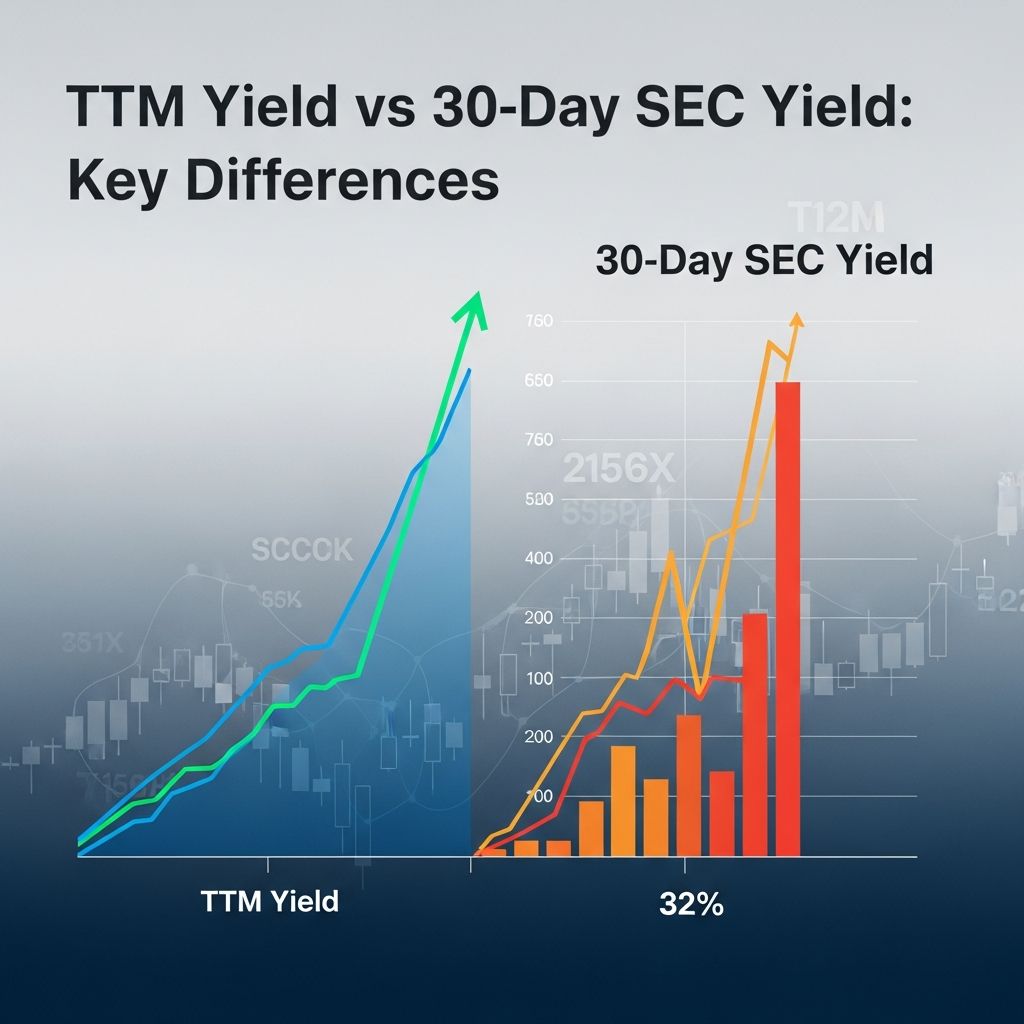
Understanding Fund Yield Metrics: TTM Yield vs. 30-Day SEC Yield
When evaluating bond funds and exchange-traded funds (ETFs), investors encounter various yield metrics designed to measure income potential. Two of the most commonly cited measurements are the trailing twelve-month (TTM) yield and the 30-day SEC yield. While both provide valuable information about fund performance and income distribution, they serve different purposes and are calculated using distinct methodologies. Understanding the differences between these metrics is essential for making informed investment decisions and comparing funds accurately.
The choice between analyzing TTM yield and 30-day SEC yield depends on your investment objectives, time horizon, and the insights you seek about a particular fund. Neither metric tells the complete story on its own, but together they provide comprehensive context about a fund’s income-generating potential and historical performance. This guide explores the fundamental differences, calculation methods, and practical applications of both yield measures.
What Is Trailing Twelve-Month (TTM) Yield?
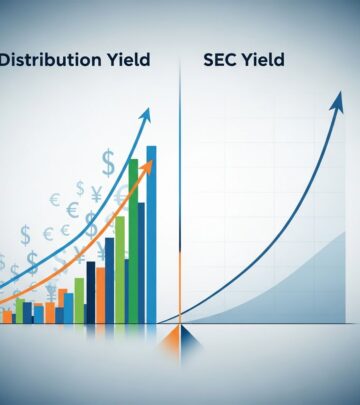
The trailing twelve-month yield, commonly abbreviated as TTM yield, represents a backward-looking measurement of a fund’s actual distributions over the previous twelve months. This metric captures the real income paid to investors during that period, including interest income, dividends, and capital gains distributions. The TTM yield calculation takes the total distributions made over the past year and divides that figure by the fund’s net asset value (NAV), typically using the ending price at the conclusion of the measurement period.
One significant advantage of the TTM yield is that it reflects actual distributions rather than theoretical projections. Investors can see exactly what the fund paid out during the past year, providing concrete evidence of income generation. However, different fund issuers and data providers may calculate TTM yield differently. Some exclude capital gains when calculating the distribution yield, while others include them in their calculations, which can result in varying figures for the same fund across different platforms.
The TTM yield is particularly useful for investors seeking to understand a fund’s historical income generation patterns. If a fund has consistently delivered similar TTM yields over multiple years, it suggests stable income production. Conversely, significant fluctuations in TTM yield from year to year may indicate changing portfolio composition, market conditions, or shifts in fund strategy.
What Is the 30-Day SEC Yield?
The 30-day SEC yield is a standardized calculation developed by the U.S. Securities and Exchange Commission to provide a uniform method for comparing bond funds and income-focused ETFs. This metric represents the dividends and interest earned over the preceding 30-day period, annualized to show what an investor would earn over a full twelve-month period if the fund continued earning at the same rate. The 30-day SEC yield is calculated by taking the net investment income earned during the 30-day period, deducting fund expenses, and dividing that figure by the fund’s net asset value or maximum offering price per share at the end of the period.
A key characteristic of the 30-day SEC yield is its forward-looking nature. Rather than reporting what actually happened, it projects potential income based on current holdings and recent performance. This makes the 30-day SEC yield more relevant for investors trying to estimate their likely income over the coming year, assuming market conditions and fund holdings remain relatively stable. Because the calculation is standardized across the industry, the 30-day SEC yield provides a more reliable basis for comparing yields between different funds.
Key Differences Between TTM Yield and 30-Day SEC Yield
Understanding the distinctions between these two yield metrics is crucial for proper fund evaluation. The primary differences relate to calculation method, time perspective, and the information each metric conveys about fund performance.
Calculation Methodology
The 30-day SEC yield relies on a standardized formula mandated by the SEC, ensuring consistency across all fund providers. It uses only the net investment income from the most recent 30 days and projects that forward to an annual figure. In contrast, TTM yield uses actual distributions paid over the entire previous twelve months and may be calculated differently depending on whether the fund issuer includes or excludes capital gains. This variation in calculation methods means the same fund might display different TTM yields depending on which data provider’s calculation you consult.
Temporal Perspective
The TTM yield is inherently backward-looking, showing what investors actually received during the past year. The 30-day SEC yield, while based on recent data, is forward-looking, projecting potential future income. If you hold a bond fund for one year, the TTM yield will roughly correspond to what you received in distributions, whereas the 30-day SEC yield serves as an estimate of what you might receive going forward.
Sensitivity to Market Changes
When interest rates change, the 30-day SEC yield typically responds more quickly than the TTM yield. If rates rise, the 30-day SEC yield of a bond fund will generally increase faster because the fund’s new purchases will reflect higher yields. The TTM yield, comprising an entire year’s worth of distributions including holdings purchased at different rates throughout that year, will change more gradually. This difference can be particularly pronounced in rapidly changing interest rate environments.
When TTM Yield and 30-Day SEC Yield Diverge
Significant differences between a fund’s TTM yield and its 30-day SEC yield can signal important changes in portfolio composition or strategy. If the 30-day SEC yield is substantially higher than the TTM yield, it suggests the fund has recently shifted toward higher-yielding securities, possibly in response to rising interest rates or a change in fund management strategy. Conversely, if the 30-day SEC yield is notably lower than the TTM yield, the fund may have recently purchased lower-yielding securities or experienced portfolio turnover in response to market conditions.
Securities lending income can also explain divergence between these metrics. Certain ETFs, particularly those holding illiquid or harder-to-access securities such as small-cap stocks or international securities, may generate additional income through securities lending programs. This extra income would be reflected in the TTM yield but might not be fully captured in the 30-day SEC yield calculation, potentially causing the TTM yield to appear higher than expected.
Another cause of divergence relates to share redemptions and creation activity. During periods of rapid redemptions, when shares outstanding decline significantly, the TTM yield can temporarily appear higher than the weighted average yield of the underlying securities. This occurs because the same distribution amount is divided by a smaller NAV base.
Practical Applications for Investors
Both yield metrics serve specific purposes in investment analysis, and savvy investors examine both rather than relying on a single figure. The 30-day SEC yield provides better insight into current income-generating potential and allows for more accurate comparisons between funds since it uses standardized calculations. If you’re shopping for a bond fund and want to compare yields fairly across different providers, the 30-day SEC yield offers the most reliable basis for comparison.
The TTM yield proves more valuable when assessing a fund’s historical consistency and actual income delivery. If you want to understand how much income a fund actually distributed over the past year, the TTM yield provides that concrete answer. By examining TTM yield trends over multiple years, you can identify whether a fund has maintained stable income generation or experienced significant fluctuations.
The most sophisticated analysis combines both metrics. When the 30-day SEC yield and TTM yield move in similar directions, it suggests the fund’s portfolio strategy and composition have remained relatively stable. If these metrics diverge significantly, it warrants investigation into what’s changed within the fund or the broader market environment.
Impact of Interest Rate Changes
Interest rate movements affect TTM yield and 30-day SEC yield differently due to their calculation methods and time horizons. When interest rates rise, newly purchased bonds in a fund’s portfolio will have higher yields. The 30-day SEC yield reflects this shift relatively quickly since it looks at the most recent 30 days of earnings. However, since a fund’s portfolio comprises holdings purchased throughout the year at various yield levels, the TTM yield reflects the weighted average of all distributions made during that entire period, including bonds purchased at lower yields months earlier.
During periods of falling interest rates, the opposite dynamic occurs. The 30-day SEC yield tends to drop faster than the TTM yield initially, since new purchases occur at lower yields. However, as the twelve-month period rolls forward and older high-yielding securities age out of the TTM calculation, the TTM yield will eventually decline toward the level indicated by the 30-day SEC yield.
Comparing Fund Performance Using Yield Metrics
When comparing multiple bond funds or ETFs, investors should examine both yield metrics alongside other factors such as fund expenses, duration, credit quality, and manager tenure. A fund with a high 30-day SEC yield but lower TTM yield might indicate recent portfolio adjustments toward higher-yielding securities, which could signal either opportunistic positioning or increased credit risk depending on the fund’s strategy.
Consider analyzing whether the 30-day SEC yield and TTM yield have moved directionally in sync over multiple reporting periods. Funds where these metrics track together fairly closely suggest stable portfolio management and predictable income streams. Greater divergence between these metrics over time may indicate active management decisions or significant portfolio turnover.
Limitations of Both Yield Metrics
While both TTM yield and 30-day SEC yield provide useful information, neither metric guarantees future income or returns. Past distributions don’t necessarily predict future distributions, and projections based on 30-day performance may not materialize if market conditions change significantly. Additionally, both metrics ignore potential price appreciation or depreciation of the fund’s shares, focusing solely on income generation.
The TTM yield can be distorted by large one-time distributions, particularly capital gains distributions at year-end. These concentrated distributions may temporarily inflate the TTM yield, potentially overstating the regular income a fund generates. The 30-day SEC yield, while standardized, is based on a relatively short measurement period and may not reflect typical fund performance if the 30-day period happened to be unusually strong or weak.
Making Informed Investment Decisions
Successful fund evaluation requires understanding what each yield metric reveals and what it obscures. The 30-day SEC yield provides a standardized snapshot of current income-generating potential and enables fair comparison between funds. The TTM yield demonstrates what investors actually received historically and reveals trends in income generation over an extended period.
When evaluating a bond fund or income-focused ETF, examine both metrics in context with the fund’s objectives, strategy, and overall performance. Look for consistency between TTM yield and 30-day SEC yield over multiple quarters or years. If these metrics remain relatively aligned, you can have confidence in the fund’s stable income generation. Significant divergence warrants investigation into the fund’s recent activities and market conditions.
Consider also consulting other yield measures such as current yield, yield to maturity for individual holdings, or yield to worst, depending on your specific investment goals. Different yield metrics serve different purposes, and a comprehensive analysis often requires examining multiple measures before making investment decisions.
Frequently Asked Questions
Q: Which yield metric should I use when comparing bond funds?
A: Use the 30-day SEC yield for comparing funds since it’s calculated using a standardized methodology across all fund providers. However, also examine the TTM yield to understand historical income generation and consistency. Together, these metrics provide a more complete picture of a fund’s income potential.
Q: Why is my fund’s 30-day SEC yield lower than its TTM yield?
A: This typically indicates that interest rates have fallen recently or the fund has shifted toward lower-yielding securities. Conversely, if 30-day SEC yield is higher, rates may have risen or the fund recently purchased higher-yielding securities. The difference reflects changes in the fund’s recent earnings relative to its full-year average.
Q: Can I rely on the 30-day SEC yield to predict my future income?
A: The 30-day SEC yield provides a reasonable estimate if fund holdings and market conditions remain relatively stable. However, significant interest rate changes, portfolio adjustments, or market disruptions could alter actual future distributions. Always consider it as one data point among several when making investment decisions.
Q: Does TTM yield include capital gains distributions?
A: It depends on the fund issuer or data provider. Some calculate TTM yield including capital gains, while others exclude them. Check your fund’s documentation or the data source you’re using to understand what’s included in the TTM yield calculation.
Q: How often do these yield metrics update?
A: The 30-day SEC yield is typically recalculated and updated daily or weekly as new data becomes available. The TTM yield updates continuously as each new distribution is paid and the oldest distribution from twelve months prior rolls out of the calculation.
References
- Evaluating ETF Yield — Charles Schwab Asset Management. 2025. https://www.schwabassetmanagement.com/content/evaluating-etf-yield
- Bond Yield Metrics: How They Work — State Street Global Advisors. 2025. https://www.ssga.com/us/en/intermediary/insights/bond-yield-metrics-how-they-work
- Comparing Mutual Funds Fixed Income Yields — Sit Funds. 2025. https://sitfunds.com/comparing-mutual-funds-fixed-income-yields/
- With Yields So Low, Where Do You Go? — Morningstar, Inc. 2025. https://www.morningstar.com/funds/with-yields-so-low-where-do-you-go
- SEC Yield Calculation (and Why It’s Better Than TTM Yield) — Nasdaq, Inc. 2025. https://www.nasdaq.com/articles/sec-yield-calculation-and-why-its-better-than-ttm-yield
Similar Articles








Read full bio of medha deb