True Costs: Rent or Buy?
Uncover the hidden expenses of renting versus buying a home to make a smart financial choice for your future.
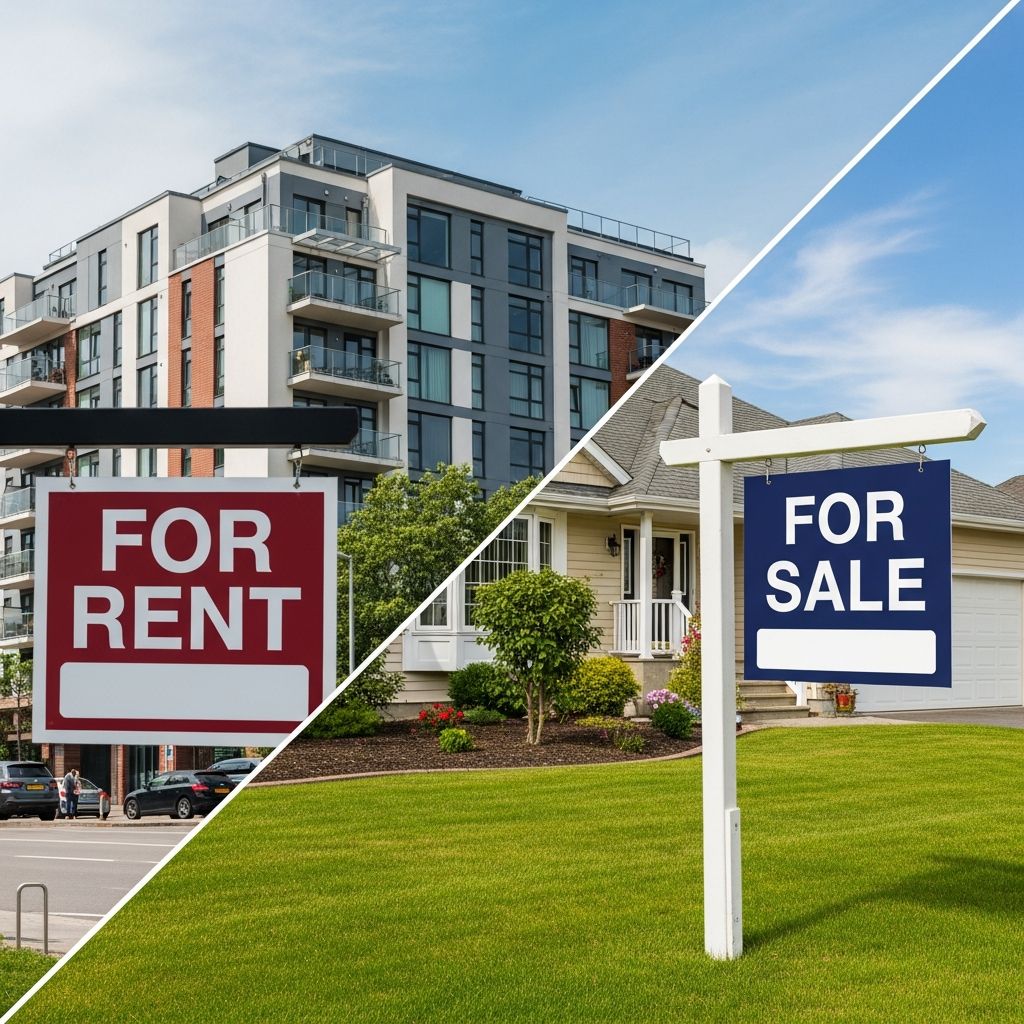
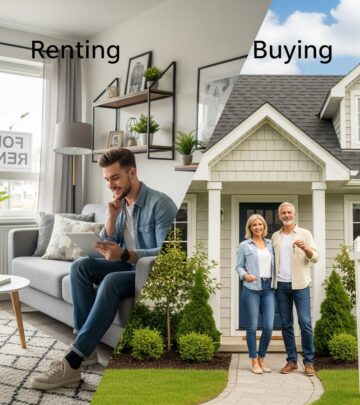
Deciding between renting and buying a home involves more than comparing monthly payments. Both paths carry distinct financial commitments that can significantly affect your wealth over time. Renting provides flexibility and lower initial outlays, while buying builds equity but demands substantial upfront and ongoing investments. This analysis draws on recent data to break down these costs comprehensively.
Upfront Financial Commitments
The initial expenses set the tone for your housing decision. Renters typically face minimal barriers to entry, often limited to a security deposit and possibly a broker’s fee. For a standard apartment, this might total a single month’s rent plus fees, recoverable upon move-out if no damages occur.
Homebuyers, however, encounter steeper hurdles. A down payment usually ranges from 3% to 20% of the home’s price. On a $425,583 median-priced U.S. home, that’s $12,767 to $85,117. Add closing costs—averaging 2-5% of the purchase price—for appraisals, title insurance, and lender fees. These upfront sums tie up capital that renters can allocate elsewhere.
| Category | Renting | Buying |
|---|---|---|
| Average Initial Cost | $2,000-$4,000 | $25,000-$100,000+ |
| Recoverable? | Often yes (deposit) | Partial via equity |
| Opportunity Cost | Low | High (investable funds) |
Ongoing Monthly Expenses Compared
Monthly costs reveal why renting often appears cheaper short-term. As of February 2025, the national average rent hovers around $2,000, including renters insurance, stable year-over-year. Mortgage payments for that median home, plus taxes and insurance, average $2,768—a 38% premium nationally.
In all 50 largest U.S. metros, rents undercut full ownership costs. San Francisco shows the starkest divide: mortgages cost 191% more monthly than rents. Even in more affordable areas like Washington, D.C., buying runs $3,607 versus $2,386 for renting—a 51% gap.
- Renters’ burdens: Fixed lease payments, utilities (often partially covered), renters insurance (~$15/month).
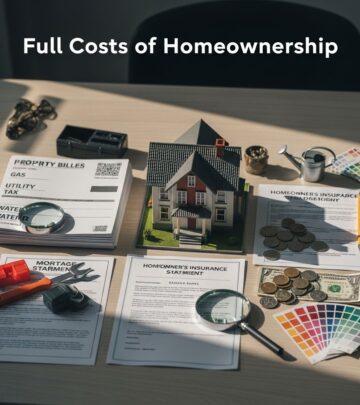
- Owners’ loads: Principal/interest, property taxes (1-2% of value annually), homeowners insurance ($1,500-$2,500/year), HOA fees if applicable ($200-$500/month).
Utilities also tilt toward owners, who pay $100+ more monthly for larger spaces, heating larger areas, and separate bills like water/trash.
Maintenance and Unexpected Repairs
Renting shifts repair responsibilities to landlords, a major perk. Owners must budget 1-2% of home value yearly for upkeep—$4,256-$8,511 on a $425,583 property. Roofs, HVAC systems, and plumbing fail unpredictably, with averages hitting $15,000 lifetime per homeowner.
Neglect compounds costs; deferred maintenance erodes property value. Renters enjoy maintenance-free living, often accessing amenities like pools or gyms included in rent.
Equity Growth Versus Investment Potential
Buying’s allure lies in equity: each mortgage payment builds ownership stake. After three years on a $300,000 home, equity might reach $55,870, offsetting some costs. Over time, as interest portions shrink, principal payments accelerate wealth accumulation.
Renters forgo this but retain liquidity. Savings from lower costs—e.g., $46,369 over three years—invested at 6% could yield $5,578. If staying short-term (under 5-6 years), renting plus investing often outperforms. Long-term, ownership prevails if home values rise.
Urban Institute data underscores owners’ advantages: larger homes (single-family prevalent), better locations, superior condition—fostering wealth.
Tax Implications and Incentives
Owners deduct mortgage interest and property taxes (up to $750,000 debt), plus potential capital gains exclusions on sale. Renters claim few breaks, though some locales offer rebates.
Price-to-rent ratios guide decisions: divide home price by annual rent. Ratios above 20 favor renting; below 15, buying.
Market Trends Shaping Choices
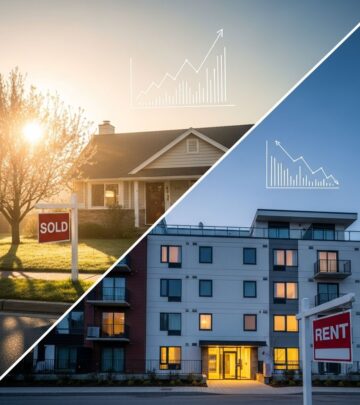
2025 data shows renting’s edge widening in 38 metros, driven by stable rents versus rising mortgages (up 2.4% YoY). Coastal cities amplify this; inland areas narrow gaps. High interest rates inflate ownership costs, echoing cycles where lower rates boost prices.
Owners view homes as assets yielding ‘imputed rent’—savings on hypothetical lease payments. Renters must save/invest differentials to compete.
Break-Even Analysis
Calculators quantify tipping points. Zillow’s tool: for $300k home, break-even at 5 years 10 months. Realtor.com often favors renting up to 30 years in pricey markets. NerdWallet stresses investing renter savings.
| Time Horizon | Advantage | Key Factor |
|---|---|---|
| 1-5 Years | Renting | Lower costs, flexibility |
| 5-10 Years | Buying (varies) | Equity buildup |
| 10+ Years | Buying | Wealth via appreciation |
Lifestyle and Location Factors
Mobility favors renting; stability suits buying. Families prioritize space/quality in owner-occupied properties. Urbanites in metros like NYC or LA save via renting.
Personal Finance Strategies
- Calculate total ownership costs, not just PITI.
- Invest renter savings aggressively.
- Assess local ratios and forecasts.
- Factor life changes: job mobility, family growth.
FAQs
Is renting always cheaper monthly?
Yes, in 2025 across major U.S. metros, averaging 38% less than full ownership costs.
How long to own before buying pays off?
Typically 5-7 years, per calculators; shorter in appreciating markets.
Do I need 20% down to buy?
No, 3-5% options exist, though PMI applies below 20%.
Should I invest renter savings?
Absolutely—to match buying’s equity, aim for stock market returns.
Impact of rising rates?
Higher mortgages widen renting’s short-term lead.
Final Thoughts on Decision-Making
Weigh your timeline, risk tolerance, and goals. Short-term: rent and invest. Long-term: buy for stability/wealth. Use tools for personalization—outcomes hinge on location, rates, and discipline.
References
- Rent vs Buy Calculator — Zillow. 2025. https://www.zillow.com/rent-vs-buy-calculator
- Rent Vs. Buy Calculator — Realtor.com. 2025. https://www.realtor.com/mortgage/tools/rent-or-buy-calculator/
- Weighing the Costs of Renting vs. Owning a Home — TSAHC. 2025. https://www.tsahc.org/blog/post/weighing-the-costs-of-renting-vs-owning-a-home
- Study: Renting is increasingly more affordable than buying — Bankrate. 2025-02. https://www.bankrate.com/real-estate/rent-vs-buy-affordability-study/
- Renting vs. Buying a Home: The Reckoning — YouTube (video transcript). 2025. https://www.youtube.com/watch?v=aU7v87EhDBI
- Buying vs. Renting a Home — HRCU. 2025. https://www.hrcu.org/self-service/blog/buying-vs-renting
- Rent vs Buy Calculator — NerdWallet. 2025. https://www.nerdwallet.com/mortgages/calculators/rent-vs-buy-calculator
Similar Articles








Read full bio of medha deb