Triple Bottom Line: People, Planet, Profit
Understanding the triple bottom line framework for sustainable business success and stakeholder value.
Understanding the Triple Bottom Line Framework
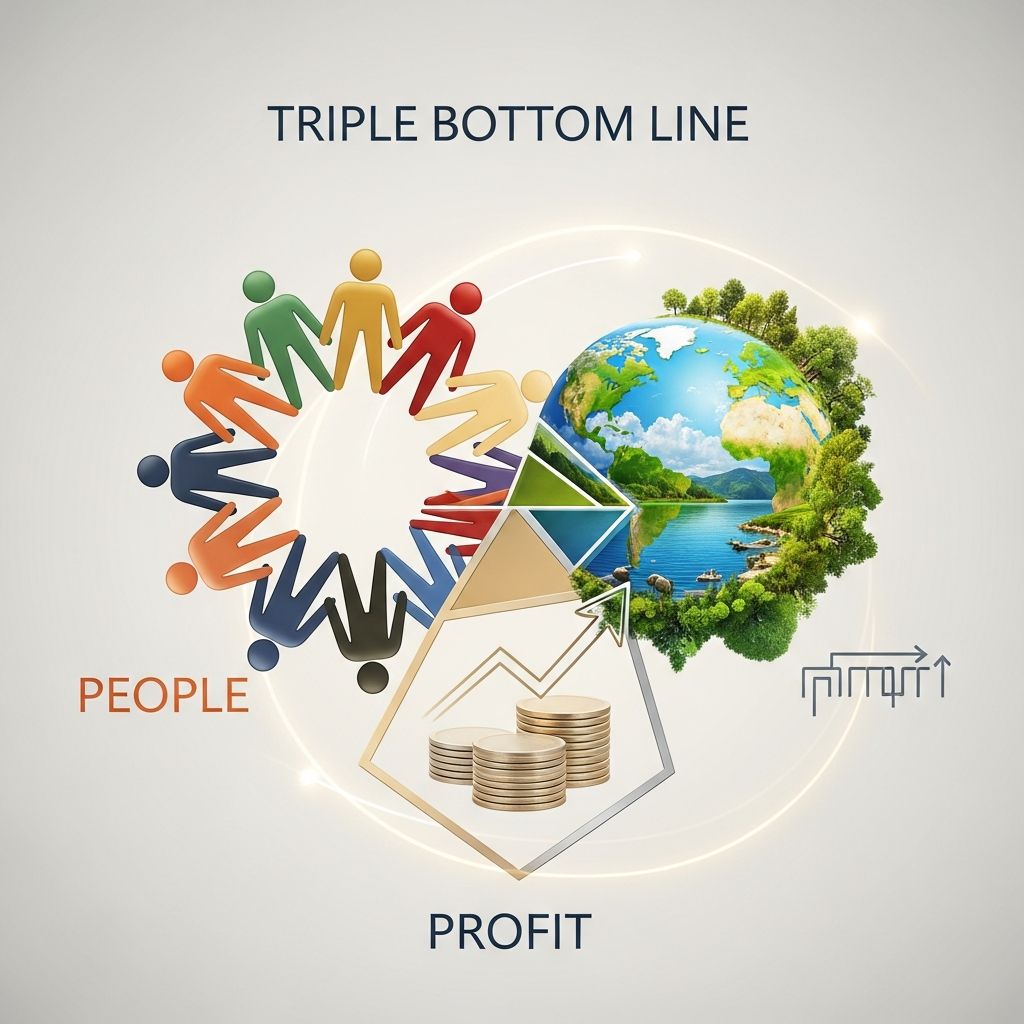
The triple bottom line, often abbreviated as TBL or 3BL, represents a fundamental shift in how businesses measure success and performance. Rather than relying solely on traditional financial metrics, the triple bottom line accounting framework evaluates a company’s commitment across three interconnected dimensions: social, environmental, and financial responsibilities. This comprehensive approach addresses the growing recognition that corporate success cannot be adequately measured by profits alone.
The concept, commonly summarized as “People, Planet, Profit,” extends beyond conventional financial reporting to encompass the full spectrum of a company’s impact on society and the natural environment. By adopting this framework, organizations acknowledge that sustainable business practices and stakeholder well-being are integral to long-term prosperity and competitive advantage.
The Three Pillars: People, Planet, and Profit
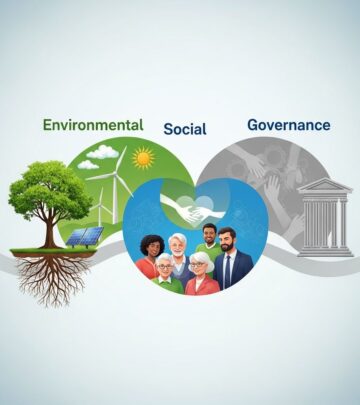
The triple bottom line framework is organized around three essential components, often referred to as the “Three P’s.” Each pillar represents a distinct dimension of corporate responsibility and performance measurement.
People: Social Responsibility and Stakeholder Value
The “People” dimension focuses on a company’s social impact across all stakeholders. This encompasses how organizations create value for employees, customers, communities, supply chain partners, and vendors. Closely connected to corporate social responsibility (CSR), this bottom line includes human capital initiatives that advance social equity both within and outside the business.
Companies measure their people impact through various metrics, including:
- Fair hiring practices and equitable compensation structures
- Employee training hours and professional development opportunities
- Worker retention rates and career advancement programs
- Community involvement and charitable contributions
- Labor practice standards and workplace safety records
- Community impact from business operations
By prioritizing people-focused initiatives, businesses demonstrate their commitment to fair labor practices and ethical treatment of all stakeholders. This aspect of the triple bottom line reflects the understanding that exploitative labor practices or community harm ultimately undermine long-term business sustainability.
Planet: Environmental Stewardship and Sustainability
The “Planet” dimension addresses a company’s environmental impact and commitment to ecological sustainability. This pillar encompasses how businesses manage natural resources, reduce their carbon footprint, and minimize pollution and waste generation.
Key environmental metrics typically include:
- Greenhouse gas emissions and carbon footprint reduction
- Water consumption and conservation efforts
- Waste management and landfill diversion rates
- Use of renewable energy and energy efficiency improvements
- Sustainable material sourcing and recycled content utilization
- Safety incident rates and environmental compliance
Companies increasingly recognize that environmental responsibility is not merely an ethical obligation but a business imperative. Sustainable environmental practices reduce operational costs through energy efficiency, minimize regulatory risks, and enhance brand reputation with environmentally conscious consumers and investors.
Profit: Economic Prosperity and Financial Performance
The “Profit” dimension, also referred to as “Prosperity,” focuses on a company’s overall economic impact and financial performance. While this traditionally refers to profits, in the triple bottom line framework, profit encompasses broader economic benefits that society receives from an organization’s business strategy.
Economic prosperity metrics include:
- Net income and return on investment
- Tax payments and fiscal contributions
- Job creation and employment opportunities
- Community economic development initiatives
- Stakeholder wealth creation
Importantly, the profit dimension in the triple bottom line framework is not viewed in isolation from social and environmental considerations. Instead, it represents the sustainable economic returns that result from responsible business practices across all three dimensions.
Historical Development and Origins
The triple bottom line concept originated from the work of John Elkington, a renowned business writer and founder of the management consultancy SustainAbility. Elkington coined the term in 1994, seeking to measure sustainability in corporate America through a new accounting framework that challenged traditional performance metrics.
During the mid-1990s, Elkington recognized that conventional measures of corporate success—such as profits, return on investment, and shareholder value—provided an incomplete picture of a company’s actual impact and value. His framework went beyond financial accounting to incorporate environmental and social dimensions that were difficult to quantify but critically important to overall organizational performance.
The adoption of triple bottom line accounting accelerated as American companies operating facilities overseas in countries like Brazil, China, and India began recognizing the hidden social and environmental costs of their operations. Business leaders started understanding how resource exploitation harmed the environment and how unfair labor practices negatively impacted communities and workers.
Why the Triple Bottom Line Matters
The triple bottom line framework addresses fundamental shifts in stakeholder expectations and market dynamics. Research demonstrates that people trust businesses that consider factors affecting customers and the environment alongside profits. This shift reflects broader changes in consumer preferences, investor expectations, and regulatory environments.
Building Stakeholder Trust
In today’s business environment, stakeholders—including employees, customers, investors, and community members—increasingly expect companies to demonstrate commitment beyond financial returns. Organizations that transparently report on social and environmental performance build stronger relationships with stakeholders and enhance their reputation and brand value.
Supporting Sustainability Goals
The triple bottom line is an important tool for reaching goals related to sustainability. By examining how their practices affect people and the environment, companies are forced to be socially and environmentally responsible. This systematic approach to accountability creates incentives for continuous improvement across all performance dimensions.
Creating Internal Business Value
Beyond external stakeholder benefits, adopting triple bottom line frameworks creates internal organizational value. Companies with sustainable, value-based business practices often experience:
- Improved employee retention and workplace satisfaction
- Reduced operational risks through supply chain resilience
- Lower production and maintenance costs through efficiency improvements
- Enhanced innovation and competitive differentiation
- Better access to capital and investor interest
Implementing Triple Bottom Line Accounting
Organizations implementing triple bottom line frameworks typically develop comprehensive measurement systems that track performance across all three dimensions. This requires identifying relevant metrics, establishing baseline measurements, and setting improvement targets.
Measurement and Metrics
Effective triple bottom line measurement depends on selecting appropriate metrics that reflect each organization’s unique context and stakeholder interests. Financial metrics remain relatively straightforward, while social and environmental metrics require more careful definition and quantification.
Social performance metrics might include training hours per employee, employee retention rates, community contributions, and charitable giving levels. Environmental metrics often encompass greenhouse gas emissions, water usage, waste generation, energy consumption per unit of production, and recycled material utilization. Financial metrics include traditional accounting measures along with community economic impact assessments.
Integration Across Operations
Successfully implementing the triple bottom line requires integrating sustainability practices throughout business operations, including supply chain management, product development, manufacturing processes, and customer service. This comprehensive approach ensures that social and environmental considerations inform decision-making at all organizational levels.
Challenges and Evolution of the Concept
While the triple bottom line framework represents important progress in corporate accountability, it has faced criticism and continues to evolve. One significant challenge involves the concept’s vagueness regarding the relative weighting of the three bottom lines, which often results in financial considerations de facto prevailing over social and environmental concerns.
Notably, John Elkington himself has acknowledged that triple bottom line accounting practices have not fully succeeded in counteracting corporations’ narrow profit orientation or fundamentally altering capitalism as he originally envisioned. In response, Elkington has publicly called for accelerated and more radical transformation of business practices to address our world’s continued environmental degradation.
Despite these challenges, the triple bottom line framework remains influential in driving corporate sustainability initiatives and encouraging organizations to consider their broader impact beyond financial returns.
Frequently Asked Questions
Q: What does the triple bottom line actually measure?
A: The triple bottom line measures a company’s performance across three dimensions: social impact (People), environmental stewardship (Planet), and financial performance (Profit). This comprehensive approach captures how business operations affect stakeholders, ecosystems, and economic outcomes.
Q: Who created the triple bottom line concept?
A: Business writer John Elkington, founder of the management consultancy SustainAbility, coined the term “triple bottom line” in 1994. He developed the framework to measure sustainability and corporate impact beyond traditional financial metrics.
Q: How does triple bottom line reporting benefit businesses financially?
A: Companies implementing triple bottom line frameworks often experience improved employee retention, reduced operational costs through efficiency improvements, lower supply chain risks, enhanced brand reputation, and better access to capital from socially conscious investors.
Q: Can companies maintain profitability while focusing on the triple bottom line?
A: Yes. The triple bottom line framework demonstrates that doing well financially and doing good for society and the environment are not mutually exclusive. Many innovative companies have shown that sustainable business practices can generate financial benefits while creating positive social and environmental impact.
Q: What industries are most likely to adopt triple bottom line frameworks?
A: While adoption spans across sectors, industries with significant environmental impact or labor-intensive operations—such as manufacturing, retail, energy, and agriculture—are often early adopters. However, technology companies, financial institutions, and service providers increasingly implement triple bottom line accounting as stakeholder expectations evolve.
Q: How do organizations measure social and environmental impact quantitatively?
A: Organizations develop standardized metrics for measurement, including employee training hours, safety incident rates, greenhouse gas emissions, water consumption, waste generation, charitable contributions, and community impact assessments. Developing appropriate measurement systems requires careful consideration of each organization’s unique operations and stakeholder interests.
References
- Triple Bottom Line (Accounting) — EBSCO Research Starters, Environmental Sciences. Accessed 2025. https://www.ebsco.com/research-starters/environmental-sciences/triple-bottom-line-accounting
- What is a Triple Bottom Line? — European Investment Bank. Accessed 2025. https://www.eib.org/en/stories/triple-bottom-line-environment
- What Is the Triple Bottom Line (TBL)? — IBM Think. Accessed 2025. https://www.ibm.com/think/topics/triple-bottom-line
- The Triple Bottom Line: What Is It and How Does It Work? — Indiana Business Review, Indiana University Regional Economics, 2011. https://www.ibrc.indiana.edu/ibr/2011/spring/article2.html
- What is the “Triple Bottom Line”? — HEC Paris Executive Education. Accessed 2025. https://www.hec.edu/en/what-triple-bottom-line
- The Triple Bottom Line: What It Is & Why It’s Important — Harvard Business School Online. Accessed 2025. https://online.hbs.edu/blog/post/what-is-the-triple-bottom-line
Similar Articles








Read full bio of medha deb