Trickle-Down Theory: Economic Policy Explained
Understanding trickle-down economics: How tax cuts and investment incentives affect economic growth.

What Is Trickle-Down Theory?
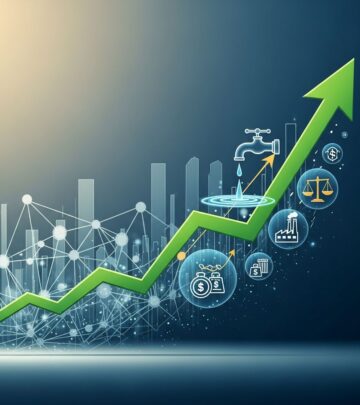
Trickle-down theory, also known as supply-side economics or horse-and-sparrow theory, is an economic concept that proposes reducing taxes on businesses and wealthy individuals to stimulate economic growth that benefits all members of society. The fundamental premise is that when corporations and high-income earners keep more of their earnings, they will invest in capital, create jobs, and increase production, ultimately generating economic benefits that “trickle down” to lower-income workers and consumers through increased wages, employment opportunities, and improved living standards.
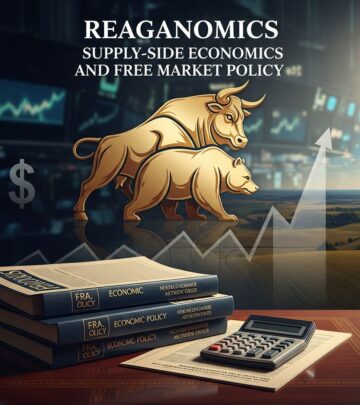
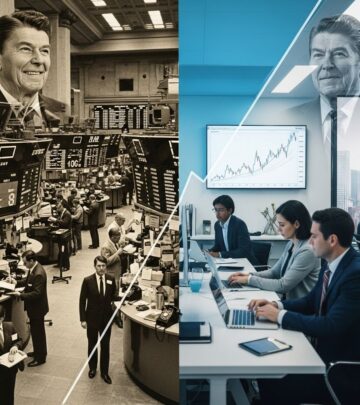
The theory gained significant prominence during the 1980s under the Reagan administration and continues to influence economic policy debates today. Proponents argue that trickle-down policies encourage entrepreneurship, innovation, and capital investment by allowing businesses to retain more profits for reinvestment and expansion. Critics, however, contend that the theory oversimplifies economic relationships and often leads to increased income inequality without delivering promised broad-based benefits.
Core Principles of Trickle-Down Economics
Trickle-down theory rests on several key economic assumptions and principles:
- Tax Reduction Incentives: Lower tax rates on corporations and high earners reduce the cost of capital investment and encourage business expansion.
- Capital Accumulation: Businesses reinvest profits into new equipment, facilities, and research and development, increasing productive capacity.
- Job Creation: Expanded business operations lead to increased hiring and employment opportunities across the economy.
- Wage Growth: Competition for workers in a growing economy drives up wages and improves working conditions.
- Consumer Spending: Higher incomes among workers and businesses lead to increased consumption and demand for goods and services.
- Revenue Neutrality: Advocates argue that economic growth stimulated by lower taxes eventually generates sufficient additional tax revenue to offset initial revenue losses.
Historical Context and Development
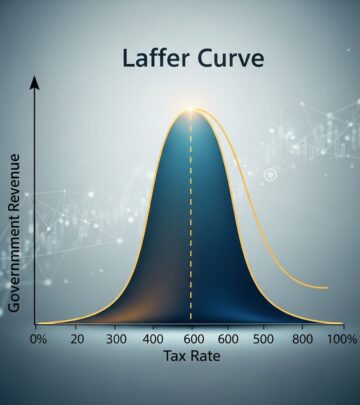
The concept of trickle-down economics gained modern prominence during the 1980s when President Ronald Reagan implemented significant tax cuts under the Economic Recovery Tax Act of 1981. These policies reduced marginal income tax rates from 70 percent to 50 percent and lowered corporate tax rates. The philosophy built upon earlier supply-side economic theories developed by economists such as Arthur Laffer, who proposed the Laffer Curve concept suggesting that lower tax rates could increase overall tax revenue through economic growth.
Similarly, President George W. Bush introduced tax cuts in 2001 and 2003, while President Donald Trump signed the Tax Cuts and Jobs Act of 2017, substantially reducing corporate tax rates from 35 percent to 21 percent. These policies reflected ongoing political commitment to trickle-down principles and their purported economic benefits.
How Trickle-Down Theory Works
The mechanism of trickle-down economics follows a specific sequence of economic events:
Step 1: Tax Reduction – Governments reduce tax rates on corporations, capital gains, and high-income individuals, leaving more money in the private sector.
Step 2: Business Investment – Companies use retained earnings to invest in equipment, infrastructure, technology, and workforce expansion.
Step 3: Economic Expansion – Increased business investment drives economic growth, productivity improvements, and market expansion.
Step 4: Employment Growth – Expanding businesses hire more workers, reducing unemployment and tightening labor markets.
Step 5: Wage Increases – Competition for qualified workers pushes wages upward as employers compete for talent.
Step 6: Consumer Demand – Higher incomes increase consumer purchasing power, driving demand for goods and services.
Step 7: Economic Multiplier Effect – Increased spending generates revenue for businesses, further fueling growth and investment.
Arguments Supporting Trickle-Down Theory
Proponents of trickle-down economics present several compelling arguments in support of the theory:
- Encourages Investment: Reduced tax burdens incentivize businesses to invest in expansion, research, and development rather than distributing profits.
- Promotes Economic Growth: Supply-side expansion increases productive capacity and overall economic output.
- Creates Employment: Business expansion directly leads to job creation and reduced unemployment rates.
- Stimulates Innovation: Retained earnings allow companies to fund research and development, driving technological advancement.
- Increases Business Competitiveness: Lower operational costs enhance businesses’ ability to compete domestically and internationally.
- Generates Government Revenue: Economic growth increases the tax base, potentially generating government revenue despite lower tax rates.
- Reduces Deficit Spending: Proponents argue tax cuts can reduce government deficits by stimulating economic activity.
Criticisms and Limitations of Trickle-Down Theory
Despite its political popularity, trickle-down theory faces substantial academic and practical criticism:
- Limited Empirical Support: Research indicates that tax cuts don’t consistently produce promised economic growth or sufficient revenue increases to offset lost tax revenue.
- Increased Income Inequality: Tax cuts primarily benefit wealthy individuals and corporations, potentially widening wealth gaps without proportionate middle and lower-class benefits.
- Stock Buybacks Instead of Investment: Companies often use tax savings for shareholder buybacks and dividends rather than productive investment and job creation.
- Weak Job Creation: Economic data from major tax-cut initiatives shows modest job creation compared to historical averages and promised levels.
- Insufficient Wage Growth: Despite tax cuts, wage growth has remained stagnant relative to productivity increases and inflation.
- Reduced Public Investment: Lower government revenues from tax cuts may necessitate reduced investment in education, infrastructure, and research.
- Oversimplified Economics: The theory underestimates complexity in modern economies and behavioral factors affecting business and consumer decisions.
Empirical Evidence and Real-World Outcomes
Examining real-world implementation of trickle-down policies reveals mixed and often disappointing results. Following the 1981 Reagan tax cuts, the economy experienced growth, but unemployment remained elevated through the early 1980s, and deficits increased substantially. The Congressional Research Service found limited correlation between top tax rates and economic growth rates.
The 2001 and 2003 Bush tax cuts occurred during a period of economic growth, yet job creation remained sluggish compared to historical averages, and wage growth lagged productivity increases. After the 2017 Tax Cuts and Jobs Act, while corporate stock prices rose and some dividends increased, capital expenditure growth was modest, and wage growth remained constrained.
International comparisons show that countries with higher tax rates, such as Denmark and Norway, maintain robust economic growth, high living standards, and lower income inequality than some lower-tax jurisdictions. This suggests factors beyond tax rates significantly influence economic performance.
Trickle-Down Theory vs. Other Economic Approaches
Trickle-down economics differs substantially from alternative economic philosophies:
| Economic Approach | Focus | Policy Tools | Intended Outcome |
|---|---|---|---|
| Trickle-Down/Supply-Side | Producers and capital | Tax cuts, deregulation | Growth from top down |
| Keynesian/Demand-Side | Consumers and demand | Government spending, stimulus | Growth through demand |
| Mixed Economy | Balance of both approaches | Targeted policies | Balanced sustainable growth |
Modern Perspective on Trickle-Down Economics
Contemporary economic thinking increasingly questions trickle-down theory’s effectiveness. Major institutions have reassessed the approach based on empirical evidence. The International Monetary Fund has noted that income inequality reduction matters for sustainable growth, suggesting that purely supply-side approaches may prove counterproductive long-term.
Modern economists emphasize the importance of demand-side factors, human capital investment, infrastructure, and equitable growth distribution alongside business-friendly policies. Many argue the most effective approach combines moderate business incentives with strategic public investment in education, infrastructure, and research development.
Contemporary policy debates increasingly focus on whether trickle-down policies represent the most efficient use of foregone government revenue, as alternative investments in education, infrastructure, or targeted business development might generate superior returns and broader economic benefits.
Frequently Asked Questions (FAQs)
Q: Why is trickle-down theory called “horse-and-sparrow economics”?
A: The colorful term reflects the theory’s premise: if you feed a horse enough oats, some will pass through to feed the sparrows. Similarly, if wealthy individuals and businesses accumulate sufficient wealth, some benefits will “trickle down” to ordinary workers.
Q: Has trickle-down theory ever worked as intended?
A: Results have been mixed and disappointing relative to predictions. While some periods saw economic growth following tax cuts, the relationship between tax reductions and promised job creation, wage growth, and broad-based prosperity has proven inconsistent and weaker than advocates predicted.
Q: What’s the difference between trickle-down and supply-side economics?
A: Supply-side economics is the broader theoretical framework focusing on increasing productive capacity through reduced taxation and regulation. Trickle-down theory is the specific mechanism describing how benefits from supply-side policies filter down to workers and consumers.
Q: Do tax cuts always increase government revenue?
A: No. While economic growth may partially offset revenue losses, empirical evidence indicates tax cuts typically reduce net government revenue in the short to medium term, contrary to “pay-for-itself” predictions often made by advocates.
Q: What alternatives exist to trickle-down theory?
A: Alternative approaches include Keynesian stimulus focusing on demand-side spending, progressive taxation with public investment, mixed-economy policies balancing market incentives with social investment, and behavioral economics approaches recognizing psychological and social factors.
Q: How does trickle-down theory relate to income inequality?
A: Critics argue trickle-down policies exacerbate income inequality by primarily benefiting wealthy individuals and corporations, while empirical evidence shows promised benefits to lower-income workers have been limited or absent in real-world implementations.
References
- Income Inequality and Economic Growth — International Monetary Fund. 2015-06-15. https://www.imf.org/external/pubs/ft/sdn/2015/sdn1513.pdf
- Top Incomes and Tax Policy — Congressional Research Service. 2012-09-14. https://fas.org/sgp/crs/misc/R42729.pdf
- Estimating the Effects of the 2017 Tax Cuts and Jobs Act — Joint Committee on Taxation, U.S. Congress. 2018-02-09. https://www.jct.gov/CMSPages/GetFile.aspx?nodeguid=4c0a7b38-8c5f-47ab-9021-e62a47dc3354
- The Effects of Marginal Tax Rates on Economic Growth and Job Creation — U.S. Department of the Treasury. 2012-04-20. https://home.treasury.gov/system/files/131/WP-12-Effects-Marginal-Tax-Rates-Economic-Growth.pdf
- Supply-Side Economics: A Re-examination of Government Revenues and Economic Growth — National Bureau of Economic Research. 2016-05-15. https://www.nber.org/papers/w22230
- How Taxes Affect Economic Growth in the Long Run — Organization for Economic Co-operation and Development. 2018-12-10. https://www.oecd.org/tax/tax-policy/
Similar Articles








Read full bio of Sneha Tete