Tree Damage to Your Vehicle: Insurance Liability Explained
Understand who pays when trees damage your car and what coverage protects you.
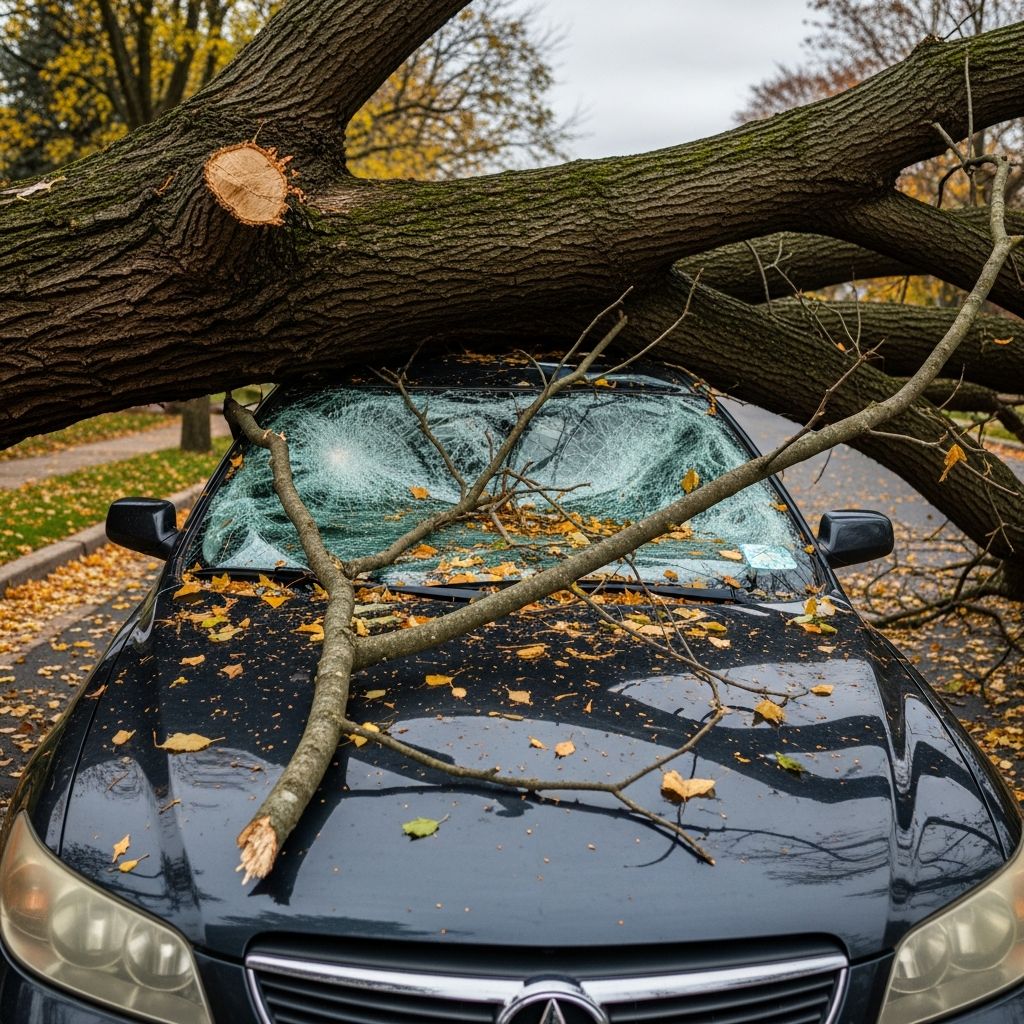
When a tree falls on your car, the resulting damage can range from minor cosmetic scratches to catastrophic structural harm requiring complete vehicle replacement. Understanding who bears financial responsibility for these incidents is crucial for every vehicle owner. The answer depends primarily on your insurance coverage type and the specific circumstances surrounding the incident.
Understanding Your Financial Responsibility
In most situations, you are responsible for covering the cost of repairs or replacement when a tree damages your vehicle. This responsibility manifests in one of two ways: either you pay directly out of pocket, or you file an insurance claim if your policy includes appropriate coverage. The distinction between these two options fundamentally changes your financial outcome.
Many vehicle owners mistakenly believe that responsibility automatically transfers to property owners or local government entities when trees cause damage. However, this assumption rarely holds true in practice. Instead, auto insurance serves as the primary financial protection mechanism.
The Role of Comprehensive Coverage in Tree Damage Claims
Comprehensive coverage is the critical insurance component that protects against tree-related vehicle damage. This coverage type addresses harm to your vehicle that does not result from collision incidents. Comprehensive policies typically cover a broad spectrum of non-collision events including theft, vandalism, hail damage, and falling objects such as trees or branches.
It’s essential to recognize that comprehensive coverage operates as optional protection in most states. While liability insurance represents the legally mandated minimum for vehicle operation, comprehensive coverage remains an elective add-on. However, financial institutions and leasing companies frequently require comprehensive coverage as a condition of financing or leasing arrangements.
How Comprehensive Coverage Functions
When you file a comprehensive claim for tree damage, your insurance policy requires you to pay a deductible before coverage activates. A deductible represents the predetermined amount you agree to contribute toward each claim. Deductibles typically range from $0 to $2,000 or higher, depending on your policy selections.
Here’s a practical example of how this mechanism works: if a falling tree causes $4,000 in damage to your vehicle and your deductible is $500, you pay $500 while your insurance company covers the remaining $3,500.
| Coverage Type | Tree Damage Coverage | Cost to You |
|---|---|---|
| Liability Only | Not Covered | Full repair cost |
| Comprehensive | Covered | Your deductible amount |
| Collision Only | Partial (if you hit fallen tree) | Your deductible amount |
| Full Coverage | Covered | Your deductible amount |
Different Scenarios: Ownership and Responsibility
The specific ownership situation surrounding the fallen tree influences how insurance claims proceed, though it doesn’t necessarily shift your primary responsibility.
Your Own Tree Falls on Your Car
When a tree growing on your property damages your vehicle, your comprehensive auto insurance covers the repairs. This scenario is straightforward—you file a claim with your auto insurance provider, and they process it under your comprehensive coverage. The causation (a tree you own) doesn’t prevent coverage as long as the damage was unexpected.
Your Neighbor’s Tree Falls on Your Car
If a neighbor’s tree falls onto your vehicle, your comprehensive coverage still protects you. You initiate a claim with your own auto insurance, and your policy covers the necessary repairs minus your deductible. Your insurance company may subsequently pursue the neighbor’s homeowner’s insurance for reimbursement through a process called subrogation, but this internal dispute between insurance companies doesn’t affect your claim experience.
However, if you have documented evidence that you repeatedly warned your neighbor about a visibly rotting or diseased tree and they ignored your concerns, you might be able to file a third-party claim directly against their homeowner’s insurance. This requires substantial proof of negligence on the neighbor’s part.
A Public Tree Falls on Your Car
When a tree maintained by your municipality or public entity damages your vehicle, you still file a claim with your auto insurance company. Government entities typically have immunity from negligence claims in tree-related incidents unless gross negligence can be demonstrated. Your comprehensive coverage remains your most practical avenue for recovery.
Tree Damage During Vehicle Operation
If a tree falls on your car while you’re actively driving, comprehensive coverage applies. However, if you’re driving and collide with a tree that’s already fallen in the road, the situation changes. In this case, collision coverage typically applies rather than comprehensive. This distinction exists because hitting an already-fallen tree is generally considered avoidable—you bear responsibility for observing road hazards while driving.
Situations Where Insurance May Deny Coverage
Understanding coverage limitations is equally important as knowing when you’re protected. Insurance companies may deny tree damage claims under specific circumstances.
Pre-existing Tree Damage or Disease
The most common denial scenario involves trees that were already dead, diseased, or visibly rotting at the time they fell. Insurance is designed to cover unexpected, unavoidable damage. A tree that presented an obvious hazard and had visible signs of deterioration doesn’t qualify as unexpected.
This principle reflects the insurance concept of premises liability—the property owner’s obligation to maintain their premises in a safe condition. If you knew or should have known that your tree was compromised and did nothing to address it, insurers may rightfully deny coverage based on negligence.
Failure to Maintain or Mitigate Risk
If an insurance company has evidence that you were notified your tree might fall due to damage or neglect, they can deny your claim. Similarly, if professional inspections revealed potential hazards and you failed to take corrective action, coverage may be withheld.
Why Homeowner’s Insurance Doesn’t Cover Vehicle Damage
A common misconception involves assuming homeowner’s insurance covers tree damage to vehicles. This assumption is incorrect. Homeowner’s insurance addresses damage to the house, attached structures, detached structures like sheds or garages, and landscaping elements. However, damage to vehicles—whether parked at home or elsewhere—falls outside homeowner’s policy scope.
The distinction exists because homeowner’s insurance and auto insurance serve different purposes. Auto insurance specifically addresses vehicle-related losses regardless of location. If a tree falls on your car while parked in your driveway, your auto insurance handles the claim, not your homeowner’s policy.
Your homeowner’s insurance would cover tree removal if the fallen tree blocks your driveway or a handicap access ramp. This coverage applies only to clearing obstruction, not to vehicle damage resulting from the fallen tree.
Third-Party Liability Scenarios
Occasionally, a third party’s actions directly cause a tree to fall on your vehicle. Examples include tree removal services that negligently drop a tree or contractors whose work destabilizes a tree.
In these situations, obtain insurance information from the responsible party. Your insurance company may pay your claim while subsequently seeking reimbursement from the third party’s liability coverage. This process protects you financially while allowing insurers to determine actual fault through their own investigation.
Practical Steps After Tree Damage Occurs
Knowing the appropriate response to tree damage optimizes your claim experience:
- Document the damage thoroughly with photographs and video from multiple angles, capturing both close-up and distant perspectives
- Contact your insurance company promptly to initiate the claims process and receive claim number assignment
- Obtain professional repair estimates from reputable auto body shops to establish accurate damage assessment
- Preserve evidence of tree condition if applicable—photographs showing rot, disease, or previous damage strengthen your position
- Keep records of communications with neighbors, contractors, or government entities regarding tree conditions or concerns
- Have professional tree inspections conducted after severe storms to identify potential hazards before they become problems
Insurance Coverage Assessment Questions
Before a tree-related incident occurs, verify your protection level by reviewing your policy documents or contacting your insurance agent:
- Does your policy include comprehensive coverage?
- What is your comprehensive coverage deductible amount?
- Does your policy limit coverage amounts for comprehensive claims?
- Are there geographic or weather-related exclusions in your comprehensive coverage?
- What is your policy’s stance on pre-existing tree damage or negligence?
Comparing Coverage Options and Costs
The decision to carry comprehensive coverage involves weighing protection benefits against policy costs. Vehicles with existing loans or leases typically require comprehensive coverage as a lender condition. For owned vehicles paid in full, comprehensive coverage remains optional but provides valuable protection against multiple hazards beyond tree damage—including theft, vandalism, and weather events.
Financial advisors generally recommend comprehensive coverage for vehicles with significant remaining value. As vehicle value depreciates, the cost-benefit analysis shifts, potentially making comprehensive coverage less economical for older vehicles.
Liability Coverage Limitations
Understanding liability insurance’s scope prevents false expectations. Liability coverage—the minimum insurance requirement in all U.S. states—covers damage you cause to others’ property and bodily injuries you inflict on others. It explicitly does not cover your own vehicle damage under any circumstances.
If you carry only liability insurance and a tree falls on your car, you are entirely responsible for repair or replacement costs. This scenario underscores comprehensive coverage’s importance for complete protection.
Key Takeaways
When trees damage your vehicle, financial responsibility ultimately rests with you—either through direct out-of-pocket payment or through comprehensive insurance coverage. Comprehensive auto insurance, rather than homeowner’s insurance or liability coverage, provides the appropriate protection mechanism. Insurance companies may deny claims involving pre-existing tree damage, negligence, or failure to maintain property. Taking preventive action—such as professional tree inspections and prompt hazard mitigation—reduces both physical damage risk and claim denial risk. Understanding your specific policy’s terms ensures you’re adequately protected against this common but often overlooked hazard.
References
- Does Car Insurance Cover Tree Damage? — Policygenius. 2025. https://www.policygenius.com/auto-insurance/does-car-insurance-cover-a-tree-falling-on-my-car/
- A Tree Fell On My Car, Will My Insurance Cover It? — Freeway. 2025. https://www.freeway.com/knowledge-center/auto/tree-fell-on-car/
- What Happens if a Tree Falls on My Car? — Progressive. 2025. https://www.progressive.com/answers/tree-falls-on-car/
- Will My Auto Insurance Cover the Damage from My Tree Falling on My Car? — York-Jersey. 2025. https://www.york-jersey.com/blog/will-my-auto-insurance-cover-the-damage-from-my-tree-falling-on-my-car/
- Who Is Responsible if a Tree Falls on My Car? — Experian. 2025. https://www.experian.com/blogs/ask-experian/who-is-responsible-if-tree-falls-on-my-car/
- Consumer Connection: Tree Damage and Insurance — SmartHER Iowa. 2025. https://smarther.iowa.gov/consumer-connection-tree-damage-and-insurance/
- Storm Recovery: Impacts of Tree Falling on My Home or Car — National General. 2025. https://nationalgeneral.com/about-us/news-and-blog/storm-impacts-of-tree-falling-on-home-or-car
Similar Articles








Read full bio of Sneha Tete