Travel and Money: How to Get and Carry Cash Safely
Master safe cash handling on your travels: get it securely, carry it smartly, and avoid common pitfalls abroad.
This comprehensive guide in the Travel and Money series explores practical strategies for obtaining local currency abroad and carrying it without becoming a target for thieves. Whether you’re a budget backpacker or a business traveler, mastering cash management enhances security and saves money. Drawing from expert advice and real-world experiences, we’ll cover everything from ATMs and exchanges to hidden wallets and emergency plans.
Why Cash Still Matters When Traveling
Despite the rise of digital payments, cash remains king in many destinations. Street vendors, small shops, rural areas, and emergency situations often require bills and coins. According to the Bank for International Settlements, cash usage persists globally, especially in developing economies where card acceptance is low. Carrying cash offers immediacy but demands caution against pickpockets, scams, and poor exchange rates.
How to Get Cash Abroad: Top Methods Ranked
Acquiring foreign currency efficiently minimizes fees and risks. Here’s a breakdown of reliable options, prioritized by cost-effectiveness and convenience.
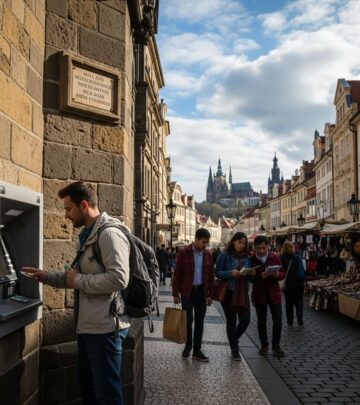
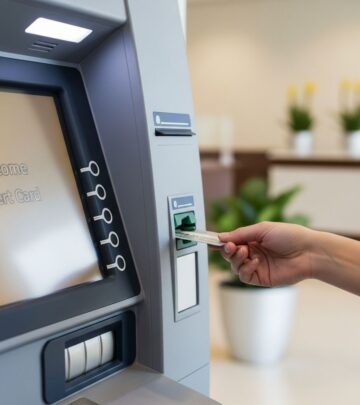
- ATMs (Best Overall Choice): Withdraw local currency using your debit or credit card. ATMs provide bank rates close to mid-market, beating airport kiosks. Notify your bank pre-trip to avoid fraud blocks. Opt for machines inside banks during daylight.
- Pre-Trip Bank Exchanges: Order currency from your home bank 1-2 weeks ahead for competitive rates without commissions. Avoid U.S. airports or hotels, where markups exceed 10%.
- Currency Exchange Bureaus: Use reputable chains like Travelex only as a last resort. Compare posted ‘buy/sell’ rates to Google’s mid-market rate (e.g., if 1 USD = 0.85 EUR, don’t accept less than 0.82 after fees).
- Cash Back at Merchants: In Europe or Asia, pay with card and get cash back in local currency—often fee-free.
| Method | Pros | Cons | Best For |
|---|---|---|---|
| ATM Withdrawal | Best rates, convenient | ATM fees ($3-5), skimmers | Most trips |
| Bank Exchange | No surprises, secure | Lead time needed | Planning ahead |
| Bureau de Change | Instant cash | High fees (10-20%) | Emergencies |
ATM Tips: Avoid Fees and Fraud
ATMs are convenient but fraught with pitfalls. Global ATM Alliance members like Bank of America waive fees at partners (e.g., Barclays in UK). Expect $2-5 foreign transaction fees otherwise—choose no-fee cards like Charles Schwab. Watch for skimmers: inspect card slots, prefer chip readers, and cover PIN entry. Use apps like ATM Hunter for fee-free locations. In 2023, the FBI reported over 1,000 ATM jackpotting incidents globally, emphasizing vigilance.
Step-by-Step ATM Safety
- Locate bank-affiliated ATMs via bank apps.
- Transact in daylight with people around.
- Decline dynamic currency conversion (DCC)—always choose local currency.
- Withdraw max per transaction to minimize fees.
- Monitor statements via mobile banking.
Exchange Rate Math: Don’t Get Ripped Off
Calculate fair value: divide local amount by mid-market rate. If a bureau offers 100 EUR for $120 USD when market is $108, walk away—it’s a 10% rip-off. Tools like XE.com provide real-time rates. Governments warn against unregulated changers; the U.S. State Department notes scams in tourist hubs like Bangkok.
Carrying Cash Securely: Diversify and Conceal
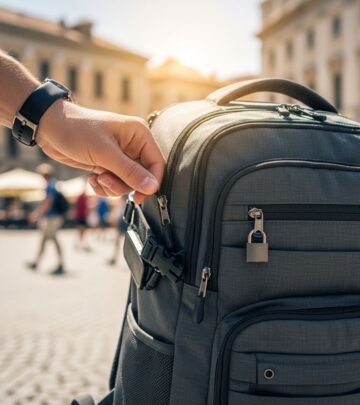
Never carry all cash in one wallet. Split into 3-4 locations: money belt, day pack, hotel safe, decoy wallet. Limit daily carry to $200-300 equivalent. Use RFID-blocking sleeves for cards.
- Money Belts/Pouches: Neck or waist styles hide bills under clothes. Avoid bulging—thieves spot them.
- Leg/Hidden Pouches: Ideal for larger sums; sweat-proof models last weeks.
- Decoy Wallet: Fill with small bills and expired cards for muggers.
- Hotel Safes: Use for excess; verify bolted shut.
EU statistics show pickpocketing claims 500,000 victims yearly, mostly tourists. Dress down, avoid flashy jewelry.
Daily Cash Management Routine
Treat cash like inventory: track via apps like Trail Wallet. Spend small notes first. In high-theft areas (Barcelona, Rome), use pockets with zippers. Photocopy passport/cash amounts for insurance claims.
Alternatives to Carrying Large Cash Amounts
Minimize bulk with these hybrids:
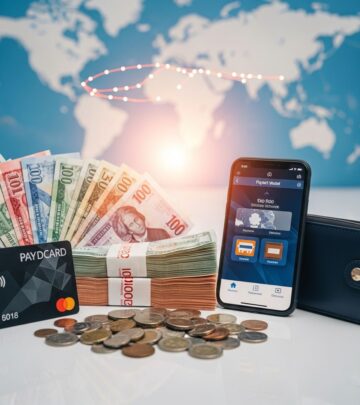
- Prepaid Travel Cards: Load USD, withdraw locally—lock rates, easy replace if lost.
- No-Fee Credit Cards: Visa/Mastercard for purchases; pay off immediately.
- Mobile Wallets: Apple Pay/Google Pay where accepted, reducing physical cash need.
- Western Union/MoneyGram: For emergencies—send to self.
Country-Specific Cash Tips
| Region | Cash Reality | Pro Tip |
|---|---|---|
| Europe | Contactless rising, cash in East | Euros widely accepted |
| Asia | Cash-dominant | ATMs dispense 1,000s; break large notes early |
| Latin America | USD often preferred | Carry clean $100 bills |
| Africa/Middle East | Cash essential | Beware fake notes; test with markers |
What to Do If Cash Is Stolen or Lost
Act fast: file police report for insurance. Contact embassy for emergency funds. U.S. citizens use Smart Traveler Enrollment Program (STEP) for alerts. Travel insurance with cash coverage (up to $500) is vital—providers like World Nomads reimburse verified losses.
Common Mistakes and How to Avoid Them
- All Eggs in One Basket: Diversify storage.
- Airport Exchanges: Rates 15% worse—skip.
- Flashing Cash: Count privately.
- Ignoring Fees: Research card terms.
- No Backup: Always have 2-3 access methods.
Frequently Asked Questions (FAQs)
Q: How much cash should I carry daily abroad?
A: $100-300 equivalent, depending on location. Adjust for cash-only norms; replenish via ATM.
Q: Are airport ATMs safe?
A: Riskier due to skimmers—use indoor bank ones instead.
Q: What’s the best no-fee debit card for travel?
A: Charles Schwab or Capital One 360—reimburses ATM fees worldwide.
Q: Should I use credit cards for cash advances?
A: Avoid—fees up to 5% + interest. Use debit ATMs.
Q: How do I spot fake bills abroad?
A: Feel texture, check watermarks, use UV lights in dodgy areas.
Final Thoughts on Smart Cash Travel
Secure cash handling transforms travel from stressful to seamless. Combine ATMs, concealment, and backups for peace of mind. As seasoned nomads prove, slow travel with minimal cash reduces risks further. Stay vigilant, budget wisely, and explore freely.
References
- Payments Systems in the U.S. – A Cross-Border Perspective — Bank for International Settlements. 2023-10-01. https://www.bis.org/publ/qtrpdf/r_qt2312h.htm
- Budgeting for Study Abroad: What You’ll Need, and How to Access Your Money — Wise Bread. 2024-05-15. https://www.wisebread.com/budgeting-for-study-abroad-what-youll-need-and-how-to-access-your-money
- Don’t Get Taken: How to Evaluate an Exchange Rate — Wise Bread. 2023-11-20. https://www.wisebread.com/dont-get-taken-how-to-evaluate-an-exchange-rate
- ATM Jackpotting — Federal Bureau of Investigation. 2023-07-12. https://www.ic3.gov/Media/Y2023/PSA230712
- International Financial Scams — U.S. Department of State. 2025-01-10. https://travel.state.gov/content/travel/en/international-travel/before-you-go/your-health-abroad/financial-scams.html
- Pocketpicking Statistics — European Union Agency for Fundamental Rights. 2024-03-05. https://fra.europa.eu/en/data-and-maps/data-explorer/property-crime
- Travel and Money: Using Your Credit Card on the Road — Wise Bread. 2024-02-28. https://www.wisebread.com/travel-and-money-using-your-credit-card-on-the-road
Similar Articles








Read full bio of Sneha Tete