Trailing Stop: Automatic Profit Protection Strategy
Master trailing stops to lock in profits and manage risk automatically as markets move.
What Is a Trailing Stop?
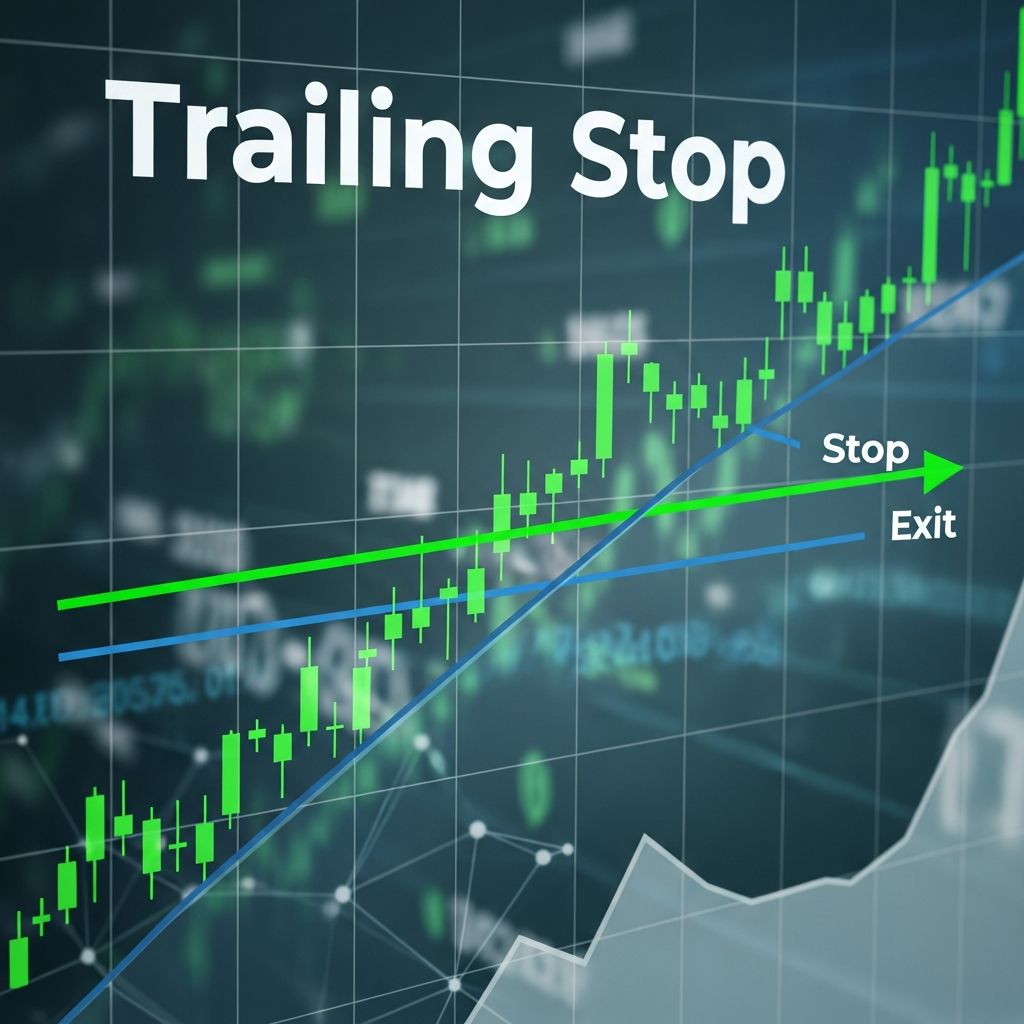
A trailing stop is an advanced order type that automatically adjusts your stop-loss level as the market price moves in your favor. Unlike a traditional fixed stop-loss order that remains at a set price, a trailing stop continuously tracks the market price and moves upward (for long positions) or downward (for short positions) by a predetermined amount or percentage. This dynamic approach allows traders to lock in profits while maintaining downside protection, combining the security of a stop-loss with the flexibility to benefit from favorable price movements.
The primary advantage of a trailing stop is that it removes emotional decision-making from the trading process. Instead of constantly monitoring positions and manually adjusting stop-loss levels, traders can set their trailing stop parameters once and let the automated system handle the adjustments. This passive approach is particularly valuable for active traders who cannot watch the markets continuously.
How Trailing Stops Work
The mechanics of a trailing stop are straightforward but powerful. When you place a trailing stop order, you specify two key parameters: the trailing amount and the initial stop-loss price. The trailing amount can be expressed as either a fixed dollar amount, a percentage of the current price, or a number of pips (percentage in points) depending on your trading platform and the security you’re trading.
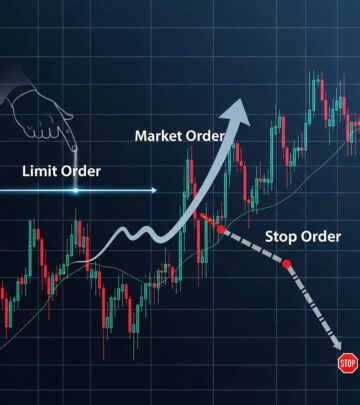
As the market price moves favorably, the trailing amount maintains a constant distance from the highest price reached (for long positions) or the lowest price reached (for short positions). When the price reverses and moves back toward your trailing stop level, the order triggers and converts to a market order, executing at the best available price. If the price never reaches the trailing stop level, the order remains active indefinitely until you cancel it or the market closes.
For example, consider a trader who purchases Stock ABC at $100 and sets a trailing stop with a $5 trailing amount. Initially, the stop-loss is set at $95. If the stock rises to $110, the stop-loss automatically adjusts to $105. If it continues to $115, the stop moves to $110. However, if the stock then falls to $110, the trailing stop is triggered, and the position is sold at or near $110, locking in a $10 profit.
Key Differences: Trailing Stop vs. Standard Stop-Loss
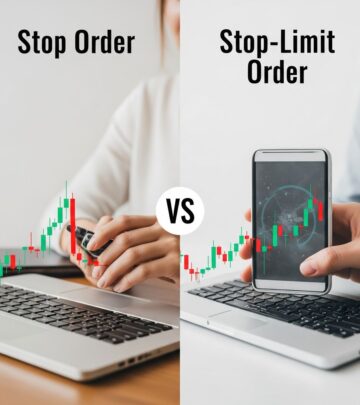
Understanding the distinction between trailing stops and traditional stop-loss orders is essential for effective trading. A standard stop-loss order remains fixed at a predetermined price level regardless of market movements. Once set, it only triggers when the market price falls to that level; it never adjusts upward even if your position becomes highly profitable.
Conversely, a trailing stop continuously recalibrates as the market moves favorably. This dynamic adjustment means your profit protection improves as the trade moves in your direction. While a standard stop-loss is simpler and sufficient for some trading strategies, trailing stops provide superior risk management for trends and momentum-based trades where you want to capture as much upside as possible while protecting against reversals.
Benefits of Using Trailing Stops
Automatic Profit Protection
One of the most compelling benefits of trailing stops is their ability to automatically lock in profits. As your position becomes increasingly profitable, the trailing stop rises in tandem, ensuring you never surrender the gains you’ve already achieved. This feature is invaluable in volatile markets where prices can reverse suddenly.
Reduced Emotional Trading
Emotion is one of the greatest obstacles to consistent profitability in trading. Trailing stops eliminate the temptation to hold losing positions too long or exit winning positions prematurely. Once the parameters are set, the system executes according to predetermined rules, removing subjective decision-making from the equation.
Flexibility in Trending Markets
Trailing stops are particularly effective in trending markets where prices move consistently in one direction. They allow you to capture substantial gains from long trends while automatically exiting if momentum reverses. A trader who anticipates a strong uptrend can set a wider trailing stop to avoid premature exits, while in choppy markets, a tighter trailing stop prevents being whipsawed by minor price fluctuations.
Passive Portfolio Management
Trailing stops enable passive profit management. Traders need not constantly monitor positions; the system automatically adjusts stops as prices move. This is especially beneficial for traders managing multiple positions or those with time constraints.
Setting Up a Trailing Stop Order
Step 1: Determine the Trailing Amount
The trailing amount is the most critical parameter. It can be expressed as a dollar amount, percentage, or pips. Determining the appropriate trailing amount requires analyzing the security’s volatility and your risk tolerance. A common approach is using the Average True Range (ATR) indicator. For example, if a stock has an ATR of $2, you might set your trailing stop at 2 × ATR, or $4 below the highest price reached.
Step 2: Choose Your Platform
Different trading platforms handle trailing stops differently. Platforms such as MetaTrader 4, thinkorswim, and Interactive Brokers offer customizable trailing stop functionality. Some platforms execute trailing stops at the terminal level, meaning your trading software must remain active for the stop to function properly.
Step 3: Monitor Volatility
Adjust your trailing stop parameters based on current market conditions. In highly volatile markets, use wider trailing amounts to avoid being stopped out by temporary price swings. In stable markets, tighter trailing stops can protect more of your gains.
Trailing Stop vs. Trailing Stop-Limit Order
A related but distinct order type is the trailing stop-limit order. While a standard trailing stop converts to a market order when triggered, a trailing stop-limit order converts to a limit order. This means the order will only execute at your specified limit price or better, providing greater control over execution prices but introducing the risk that the order may not fill if the market moves away from your limit price quickly.
Trailing stop-limit orders are useful when you want to ensure you don’t receive an unexpectedly poor execution price due to gaps or slippage. However, they sacrifice the guaranteed execution of market orders for this price control.
Common Mistakes to Avoid
Incorrect Stop Distance
Setting your trailing stop at the wrong distance is a frequent error. Using the same fixed dollar amount across securities of different price levels and volatilities often results in premature exits or insufficient protection. Instead, base your distances on volatility metrics or use percentage-based trailing amounts to account for different securities’ characteristics.
Ignoring Support and Resistance Levels
Placing trailing stops just above support levels or below resistance levels can result in unnecessary exits. Technical analysis can help you position stops at more meaningful levels that account for normal price oscillations.
Slippage and Gap Risk
In fast-moving or gapping markets, your trailing stop may execute at a significantly different price than expected. To mitigate this, consider using stop-limit orders during volatile periods and regularly review your broker’s execution policies.
Advanced Trailing Stop Strategies
Indicator-Based Trailing Stops
Rather than using fixed percentages, sophisticated traders employ technical indicators to set dynamic trailing stops. The ATR indicator, calculated over 5 to 21 periods with multipliers between 2.5 and 3.5, provides volatility-adjusted stop levels. This method ensures your stops adapt to changing market conditions automatically.
Multi-Level Trailing Stops
Some traders employ multiple trailing stop levels at different points. For instance, once a position reaches 50% of the profit target, they tighten the trailing stop. At 75% of the target, they tighten it further. This strategy allows maximum gains from strong trends while ensuring profits are protected at various milestone prices.
Trailing Stops in Different Market Conditions
In trending markets with clear directional bias, wider trailing stops allow profits to run. In ranging markets where prices oscillate between support and resistance, tighter trailing stops prevent whipsaws. Adjust your parameters based on the prevailing market regime.
Practical Examples
Consider a practical example: A retail stock trader buys 100 shares at $90.13 with a 0.49-point trailing stop. As the stock rises to $90.54, the trader adjusts the trailing stop to $0.40. When the stock reaches $91.70, the position closes, locking in a $1.57 per share profit, or approximately $157 total gain. This demonstrates how trailing stops can secure meaningful profits while adapting to favorable price movements.
Another example involves a cryptocurrency trader managing a Bitcoin position. Starting with a 5% trailing stop on an entry at $40,000, the initial stop is at $38,000. As Bitcoin rises to $44,000, the stop adjusts to $41,800. If Bitcoin continues to $48,000, the stop moves to $45,600. If Bitcoin then declines to $45,600, the position exits with a $5,600 profit, demonstrating the effectiveness of trailing stops in volatile assets.
Frequently Asked Questions
Q: How do I set a trailing stop on my trading platform?
A: Most platforms include trailing stop functionality in their order types. Select “Trailing Stop” or “Trailing Stop Order” from the order menu, enter your desired trailing amount as a dollar value or percentage, and set your initial stop price. The system will then automatically adjust the stop as the price moves favorably.
Q: Can trailing stops guarantee I won’t lose money?
A: No. Trailing stops protect against losses but cannot eliminate trading risk. In fast-moving or gapping markets, your position may execute at a price worse than your trailing stop level due to slippage. Additionally, if the price reverses sharply, you exit the position and forgo any potential recovery.
Q: Are trailing stops better than fixed stop-losses?
A: Trailing stops are superior for trend-following strategies, as they capture more upside while protecting against reversals. However, fixed stops may be preferable in ranging or choppy markets where you want to avoid false exits. The best choice depends on your trading style and market conditions.
Q: What happens to my trailing stop if I don’t monitor my account?
A: Trailing stops function automatically on most platforms. However, some platforms like MetaTrader 4 execute trailing stops at the terminal level, requiring your trading software to remain active. Check your broker’s specific implementation to ensure your stops function as intended during inactive periods.
Q: Can I use trailing stops on all securities?
A: Most trading platforms support trailing stops on stocks, ETFs, forex, commodities, and cryptocurrencies. However, availability depends on your specific broker and the instrument. Confirm that your broker supports trailing stops for the securities you trade.
Q: Should I use a dollar amount or percentage for my trailing stop?
A: Percentage-based trailing stops are generally preferable as they account for the security’s price level and adapt proportionally to price changes. Dollar amounts are simpler but may not be appropriate across securities of different prices. Use the method that aligns with your trading approach and platform capabilities.
Conclusion
Trailing stops represent a powerful tool for modern traders seeking to balance profit capture with risk management. By automatically adjusting stop-loss levels as positions move favorably, trailing stops lock in gains while allowing winning trades to run. They eliminate emotional decision-making and enable passive portfolio management, making them particularly valuable in trending markets.
Successfully implementing trailing stops requires careful selection of appropriate trailing amounts based on volatility and technical levels, choosing a reliable trading platform, and adjusting parameters based on market conditions. While trailing stops cannot eliminate trading risk, they significantly enhance risk management and help traders maintain discipline in executing their trading plans. Whether you’re a day trader, swing trader, or long-term investor, incorporating trailing stops into your trading toolkit can improve your overall profitability and consistency.
References
- Trailing Stop Limit — Interactive Brokers. 2025. https://www.interactivebrokers.com/campus/trading-lessons/trailing-stop-limit/
- Trailing Stop Orders: How to Manage Risk Effectively — LuxAlgo. 2025. https://www.luxalgo.com/blog/trailing-stop-orders-how-to-manage-risk-effectively/
Similar Articles








Read full bio of Sneha Tete