Traditional Economy: Definition, Examples, Pros and Cons
Explore traditional economies: how customs and culture shape economic systems and communities.
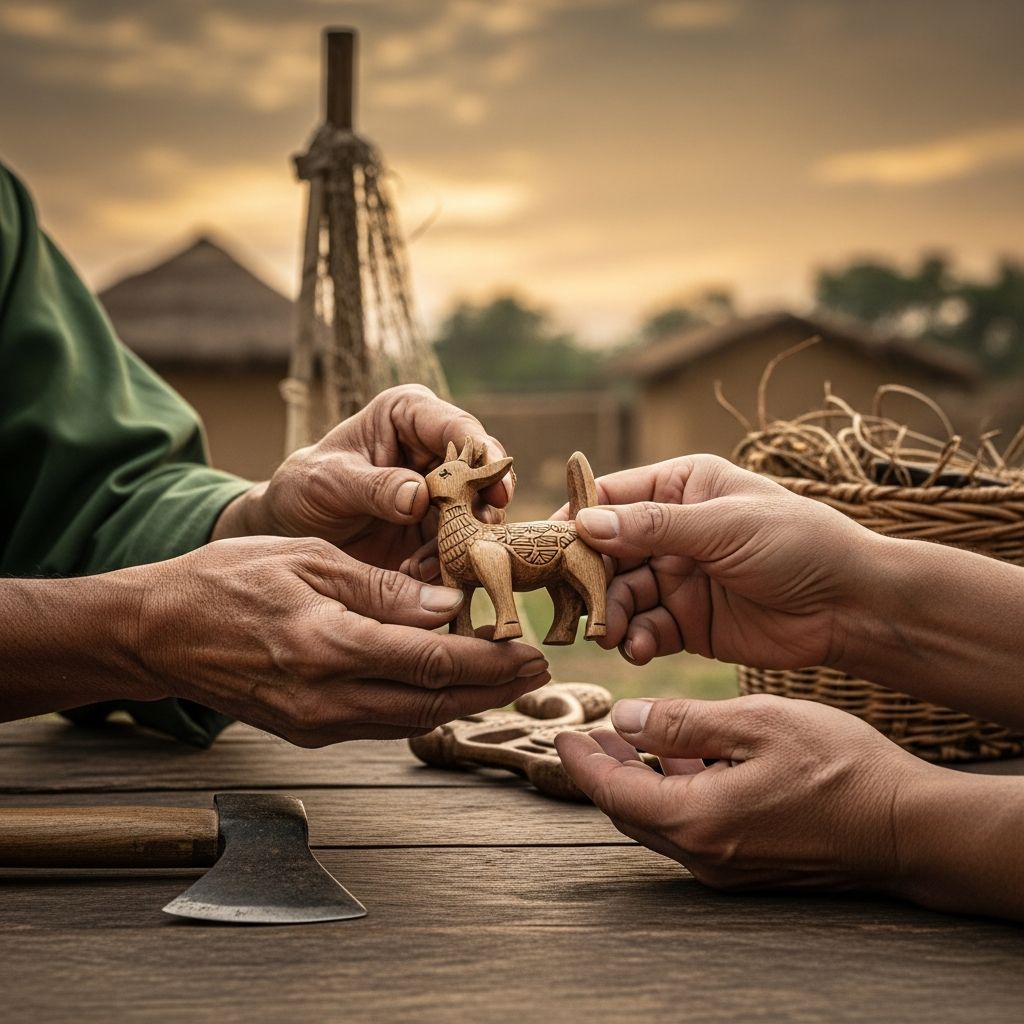
Understanding Traditional Economy: Definition and Core Concepts
A traditional economy is an economic system deeply rooted in customs, traditions, and cultural beliefs passed down through generations. Rather than operating under a profit motive or responding to market forces, traditional economies emphasize the trading and bartering of products and services that enable participants to subsist within a specific region, community, and culture. These systems are predominantly found in rural and non-industrialized regions where communities rely on time-honored survival practices such as subsistence farming, hunting, fishing, and gathering to sustain their livelihoods.
Unlike modern market-based economies, traditional economies do not depend on a single currency or centralized control. Instead, they operate based on established patterns and historical precedents that have been refined over centuries. The system prioritizes producing goods and services for personal consumption and community needs rather than generating surplus for trade, creating a self-sufficient economic framework.
Key Characteristics of Traditional Economies
Traditional economies possess several distinctive features that set them apart from other economic systems. Understanding these characteristics provides insight into how these communities function and maintain their way of life.
Community and Family-Based Organization
Traditional economies center around family units or tribes as the primary economic organization. There is no central control or government oversight; instead, the economy is based on the needs and skills of the group and what is required for the group to survive. Every member of the community plays a defined role in either generating or supporting the production of goods and services. Decisions are typically made by elders or family heads, reinforcing established social hierarchies and ensuring stability within the community.
Barter and Trade Systems
The practice of bartering is a common exchange method in traditional economies, allowing for the direct exchange of goods and services without the use of money. This barter system creates mutual dependence and strengthens social bonds within the community. Rather than using a standardized currency, community members negotiate exchanges based on their immediate needs and available resources, fostering direct interpersonal transactions.
Reliance on Agriculture, Hunting, and Gathering
Traditional economies often base their production on one or a few primary activities: agriculture, hunting, fishing, and gathering. In some cases, societies may follow herds of animals to hunt and sustain their populations. Many people in traditional economies progress from hunters to farmers, where they can establish permanent structures and develop settled societies. The specific focus depends on the geographic location and available natural resources.
Limited Technological Advancement
The reliance on simple tools and time-honored methods in traditional economies inherently limits technological advancement. However, this approach ensures the preservation of cultural practices and knowledge passed down through generations. The use of simple, proven methods reduces the need for complex infrastructure while maintaining sustainable practices that have worked for centuries.
Minimal Surplus and Waste
Traditional economies produce little to no surplus of goods. Almost everything produced is fully consumed by the community, with virtually no excess inventory. Additionally, these economies demonstrate remarkable efficiency in resource utilization, producing minimal waste. Every part of an animal hunted or crop harvested is used, reflecting a deep respect for natural resources and economic efficiency.
Geographic and Local Focus
Traditional economies are geographically and locally based, operating within small groups such as colonies, tribes, villages, or singular families. The goods and services produced are based directly on the group’s needs, customs, and beliefs specific to their location. This localization means that economic activities are tailored to the environmental and cultural context of the community.
How Traditional Economies Function
Traditional economies operate through a system where customs and traditions dictate economic activities rather than market demands or government planning. The economic system reflects the cultural heritage and social structures of the societies in which it exists, characterized by a strong sense of community and cooperation among members.
Individuals in traditional economies typically learn the skills of their parents, with boys following in their fathers’ trades and girls taking on domestic responsibilities taught by their mothers. This knowledge transfer ensures that proven techniques and cultural practices are preserved across generations. Skills are honed through observation and practice, creating a continuous chain of expertise and understanding.
The stability of traditional economies is maintained through adherence to long-standing customs and social structures, which provide a rigid framework for economic activities. This framework reduces uncertainties around each individual’s role and contribution to the community. Strict adherence to time-honored practices facilitates social order and creates an environment where each member understands their responsibilities and the stakes involved.
Real-World Examples of Traditional Economies
Several communities around the world maintain traditional economic systems, demonstrating how these practices continue in the modern era:
Indigenous Communities
Many indigenous populations across Africa, South America, Asia, and the Pacific maintain traditional economies based on hunting, fishing, and gathering. These communities preserve ancestral knowledge and sustainable resource management practices that have sustained their populations for generations.
Agricultural Villages in Developing Nations
Rural agricultural communities in parts of Sub-Saharan Africa, South Asia, and Southeast Asia continue to operate primarily through subsistence farming and barter systems. These communities produce primarily for local consumption and engage in trade with neighboring villages based on seasonal availability.
Pastoral Societies
Nomadic and semi-nomadic pastoral communities, such as herding societies in Mongolia, East Africa, and Central Asia, maintain traditional economies based on livestock management and seasonal migration patterns.
Advantages of Traditional Economies
Despite their limitations, traditional economies offer several significant benefits to their communities:
Strong Community Bonds
Traditional economies breed strong, tight-knit communities where every member plays a meaningful role in generating or supporting the production of goods and services. This creates an environment where individuals are deeply connected to their community’s well-being and success. The emphasis on community welfare over individual wealth accumulation enhances resilience and sustainability within the community.
Environmental Sustainability
The approach to resource management in traditional economies is often more environmentally sustainable than modern industrial practices. By relying on simple tools and methods passed down from prior generations, these economies minimize resource depletion and environmental degradation. The reliance on sustainable practices ensures that resources remain available for future generations.
Stability and Predictability
The rigid social structure and adherence to established customs provide stability and predictability within traditional economies. Members know their roles, responsibilities, and what to expect from their community, reducing anxiety and uncertainty about economic survival.
Cultural Preservation
Traditional economies facilitate the preservation of cultural heritage, language, and social practices. By maintaining time-honored methods and knowledge transfer systems, these communities preserve their unique identities and traditions for future generations.
Self-Sufficiency and Resilience
The emphasis on self-sufficiency creates a buffer against economic instability and external influences, ensuring that communities remain cohesive and self-reliant. By producing primarily for their own needs, traditional economies are less vulnerable to external market shocks or global economic disruptions.
Disadvantages of Traditional Economies
While traditional economies offer distinct advantages, they also face significant challenges and limitations:
Limited Technological Progress
The reliance on simple tools and time-honored methods limits technological advancement and productivity improvements. Without access to modern technology, traditional economies struggle to increase efficiency or improve living standards beyond historical levels.
Vulnerability to Environmental Changes
Traditional economies are susceptible to weather changes and the availability of food animals or crops. Droughts, floods, or other environmental disruptions can severely impact food production and threaten community survival. Unlike diversified modern economies, traditional systems have limited mechanisms to buffer against natural disasters.
Limited Access to External Goods and Services
The geographic isolation and focus on self-sufficiency mean that communities have limited access to goods and services produced outside their immediate region. This restricts consumer choice and access to medical, educational, and technological resources available in developed economies.
Slow Economic Growth
The absence of profit motives and market incentives means that traditional economies experience minimal economic growth or innovation. Communities remain economically static, with living standards remaining relatively constant across generations.
Limited Educational Opportunities
Traditional economies often provide limited formal education opportunities, as knowledge transmission occurs primarily through family and community apprenticeship. Access to formal schooling, advanced education, and professional training is restricted, limiting individual upward mobility.
Health and Living Challenges
Without access to modern healthcare, sanitation systems, and infrastructure, communities in traditional economies face higher rates of disease, malnutrition, and mortality compared to developed nations.
Comparison of Traditional Economy Characteristics
| Characteristic | Description | Impact |
|---|---|---|
| Customs and Traditions | Economic decisions guided by historical practices | Stable but inflexible |
| Self-Sufficiency | Communities produce for their own needs | Independent but limited growth |
| Barter System | Direct exchange without currency | Personal connections but inefficient scaling |
| Community Orientation | Focus on collective welfare | Strong bonds but limited individual choice |
| Simple Tools | Use of basic, time-tested implements | Sustainable but low productivity |
Traditional Economy vs. Other Economic Systems
Traditional economies differ fundamentally from command economies, market economies, and mixed economies. Command economies feature centralized government control, while market economies operate through supply and demand mechanisms and profit motives. Mixed economies combine elements of both systems. Traditional economies, by contrast, operate independently of government directives or market forces, relying instead on cultural and historical precedents to guide economic activity.
Frequently Asked Questions
Q: What defines a traditional economy?
A: A traditional economy is defined by customs, traditions, and cultural practices that guide economic activities. It emphasizes community welfare, self-sufficiency, barter systems, and reliance on agriculture, hunting, or fishing rather than profit-driven production.
Q: Where are traditional economies found today?
A: Traditional economies are predominantly found in rural, non-industrialized regions in parts of Africa, South Asia, Southeast Asia, Latin America, and among indigenous communities worldwide. However, few purely traditional economies exist today; most are transitioning toward mixed systems.
Q: How do people exchange goods in a traditional economy?
A: In traditional economies, people primarily use barter—the direct exchange of goods and services without money. This system creates mutual dependence and strengthens community bonds through personal transactions.
Q: What is the main advantage of a traditional economy?
A: The primary advantage is the creation of strong, tight-knit communities with stable social structures. Additionally, traditional economies are often more environmentally sustainable and provide cultural preservation and self-sufficiency benefits.
Q: What are the biggest challenges facing traditional economies?
A: The main challenges include limited technological advancement, vulnerability to environmental changes, restricted access to external goods and services, minimal economic growth, limited educational opportunities, and health challenges due to lack of modern infrastructure and healthcare.
Q: Can traditional economies coexist with modern economies?
A: Yes, many traditional economies exist alongside modern market economies in the same nation, though they are increasingly influenced by external economic forces and gradually transitioning toward mixed economic systems that incorporate both traditional and modern elements.
References
- Traditional Economy | Definition + Examples — Wall Street Prep. 2025. https://www.wallstreetprep.com/knowledge/traditional-economy/
- Traditional Economy | Definition, Characteristics & Advantages — Study.com. 2025. https://study.com/academy/lesson/what-is-a-traditional-economy-definition-characteristics-advantages-examples.html
- Traditional Economy: Definition, Characteristics and Examples — TheStreet. 2025. https://www.thestreet.com/markets/what-is-traditional-economy-14759652
- Traditional economy — EBSCO Research Starters. 2025. https://www.ebsco.com/research-starters/economics/traditional-economy
- Traditional economy – Wikipedia — Wikimedia Foundation. 2025. https://en.wikipedia.org/wiki/Traditional_economy
Similar Articles








Read full bio of medha deb