Trading Timeframes: Choosing the Right Strategy
Master different trading timeframes and find the perfect strategy for your trading style.

Trading timeframes are fundamental to any successful trading strategy. Whether you’re a seasoned investor or just beginning your journey in the financial markets, understanding different timeframes can dramatically impact your profitability and risk management. The timeframe you choose determines not only how frequently you trade but also the type of analysis you employ, the risks you face, and ultimately, your potential returns. In this comprehensive guide, we’ll explore the various trading timeframes available and help you determine which approach best suits your financial goals and lifestyle.
What Are Trading Timeframes?
Trading timeframes refer to the duration over which a trader holds a position, ranging from seconds to years. Each timeframe presents unique opportunities and challenges. The timeframe you select will influence your trading decisions, the amount of capital required, the frequency of trades, and your emotional involvement in the markets. Understanding these differences is crucial for developing a coherent trading strategy that aligns with your objectives and circumstances.
The primary trading timeframes include:
- Scalping (seconds to minutes)
- Day trading (minutes to hours)
- Swing trading (hours to days)
- Position trading (days to weeks)
- Long-term investing (months to years)
Scalping: The Fastest Approach
Scalping represents the most aggressive and time-intensive trading timeframe. Scalpers hold positions for mere seconds to a few minutes, attempting to profit from small price movements. This strategy requires constant market monitoring and the ability to execute trades with lightning-fast precision.
Characteristics of Scalping:
- Very short holding periods (seconds to minutes)
- Requires high leverage and significant capital
- Demands constant attention to the markets
- Benefits from high volatility
- Involves substantial transaction costs and commissions
- Requires advanced technical analysis skills
Scalpers typically rely on technical indicators, chart patterns, and market microstructure analysis. They may execute dozens or even hundreds of trades per day, targeting small profit margins on each trade. While the potential for quick profits exists, scalping also carries significant risks, including market gaps, slippage, and emotional decision-making under pressure. Transaction costs can quickly erode profits, making this strategy more suitable for well-capitalized traders with institutional-level commissions.
Day Trading: The Active Approach
Day trading involves opening and closing positions within a single trading day. Day traders never hold positions overnight, eliminating gap risk but requiring active market participation during trading hours. This timeframe appeals to traders seeking more control over their risk exposure while maintaining active market engagement.
Key Features of Day Trading:
- Positions held from minutes to several hours
- No overnight exposure or gap risk
- Requires several hours of daily attention
- Uses intraday chart analysis and technical indicators
- Moderate leverage typically employed
- Benefits from daily volatility and price movements
Day traders often use multiple timeframes within a single day, analyzing 5-minute, 15-minute, hourly, and 4-hour charts. This approach allows for more deliberate decision-making compared to scalping, while still maintaining active involvement in the markets. Day traders must maintain discipline, stick to predetermined entry and exit points, and manage emotions during volatile market conditions. The strategy requires sufficient capital to cover margin requirements and withstand losing streaks without depleting trading accounts.
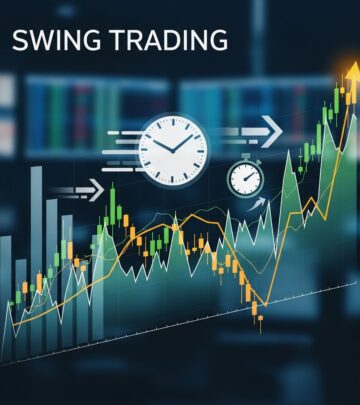
Swing Trading: The Balanced Strategy
Swing trading represents a middle ground between day trading and long-term investing. Swing traders hold positions for several days to several weeks, capitalizing on short-term price trends and market swings. This timeframe accommodates traders with full-time jobs or other commitments who cannot monitor markets constantly.
Advantages of Swing Trading:
- Holding periods of days to weeks
- Allows employment or other commitments
- Combines technical and fundamental analysis
- Reduced transaction costs compared to day trading
- Lower stress levels than frequent trading
- Captures intermediate price trends effectively
Swing traders typically analyze daily and weekly charts, identifying support and resistance levels, trend reversals, and breakout opportunities. They may place orders during non-market hours and monitor positions less frequently than day traders. This approach requires patience and the ability to tolerate temporary price fluctuations without acting on every market movement. Swing trading suits traders who prefer combining technical analysis with fundamental research to identify higher-probability trades.
Position Trading: The Longer View
Position traders hold investments for weeks to several months, focusing on intermediate-term trends and market cycles. This timeframe appeals to investors with substantial capital who prefer less frequent trading and lower transaction costs. Position traders often integrate technical analysis with macroeconomic analysis and company-specific research.
Position Trading Characteristics:
- Holding periods spanning weeks to months
- Based on intermediate-term trend analysis
- Minimal time commitment required
- Lower transaction costs
- Greater focus on fundamental analysis
- Benefits from position sizing and risk management
Position traders analyze weekly and monthly charts to identify significant support and resistance levels, trend channels, and breakout patterns. They may hold positions through minor pullbacks, focusing on the larger trend direction. This approach requires discipline to avoid overtrading and confidence in the underlying thesis supporting each position.
Long-Term Investing: The Patient Approach
Long-term investors hold securities for years or even decades, focusing on wealth accumulation rather than active trading. This timeframe represents traditional buy-and-hold investing, where investors purchase quality assets and allow compound growth to work over extended periods.
Long-Term Investing Principles:
- Holding periods of years to decades
- Emphasizes fundamental analysis and company quality
- Minimal trading activity required
- Significantly reduced transaction costs
- Benefits from compounding and dividend reinvestment
- Lower stress and emotional involvement
Long-term investors focus on the underlying value of securities, analyzing financial statements, competitive advantages, management quality, and industry trends. They accept short-term price volatility, viewing it as an opportunity to accumulate quality assets at attractive prices. This approach aligns with the proven wealth-building strategies of successful investors and provides tax advantages through lower capital gains rates and reduced trading friction.
Comparing Trading Timeframes
| Timeframe | Holding Period | Daily Time Commitment | Risk Level | Best For |
|---|---|---|---|---|
| Scalping | Seconds to Minutes | 6-8 hours | Very High | Active traders with high capital |
| Day Trading | Minutes to Hours | 4-6 hours | High | Full-time active traders |
| Swing Trading | Days to Weeks | 30 minutes – 1 hour | Moderate | Part-time traders with jobs |
| Position Trading | Weeks to Months | 15-30 minutes | Moderate to Low | Investors with patience |
| Long-Term Investing | Years to Decades | Minimal | Low | Wealth builders and retirees |
Choosing Your Timeframe
Selecting the appropriate trading timeframe depends on several personal factors:
Available Time and Commitment
Consider how many hours daily you can dedicate to trading and market analysis. Scalpers and day traders require constant attention, while swing traders and long-term investors need minimal daily involvement. Your lifestyle, employment situation, and family commitments should guide this decision.
Capital Requirements
Different timeframes require varying amounts of capital. Day traders in the United States must maintain at least $25,000 in their accounts per SEC regulations. Scalping requires additional capital for proper leverage, while long-term investing can begin with smaller amounts through dollar-cost averaging strategies.
Risk Tolerance
Shorter timeframes typically involve higher risk per trade. Scalpers and day traders experience larger percentage swings in their accounts daily. If volatility causes you significant stress, longer timeframes may be more suitable.
Skills and Experience
Active trading requires significant technical analysis expertise and emotional discipline. New traders benefit from starting with longer timeframes while developing their skills before attempting day trading or scalping.
Financial Goals
Clearly define your financial objectives. Day traders pursue consistent income replacement, while long-term investors focus on wealth accumulation and retirement planning. Your goals should align with your chosen timeframe.
Combining Multiple Timeframes
Many successful traders use multiple timeframes simultaneously. For example, a swing trader might analyze weekly charts to identify the major trend, daily charts to find optimal entry points, and 4-hour charts to manage risk. This multi-timeframe analysis improves trade quality by aligning smaller trades with larger trends.
Common Mistakes in Timeframe Selection
Traders often make critical errors when choosing timeframes:
- Overestimating available time: Many traders start with day trading despite working full-time jobs, leading to missed trades and poor decisions.
- Underestimating capital requirements: Insufficient capital forces traders to use excessive leverage, increasing losses during normal market fluctuations.
- Choosing timeframes for excitement: Selecting day trading or scalping because they seem exciting rather than matching your circumstances leads to losses.
- Changing strategies constantly: Frequently switching between timeframes prevents mastery of any single approach.
- Ignoring risk tolerance: Selecting aggressive timeframes despite low risk tolerance creates stress and emotional trading.
Frequently Asked Questions
Q: Which timeframe is best for beginners?
A: Most experts recommend swing trading or position trading for beginners. These timeframes provide adequate time for analysis, reduce emotional pressure, and allow traders to develop skills before attempting more active strategies like day trading or scalping.
Q: Can I combine different timeframes in one account?
A: Yes, many traders successfully combine multiple timeframes. For example, you might hold position trades lasting months while occasionally executing swing trades lasting weeks. However, ensure your overall portfolio risk remains within acceptable limits.
Q: Do I need special equipment for day trading?
A: While specialized trading software and fast internet connections help, they’re not absolute requirements. However, reliable technology becomes increasingly important as you move toward shorter timeframes where milliseconds matter.
Q: How do taxes differ between timeframes?
A: Trading profits held less than one year are taxed as short-term capital gains at ordinary income rates. Long-term capital gains (held over one year) receive preferential tax treatment. Active traders typically pay higher taxes than long-term investors in the same income bracket.
Q: Can I day trade with $5,000?
A: In the U.S., individual day traders must maintain at least $25,000 in their accounts. However, some traders outside the U.S. face different regulations, and cash accounts allow day trading with smaller amounts but restrict buying power.
Q: What’s the success rate for different trading timeframes?
A: Success rates vary dramatically by trader skill, discipline, and market conditions. Most studies suggest that longer-term investors have higher success rates than active traders, though high-skill active traders can also achieve consistent profitability.
References
- Regulation SHO — U.S. Securities and Exchange Commission. Updated regularly. https://www.sec.gov/cgi-bin/browse-edgar
- Pattern Day Trader Rule — Financial Industry Regulatory Authority (FINRA). https://www.finra.org/
- Day Trader Patterns and Practices — U.S. Securities and Exchange Commission. https://www.sec.gov/investor/pubs/daytips.htm
- A Random Walk Down Wall Street — Burton G. Malkiel. Princeton University Press. 2019. Discusses long-term investing efficiency versus active trading.
- Technical Analysis of the Financial Markets — John J. Murphy. New York Institute of Finance. 1999. Comprehensive guide to chart analysis across multiple timeframes.
Similar Articles








Read full bio of medha deb