Trading Strategies: Complete Guide to Market Success
Master proven trading strategies to optimize returns and manage risk effectively in financial markets.

Trading strategies are systematic approaches to buying and selling securities in financial markets. Whether you’re a beginner exploring the markets or an experienced investor looking to refine your approach, understanding different trading strategies is essential for achieving your financial objectives. This comprehensive guide explores the most effective trading strategies used by successful traders worldwide.
Understanding Trading Strategies
A trading strategy is a predetermined set of rules and guidelines that dictate when and how a trader enters and exits positions. These strategies are based on technical analysis, fundamental analysis, or a combination of both. The primary goal of any trading strategy is to maximize profits while minimizing risk exposure. Each strategy has unique characteristics, time horizons, and risk profiles that suit different types of traders and market conditions.
Successful traders develop strategies tailored to their:
- Risk tolerance levels
- Available capital and investment budget
- Time commitment and availability
- Market experience and expertise
- Financial goals and objectives
- Personal trading psychology and preferences
Day Trading Strategy
Day trading involves buying and selling securities within the same trading day, capitalizing on short-term price movements. Day traders aim to profit from intraday volatility and close all positions before the market closes. This strategy requires significant time commitment, advanced technical analysis skills, and substantial capital to generate meaningful returns.
Key Characteristics of Day Trading:
- Multiple trades executed daily, often dozens or hundreds
- Positions held from minutes to hours
- Relies heavily on technical indicators and price patterns
- Requires active monitoring throughout trading hours
- No overnight risk exposure
- High transaction costs due to frequent trading
Day traders typically use technical analysis tools such as moving averages, relative strength index (RSI), and MACD indicators to identify entry and exit points. Successful day traders combine technical proficiency with strict risk management rules, including position sizing and stop-loss orders to protect against catastrophic losses.
Swing Trading Strategy
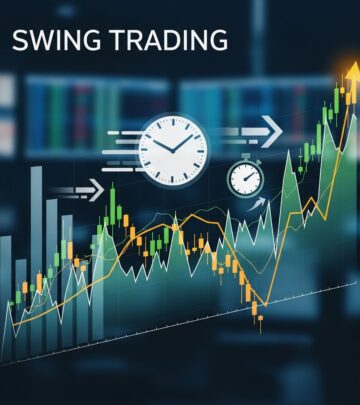
Swing trading bridges the gap between day trading and long-term investing. Swing traders hold positions for several days to weeks, attempting to capture price swings within larger trends. This approach requires less time commitment than day trading while potentially offering better risk-to-reward ratios.
Swing Trading Advantages:
- Positions held for days to weeks, not minutes
- Lower trading frequency reduces transaction costs
- Compatible with full-time employment
- Captures intermediate market trends
- Uses both technical and fundamental analysis
- Allows for more thorough research and decision-making
Swing traders analyze support and resistance levels, trendlines, and chart patterns to identify optimal entry and exit points. Many swing traders combine technical analysis with fundamental analysis to identify quality companies trading at opportune prices. This strategy works particularly well during volatile market periods when significant price swings occur frequently.
Scalping Strategy
Scalping is the most short-term trading strategy, involving rapid trades designed to profit from small price movements. Scalpers execute numerous trades throughout the day, often holding positions for just seconds to minutes. While individual profits per trade are small, the cumulative effect can result in significant daily gains.
Scalping Characteristics:
- Extreme emphasis on speed and execution
- Positions held seconds to minutes
- Small profit targets per trade (typically $0.10 to $0.50)
- High volume trading required for profitability
- Demands real-time data and quick decision-making
- Extremely high transaction costs
- Requires significant trading experience and discipline
Scalpers rely on bid-ask spreads, immediate price momentum, and technical patterns. This strategy is most effective in highly liquid markets like major currency pairs, indices, and popular stocks. Scalping requires advanced platforms, low commission rates, and exceptional discipline to manage psychological stress from rapid-fire trading decisions.
Position Trading Strategy
Position trading represents the longer-term end of the trading spectrum. Position traders hold securities for weeks, months, or even years, focusing on major trend identification rather than short-term fluctuations. This approach aligns closely with traditional investing but with a more active management approach.
Position Trading Features:
- Long holding periods from weeks to years
- Based on fundamental and macroeconomic analysis
- Lower trading frequency and transaction costs
- Requires patience and conviction in thesis
- Less time-intensive than other strategies
- Better suited for traditional investors
- Compatible with passive income generation
Position traders conduct thorough fundamental analysis, examining company financials, industry trends, and macroeconomic conditions. They focus on identifying undervalued securities with strong long-term growth potential. This strategy requires significant research capability and strong conviction to maintain positions during temporary market downturns.
Momentum Trading Strategy
Momentum trading capitalizes on existing market trends, with the philosophy that assets trending upward will continue rising and vice versa. Momentum traders identify securities exhibiting strong directional movement and trade in the direction of that momentum.
Momentum Trading Approach:
- Identifies securities with strong directional momentum
- Trades in the direction of existing trends
- Uses momentum indicators like RSI and MACD
- Combines technical analysis with volume analysis
- Typically holds positions medium-term
- Benefits from volatile market conditions
Momentum traders avoid contrarian positions and instead follow price trends. This strategy has demonstrated historical success, particularly during bull markets and periods of increased volatility. Effective momentum trading requires precise entry points, clear exit criteria, and strict adherence to trading rules.
Trend Following Strategy
Trend following is a systematic approach based on identifying and trading the direction of established market trends. Trend followers assume markets move in identifiable trends and attempt to profit by trading with those trends rather than against them.
Trend Following Methodology:
- Identifies primary trend direction
- Waits for trend confirmation before entry
- Uses moving averages and trendlines
- Applies stop-losses below support levels
- Manages positions using trailing stops
- Works across multiple timeframes and markets
Trend following has proven effective across various markets including stocks, commodities, currencies, and indices. Professional trend-following systems often incorporate multiple indicators and diversification across different markets and timeframes to improve consistency and reduce drawdowns.
Contrarian Trading Strategy
Contrarian trading takes the opposite approach, betting against prevailing market sentiment and trends. Contrarian traders believe excessive optimism or pessimism creates pricing opportunities and attempt to profit by taking positions against the crowd.
Contrarian Trading Elements:
- Identifies overbought and oversold conditions
- Takes positions against prevailing sentiment
- Uses sentiment indicators and market breadth analysis
- Requires strong conviction and patience
- Often involves contrarian indicators
- Can result in significant losses if timing is poor
Contrarian strategies require significant expertise and conviction, as traders often feel pressure when trades move against them initially. However, when executed successfully, contrarian approaches can generate outsized returns during market reversals and sentiment shifts.
Mean Reversion Strategy
Mean reversion trading is based on the statistical principle that prices tend to revert toward their average values over time. Traders using this strategy identify securities trading at extreme price levels and anticipate a return to normal valuation levels.
Mean Reversion Trading Characteristics:
- Identifies extreme price deviations from averages
- Anticipates return to historical mean prices
- Uses statistical and technical analysis
- Defines entry and exit based on standard deviations
- Particularly effective in range-bound markets
- Works well with stocks exhibiting mean reverting behavior
Mean reversion strategies typically perform better in sideways or range-bound markets rather than strong trending markets. Traders must carefully identify when securities are truly overextended versus when they’re exhibiting strong directional moves that may continue beyond traditional reversion levels.
Grid Trading Strategy
Grid trading is a systematic approach involving placing multiple buy and sell orders at predetermined price levels within a specified range. This strategy automates trading decisions and removes emotional elements from execution.
Grid Trading Benefits:
- Automates entry and exit decisions
- Capitalizes on price volatility within ranges
- Removes emotional trading decisions
- Generates consistent profits in volatile markets
- Defines risk precisely upfront
- Works effectively with cryptocurrencies and forex
Grid trading strategies require careful parameter selection including grid size, order spacing, and position sizing. Traders must ensure the strategy aligns with their risk tolerance and capital availability. While grid trading can be highly profitable during volatile ranging markets, strong directional moves can result in significant losses.
Breakout Trading Strategy
Breakout trading involves identifying key support and resistance levels, then trading when price breaks through these levels with conviction. Breakout traders assume that breaks of significant levels signal the beginning of substantial price movements.
Breakout Trading Methodology:
- Identifies key support and resistance levels
- Waits for breakout confirmation with volume
- Enters on breaks of established levels
- Uses stop-losses below the broken level
- Targets measured moves or technical extensions
- Varies holding periods based on timeframe
Effective breakout trading requires distinguishing between genuine breakouts and false breaks. Volume analysis is critical, as breakouts accompanied by strong volume are more likely to result in sustained price movements. Many traders combine breakout identification with support/resistance confirmation to improve success rates.
Important Considerations for Strategy Selection
Choosing the right trading strategy depends on multiple personal and market factors. Consider the following when evaluating strategies:
- Time Commitment: Day trading and scalping require constant monitoring, while position trading allows more flexibility
- Capital Requirements: Some strategies require minimum capital thresholds to be profitable after costs
- Risk Tolerance: Different strategies have varying drawdown profiles and volatility
- Market Conditions: Certain strategies perform better in trending markets versus range-bound markets
- Trading Skills: Advanced strategies require significant technical and analytical expertise
- Emotional Discipline: All strategies require strict adherence to predetermined rules
Frequently Asked Questions
Q: What is the most profitable trading strategy?
A: The most profitable strategy depends on individual circumstances. While some day traders achieve high returns, others find success with long-term position trading. Profitability depends on strategy execution, discipline, market conditions, and trader skill level rather than the strategy itself.
Q: How much money do I need to start trading?
A: Starting capital depends on your strategy and market. Day traders face regulatory minimum requirements ($25,000 in the U.S.), while swing traders and position traders can start with smaller amounts. Always maintain adequate capital for position sizing and risk management.
Q: Can I combine multiple trading strategies?
A: Yes, many successful traders combine multiple strategies across different timeframes or markets. However, combining strategies increases complexity and requires careful monitoring to avoid conflicting signals and over-trading.
Q: How important is risk management in trading strategies?
A: Risk management is absolutely critical. Even the best strategies fail without proper risk management. Successful traders prioritize capital preservation through position sizing, stop-losses, and portfolio diversification.
Q: Should I backtest strategies before trading real money?
A: Absolutely. Backtesting strategies on historical data helps identify potential issues and refine parameters before risking real capital. Paper trading is also recommended to practice execution without financial risk.
Q: Which trading strategy is best for beginners?
A: Beginners typically benefit from swing trading or position trading, as these approaches require less time commitment and allow for thorough research and decision-making compared to day trading or scalping.
References
- U.S. Securities and Exchange Commission – Day Trading Rules — U.S. Securities and Exchange Commission (SEC). 2024. https://www.sec.gov/investor/pubs/daytrader.htm
- FINRA – Trading and Investor Information — Financial Industry Regulatory Authority (FINRA). 2024. https://www.finra.org/investors/learn-to-invest/types-investments/stocks
- Technical Analysis of Stocks and Commodities Fundamentals — Investopedia Editorial Team. 2024. https://www.investopedia.com/terms/t/technical-analysis.asp
- Fundamental Analysis Explained — Investopedia Editorial Team. 2024. https://www.investopedia.com/terms/f/fundamentalanalysis.asp
- Understanding Risk Management in Trading — Investopedia Editorial Team. 2024. https://www.investopedia.com/terms/r/riskmanagement.asp
Similar Articles








Read full bio of Sneha Tete