Trade War: Definition, Causes, and Economic Impact
Understanding trade wars: How tariffs and protectionist policies reshape global commerce and economies.
What Is a Trade War?
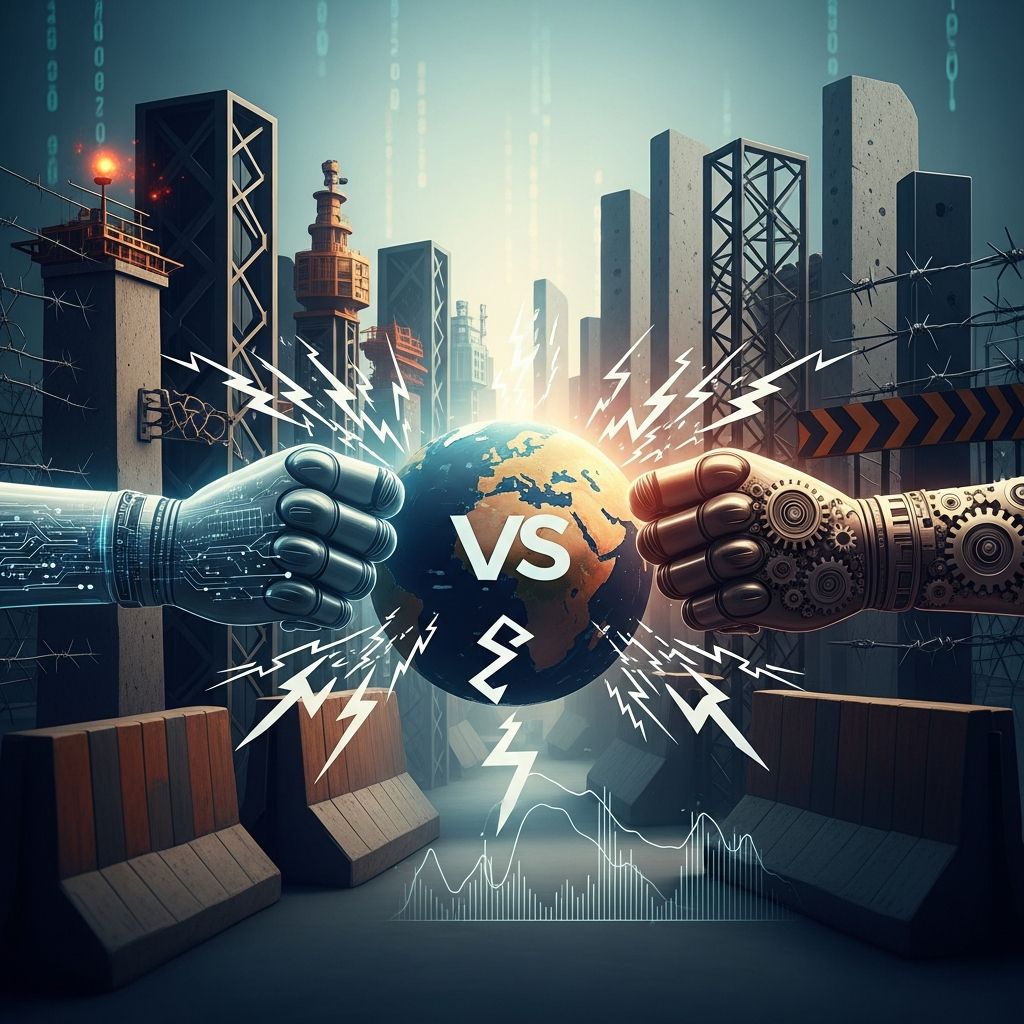
A trade war is an economic conflict between two or more nations in which countries raise or implement tariffs or other trade barriers against each other as part of their commercial policies, typically in response to similar measures imposed by the opposing party. These conflicts emerge from extreme protectionism, where governments seek to shield their domestic industries from foreign competition by making imported goods more expensive or harder to access.
The term “trade war” uses military language metaphorically to describe escalating economic tensions. When tariffs are the exclusive mechanism of conflict, such disputes are sometimes called customs wars, toll wars, or tariff wars. Minor trade disagreements without significant escalation are often referred to as trade disputes, where the “war” metaphor would be hyperbolic. The fundamental characteristic of a trade war is the cyclical pattern of retaliation, where one country imposes trade barriers and the other responds with their own protectionist measures.
Understanding the Mechanics of Trade Wars
Trade wars operate through a tit-for-tat cycle of escalating protectionist measures. When one country implements a tariff or import restriction on goods from another nation, the affected country typically retaliates by imposing its own barriers on the first country’s exports. This cycle can quickly spiral into a full-scale economic conflict affecting multiple industries and sectors.
The mechanisms of trade wars involve various types of trade barriers that governments can deploy:
- Tariffs: Taxes placed on imported goods that increase their cost and make domestic alternatives more competitive. Tariffs generate government revenue while theoretically protecting domestic producers from foreign competition.
- Import Quotas: Restrictions that limit the quantity of specific products that can be imported into a country, directly reducing foreign competition without generating government revenue.
- Currency Devaluation: Lowering the exchange rate to make domestic exports cheaper and more competitive internationally while simultaneously making imports more expensive domestically.
- Domestic Subsidies: Government financial support for domestic industries to help them compete against foreign producers.
- Embargoes: Complete or partial bans on trade with specific countries, used as extreme protectionist measures or political statements.
Causes and Origins of Trade Wars
Trade wars typically originate from genuine or perceived unfair trading practices between nations. Governments often believe their trading partners are engaging in practices that disadvantage their own markets and domestic industries. Common triggers include trade imbalances, intellectual property theft, currency manipulation, or dumping of cheap products into foreign markets.
Protectionism itself is not inherently negative. Governments may implement trade barriers to protect developing industries, maintain employment levels, or safeguard strategic sectors vital to national security. However, when countries respond to each other’s protectionist measures with their own barriers, the situation escalates into a trade war that can harm both economies.
Historical examples illustrate how trade wars develop and persist. The Boston Tea Party was part of an early trade conflict between Great Britain and American colonists. More recent examples include the Smoot-Hawley Tariff Act of 1930, the Chicken Tariff War of the 1960s, and the 1987 trade conflict with Japan. The U.S.-China trade tensions that began in 2018 represent a modern example where President Donald Trump announced plans for higher tariffs on billions of dollars of Chinese-produced goods, escalating into a complex trade war affecting multiple sectors and countries.
Short-Term Economic Effects
In the short term, trade wars can produce benefits that initially appear favorable to the protected economy. Imposing trade barriers typically achieves the goal of protecting domestic businesses from foreign competition. Domestic producers of protected goods face reduced competition from imports, allowing them to increase prices and market share. This protection can lead to job creation in protected industries, boost revenues for domestic companies, and increase government revenue through tariff collections.
Consumers may initially shift their purchasing toward domestically-produced goods, stimulating local manufacturing. For countries struggling with trade deficits—when imports exceed exports—trade wars can theoretically reduce this imbalance by making foreign goods more expensive and encouraging domestic consumption. Additionally, trade wars can be used strategically to pressure trading partners engaging in unfair practices, serving as a tool to encourage more ethical trading practices.
Long-Term Economic Consequences
While short-term benefits may materialize, economists generally agree that trade wars cause significant long-term economic damage. The long-term effects tend to outweigh any temporary gains, creating structural damage to affected economies.
The primary long-term consequences include:
- Reduced Economic Growth: Trade wars slow GDP growth as reduced trade volume and increased economic uncertainty discourage investment and business expansion.
- Inflation: Higher tariffs increase import costs, which get passed on to consumers through higher prices. This inflation affects entire supply chains, not just the directly taxed products.
- Job Losses: While protected industries may gain jobs temporarily, other industries that depend on imported materials or export markets suffer significant job losses, often outweighing gains in protected sectors.
- Decreased International Competitiveness: Protected companies become less competitive globally, as they face reduced pressure to innovate and improve efficiency when sheltered from foreign competition.
- Currency Devaluation: Extended trade wars can lead to currency devaluation, reducing purchasing power and creating additional economic instability.
- Diplomatic Damage: Trade wars can severely damage international relationships and undermine diplomatic cooperation on other critical issues.
Impact on Consumers and Businesses
Trade wars directly affect both consumers and businesses through multiple channels. Consumers face higher prices for imported goods due to tariffs and sanctions, reducing their purchasing power and forcing difficult choices between available options. With fewer imported goods available, consumer choice diminishes, potentially leading to lower product quality or innovation as domestic producers face reduced competition pressure.
Businesses that rely on imported materials or components face increased costs that either reduce profits or get passed to consumers. Export-oriented businesses suffer as trading partners implement retaliatory tariffs, making their products more expensive abroad and reducing international sales. Small and medium-sized enterprises often lack the resources to absorb these cost increases or adapt to changing trade conditions, making them particularly vulnerable during trade wars.
Trade Wars and Comparative Advantage
Economic theory emphasizes that free trade benefits all participating nations through the principle of comparative advantage, where countries specialize in producing goods they can make most efficiently. Trade wars directly contradict this principle by imposing artificial barriers that prevent specialization and efficient resource allocation. When governments make it more costly to import products, they distort natural market forces that would otherwise guide production toward the most efficient producers globally. This inefficiency means the global economy produces less output than it would under free trade, harming all participating nations in aggregate.
Historical Examples of Trade Wars
Understanding trade war history provides context for understanding their consequences. The Smoot-Hawley Tariff Act of 1930 raised tariffs substantially during the Great Depression, which many economists argue worsened economic conditions globally. The Chicken Tariff War of the 1960s between the United States and Europe demonstrated how trade disputes can persist and expand beyond initial disagreements. The 1987 trade tensions with Japan showed how trade conflicts could intensify competition in specific sectors like semiconductors and automobiles.
More recent trade conflicts, particularly U.S.-China tensions beginning in 2018, illustrate how modern trade wars unfold. These conflicts have involved multiple rounds of tariff increases, affecting sectors from agriculture to technology, demonstrating the complexity and far-reaching consequences of contemporary trade disputes.
Managing Trade Deficits Through Trade Wars
Trade wars are sometimes promoted as tools to reduce trade deficits, situations where countries import more than they export. Proponents argue that tariffs encourage consumers to buy domestically-made products, reducing imports and improving the trade balance. However, this approach often proves counterproductive long-term. Trading partners retaliate with their own tariffs, reducing exports and potentially worsening the trade deficit. Additionally, tariffs increase prices for consumers and businesses, potentially reducing overall purchasing power and import volumes through economic contraction rather than genuine trade rebalancing.
Trade Wars as Policy Tools
Governments sometimes view trade wars as legitimate policy instruments for addressing what they perceive as unfair trading practices. A country might target partners using intellectual property theft, currency manipulation, or dumping practices—selling products below production cost to gain market share. In these cases, trade barriers serve as pressure tactics to encourage more equitable trading relationships and enforce international trade rules.
However, the line between defensive protectionism and economic aggression can blur quickly. What one country views as correcting unfair practices, another might see as protectionist aggression. This disagreement can escalate trade disputes beyond their original causes, creating conflicts that ultimately harm both economies more than the original unfair practices did.
Frequently Asked Questions
Q: How do trade wars differ from trade disputes?
A: Trade wars involve significant escalation with multiple rounds of retaliatory tariffs and barriers, while trade disputes refer to minor disagreements where the “war” metaphor would be exaggerated. Trade disputes may remain limited in scope and intensity, whereas trade wars involve systematic cycles of retaliation.
Q: Can trade wars ever benefit an economy?
A: Trade wars may provide short-term benefits like job creation in protected industries and reduced trade deficits. However, economists generally agree these temporary gains are outweighed by long-term damage including reduced growth, inflation, currency devaluation, and decreased international competitiveness.
Q: What are the most effective trade war tactics?
A: Tariffs are the most commonly used mechanism, but import quotas, currency devaluation, subsidies, and embargoes also serve as trade war tools. Each has different effects on government revenue, market competition, and consumer prices.
Q: How do trade wars affect currency values?
A: Extended trade wars can lead to currency devaluation as economic uncertainty and reduced trade volumes weaken a country’s currency. Some governments deliberately devalue currency as a trade war tactic to make exports cheaper and imports more expensive.
Q: Why don’t governments simply avoid trade wars?
A: Governments sometimes believe trade wars address legitimate unfair trading practices or protect vital domestic industries and employment. Additionally, once one country implements protectionist measures, political pressure often forces other countries to retaliate, creating a self-perpetuating cycle.
References
- Trade war — Wikipedia. Accessed November 29, 2025. https://en.wikipedia.org/wiki/Trade_war
- What Is a Trade War? Definition and Examples — SmartAsset. https://smartasset.com/financial-advisor/trade-war
- Trade War — Fiveable, Principles of Macroeconomics. https://fiveable.me/key-terms/principles-macroeconomics/trade-war
- Trade Wars – Overview, Impacts, Good or Bad — Corporate Finance Institute. https://corporatefinanceinstitute.com/resources/economics/trade-wars/
- What Is a Trade War and How Could It Raise Prices? — NerdWallet. https://www.nerdwallet.com/finance/learn/what-is-a-trade-war
Similar Articles








Read full bio of Sneha Tete