Total Expense Ratio (TER): Definition, Formula & Impact
Understand TER and how fund expenses impact your investment returns and portfolio performance.
What Is Total Expense Ratio (TER)?
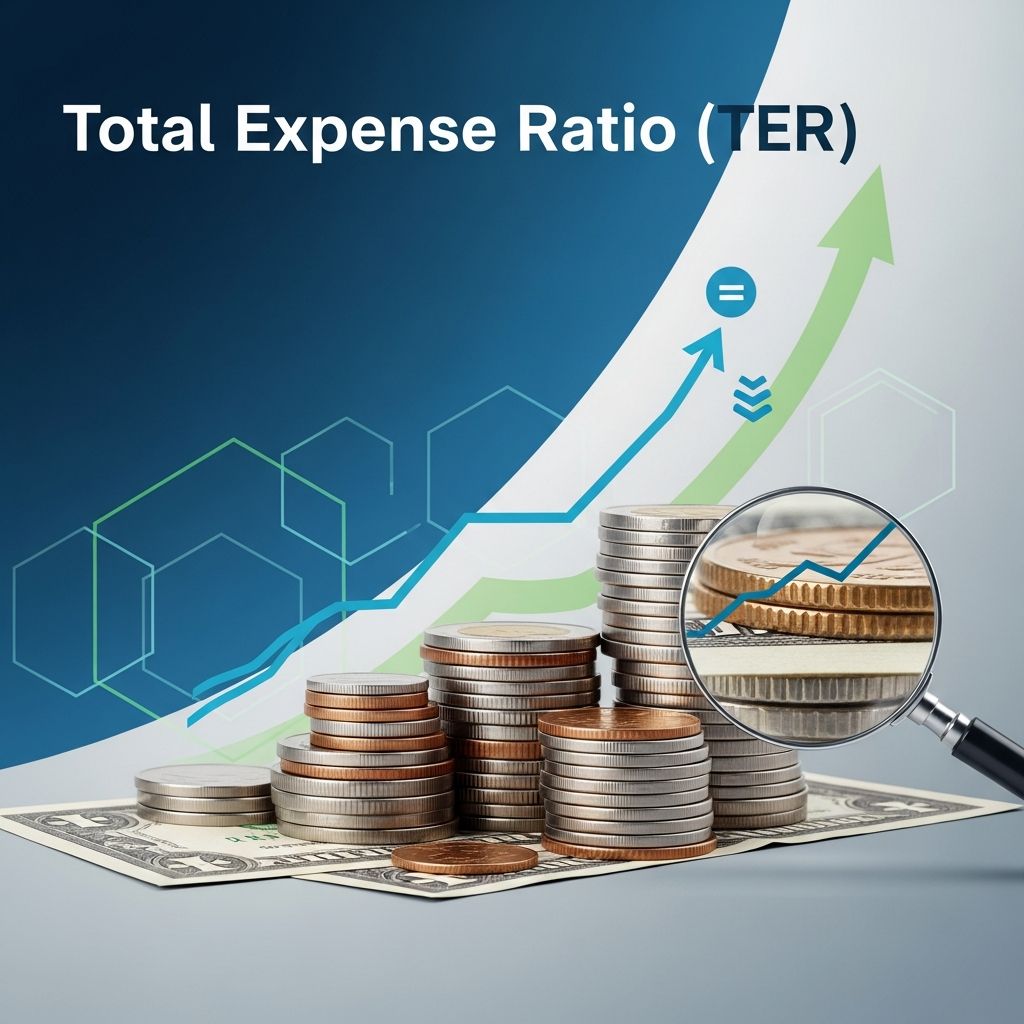
The Total Expense Ratio (TER) represents the aggregate annual cost of operating and managing a mutual fund, expressed as a percentage of the fund’s assets under management (AUM). This critical metric encompasses all expenses that an Asset Management Company (AMC) incurs to run a fund scheme, from management fees to administrative costs. For investors, understanding TER is essential because it directly impacts the net returns they receive from their mutual fund investments.
TER serves as a transparent measure that allows investors to compare the cost-efficiency of different funds and make informed investment decisions. When evaluating any mutual fund, the TER is typically one of the first metrics investors should examine, as it reveals how much of their investment is being consumed by operational expenses before any returns are generated.
Components of Total Expense Ratio
The TER encompasses various expense categories that collectively represent the total cost of fund management. Understanding these components helps investors appreciate where their money goes when they invest in a mutual fund:
Management Fees
Management fees represent the largest component of most fund TERs. These fees compensate the fund manager and their team for making investment decisions, conducting research, and actively managing the portfolio. This includes salaries for investment professionals, research analysts, and the overhead associated with maintaining investment expertise.
Distribution and Marketing Costs
AMCs incur expenses related to marketing their funds, distributing them through various channels, and compensating distributors. These costs include advertising, commission payments to financial advisors, and other promotional activities designed to attract investors.
Administrative and Operational Expenses
Beyond fund management, AMCs must cover administrative costs such as legal fees, audit charges, compliance expenses, regulatory filings, and general office operations. These expenses ensure the fund operates within legal and regulatory frameworks.
Transaction and Brokerage Costs
When fund managers buy and sell securities within the portfolio, transaction costs and brokerage commissions are incurred. These costs vary depending on trading frequency and the liquidity of securities being traded.
Custodial and Transfer Agent Fees
Funds must pay custodians to safeguard securities and maintain records, as well as transfer agents to handle shareholder accounts and transactions.
How to Calculate Total Expense Ratio
Calculating the TER is straightforward and follows a simple mathematical formula. Understanding this calculation empowers investors to verify the reported TER and understand its impact on their investments.
The TER Formula
The fundamental formula for calculating TER is:
TER = (Total Annual Fund Expenses / Average Assets Under Management) × 100
Practical Example
Consider an equity mutual fund with the following characteristics:
- Total assets under management: Rs. 600 crore
- Annual management fees: Rs. 6 crore
- Administrative expenses: Rs. 2 crore
- Distribution costs: Rs. 2 crore
- Other operational expenses: Rs. 2 crore
- Total expenses: Rs. 12 crore
Using the formula:
TER = (Rs. 12 crore / Rs. 600 crore) × 100 = 2%
This means investors in this fund will have 2% of their investment value deducted annually to cover all operational expenses.
TER Regulatory Limits and Standards
Most countries regulate maximum TER levels to protect investors from excessive fees. In India, SEBI (Securities and Exchange Board of India) has established specific TER caps for different fund categories:
Equity Fund TER Limits
| Asset Range | Maximum TER |
|---|---|
| First Rs. 500 crore | 2.25% |
| Next Rs. 250 crore | 2.00% |
| Next Rs. 1,250 crore | 1.75% |
These tiered limits encourage AMCs to manage larger funds more efficiently while protecting smaller fund investors from excessive charges.
Impact of TER on Investment Returns
The TER has a direct and significant impact on the net returns investors receive from their mutual fund investments. Since TER is deducted from fund returns before calculating the Net Asset Value (NAV), a higher TER directly reduces investor earnings.
Understanding the Return Impact
Consider a practical scenario: if a mutual fund generates a gross return of 15% in a year, and the fund has a TER of 2%, the net return to investors would be only 13%. This 2% difference compounds over time, significantly affecting long-term wealth creation. Over a 20-year investment period, even small differences in TER can result in substantial differences in final corpus.
Long-Term Compounding Effect
The power of compounding makes TER differences particularly significant in long-term investments. A fund with 0.5% TER versus 1.5% TER might show only 1% annual difference, but over 25 years, this seemingly small difference can compound to a substantial reduction in final returns, potentially costing investors thousands or even millions of rupees depending on their investment size.
TER vs. Other Fund Expense Metrics
Investors often encounter various expense-related terminology when researching mutual funds. Understanding the distinctions between different metrics is crucial for accurate fund comparison.
TER Versus Management Expense Ratio (MER)
While sometimes used interchangeably, TER and MER can differ slightly. MER typically includes all operating expenses, while TER may specifically refer to trading expenses in some contexts. In Canada, for instance, TER specifically denotes trading commissions incurred for buying and selling securities, while MER represents broader operating expenses.
Trading Expense Ratio (TER) in Canadian Context
In Canadian mutual funds, TER specifically represents the cost of portfolio trading commissions expressed as a percentage of daily average net asset value. This metric excludes the MER but is typically reported alongside it, as both are deducted before calculating published fund performance.
Factors Affecting Total Expense Ratio
Several variables influence a fund’s TER, and understanding these factors helps investors predict whether a fund’s expenses might increase or decrease over time.
Fund Management Strategy
Actively managed funds, where portfolio managers frequently buy and sell securities attempting to outperform market benchmarks, typically have higher TERs due to increased research costs and transaction expenses. In contrast, passively managed index funds that simply track market indices with minimal trading activity generally maintain lower TERs, often 0.2% to 0.5%.
Fund Size and Asset Base
Larger funds often benefit from economies of scale, spreading fixed costs across a larger asset base, which can result in lower TERs. However, extremely large funds may experience higher trading costs due to larger position sizes and market impact considerations.
Fund Flows and Liquidity
Funds experiencing significant inflows or outflows incur higher transaction costs as portfolio adjustments must be made to accommodate investor money movements. Similarly, funds holding illiquid securities typically face higher trading costs, as buying and selling less-traded securities involves wider bid-ask spreads.
Asset Class and Investment Focus
Different asset classes carry different cost structures. Funds investing in international markets typically have higher TERs than domestic funds due to additional custodial and foreign exchange costs. Specialized sector funds may also carry higher expenses due to intensive research requirements.
Geographic Location and Regulatory Environment
Funds operating in different countries face different regulatory requirements and operational costs, influencing their TERs. Developed market funds may have lower TERs due to mature, efficient market structures, while emerging market funds often carry higher costs.
How TER Is Charged to Investors
An important point for investors to understand is that TER is not charged as a separate, visible fee but is instead incorporated into the daily NAV calculation. Each business day, the fund’s assets are reduced by the proportionate TER amount before NAV is calculated and published.
This means that although you never receive a separate invoice for TER, its impact is immediately reflected in your fund’s NAV. If a fund has a 1% TER and the fund generates no returns, your investment would decline by 1% annually due solely to this expense.
Using TER to Compare and Evaluate Mutual Funds
When selecting mutual funds, investors should prioritize funds with lower TERs, all else being equal. This principle holds particularly true when comparing funds with similar investment objectives, strategies, and performance histories.
TER as a Comparison Tool
TER provides a standardized metric for comparing funds across different AMCs. By focusing on funds with lower TERs within the same category, investors can maximize the portion of returns that remains in their pocket rather than being consumed by expenses.
Importance of Transparency
Regulatory requirements mandate that all funds prominently disclose their TER in fund factsheets and other regulatory documents. This transparency enables informed investor decision-making and creates competitive pressure for AMCs to maintain reasonable expense levels.
Actively Managed vs. Passively Managed Funds: TER Comparison
| Characteristic | Actively Managed | Passively Managed |
|---|---|---|
| Typical TER Range | 1.0% – 2.5% | 0.2% – 0.8% |
| Trading Frequency | High | Low |
| Research Costs | High | Low |
| Return Objective | Outperform benchmark | Match benchmark |
Frequently Asked Questions About Total Expense Ratio
What is the average TER for mutual funds?
The average TER varies by fund category and management style. Actively managed equity funds typically have TERs between 1.0% and 2.5%, while passively managed index funds usually have TERs between 0.2% and 0.8%. Debt funds generally have lower TERs ranging from 0.3% to 1.0%.
Does TER include exit loads and entry loads?
No, TER does not include entry loads, exit loads, or other transaction fees charged to individual investors. TER only encompasses the ongoing operational expenses of running the fund. Entry and exit loads are separate charges that investors may incur when buying or redeeming fund units.
Can TER change over time?
Yes, TER can vary year to year depending on the fund’s size, trading activity, and market conditions. As a fund grows larger through investor inflows, its TER may decrease due to economies of scale. Conversely, periods of high portfolio turnover may temporarily increase the TER.
Is lower TER always better?
Generally yes, when comparing funds with similar investment objectives and strategies, lower TER is preferable because it means more of the returns remain with investors. However, an extremely low TER paired with consistently poor performance may indicate insufficient investment resources, so funds should be evaluated holistically rather than on TER alone.
How frequently is TER calculated?
TER is calculated on an annualized basis but is applied daily to the fund’s NAV. Each trading day, the proportionate TER amount is deducted from fund assets before the NAV is published to investors.
Where can I find a fund’s TER?
A fund’s TER is disclosed in multiple places including the fund factsheet, scheme information document (SID), annual reports, and on the AMC’s website. Regulatory authorities require prominent disclosure to enable investor comparison and informed decision-making.
References
- Total Expense Ratio (TER): Definition and Calculation — Bajaj Asset Management Company. 2025. https://www.bajajamc.com/knowledge-centre/total-expense-ratio
- What Is TER in Mutual Funds and How It Affects Performance — DSP Investment Managers. 2025. https://www.dspim.com/knowledge-hub/learn/mutual-fund-advanced/what-is-ter-total-expense-ratio-how-do-you-calculate-it
- Total Expense Ratio – What is TER in Mutual Fund — Bajaj Finserv. 2025. https://www.bajajfinserv.in/investments/what-is-total-expense-ratio
- What is a Trading Expense Ratio (TER)? — RBC Global Asset Management. 2025. https://www.rbcgam.com/en/ca/learn-plan/types-of-investments/what-is-a-trading-expense-ratio-ter/detail
- Securities and Exchange Board of India (SEBI) Regulations on Mutual Fund Expenses — SEBI Official Website. 2024. https://www.sebi.gov.in
Similar Articles








Read full bio of Sneha Tete