Total Cost of Ownership (TCO): Complete Guide
Master TCO analysis to make smarter purchasing decisions and maximize long-term value.
Understanding Total Cost of Ownership (TCO)
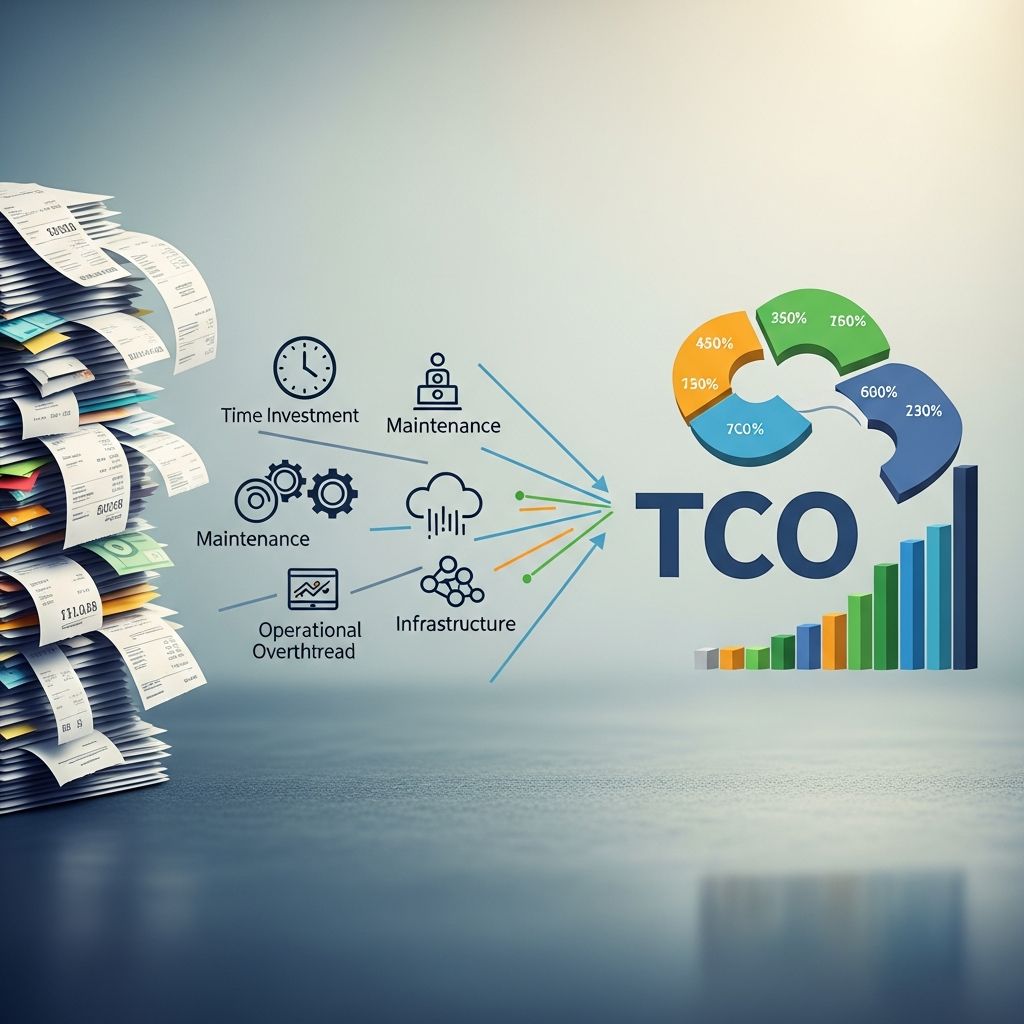
Total Cost of Ownership, commonly known as TCO, is a comprehensive financial assessment method that extends far beyond the initial purchase price of a product or service. Rather than viewing an investment through the narrow lens of its upfront cost, TCO captures the complete financial picture by accounting for all direct and indirect expenses incurred throughout an asset’s entire lifecycle. This includes acquisition, deployment, operation, maintenance, upgrades, training, support, and eventual disposal or retirement. The methodology is particularly valuable in strategic business decision-making because it reveals the true cost of ownership and helps organizations avoid costly miscalculations based on incomplete financial data.
What Is Total Cost of Ownership?
Total Cost of Ownership represents a financial estimate designed to help buyers, sellers, and organizations determine both direct and indirect costs associated with acquiring and maintaining a product or service over its useful life. The concept recognizes a fundamental business reality: ownership costs are significantly greater than the cost of purchasing or acquiring a product. By examining the full financial scope of an investment, TCO enables decision-makers to understand the actual return on investment (ROI) and make comparisons between competing alternatives on equal footing. This holistic approach transforms how organizations evaluate capital expenditures, technology investments, equipment purchases, and vendor selections.
Key Components of Total Cost of Ownership
Understanding TCO requires familiarity with the various cost categories that comprise the total calculation. These components can be organized into several distinct categories:
Direct Costs
Purchase Price: The initial acquisition cost of the product or asset, including the base price and any supplier margins.
Acquisition Costs: Expenses related to obtaining the asset, including transportation, shipping, customs duties, installation, setup, and procurement department operations.
Implementation and Training: Costs associated with deploying the asset and training employees to use it effectively, including documentation and user onboarding.
Indirect Costs (Hidden Costs)
Operating Costs: Ongoing expenses required to keep the asset functional, including energy consumption, raw materials, utilities, labor, and consumables.
Maintenance and Support Costs: Expenses for preventive maintenance, corrective repairs, software updates, part replacements, technical support services, and warranty coverage.
Upgrade and Enhancement Costs: Investments in technological upgrades, system enhancements, license renewals, and performance improvements over the asset’s lifecycle.
Quality and Compliance Costs: Expenses related to ensuring compliance with regulations, meeting quality standards, and addressing non-compliance issues.
Downtime and Productivity Costs: Indirect costs associated with system failures, maintenance windows, or inefficiencies that impact business operations and employee productivity.
Disposal and Decommissioning Costs: Expenses for safely retiring, recycling, reselling, or destroying the asset at the end of its useful life.
The Total Cost of Ownership Formula
While TCO calculations can vary depending on industry and specific requirements, the fundamental formula provides a standardized approach:
TCO = Acquisition Cost + Operating Cost + Maintenance Cost + Disposal Cost + Hidden Costs
Alternatively, TCO can be expressed as:
TCO = Initial Purchase Price + Indirect Costs + Hidden Costs
Or more simply:
TCO = Purchase Price + Total Operating Costs Over Asset Lifecycle
The key to accurate TCO calculation is ensuring that all cost categories are identified, quantified, and included in the final assessment.
How to Calculate Total Cost of Ownership
Calculating TCO effectively requires a structured, methodical approach that captures all relevant expenses over the asset’s expected lifecycle. Here is a step-by-step process:
Step 1: Determine the Initial Purchase Cost
Calculate the direct cost of acquiring the asset, including the base purchase price, taxes, shipping, installation, and any initial setup fees. This is the most straightforward component to identify and quantify.
Step 2: Define the Ownership Timeframe
Establish the expected lifecycle or ownership duration for the asset. For most technology investments, this is typically 5-7 years, though it varies by industry and asset type. This timeframe forms the basis for projecting future costs.
Step 3: Identify and Quantify Operating Costs
Catalog all ongoing operational expenses, including energy costs, labor expenses, consumables, software subscriptions, licensing fees, and routine operational expenses. Project these costs for each year of the ownership period.
Step 4: Account for Maintenance and Support
Estimate costs for preventive maintenance, repairs, replacements, technical support, and warranty services. Consider both routine maintenance and unexpected repairs based on historical data or industry benchmarks.
Step 5: Include Training and Implementation
Evaluate costs related to employee training, system configuration, documentation, and change management. These are often underestimated but can represent significant expenses.
Step 6: Factor in Indirect and Hidden Costs
Assess less obvious costs such as downtime expenses, lost productivity, compliance costs, quality assurance expenses, and impact on existing systems. While more difficult to quantify, these costs can substantially affect TCO.
Step 7: Consider Financing Impact
The payment method used to purchase an asset affects its total cost of ownership. Cash or debit payments have no additional costs, whereas credit cards, loans, or other financing options add interest and fees that vary by percentage rates.
Step 8: Calculate Residual Value
Determine the asset’s remaining value at the end of its useful life, including resale value, salvage value, or recycling proceeds. Subtract this from the total costs to arrive at the net TCO.
Step 9: Apply Discount Rate (Optional)
For more sophisticated analyses, apply a discount rate to convert future costs to present value, allowing for more accurate comparisons between alternatives.
Step 10: Sum All Costs
Aggregate all identified costs over the ownership period to determine the total cost of ownership. Compare this figure against purchase alternatives to identify the most cost-effective option.
Industries and Applications Using TCO
TCO analysis is applicable across virtually all business sectors and industries. Organizations use TCO methodology to evaluate various types of investments and purchases:
Information Technology
Technology professionals use TCO to compare software solutions, hardware infrastructure, cloud services, and IT systems. Organizations can evaluate the true cost of implementing enterprise resource planning (ERP) systems, customer relationship management (CRM) platforms, or cybersecurity solutions.
Manufacturing and Operations
Manufacturing companies apply TCO analysis to equipment purchases, production machinery, and operational tools. This helps them understand how labor costs, energy consumption, maintenance requirements, and production efficiency affect the true cost of ownership.
Fleet Management
Organizations managing vehicle fleets use TCO to evaluate the cost of purchasing versus leasing vehicles, accounting for fuel, maintenance, insurance, and depreciation over time.
Facilities and Real Estate
Building and property management decisions benefit from TCO analysis, which accounts for construction costs, utilities, maintenance, repairs, and long-term property management expenses.
Vendor and Supplier Selection
Organizations use TCO to compare vendors offering similar products or services, incorporating not just purchase price but also quality, service levels, and support costs.
Key Factors Influencing Total Cost of Ownership
Several important factors can significantly impact TCO calculations and must be carefully considered:
Reliability and Performance
Assets with higher reliability typically have lower maintenance costs and reduced downtime expenses, directly affecting TCO. Performance metrics should be evaluated when comparing alternatives.
Technical Support and Service Quality
The quality and responsiveness of vendor support services can dramatically affect maintenance costs and operational efficiency. Poor support may result in extended downtime and higher operational expenses.
Labor Cost Considerations
Changes in labor costs can significantly alter TCO calculations. For example, purchasing new equipment might be expensive initially, but if it requires fewer employees to operate, the labor cost savings could offset the higher purchase price and improve overall TCO.
Energy Consumption and Efficiency
For equipment and facilities, energy costs represent a substantial ongoing expense. More efficient alternatives may have higher upfront costs but deliver significant savings through reduced energy consumption over time.
Regulatory Compliance Requirements
Compliance-related costs, including regulatory certifications, documentation, and quality assurance, should be incorporated into TCO calculations.
Benefits of Analyzing Total Cost of Ownership
Implementing TCO analysis provides organizations with numerous strategic and financial benefits:
Improved Decision-Making
TCO analysis provides comprehensive financial data that enables better-informed purchasing and investment decisions. Organizations can confidently compare competing options on equal footing.
Cost Optimization
By identifying all cost components, organizations can pinpoint opportunities to reduce expenses, eliminate waste, and optimize financial efficiency over the asset’s lifecycle.
Risk Mitigation
Understanding the complete cost picture helps organizations anticipate and plan for potential costs, reducing the risk of budget overruns and unexpected expenses.
Strategic Planning
TCO analysis supports long-term financial planning and capital budgeting by providing accurate projections of future costs and financial impacts.
Vendor Accountability
TCO analysis creates a comprehensive framework for evaluating vendor performance and holding suppliers accountable for the total value delivered, not just the initial price.
Common Mistakes in TCO Calculations
Organizations often make errors that undermine the accuracy and usefulness of their TCO analyses. Understanding these common pitfalls helps improve calculation quality:
Overlooking Hidden Costs
Many organizations fail to capture indirect costs such as training, implementation delays, downtime, and productivity losses, resulting in underestimated TCO figures.
Using Inaccurate Historical Data
Relying on outdated or inaccurate cost data from previous projects can skew projections. Organizations should validate assumptions with current data and industry benchmarks.
Ignoring Financing Impacts
Failing to account for the cost of financing through loans or credit can significantly understate TCO.
Underestimating Support and Maintenance
Organizations frequently underestimate the true cost of ongoing support, maintenance, and technical services, leading to incomplete TCO calculations.
Neglecting Residual Value
Failing to account for the asset’s remaining value at the end of its useful life can inflate TCO calculations and distort comparisons between alternatives.
TCO Analysis in Practice: Real-World Example
Consider a manufacturing company evaluating two equipment options for a production line. Equipment A has a purchase price of $50,000 with annual operating costs of $5,000 and annual maintenance costs of $3,000. Equipment B costs $35,000 upfront but has annual operating costs of $8,000 and maintenance costs of $5,000. Over a 7-year lifecycle, Equipment A’s TCO is $156,000, while Equipment B’s TCO is $161,000. Although Equipment B appears cheaper at purchase, the complete TCO analysis reveals Equipment A as the more economical choice over time.
Frequently Asked Questions About Total Cost of Ownership
Q: Why is Total Cost of Ownership important for businesses?
A: TCO is important because it provides a comprehensive view of the true financial impact of an investment beyond the initial purchase price. This helps organizations make informed decisions, avoid hidden cost surprises, and optimize long-term financial performance.
Q: What is the difference between TCO and purchase price?
A: Purchase price is simply the upfront cost of acquiring an asset, while TCO encompasses all expenses throughout the asset’s entire lifecycle, including operating, maintenance, support, and disposal costs. TCO provides a much more complete financial picture.
Q: How long should I project costs when calculating TCO?
A: The projection period should match the asset’s expected useful life. For most technology investments, this is typically 5-7 years, though it varies by industry and asset type.
Q: Should I include labor costs in TCO calculations?
A: Yes, labor costs should be included in TCO calculations. Changes in labor requirements can significantly affect the total cost of ownership, and should be evaluated when comparing alternatives.
Q: How does financing method affect TCO?
A: Financing methods significantly impact TCO. Cash purchases have no additional costs, while credit cards, loans, and other financing options add interest and fees that increase the total cost of ownership.
Q: Can TCO analysis be used for vendor selection?
A: Yes, TCO analysis is an excellent tool for vendor selection. By comparing the complete cost of ownership across different vendors, organizations can identify the option that provides the best long-term value, not just the lowest purchase price.
Q: What software tools can help calculate TCO?
A: Various software tools and spreadsheet applications can calculate and analyze TCO specific to different investments. Many enterprise resource planning systems include TCO analysis modules designed for business decision-making.
References
- What Is Total Cost of Ownership (TCO)? (Tips and Examples) — Indeed Career Advice. 2024. https://www.indeed.com/career-advice/career-development/total-ownership-cost
- Total Cost of Ownership — Wikipedia. 2024. https://en.wikipedia.org/wiki/Total_cost_of_ownership
- Total Cost of Ownership (TCO): Definition, Methods & Examples — Pipefy. 2024. https://www.pipefy.com/blog/total-cost-of-ownership-tco/
- TCO: Calculate Total Cost of Ownership — KAIZEN™. 2024. https://kaizen.com/insights/tco-calculate-total-cost-ownership/
- What is total cost of ownership (TCO)? How is it calculated? — TechTarget. 2024. https://www.techtarget.com/searchdatacenter/definition/TCO
- What Is Total Cost of Ownership (TCO)? — IBM. 2024. https://www.ibm.com/think/topics/total-cost-of-ownership
Similar Articles








Read full bio of Sneha Tete