Understanding Tort Insurance Options for Drivers
Learn how full and limited tort coverage affects your auto insurance rights and costs.
What Does Tort Insurance Mean?
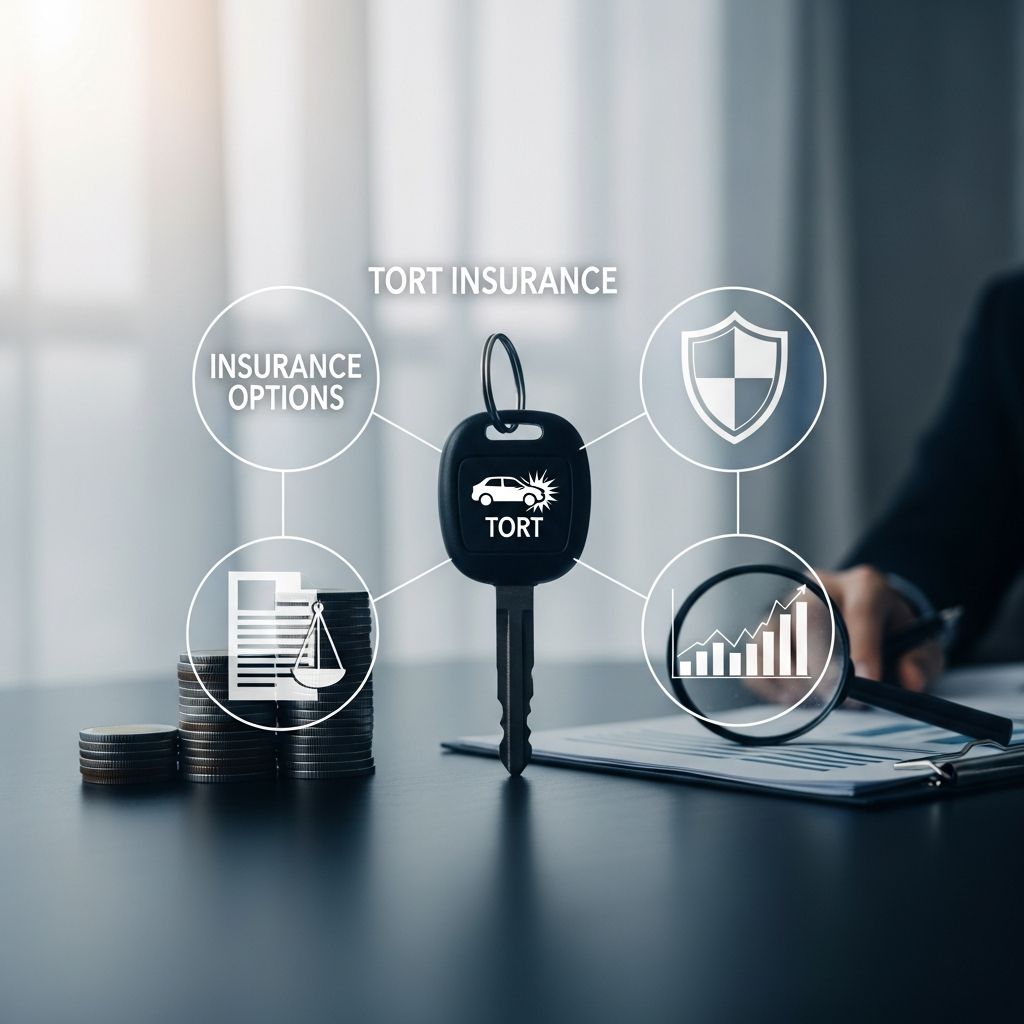
When you purchase auto insurance, you’re making choices that significantly impact your financial protection after an accident. One of the most important decisions involves selecting between different tort insurance systems. Tort insurance refers to your legal right to pursue compensation from an at-fault driver after a motor vehicle accident. This system allows injured parties to recover damages through legal action rather than relying solely on their own insurance coverage.
In the United States, auto insurance operates under two primary frameworks: tort systems and no-fault systems. The specific system governing your coverage depends on your state of residence. Within tort systems, drivers typically have the option to select between two distinct coverage levels, each offering different protection and financial implications.
Comparing Coverage Levels and Their Implications
When examining the two primary tort insurance options available in many states, understanding what each covers becomes essential for making an informed decision. The fundamental distinction lies in how each option treats non-monetary damages following an accident.
| Coverage Category | Full Tort Protection | Limited Tort Protection |
|---|---|---|
| Medical Expenses | Fully covered | Fully covered |
| Lost Wages | Fully covered | Fully covered |
| Property Damage | Fully covered | Fully covered |
| Pain and Suffering | Unrestricted recovery | Limited to “serious” injuries only |
| Loss of Life Enjoyment | Recoverable | Limited recovery |
| Emotional Distress | Recoverable | Limited recovery |
Understanding Full Tort Coverage
Full tort coverage represents the more comprehensive protection option available to drivers in states offering choice between tort systems. When you select full tort insurance, you preserve your unrestricted right to pursue legal action against an at-fault driver for any type of injury-related damages.
This coverage category eliminates the need to meet specific injury thresholds before recovering compensation. Whether your injuries are minor, moderate, or severe, full tort protection grants you the statutory right to recover financial compensation for medical expenses, lost earnings, vehicle damage, and crucially, non-economic damages. Non-economic damages encompass pain and suffering, loss of life’s pleasures, embarrassment, humiliation, and emotional distress resulting from the accident.
The primary trade-off for this expanded protection involves higher insurance premiums. However, many drivers find this investment worthwhile because it removes barriers that insurance companies might otherwise use to deny fair compensation for injuries sustained in accidents where they bear no responsibility.
Exploring Limited Tort Coverage
Limited tort insurance offers a more restrictive alternative designed to reduce your insurance costs. By selecting this option, you agree to limit your recovery for non-monetary damages unless your injuries meet specific legal criteria established by your state.
Under limited tort coverage, you retain full rights to recover all economic damages—medical bills, lost wages, property repair or replacement costs, and related out-of-pocket expenses. However, you surrender the ability to sue for pain and suffering unless your injuries qualify as “serious” under your state’s legal definition.
This definition of “serious injury” varies significantly by jurisdiction. Generally, serious injuries include severe conditions such as dismemberment, permanent disfigurement, broken bones, death, or permanent disability. The restricted nature of limited tort means that drivers with this coverage who sustain moderate injuries—such as soft tissue damage, whiplash, or temporary impairment—cannot recover compensation for pain and suffering, regardless of the accident’s severity or their actual suffering.
Financial Considerations and Premium Differences
The cost differential between full and limited tort insurance represents a significant factor in many drivers’ decision-making processes. Limited tort policies consistently cost less than full tort alternatives because insurers face reduced liability exposure with limited tort coverage.
By selecting limited tort, you transfer some financial risk to yourself. You trade lower premiums for reduced recovery potential. This arrangement benefits accident-free drivers who anticipate never needing to file comprehensive claims. However, for drivers concerned about potential accidents or those with longer commutes and higher accident exposure, full tort coverage provides valuable peace of mind despite the higher upfront cost.
When evaluating these options, consider your driving habits, accident history, local traffic conditions, and financial circumstances. The money saved through limited tort premiums might seem attractive initially, but a single moderate accident could result in substantial unrecoverable damages that far exceed the cumulative premium savings over several years.
Negotiating Power and Settlement Dynamics
An often-overlooked consequence of selecting limited tort insurance involves reduced negotiating leverage with insurance companies. When you opt for limited tort protection, you essentially signal that you won’t pursue pain and suffering claims except in extraordinary circumstances.
Insurance companies recognize this limitation and adjust their settlement approaches accordingly. With full tort coverage, insurers must account for potential pain and suffering claims in their settlement calculations, incentivizing them to offer more competitive settlements to avoid litigation. Limited tort holders lose this negotiating advantage, as insurers know upfront that only economic damages are at stake in most scenarios.
This dynamic becomes particularly significant in cases involving subjective suffering—chronic pain, psychological effects, lifestyle disruptions, and lost enjoyment of activities. Full tort coverage allows you to potentially recover compensation for these real but non-monetary consequences, while limited tort generally restricts such recovery unless injuries meet strict legal thresholds.
State-Specific Rules and Variations
Tort insurance rules vary substantially across different states, and understanding your particular state’s framework is essential. In Pennsylvania, for example, full tort is the default option, meaning drivers automatically receive full tort protection unless they specifically elect limited tort coverage by signing a waiver.
Conversely, in Kentucky, limited tort represents the default system. Drivers must take affirmative action to opt into full tort protection. Some states don’t offer choices at all, instead mandating either a tort or no-fault system for all residents. Researching your state’s specific requirements prevents accidental selection of inadequate coverage through inaction or misunderstanding.
Important Exceptions to Limited Tort Restrictions
Even if you select limited tort coverage, several important exceptions may preserve your ability to recover pain and suffering damages in specific circumstances. Understanding these exceptions provides crucial protection despite selecting the more restrictive option.
- Commercial Vehicle Exception: If you’re injured while driving or riding in a commercial vehicle—such as a taxi, bus, ride-sharing service, or rental car—you automatically retain full tort rights for pain and suffering claims, regardless of your policy’s stated limitations.
- Uninsured Driver Exception: When struck by a driver without valid insurance, your right to pursue pain and suffering damages reverts to full tort status, even with limited tort coverage.
- Intoxicated Driver Exception: In certain states like Pennsylvania, if the at-fault driver was intoxicated, you can pursue full damages regardless of your coverage type.
- Intentional Act Exception: If the at-fault driver caused the accident intentionally with the goal of causing harm, limited tort restrictions don’t apply.
- Out-of-State Vehicle Exception: Accidents caused by drivers operating vehicles registered in other states may exempt you from limited tort restrictions.
Making Your Coverage Decision
Selecting between full and limited tort insurance requires careful consideration of multiple factors unique to your circumstances. Neither option is universally optimal; the right choice depends on your individual risk tolerance, financial situation, and driving patterns.
Choose full tort coverage if you’re concerned about accident liability, drive frequently in high-traffic areas, or worry about the potential for serious injuries from an accident. The additional premium expense purchases comprehensive protection and maintains your ability to recover full compensation for any accident-related harm, including suffering.
Limited tort coverage may suit drivers with excellent safety records, minimal annual mileage, or significant budget constraints. However, carefully weigh the premium savings against potential unrecovered damages from even moderate accidents. Remember that you cannot predict when or how severely an accident might affect you physically and emotionally.
Most insurance professionals recommend that drivers carefully evaluate their personal circumstances rather than automatically selecting the cheapest option. Full tort coverage removes significant hurdles in your path toward fair compensation after accidents where you bear no responsibility.
Taking Action on Your Coverage
Review your current auto insurance policy to determine your existing tort coverage status. Many drivers remain unaware of whether they selected full or limited tort when purchasing their policies. If you selected limited tort and are now reconsidering that decision, contact your insurance agent about upgrading to full tort coverage. Conversely, if you currently carry full tort and are seeking to reduce premiums, you can explore switching to limited tort, though this decision should involve careful consideration of your accident risk and financial exposure.
Ultimately, your tort insurance selection represents an important decision affecting your financial protection following accidents. Take time to understand your state’s specific rules, review the exceptions that might apply in your situation, and select coverage that provides appropriate protection for your circumstances and peace of mind on the road.
References
- What Is Full Tort vs. Limited Tort in Car Insurance? — Experian. https://www.experian.com/blogs/ask-experian/full-tort-vs-limited-tort-car-insurance/
- What’s the Difference Between Full Tort and Limited Tort? — GoSimon. https://www.gosimon.com/limited-tort/full-tort/
- Tort Insurance: What Is Full vs Limited Tort Car Insurance? — Bankrate. https://www.bankrate.com/insurance/car/tort-insurance/
- Pennsylvania Limited Tort vs. Full Tort: Understanding Your Plaintiff’s Auto Insurance Coverage — Weber Gallagher. https://www.wglaw.com/news/pennsylvania-limited-tort-vs-full-tort-understanding-your-plaintiffs-auto-insurance-coverage/
Similar Articles








Read full bio of Sneha Tete