Top States Facing Bankruptcy Surge
Discover which U.S. states lead in bankruptcy filings and the economic forces driving this troubling trend across America.

Bankruptcy filings across the United States have climbed sharply in recent years, reaching 574,314 cases in the 12 months ending December 2025, an 11% increase from the prior year. This rise reflects broader economic pressures including persistent inflation, elevated interest rates, and soaring housing expenses that have strained households and businesses alike. Non-business filings, primarily personal bankruptcies, jumped 11.2% to 549,577, while business cases increased 7.1% to 24,737. Understanding regional variations reveals critical insights into financial vulnerability nationwide.
National Overview of Rising Bankruptcy Trends
The uptick in filings marks a reversal from pandemic-era lows, when government aid temporarily cushioned economic shocks. From March 2024 to March 2025, total filings rose 13.1%, signaling renewed distress amid recovering but uneven economic conditions. Consumer bankruptcies specifically surged 12% to 533,949 in 2025, per data from Epiq AACER tracking federal court records. Business filings, after dipping to 13,481 in 2022, exceeded pre-2019 levels by 8.6%.
Chapter 11 reorganizations, where companies seek to restructure rather than liquidate, doubled from 6,052 in 2019 to 11,730 in 2025, indicating businesses fighting to survive rather than close. These patterns highlight a selective recovery: while consumer filings lag pre-pandemic peaks, commercial ones have surpassed them, concentrated in high-growth states.
States Leading in Total Bankruptcy Volume
Large population centers dominate raw numbers due to scale. California, with over 39 million residents, recorded 38,597 personal bankruptcy cases in 2023, the nation’s highest. Florida followed with 29,410 filings despite ranking third in population, while Texas saw 25,671 amid its 29 million residents. These populous states account for a disproportionate share, but rates per capita tell a different story about relative hardship.
| State | Population (millions) | Filings (2023) |
|---|---|---|
| California | 39+ | 38,597 |
| Florida | 22 | 29,410 |
| Texas | 29 | 25,671 |
This table illustrates volume leadership, but smaller states often face steeper proportional challenges.
Per Capita Bankruptcy Hotspots
When adjusted for population, less populous states emerge as leaders in filing rates. The top five for personal bankruptcies per 100,000 residents include Alabama, Missouri, Nevada, Tennessee, and Indiana. Alabama’s rate dwarfs others; Florida’s 145 per 100,000 in 2021 was less than half Alabama’s, underscoring regional disparities.
- Alabama: Highest per capita rate, driven by limited economic diversification.
- Missouri: Elevated filings amid manufacturing declines.
- Nevada: Tourism volatility exacerbates debt burdens.
- Tennessee: Rural poverty and healthcare costs contribute.
- Indiana: Industrial shifts fuel personal insolvencies.
These states, often with smaller economies, suffer from concentrated vulnerabilities like job losses in legacy sectors.
Business Bankruptcy Epicenters
Commercial filings tell a parallel story of entrepreneurial strain. Texas led absolute growth, surging from 2,429 in 2019 to 4,087 in 2025—a 68.3% increase and 1,658 more cases. Florida rose 30.5% to 2,372, California 12.8% to 3,128, Georgia 24.7% to 1,076, and New Jersey 21% to 801. Percentage growth from 2019 highlights Texas, Florida, Colorado, Arkansas, and Georgia as fastest risers.
| State | 2019 Filings | 2025 Filings | % Growth |
|---|---|---|---|
| Texas | 2,429 | 4,087 | 68.3% |
| Florida | 1,817 | 2,372 | 30.5% |
| California | 2,773 | 3,128 | 12.8% |
| Georgia | 863 | 1,076 | 24.7% |
| New Jersey | 662 | 801 | 21.0% |
States like South Dakota, Kentucky, and Connecticut lag below 2019 levels, with filings at 28, 120, and 109 respectively in 2025. This uneven distribution points to booming Sun Belt economies paradoxically breeding higher failure rates due to overexpansion.
Economic Drivers Behind the Surge
Several interconnected factors propel these trends. High interest rates have ballooned borrowing costs, making debt servicing untenable for many. Inflation eroded purchasing power, while housing prices locked families out of wealth-building equity. Post-pandemic normalization ended stimulus buffers, exposing underlying fragilities.
For businesses, supply chain disruptions and labor shortages compounded issues, pushing Chapter 11 usage as owners restructure. In consumer cases, medical debt and unemployment remain perennial triggers, amplified by current macro pressures. Regional elements like Nevada’s hospitality dependence or Alabama’s agricultural risks intensify local impacts.
Implications for Consumers and Policymakers
Rising filings signal broader economic warning signs. Households in high-rate states face credit stigma, complicating recovery, while businesses navigate heightened collection risks. Policymakers must address root causes: affordable housing initiatives, interest rate relief, and small business support could mitigate future waves.
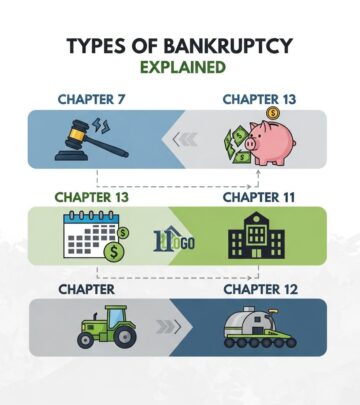
Individuals eyeing bankruptcy should weigh Chapter 7 liquidation versus Chapter 13 repayment plans, consulting professionals for tailored advice. Monitoring state-specific data aids proactive financial planning amid volatility.
Strategies to Avoid Bankruptcy Pitfalls
Proactive steps can avert filings. Budget ruthlessly, prioritizing high-interest debt payoff via avalanche or snowball methods. Build emergency funds covering 3-6 months’ expenses. Explore debt consolidation or negotiation before courts intervene.
- Review credit reports quarterly for errors.
- Seek free counseling from nonprofit agencies.
- Diversify income to buffer job loss risks.
- Avoid new debt during recovery phases.
Business owners should stress-test cash flows, renegotiate vendor terms, and pursue grants or low-interest loans early.
Future Outlook and Projections
With 2025’s 24,039 quarterly business peak, Q3 data suggests continued pressure into 2026. If rates stabilize and inflation cools, filings may plateau; persistent headwinds could accelerate them. Tracking U.S. Courts data provides real-time pulses on this evolving crisis.
Frequently Asked Questions
What states have the most bankruptcies per capita?
Alabama, Missouri, Nevada, Tennessee, and Indiana top the list for personal filings per 100,000 residents.
Why are bankruptcy filings rising in 2025?
Inflation, high interest rates, and housing costs are primary drivers, reversing pandemic declines.
How do business and personal bankruptcies differ by state?
Texas and Florida lead business growth, while per capita personal rates cluster in the South and Midwest.
Can bankruptcy rates predict economic downturns?
Often yes; surges like 2025’s indicate household and firm distress beyond official unemployment figures.
What should I do if facing potential bankruptcy?
Consult accredited counselors, explore alternatives like debt management, and understand chapter options.
References
- Bankruptcy Statistics 2026 | Top U.S. Bankruptcy Facts — LawFirm.com. 2026. https://www.lawfirm.com/bankruptcy/statistics/
- Which States Are Driving the New Wave of Business Bankruptcies? — Kaplan Collection Agency. 2025. https://www.kaplancollectionagency.com/business-advice/which-states-are-driving-the-new-wave-of-business-bankruptcies/
- Bankruptcy Filings Rise 11 Percent — United States Courts. 2026-02-04. https://www.uscourts.gov/data-news/judiciary-news/2026/02/04/bankruptcy-filings-rise-11-percent
- More Americans are filing for bankruptcy. Here’s what’s behind the rise — CBS News. 2025. https://www.cbsnews.com/news/bankruptcy-filing-rise-consumer-business-epiq/
- Bankruptcy on the Rise: What the Latest Data Tells Us About Small Business Vulnerability — Experian. 2026-01-26. https://www.experian.com/blogs/business-information/2026/01/26/bankruptcy-on-the-rise-what-the-latest-data-tells-us-about-small-business-vulnerability/
Similar Articles








Read full bio of medha deb