Top Shareholders of Meta: Who Owns Facebook?
Discover the major shareholders of Meta Platforms and their stakes in the social media giant.
Understanding Meta’s Ownership Structure
Meta Platforms, Inc., formerly known as Facebook, represents one of the most significant technology companies in the world, with a complex ownership structure involving individual insiders and massive institutional investors. The company’s shareholding reflects the convergence of venture capital backing, strategic investments, and insider retention, creating a unique dynamic that influences corporate decisions and shareholder value. As of 2024, Meta’s equity is distributed across a diverse range of stakeholders, from founders to multinational financial institutions managing billions in assets.
Mark Zuckerberg: The Dominant Shareholder
Mark Zuckerberg, the founder and former CEO of Facebook, maintains an extraordinarily significant position as Meta’s largest individual shareholder with approximately 13.5% ownership stake as of 2024. This percentage represents a decrease from his initial holdings at the time of Facebook’s IPO in 2012, when he controlled nearly 30% of the company. Despite this dilution through subsequent fundraising rounds and acquisitions, Zuckerberg’s remaining stake translates to substantial wealth and voting power, with his shares valued at approximately $265 billion based on current market valuations.
Zuckerberg’s net worth as of May 2024 reached $155 billion, ranking him among the world’s wealthiest individuals and securing his position at number 5 on Forbes’ annual list of billionaires. His significant shareholding affords him considerable influence over Meta’s strategic direction, product decisions, and long-term vision. Despite relinquishing the CEO role in recent years, his founder status and substantial equity stake ensure his continued prominence in company governance and major corporate initiatives.
Institutional Investors: The Backbone of Meta’s Capital
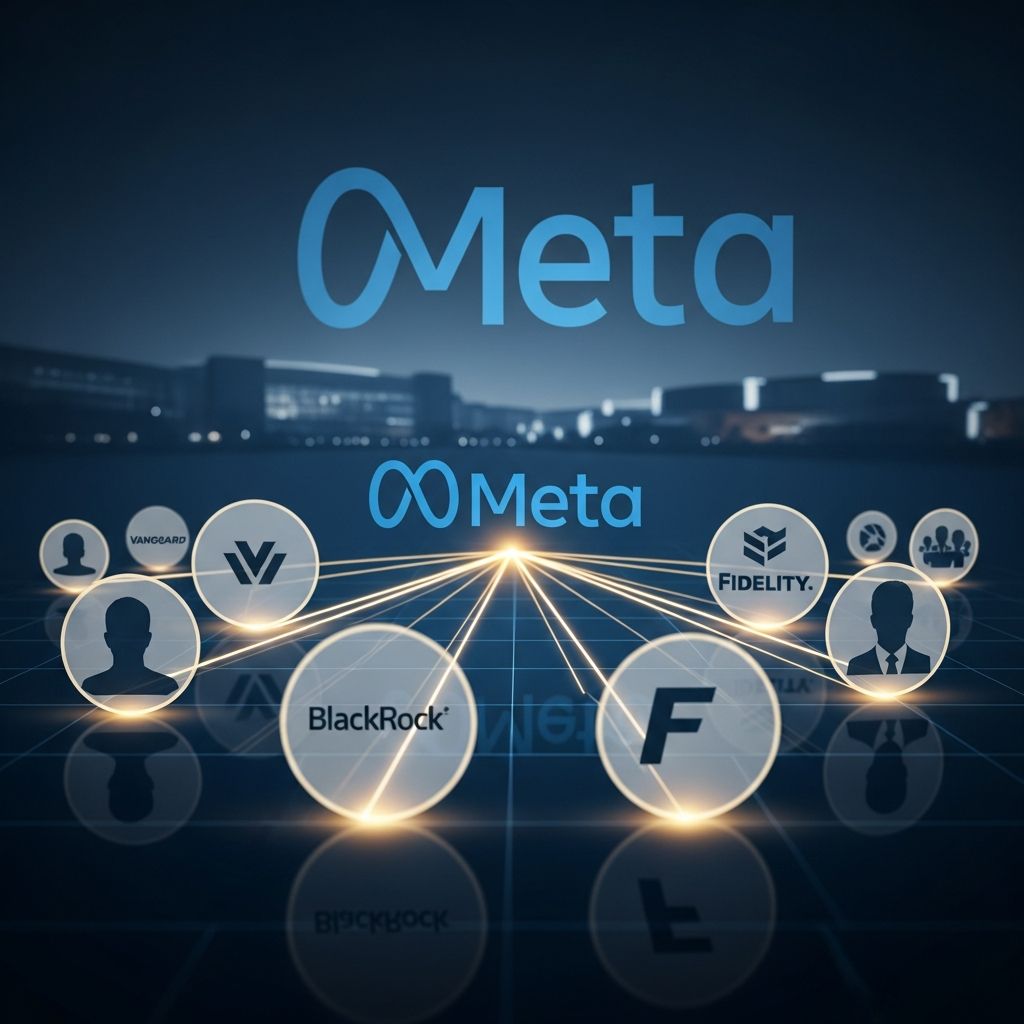
Institutional investors control approximately 80% of Meta’s total shares, representing the most substantial portion of the company’s capitalization. These large investment firms manage pension funds, mutual funds, and other pooled investment vehicles on behalf of millions of individual investors worldwide. Their involvement reflects Meta’s maturation as a public company and its significance within diversified investment portfolios targeting technology sector growth.
The Vanguard Group: Leading Institutional Investor
The Vanguard Group represents the single largest institutional shareholder in Meta, controlling approximately 8.8% of outstanding shares as of late 2024. As one of the world’s largest investment management companies, Vanguard’s substantial position in Meta reflects the company’s importance within technology-focused index funds and actively managed portfolios. With approximately 192.6 million shares valued at around $149 billion, Vanguard’s stake represents a core holding in its suite of investment products serving individual and institutional clients.
BlackRock: A Major Institutional Force
BlackRock, the world’s largest asset manager, holds approximately 7.66% of Meta’s shares, translating to over 127 million shares valued at approximately $98.4 billion. BlackRock’s significant position reflects its role in managing trillions of dollars across passive and active investment strategies. The firm’s substantial Meta holdings influence its voting patterns at shareholder meetings and contribute to its influence over technology sector investments globally.
Fidelity Investments: Strong Institutional Presence
Fidelity Investments maintains a notable position as the third-largest institutional shareholder, controlling approximately 6.28% of Meta’s outstanding equity. With holdings valued at around $105 billion, Fidelity’s stake reflects both its direct investment management activities and its role in administering retirement accounts and investment funds for millions of customers. This significant position enables Fidelity to participate meaningfully in Meta’s corporate governance and shareholder voting initiatives.
Other Major Institutional Shareholders
Beyond the primary institutional holders, several other major investment firms maintain substantial stakes in Meta:
– State Street Corporation: Holds approximately 3.97% to 4.01% of Meta shares, representing over 86 million shares valued at roughly $67 billion, serving primarily custodial and index fund management functions- JPMorgan Chase: Controls approximately 2.38% to 2.53% of Meta’s equity, with holdings valued near $42.4 billion, reflecting its role as a major asset manager and financial institution- Geode Capital Management: Maintains a 2.27% stake in Meta, specializing in passive and index-based investment strategies- T. Rowe Price: Holds approximately 1.95% of Meta’s shares, reflecting its position as a major active investment management firm- Capital World Investors: Controls roughly 1.86% of Meta’s equity, serving clients through global investment strategies- Capital Research Global Investors: Maintains a 1.7% stake, supporting international investment portfolios- Morgan Stanley: Holds approximately 1.66% of Meta shares, combining investment banking, wealth management, and asset management activities
Individual Insiders and Notable Shareholders
Beyond Mark Zuckerberg, Meta’s insider shareholder group includes other significant individual investors who played crucial roles in the company’s founding and early development.
Sheryl Sandberg: Executive Leadership Shareholder
Sheryl Sandberg served as Chief Operating Officer of Meta for many years and represents one of the three largest individual investors in the company as of 2024. Her significant shareholding reflects both her compensation as a senior executive and her equity grants accumulated throughout her tenure at the company. Her insider status and substantial shareholding align her interests with other long-term Meta stakeholders.
Christopher K. Cox: Co-Founder and Director
Christopher Cox, who served as Chief Product Officer and played a vital role in Facebook’s early development, ranks among the three largest individual investors in Meta as of 2024. His substantial shareholding reflects his contributions to the company’s founding vision and product development strategy.
Dustin Moskovitz: Early Co-Founder
Dustin Moskovitz, who co-founded Facebook alongside Mark Zuckerberg at Harvard University, originally held a 7.6% stake in the company, making him one of the world’s youngest billionaires at the time. Moskovitz left Facebook in 2008 to pursue other entrepreneurial ventures, including the development of Asana, a workplace productivity platform. His early departures and subsequent focus on other companies reflect a different path from Zuckerberg’s continuous involvement.
Eduardo Saverin: Original Co-Founder
Eduardo Saverin, another Facebook co-founder who played a key role in the company’s early financing, originally held approximately one-third of the company before his stake was diluted as other investors joined. His position in Facebook was dramatized in the film ‘The Social Network,’ which depicted both the company’s founding and subsequent business conflicts. By the time of Facebook’s public offering, Saverin’s stake had been reduced to approximately 5% of the company.
The Complete Founder Team
Facebook’s founding team extended beyond the most prominent shareholders. The five co-founders who met at Harvard University and collaborated on the project were Mark Zuckerberg, Eduardo Saverin, Andrew McCollum, Dustin Moskovitz, and Chris Hughes. Each brought distinct skills and perspectives to the early development of the social network, though their involvement and shareholding evolved differently over time as the company matured.
Meta’s Business Portfolio and Revenue Generation
Understanding Meta’s shareholder value requires examining the diverse revenue streams supporting the company’s operations. Meta’s revenue structure has evolved significantly, particularly following the company’s rebranding and strategic pivot:
| Revenue Category | 2021 | 2022 | 2023 | 2024 |
|---|---|---|---|---|
| Family of Apps | $116B | $114B | $133B | $162B |
| Reality Labs | $2.27B | $2.16B | $1.9B | $2.15B |
Meta’s “Family of Apps” category, which includes Facebook, Instagram, WhatsApp, and Messenger, represents the company’s primary revenue driver, generating $162 billion in 2024. Reality Labs, encompassing the company’s virtual and augmented reality initiatives, represents a strategic investment area generating approximately $2.15 billion annually. This diversified revenue structure provides shareholders with multiple growth avenues while supporting the company’s broader transformation into a metaverse-focused technology enterprise.
Geographic Revenue Distribution
Meta’s shareholder value is influenced by its global revenue distribution, which reflects the geographic diversity of its user base and advertising markets:
| Region | 2023 Revenue | 2024 Revenue | |
|---|---|---|---|
| United States | $49.78B | $59.73B | |
| Europe | $31.21B | $38.36B | |
| Asia-Pacific (Excl. China) | – | $26.66B | |
| China | $13.69B | $18.35B | |
| Rest of World | $14.65B | $17.92B | |
| Canada | $3.11B | $3.48B |
The United States represents Meta’s largest revenue source, generating nearly $60 billion in 2024, reflecting the company’s advertising strength in developed markets. Europe contributes approximately $38.36 billion, while expansion into Asia-Pacific and China demonstrates the company’s growing international presence and shareholder value creation in emerging markets.
Meta’s Strategic Acquisitions and Platform Expansion
Meta’s ownership structure and shareholder value are significantly influenced by the company’s strategic acquisition strategy. The company owns several major technology platforms and services that generate substantial value for shareholders:
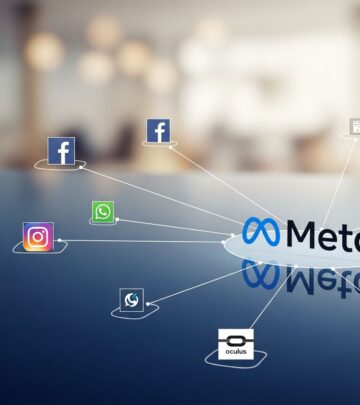
– Instagram: Acquired in 2012, Instagram has evolved into a primary revenue generator comparable to Facebook, with particular strength in visual content and younger demographics- WhatsApp: Purchased in 2014, WhatsApp provides messaging services to over 2 billion users, though the platform is still developing monetization strategies- Oculus VR (Meta Quest): Acquired to position Meta at the forefront of virtual reality technology, this platform represents Meta’s strategic bet on the metaverse and future computing paradigms- Threads: Launched as Meta’s response to Twitter’s challenges, Threads represents the company’s continued focus on text-based social networking
Historical Context: From Venture Capital to Institutional Ownership
Meta’s evolution from a venture-backed startup to a public company with predominantly institutional ownership reflects broader trends in technology sector development. Early investors like Jim Breyer of Accel Partners and Yuri Milner of Digital Sky Technologies provided critical funding during Facebook’s growth phase, positioning these venture capital firms as significant early shareholders. However, the company’s transformation to institutional ownership following its 2012 IPO reflects the massive capital requirements of technology companies and the role of index funds in managing technology sector exposure.
Frequently Asked Questions
Q: Who is the largest shareholder of Meta?
A: Mark Zuckerberg is the largest individual shareholder, controlling approximately 13.5% of Meta’s shares. However, the Vanguard Group is the largest overall shareholder at 8.8%, representing institutional investor dominance in the company’s ownership structure.
Q: What percentage of Meta does Mark Zuckerberg own?
A: As of 2024, Mark Zuckerberg owns approximately 13.5% of Meta, down from approximately 28.2% at the time of Facebook’s IPO in 2012. His shares are valued at approximately $265 billion.
Q: How much of Meta is owned by institutional investors?
A: Institutional investors control approximately 80% of Meta’s total shares, with firms like Vanguard, BlackRock, and Fidelity representing the largest institutional holders.
Q: Who are the five co-founders of Facebook?
A: The five co-founders of Facebook are Mark Zuckerberg, Eduardo Saverin, Andrew McCollum, Dustin Moskovitz, and Chris Hughes. They met while studying at Harvard University and collaborated to launch the social network.
Q: What companies does Meta own?
A: Meta owns several major technology platforms, including Instagram, WhatsApp, Meta Quest (formerly Oculus VR), and Threads. These acquisitions have positioned Meta as a diversified technology holding company.
Q: How has Meta’s ownership structure changed since its IPO?
A: Meta has transitioned from founder-dominated ownership to predominantly institutional investor control. While Mark Zuckerberg’s stake decreased from 28.2% to 13.5%, institutional investors’ aggregate stake increased substantially, reflecting the company’s maturation as a public enterprise.
References
- Income Diary: Who Owns Facebook – The 10 Richest Facebook Shareholders — Income Diary. 2024. https://www.incomediary.com/who-owns-facebook-the-10-richest-facebook-shareholders/
- Facebook Inc. Company Information and Shareholders — Market Screener. 2024. https://www.marketscreener.com/quote/stock/FACEBOOK-INC-111381530/company/
- Meta Platforms – Wikipedia — Wikipedia. 2024. https://en.wikipedia.org/wiki/Meta_Platforms
- Meta Platforms Inc. SEC Proxy Statement — U.S. Securities and Exchange Commission. 2024-03-29. https://www.sec.gov/Archives/edgar/data/1326801/000132680124000022/meta-20240329.htm
Similar Articles








Read full bio of medha deb