Top Robo-Advisors of 2026
Discover the leading automated investment platforms shaping wealth management in 2026 with low fees and smart strategies.

Robo-advisors have revolutionized personal finance by offering algorithm-driven portfolio management at a fraction of traditional advisor costs. These platforms use sophisticated software to assess your risk tolerance, goals, and timeline, then construct and maintain diversified investment portfolios. In 2026, with market volatility and economic shifts, selecting the right robo-advisor is crucial for long-term growth. This guide ranks the leading platforms based on fees, features, performance, and user experience, drawing from expert analyses and recent evaluations.
What Makes a Robo-Advisor Stand Out?
Key factors define top performers: low expense ratios, minimal account minimums, advanced tax optimization like tax-loss harvesting, automatic rebalancing, and access to human support for complex needs. Platforms also differ in portfolio construction—some emphasize ETFs from Vanguard or iShares, others include direct indexing or thematic investing. Goal-based planning tools, such as retirement projectors or debt payoff calculators, add value for holistic financial management.
- Fees: Annual management fees typically range from 0% to 0.35%, plus underlying ETF expenses.
- Minimums: From $0 to $5,000, enabling broad accessibility.
- Tax Efficiency: Automated strategies to minimize capital gains taxes.
- Account Types: IRAs, taxable brokerage, 529 plans, and more.
- Extras: Cash management, borrowing options, or stock trading integration.
Ranking the Leaders: Our Top Picks for 2026
Based on comprehensive reviews, Vanguard Digital Advisor tops charts for its unbeatable cost-efficiency and portfolio quality, scoring highest in multi-category assessments. Wealthfront and Betterment follow closely with innovative tools, while Fidelity Go and Schwab Intelligent Portfolios appeal to cost-conscious investors.
| Platform | Management Fee | Minimum | Key Strength | Rating (2026) |
|---|---|---|---|---|
| Vanguard Digital Advisor | 0.15%-0.20% | $100 | Tax efficiency & low costs | 4.8/5 |
| Wealthfront | 0.25% | $500 | Tax-loss harvesting & planning tools | 5.0/5 |
| Fidelity Go | 0%-0.35% | $0 | Free for small balances | 4.9/5 |
| Betterment | 0.25% or $5/mo | $0 | Portfolio variety & human access | 5.0/5 |
| Schwab Intelligent Portfolios | 0% | $5,000 | No advisory fees | 4.7/5 |
Vanguard Digital Advisor: The Benchmark for Efficiency
Vanguard Digital Advisor leads with a 0.15%-0.20% fee and just $100 minimum, using exclusive Vanguard ETFs for broad diversification across stocks, bonds, and international assets. Its algorithms excel in tax-loss harvesting and personalized goal planning, including retirement medical cost estimators and emergency fund builders. Independent rankings confirm its superiority in portfolio quality and drawdown protection tools.
Ideal for buy-and-hold investors, it minimizes cash drag and optimizes for long-term compounding. Users praise the seamless integration with Vanguard’s ecosystem, though the interface is functional rather than flashy.
Wealthfront: Tech-Driven Innovation
Wealthfront charges 0.25% with a $500 minimum, standing out for daily tax-loss harvesting—even on small accounts—direct indexing for high-net-worth customization, and automated bond ladders. It supports goal-based scenarios, projecting how current choices impact future wealth, plus commission-free stock/ETF trading for hybrid DIY-automated strategies.
Additional perks include competitive cash accounts and low-rate portfolio lines of credit. While portfolios score average in some diversity metrics, the platform’s transparency and tools make it a favorite for tech-savvy users.
Betterment: Versatile and User-Friendly
At 0.25% (or $4/month for basic), Betterment offers no minimum, fractional shares, and diverse portfolios including socially responsible and income-focused options. Automatic rebalancing, tax coordination across accounts, and crypto exposure via trusts enhance appeal. Premium users ($100K+) get unlimited CFP access.
Sync external accounts for holistic advice, making it suitable for multi-account management. Strong mobile ratings reflect intuitive design.
Fidelity Go: Beginner-Friendly with Power
Fidelity Go waives fees under $25K (0.35% above), starting at $0 minimum. Leveraging Fidelity’s research, it provides rebalancing, tax-smart strategies, and unified dashboard views. Excellent for Fidelity loyalists, with top-tier support and cash management integration.
App scores (4.8 iOS, 4.6 Android) highlight accessibility for novices.
Schwab Intelligent Portfolios: Fee-Free Powerhouse
Zero management fees and $5K minimum define Schwab’s offering, with 50+ ETF portfolios, tax-loss harvesting (over $50K), and 24/7 support. Though premium CFP access ended in 2026, the core service remains robust for passive investors.
Emerging Contenders Worth Watching
- Ally Invest Robo Portfolios: 0%-0.3% fees, $100 min, cash-enhanced options for stability.
- Acorns & Stash: Micro-investing focus, ideal for beginners with rounding-up features.
- SoFi & Robinhood Strategies: Integrated banking/investing, low barriers.
- Merrill Guided Investing: Bank of America tie-in for comprehensive services.
Comparing Core Features Side-by-Side
| Feature | Vanguard | Wealthfront | Betterment | Fidelity Go | Schwab |
|---|---|---|---|---|---|
| Tax-Loss Harvesting | Yes | Daily | Advanced | Yes | Over $50K |
| Human Advisors | Limited | No | Premium | Yes | No |
| Mobile App Rating | 4.5 | 4.7 | 4.8 | 4.8 | 4.6 |
| Portfolio Options | ETFs | Direct Index | Thematic | Core | 51 ETFs |
How to Choose Your Robo-Advisor
Assess your balance: Free options like Schwab or Fidelity suit smaller portfolios; premium features favor Betterment. Prioritize tax efficiency for taxable accounts (Wealthfront excels). Test interfaces via demos and review promotions—e.g., Betterment’s funding bonuses or Vanguard’s fee waivers.
Consider integration: Fidelity/Schwab for existing accounts; standalone like Wealthfront for simplicity.
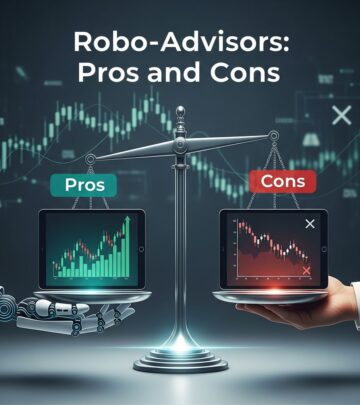
Pros and Cons Across the Board
- Pros: Low costs (savings of 1-2% vs. humans), 24/7 access, diversification, behavioral guardrails.
- Cons: Limited personalization, no complex estate planning, market-dependent returns.
Frequently Asked Questions (FAQs)
What is a robo-advisor?
An online platform using algorithms to manage investments based on your inputs, offering low-cost automation.
Are robo-advisors safe?
Yes, regulated by SEC/FINRA, with SIPC insurance up to $500K. Platforms like Vanguard and Fidelity add FDIC for cash.
Which has the lowest fees?
Schwab Intelligent Portfolios and Fidelity Go (under $25K) charge 0%.
Can I switch robo-advisors easily?
Most support ACATS transfers; expect 5-10 days, minimal fees if in-network.
Do they outperform human advisors?
For simple portfolios, yes due to lower fees; complex needs may require humans.
Getting Started in 2026
Sign up involves a risk quiz (5-10 mins), funding via bank/transfer, and ETF purchases within days. Monitor quarterly, but automation handles most. With rising adoption—over 10M users—these tools democratize wealth building. Start small, scale as confidence grows.
References
- The Best Robo-Advisors for 2026 (Ranked Worst to Best) — Money Matters MD (YouTube). 2026. https://www.youtube.com/watch?v=82ZXlrptdf4
- Best Robo-Advisors: Top Picks for March 2026 — NerdWallet. 2026-03. https://www.nerdwallet.com/investing/best/robo-advisors
- Best Robo-Advisors in the US (2026) — Unbiased.com. 2026. https://www.unbiased.com/discover/financial-advice/best-robo-advisors
- Best Robo-Advisors In 2026 — Bankrate. 2026. https://www.bankrate.com/investing/best-robo-advisors/
- The Best Robo-Advisors of 2026 — SmartAsset. 2026. https://smartasset.com/retirement/the-top-10-robo-advisors
Similar Articles








Read full bio of Sneha Tete