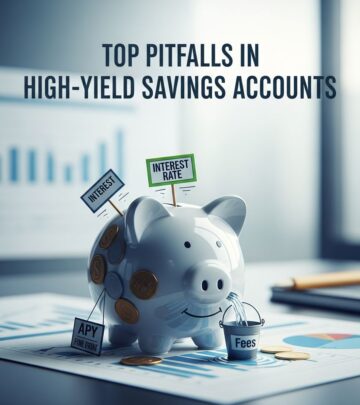
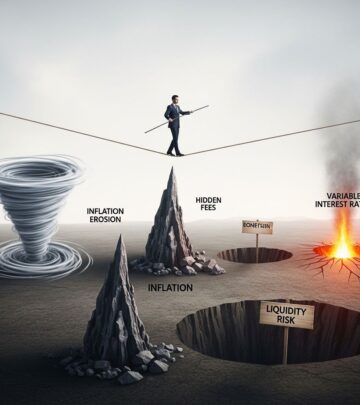
Top Pitfalls in High-Yield Savings Accounts
Discover the most common errors savers make with high-yield accounts and learn proven strategies to maximize your earnings safely.
High-yield savings accounts (HYSAs) offer significantly better returns than traditional savings options, making them essential for building emergency funds or short-term goals. However, many people undermine their benefits through avoidable errors. This guide explores critical missteps and provides actionable advice to optimize your savings strategy.
Understanding High-Yield Savings Accounts
HYSAs typically provide annual percentage yields (APYs) far exceeding the national average of around 0.06% for standard accounts, often reaching 4% or more depending on market conditions. These accounts are FDIC-insured up to $250,000 per depositor per institution, ensuring safety while your money compounds. Online banks dominate this space due to lower overhead costs, passing savings to customers via higher rates.
Despite their advantages, success requires vigilance. Rates fluctuate with Federal Reserve policies, so staying informed is key. In 2026, with potential rate adjustments, proactive management separates effective savers from those leaving money on the table.
Failure to Compare Rates Across Providers
One of the most prevalent issues is settling for the first HYSA encountered without comparison shopping. Rates can differ by 1% or more among institutions labeled as ‘high-yield,’ directly impacting earnings. For instance, a $10,000 deposit at 4.5% APY earns $450 annually, versus $350 at 3.5%—a $100 gap.
Brick-and-mortar banks often lag behind online counterparts and credit unions. Regularly checking comparison sites or tools reveals top performers. Establish a habit of reviewing rates quarterly, as leading banks shift with economic changes.
- Search for current top APYs using reliable aggregators.
- Consider customer service, app usability, and transfer speeds alongside rates.
- Be prepared to switch if a better option emerges, as moving funds is straightforward via ACH transfers.
Overemphasizing Interest Rates Alone
While APY is crucial, fixating solely on it ignores other vital factors. Minimum balance requirements, monthly fees, withdrawal limits, and mobile app quality can erode gains. Some accounts cap monthly transfers at six, per federal rules, complicating access.
Evaluate the full package: Does the bank offer ATM reimbursements? Bill pay features? Integration with budgeting apps? A slightly lower rate with superior features might net more value long-term.
| Factor | Why It Matters | Example Impact |
|---|---|---|
| Minimum Balance | Avoids fees | $10/month fee on $5,000 balance wipes out interest |
| Withdrawal Limits | Ensures liquidity | Excess withdrawals could close account |
| Mobile Banking | Convenience | Quick transfers during emergencies |
| Compounding Frequency | Maximizes growth | Daily vs. monthly adds ~0.1% effective yield |
Ignoring Automation for Consistent Contributions
Opening an HYSA is just the start; without regular deposits, growth stalls. Manual transfers often fall victim to competing expenses, especially for emergency funds. Automating pulls from checking ensures discipline.
Set up recurring transfers post-payday—even $50 weekly compounds significantly. Tools like roundup features on debit cards transfer spare change automatically, turning everyday spending into savings. Over a year, $100 monthly at 4.5% APY yields over $1,200 with compounding.
Commingling Funds for Multiple Goals
Lumping all savings into one account obscures progress toward distinct objectives like a home down payment, vacation, or car purchase. This invites temptation to dip into one ‘bucket’ for another need.
Maintain separate HYSAs per goal, often with no extra fees from online banks. Label them clearly in your banking app for tracking. This psychological separation boosts adherence—studies show dedicated accounts increase savings rates by 20-30%.
- Emergency fund: 3-6 months’ expenses.
- Short-term goals: Under 5 years.
- Longer horizons: Consider CDs or investments.
Neglecting to Monitor Account Performance
‘Set it and forget it’ works until rates drop or goals are met. Failing to review means over-saving in low-risk accounts or missing rate changes. Schedule monthly check-ins to assess balance against targets.
Adjust automation as needed: Halt contributions once funded, reallocating to higher-return options like CDs locking current rates amid expected cuts. Tools like account alerts notify of rate shifts.
Exceeding FDIC Limits or Spreading Funds Poorly
Depositing over $250,000 in one account per owner risks uninsured losses if the bank fails—rare but possible. Diversify across institutions while staying under limits. Also, parking all cash in HYSAs ignores alternatives like CDs offering fixed rates immune to cuts.
For excess funds beyond immediate needs, blend HYSAs with CDs or money market funds, balancing liquidity and yield.
Overlooking Deposit Restrictions and Bonuses
Some HYSAs tie high rates or bonuses to direct deposits, excluding annuities or Social Security for seniors. Others limit funding methods, affecting accessibility. Read terms to confirm compatibility with your income sources.
Best Practices for HYSA Success
To thrive:
- Shop rates bi-annually.
- Automate and separate goals.
- Monitor FDIC coverage.
- Compare APYs apples-to-apples, noting compounding.
- Use for liquid needs only; invest surplus.
In 2026’s shifting rate environment, HYSAs remain superior to traditional accounts but demand strategy. Pair with budgeting for holistic growth.
Frequently Asked Questions
Are HYSAs safe?
Yes, FDIC-insured up to $250,000 per depositor per bank.
How often do rates change?
Variable, tied to Fed rates; review monthly.
Can I have multiple HYSAs?
Absolutely, no credit impact; ideal for goals.
What’s better than an HYSA?
CDs for locked rates; stocks for long-term.
Minimum deposit needed?
Often none, but check for bonuses.
References
- 7 High-Yield Savings Account Mistakes to Avoid — Experian. 2023-10-12. https://www.experian.com/blogs/ask-experian/high-yield-savings-account-mistakes-to-avoid/
- 3 costly high-yield savings account mistakes to avoid this fall — CBS News. 2025-09-15. https://www.cbsnews.com/news/costly-high-yield-savings-account-mistakes-to-avoid-fall-2025/
- 5 High-Yield Savings Mistakes I Made (So You Don’t Have To!) — YouTube (Colin Exelby, CFP®). 2024-05-20. https://www.youtube.com/watch?v=ilYD8bqafNo
- Basics of High-Yield Savings Accounts — First Fed. 2024-02-10. https://www.ourfirstfed.com/support/financial-education/basics-of-high-yield-savings-accounts
- 8 banking mistakes the middle class should avoid — KTVZ (Stacker). 2024-01-31. https://ktvz.com/stacker-money/2024/01/31/8-banking-mistakes-the-middle-class-should-avoid-to-maximize-their-savings-potential/
Similar Articles








Read full bio of Sneha Tete