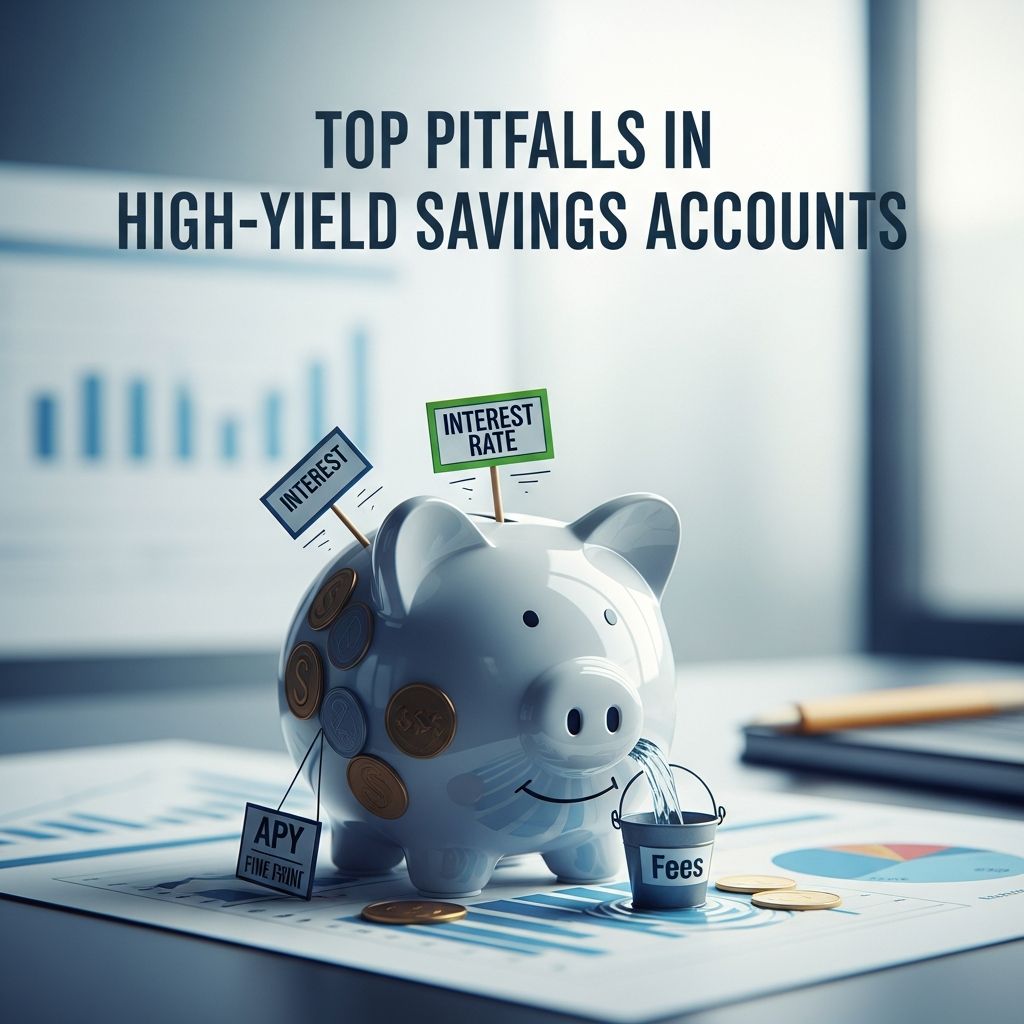
Top Pitfalls in High-Yield Savings Accounts
Unlock the full potential of high-yield savings by steering clear of these frequent errors that erode your earnings and security.
High-yield savings accounts (HYSAs) offer a secure way to earn superior interest compared to standard savings options, making them ideal for emergency funds and short-term goals. However, savers often undermine their benefits through avoidable errors. This article explores key missteps, drawing from expert insights to help you optimize returns while minimizing risks.
Understanding High-Yield Savings Fundamentals
These accounts typically provide annual percentage yields (APYs) several times higher than traditional ones, often 4-5% or more, thanks to online banks’ lower overhead. The Federal Deposit Insurance Corporation (FDIC) insures deposits up to $250,000 per depositor, per insured bank, per account category, ensuring principal safety. Compounding frequency—daily, monthly—affects growth; always compare APY for apples-to-apples evaluation.
Critical Errors That Diminish Your Returns
Many overlook foundational practices, leading to suboptimal performance. Here’s how to sidestep them:
- Skipping Rate Comparisons: Rates fluctuate; what seems high today may lag tomorrow. Online banks often lead due to no branches. Action: Use aggregators or FDIC’s rate tool to scan options weekly.
- Focusing Solely on APY: High rates attract, but fees, minimums, or withdrawal limits can offset gains. Some demand direct deposits for bonuses. Check mobile apps, transfer speeds, and customer service.
- Ignoring Compounding Details: Daily compounding boosts earnings over monthly. Verify terms to ensure true yield matches advertised APY.
Strategic Management for Maximum Growth
Beyond selection, active management is key. Automate transfers from checking to build habits— even $50 monthly compounds significantly over time.
| Monthly Deposit | 1-Year Growth (5% APY) | 5-Year Growth |
|---|---|---|
| $100 | $105.13 | $552.56 |
| $200 | $210.25 | $1,105.12 |
| $500 | $525.63 | $2,762.81 |
Table assumes daily compounding, no fees. Small, consistent inputs yield big results.
Organizing Savings by Purpose
Lumping all funds into one account muddles tracking. Multiple goals—like a home down payment versus vacation—benefit from separate HYSAs or buckets within apps.
- Emergency fund: 3-6 months’ expenses.
- Short-term goals: Car, travel (under 5 years).
- Avoid long-term in HYSAs; shift to investments post-safety net.
Label accounts digitally for progress visibility, curbing impulse dips.
Rate Volatility and Adaptation Tactics
Fed cuts in 2025 lowered HYSA rates, yet they outpace traditional accounts’ <0.5%. Don’t chase fleeting peaks; monitor via newsletters or apps. Consider certificates of deposit (CDs) for locked rates if funds are idle. Diversify: Split between HYSA and CDs for liquidity and yield security.
Insurance and Risk Oversight
Exceeding FDIC’s $250,000 limit per bank risks loss in failures. Spread across institutions; use EIN for business funds. Brokerage cash-like products may lack FDIC—stick to banks. Verify insurance via FDIC’s BankFind tool.
Demographic-Specific Considerations
Seniors: Confirm Social Security or annuities qualify for direct deposit bonuses. Families: Round-up features auto-save spare change. All: Opening multiples won’t hurt credit.
Integration into Broader Financial Plans
HYSAs excel for liquidity needs but cap returns. Once emergency coverage is set, prioritize retirement accounts (401(k)s) or index funds for higher potential. Reassess quarterly: If goals met, reallocate.
Frequently Asked Questions
Are HYSAs safe?
Yes, FDIC-insured up to $250,000. Choose federally insured banks.
How often do rates change?
Variable, tied to Fed policy. Review monthly.
Best for beginners?
Ideal starter for habit-building with low risk.
Tax implications?
Interest is taxable; expect 1099-INT.
Minimum deposits needed?
Often none, but check for bonuses.
Actionable Steps to Get Started
- Inventory goals and current savings.
- Compare 5+ HYSAs via APY, fees, features.
- Open 1-3 accounts, automate deposits.
- Set calendar reminders for rate checks.
- Build to FDIC max, then diversify.
Implementing these avoids 90% of pitfalls, per financial educators.
References
- 7 High-Yield Savings Account Mistakes to Avoid — Experian. 2024-10-15. https://www.experian.com/blogs/ask-experian/high-yield-savings-account-mistakes-to-avoid/
- 3 costly high-yield savings account mistakes to avoid this fall — CBS News. 2025-09-20. https://www.cbsnews.com/news/costly-high-yield-savings-account-mistakes-to-avoid-fall-2025/
- 5 High-Yield Savings Mistakes I Made (So You Don’t Have To!) — YouTube (Colin Exelby, CFP®). 2024-11-05. https://www.youtube.com/watch?v=ilYD8bqafNo
- Basics of High-Yield Savings Accounts — First Fed. 2025-01-12. https://www.ourfirstfed.com/support/financial-education/basics-of-high-yield-savings-accounts
- The Dos and Don’ts of High-Yield Savings Accounts — Freedman Financial. 2025-02-28. https://www.freedmanfinancial.com/blog/the-dos-and-donts-of-high-yield-savings-accounts
Similar Articles








Read full bio of medha deb