Top Line vs Bottom Line: Key Differences Explained
Understand revenue vs. profit: Master the difference between top line and bottom line growth.
Understanding Top Line vs. Bottom Line: A Comprehensive Guide
When evaluating a company’s financial performance, two metrics consistently rise to the top of discussions: the top line and the bottom line. These fundamental measures appear on every income statement and provide critical insights into how well a business is performing. Yet many business owners, investors, and financial professionals struggle to understand the nuanced differences between these two figures and why both matter for long-term success.
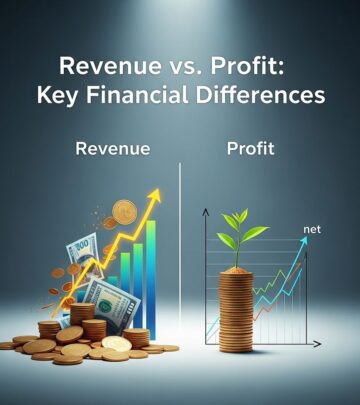
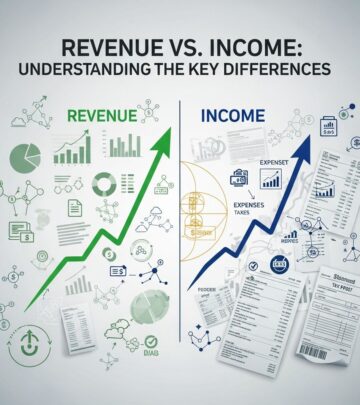
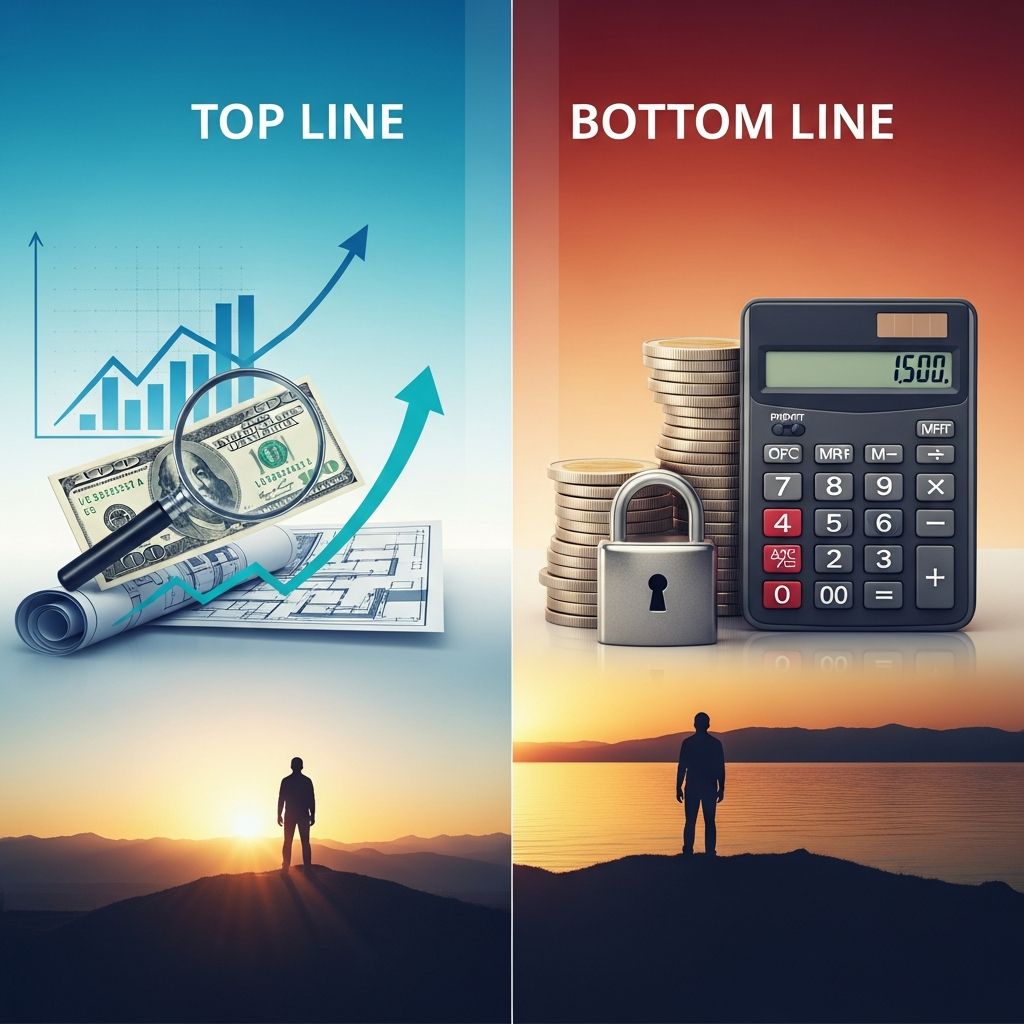
The top line represents your company’s total revenue or gross sales before any expenses are deducted. The bottom line, conversely, represents your net income or profit after all operating costs, taxes, and expenses have been subtracted from that revenue. While they are directly related through the income statement, they tell very different stories about your business’s financial health. Understanding the distinction between these metrics is essential for making informed business decisions and setting realistic financial goals.
What Is the Top Line?
The top line, also known as gross revenue or total sales, appears at the very top of your income statement. This figure represents every dollar your company has earned from its core business activities before any deductions whatsoever. Whether you’re selling products, providing services, or generating income through multiple revenue streams, the top line captures the complete picture of your company’s sales efforts.
Top-line revenue includes all income generated from your primary business operations. This means it encompasses sales from your main products or services, revenues from new market expansions, earnings from additional product lines, and income from core business activities. Notably, the top line does not account for operating costs, employee salaries, rent, utilities, cost of goods sold, depreciation, interest payments, or taxes. It’s purely a measure of your company’s ability to generate sales.
What Is Top-Line Growth?
Top-line growth occurs when your company’s total revenue increases over a specific period. This growth indicates that your business is successfully expanding its market reach, increasing sales volume, or effectively penetrating new customer segments. A rise in top-line growth signals strong market demand for your products or services and demonstrates your company’s ability to scale its operations.
Several factors can drive top-line growth. Companies often achieve it through aggressive marketing campaigns that attract new customers, product innovation and the introduction of new product lines, price increases on existing offerings, expansion into new geographic markets, strategic partnerships, and improvements that reduce sales returns. When investors see top-line growth, they often interpret it as a sign of business expansion and market strength, which can increase company valuation and attract investment opportunities.
What Is the Bottom Line?
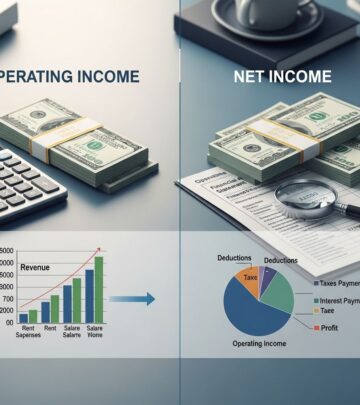
The bottom line appears at the final line of your income statement and represents your company’s net income, also called net profit, net earnings, or bottom-line revenue. This figure tells you how much profit your company actually keeps after accounting for all expenses, taxes, and costs. The bottom line is calculated by subtracting all operating expenses from your top-line revenue.
To calculate bottom-line revenue, you subtract all business expenses from your total revenue. These expenses include the cost of goods sold (COGS), operating expenses, salaries and wages, rent, utilities, depreciation and amortization, interest payments on debt, and income taxes. The resulting figure represents what your business actually takes home as profit.
What Is Bottom-Line Growth?
Bottom-line growth refers to an increase in your company’s net profit or net income over time. Unlike top-line growth, which simply measures increasing sales, bottom-line growth indicates that your company is not only generating more revenue but also efficiently managing its costs and converting that revenue into actual profit. A rise in bottom-line growth means the company is meeting customer demand while effectively controlling expenses.
Bottom-line growth can be achieved through several strategies. Companies can increase revenue, implement cost-control measures to reduce operating expenses, improve operational efficiency to do more with less, optimize tax strategies to minimize tax liability, reduce waste throughout the organization, negotiate better terms with suppliers, and implement automation or technology solutions to lower labor costs. These approaches demonstrate that your company is serious about profitability and shareholder value.
Key Differences Between Top Line and Bottom Line
| Aspect | Top Line | Bottom Line |
|---|---|---|
| Definition | Total revenue or gross sales before expenses | Net income or profit after all expenses |
| Income Statement Position | First line of the income statement | Final line of the income statement |
| What It Measures | Effectiveness of sales and revenue generation | Overall profitability and financial efficiency |
| Calculation | Total sales without deductions | Top line minus all expenses and taxes |
| Focus Area | Sales volume, pricing, market expansion | Cost control, expense management, efficiency |
| Business Priority | Growth, market share, customer acquisition | Profitability, sustainability, cash flow |
| Investor Perspective | Indicates business expansion potential | Reflects actual financial health and profitability |
| Common Terms | Gross revenue, gross sales, top-line growth | Net profit, net income, bottom-line growth |
Why Both Metrics Matter for Your Business
The Importance of Top Line
The top line is crucial because it represents your company’s fundamental ability to generate sales and grow its business. A rising top line indicates strong market demand, effective sales strategies, and successful business expansion. When customers are buying more of your products or services, that’s reflected in top-line growth. Investors and stakeholders pay close attention to top-line growth because it signals business momentum and market opportunity.
Without top-line growth, your business has limited resources to reinvest in operations, hire talented employees, fund research and development, or pursue strategic growth opportunities. The top line provides the foundation upon which everything else in your business is built. However, top-line growth alone doesn’t guarantee profitability or long-term success.
The Importance of Bottom Line
While top-line growth is important for expansion, bottom-line growth is absolutely essential for long-term sustainability and profitability. The bottom line reveals whether your company is actually making money or simply generating high sales volume at the expense of margins and efficiency. A company can have impressive top-line growth but a declining bottom line if expenses are growing faster than revenue.
Bottom-line growth demonstrates your company’s ability to convert revenue into actual profit and indicates effective cost management. This metric directly affects shareholder value, dividend payments, reinvestment capacity, and business sustainability. Many businesses strive to achieve sustained bottom-line growth because it demonstrates improved profitability and enhances shareholder value.
How Top Line and Bottom Line Relate to Each Other
The top line and bottom line are directly connected through a simple mathematical relationship. The bottom line is calculated by subtracting all expenses from the top line. If your company generates $1,000,000 in top-line revenue and incurs $800,000 in total expenses, your bottom line would be $200,000 in net income.
These figures are interdependent but not interchangeable. The top line feeds into the bottom line, meaning that increases in top-line revenue create opportunities for bottom-line growth. However, this relationship requires disciplined cost management. When costs are kept low, more revenue coming in translates to more profit. Conversely, increasing income without controlling costs might not result in higher profits.
In an ideal business scenario, both top line and bottom line grow together, with top-line growth outpacing expense growth. However, sometimes these metrics move in opposite directions. During a recession, for example, top-line sales might decline, but a company could still grow its bottom line by aggressively cutting expenses. Alternatively, a company might experience strong top-line growth while the bottom line stagnates due to rising operating costs.
Strategies for Growing Both Top Line and Bottom Line
Strategies to Boost Top-Line Revenue
Growing your top line requires a multifaceted approach focused on sales expansion and market reach. Consider implementing aggressive advertising and marketing campaigns to reach new customers and increase brand awareness. Develop and launch new product lines or services to attract additional customer segments. Improve your existing products to reduce returns and increase customer satisfaction. Enter new geographic markets or expand into underserved customer segments. Increase prices strategically while maintaining market competitiveness. Build strategic partnerships and distribution channels to expand your reach.
Strategies to Improve Bottom-Line Profitability
Improving your bottom line requires a focus on operational efficiency and cost control. Conduct a thorough review of all operating expenses and identify areas for reduction. Negotiate better terms with suppliers and vendors to lower procurement costs. Implement automation and technology solutions to reduce labor costs and improve efficiency. Optimize your supply chain to minimize waste and improve delivery times. Review your tax strategy to minimize tax liability legally. Streamline business processes to eliminate inefficiencies. Consider outsourcing non-core functions to reduce overhead. Improve inventory management to reduce holding costs.
Real-World Examples of Top Line vs. Bottom Line
Consider a retail company with $1,000,000 in top-line revenue. This represents all sales from all stores, products, and services before any expenses are considered. The company then subtracts cost of goods sold ($400,000), operating expenses including salaries and rent ($350,000), depreciation ($50,000), and taxes ($80,000), totaling $880,000 in expenses. The resulting bottom line is $120,000 in net income.
In another scenario, a software company experiences rapid top-line growth of 40% year-over-year, reaching $50 million in revenue. However, due to aggressive hiring and marketing investments, operating expenses also grew 45%, limiting bottom-line growth to just 10%. While the top-line growth is impressive, the bottom-line growth reveals that the company’s efficiency declined despite higher sales.
Common Examples of Bottom-Line Items
When analyzing your bottom line, you’ll encounter several important metrics and line items that contribute to your final net income figure. These include:
– Net income or net profit
– Earnings per share (EPS)
– Gross profit
– Operating income
– Net profit margin
– Return on equity (ROE)
– Return on assets (ROA)
Frequently Asked Questions
Q: Can a company have top-line growth but declining bottom-line growth?
A: Yes, absolutely. A company can experience increasing sales while profitability declines if operating expenses grow faster than revenue. This often happens when companies invest heavily in expansion or marketing without controlling costs.
Q: Which is more important for investors: top line or bottom line?
A: Both are important, but they tell different stories. Top-line growth indicates business expansion potential, while bottom-line growth reveals actual profitability. Most sophisticated investors examine both metrics together to get a complete picture of financial health.
Q: How can I improve my bottom line without increasing top-line revenue?
A: You can improve your bottom line by reducing operating costs, improving operational efficiency, renegotiating supplier contracts, implementing cost-saving technologies, reducing waste, and optimizing your tax strategy.
Q: What does it mean if the bottom line is negative?
A: A negative bottom line means your company is operating at a loss—expenses exceed revenue. While new companies often have negative bottom lines temporarily, sustained losses indicate serious financial problems that need to be addressed.
Q: Is organic growth the same as top-line growth?
A: Not exactly. Organic growth refers to revenue growth from existing business operations and internal expansion, while top-line growth can include revenue from acquisitions and other non-organic sources. Organic top-line growth is generally considered more sustainable.
Q: How often should I review my top line and bottom line?
A: Most companies review these metrics monthly, quarterly, and annually. More frequent reviews help you identify trends early and make timely adjustments to your business strategy.
References
- Top Line vs. Bottom Line: Definitions, Differences & Examples — TGG Accounting. 2024. https://tgg-accounting.com/top-line-vs-bottom-line/
- Top Line vs. Bottom Line: Key Differences & Strategies — Ramp. 2024. https://ramp.com/blog/what-is-top-line-growth
- The Difference Between Top-line and Bottom-line in Business — Credibly. 2024. https://www.credibly.com/incredibly/top-line-vs-bottom-line-revenue/
- What Are Top Line and Bottom Line in a Company’s Financial Statement — Economic Times. 2024. https://economictimes.com/wealth/personal-finance-news/what-are-top-line-and-bottom-line-in-a-companys-financial-statement/articleshow/120828237.cms
- Top Line and Bottom Line – Overview, How To Calculate, Divergence — Corporate Finance Institute. 2024. https://corporatefinanceinstitute.com/resources/accounting/top-line-and-bottom-line/
- Difference Between Top-Line and Bottom-Line Growth — Bajaj FinServ. 2024. https://www.bajajfinserv.in/top-line-vs-bottom-line
- Why Top Line & Bottom Line Matter and How to Grow Them — National Funding. 2024. https://www.nationalfunding.com/blog/business-bottom-line/
Similar Articles








Read full bio of Sneha Tete