Top Factor Impacting Your Credit Score
Discover the dominant influence on your credit score and actionable strategies to optimize all key components for financial success.

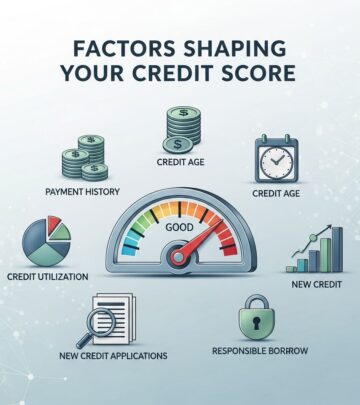
Your credit score serves as a critical benchmark for lenders assessing your financial reliability, directly influencing loan approvals, interest rates, and even rental opportunities. Among the components evaluated by major scoring models like FICO and VantageScore, one stands out as the most influential: payment history, accounting for 35% of your total score. This article explores this dominant factor in depth, alongside the other four key elements, providing practical guidance to enhance your credit profile.
Understanding the Core Components of Credit Scores
Credit scoring models analyze data from your credit reports, supplied by agencies such as Experian, Equifax, and TransUnion. These models weigh five primary categories differently, with weights reflecting their predictive power for future repayment behavior. FICO Scores, used by 90% of top lenders, assign fixed percentages to each, while VantageScore employs a similar but slightly adjusted framework.
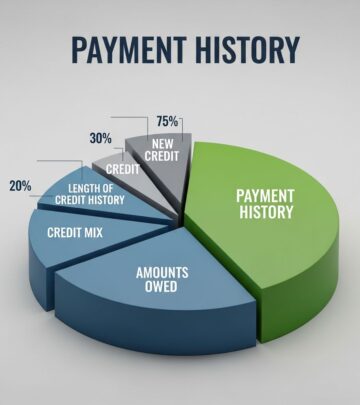
Here’s a breakdown of the standard FICO Score weights:
| Factor | Weight | Description |
|---|---|---|
| Payment History | 35% | Tracks on-time payments across all accounts |
| Amounts Owed | 30% | Evaluates debt levels relative to credit limits |
| Length of Credit History | 15% | Measures age of accounts and overall experience |
| New Credit | 10% | Assesses recent inquiries and account openings |
| Credit Mix | 10% | Reviews variety of credit types managed |
This structure ensures scores between 300 and 850, where 670-739 is good, 740-799 is very good, and 800+ is exceptional.
Payment History: The Heaviest Hitter at 35%
Payment history reigns supreme because it reveals your track record of meeting obligations, the strongest predictor of future behavior. It encompasses every payment on credit cards, loans, mortgages, and utilities reported to credit bureaus.
Positive elements include consistent on-time payments, which build a robust profile over 18+ months. Negative marks arise from delinquencies: payments 30+ days late drop scores by 60-110 points initially, worsening with severity (60, 90 days), and lingering up to seven years. Collections, foreclosures, or bankruptcies inflict deeper, multi-year damage.
- On-time payments: Bolster scores steadily; autopay ensures consistency.
- Late payments: Even one can harm significantly; contact creditors early for hardship options.
- Severe events: Bankruptcies stay 7-10 years, but impacts fade over time.
To strengthen this factor, prioritize due dates via calendar reminders or autopay, and address issues promptly with creditors or nonprofit counselors.
Credit Utilization: Managing Debt Burden (30%)
Amounts owed, or credit utilization, gauges how much of your available credit you’re using, signaling financial stress to lenders. This category splits into balances on revolving (credit cards) versus installment (loans) debt.
The utilization ratio—total balances divided by total limits—is pivotal. Top scorers keep it under 10%, but below 30% avoids penalties. High ratios, even on one card, drag scores down regardless of on-time payments.
Strategies for improvement:
- Pay balances monthly to near zero before statements close.
- Request credit limit increases (without hard inquiries if possible) to lower ratios.
- Avoid closing old cards, as it raises utilization.
For installment loans, steady principal reduction helps, unlike minimum payments that barely dent utilization.
Building a Stronger Credit History Length (15%)
Longer credit histories demonstrate seasoned money management, with FICO examining your oldest account’s age, newest account, and average age across all. No shortcuts exist; building takes time.
Young profiles (under 2 years) score lower, but keeping old accounts open preserves length. For example, a responsibly used card from a decade ago boosts averages significantly.
Practical tips:
- Retain and lightly use oldest accounts.
- Avoid frequent closures that shorten averages.
- Become an authorized user on a family member’s long-standing positive account.
Navigating New Credit Inquiries (10%)
New credit evaluates recent applications and openings, where multiple hard inquiries signal risk. Each inquiry can dip scores 5-10 points, lasting two years, though effects wane after 12 months.
Opening many accounts rapidly dilutes history length and raises mix concerns. Rate shop within 14-45 day windows (per model) to count as one inquiry.
Best practices:
- Limit applications to necessities.
- Pre-qualify with soft inquiries first.
- Space out new accounts over years.
Diversifying Your Credit Mix (10%)
Credit mix rewards handling varied debts: revolving (cards) and installment (loans/mortgages). A balanced portfolio shows versatility, but don’t seek debt solely for this—it’s minor.
Ideal mixes include cards, auto loans, and mortgages if applicable. Lacking variety isn’t dire if other factors excel.
Actionable Strategies to Elevate Your Score
Improving credit requires focus across factors, starting with the biggest. Monitor free weekly reports at AnnualCreditReport.com, dispute errors, and track progress via free scores from banks or apps.
Quick wins:
- Automate payments for 35% protection.
- Target <30% utilization for 30% uplift.
- Preserve history length patiently.
Long-term: Build mix naturally, apply sparingly. Scores rise 20-100+ points in months with discipline.
Frequently Asked Questions
What is the single biggest factor in my credit score?
Payment history at 35%, as it directly shows repayment reliability.
How long do late payments affect my score?
Up to seven years, but impact diminishes over time.
What’s a good credit utilization ratio?
Under 30%, ideally below 10% for optimal scores.
Does closing a credit card help my score?
No, it often hurts by increasing utilization and shortening history.
Can I improve my score without new credit?
Yes, via payments, debt reduction, and error corrections.
Monitoring and Maintaining Your Progress
Regular checks via reputable services keep you informed. Tools from FICO or bureaus provide factor breakdowns, guiding targeted fixes. Consistent habits yield enduring gains, unlocking better rates and opportunities.
References
- 5 Factors That Affect Your Credit Score — Global Credit Union. 2023. https://www.globalcu.org/learn/credit/what-5-factors-affect-your-credit-score/
- What Affects Your Credit Scores? — Experian. 2024-01-15. https://www.experian.com/blogs/ask-experian/credit-education/score-basics/what-affects-your-credit-scores/
- The 5 Factors that Make Up Your Credit Score — Freddie Mac. 2023-05-10. https://myhome.freddiemac.com/blog/financial-education/credit-score-factors
- Five Factors That Impact Your Credit Score — Heartland Bank & Trust Co. 2024. https://www.hbtbank.com/personal-banking/five-factors-that-impact-your-credit-score/
- Factors That Influence Your Credit Score — Nebraska Bank. 2023. https://www.ne.bank/factors-that-influence-your-credit-score
- How are FICO Scores Calculated? — myFICO. 2024-02-20. https://www.myfico.com/credit-education/whats-in-your-credit-score
- Credit Scores — Federal Trade Commission (FTC). 2023-11-01. https://consumer.ftc.gov/credit-scores
Similar Articles








Read full bio of medha deb