Top Companies Owned by Chrysler and Fiat
Explore the major automotive and industrial brands under Chrysler and Fiat's corporate umbrella.
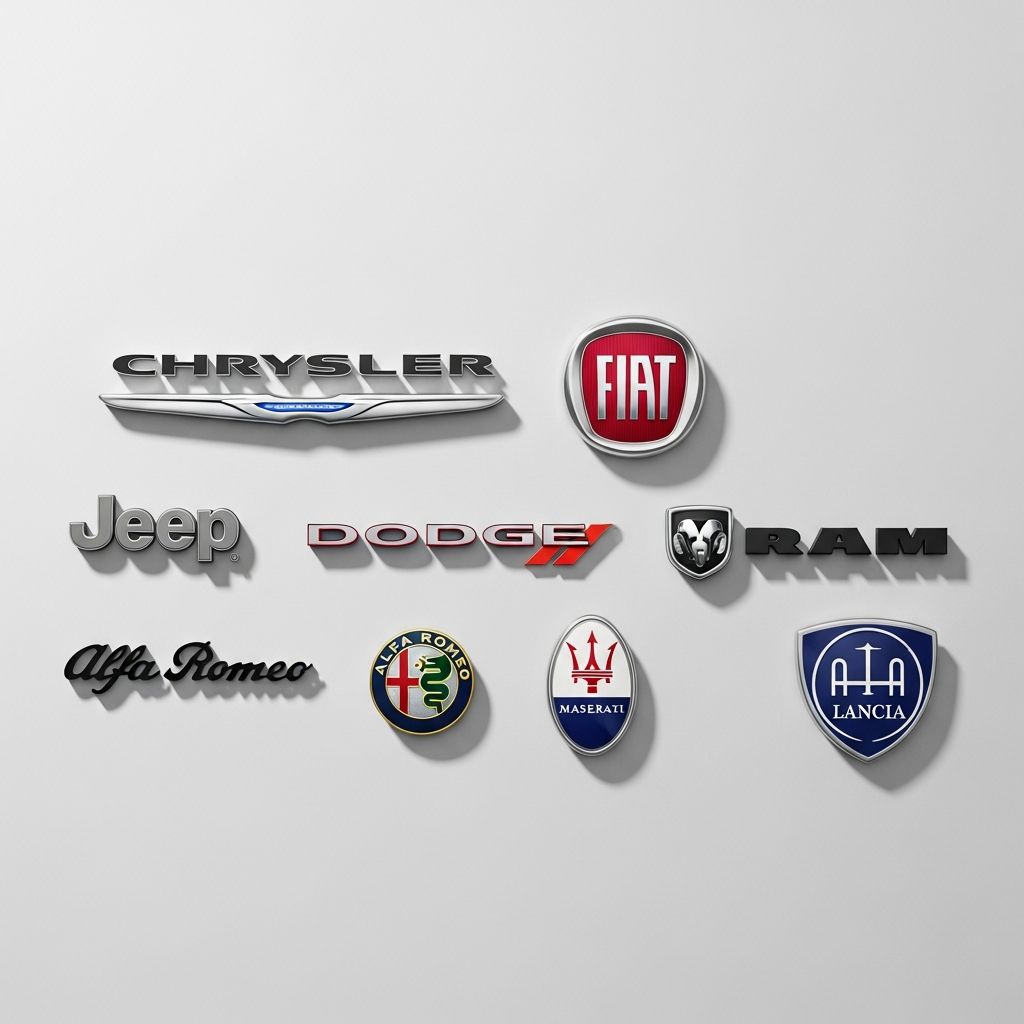
Top Companies Owned by Chrysler and Fiat: A Comprehensive Overview
Fiat Chrysler Automobiles (FCA) represents one of the world’s most significant automotive conglomerates, commanding a diverse portfolio of brands and industrial subsidiaries that span across multiple continents and market segments. Understanding the structure and composition of this corporate entity provides valuable insight into the automotive industry’s consolidation trends and the strategic positioning of legacy automakers in an increasingly competitive global marketplace. The integration of Fiat and Chrysler created a powerhouse capable of competing with industry giants while maintaining distinct brand identities that appeal to different consumer demographics.
The Foundation: Fiat Meets Chrysler
The merger between Fiat Group and Chrysler Group represents one of the automotive industry’s most significant transformations in recent history. Following Chrysler Group’s Chapter 11 bankruptcy reorganization in April 2009, Fiat strategically acquired an initial 20% stake in the struggling American automaker. This acquisition proved to be a catalyst for comprehensive restructuring and strategic repositioning. By January 2012, Fiat’s ownership grew to 58.5%, and by January 2014, Fiat had completed its acquisition of the remaining 41.5% stake from the United Auto Workers, transforming Chrysler Group into a wholly owned subsidiary with a total acquisition cost of $4.9 billion plus an additional $5.5 billion in pension liabilities.
This integration marked a turning point in automotive history, combining European manufacturing expertise with American automotive heritage. The resulting entity, Fiat Chrysler Automobiles, became uniquely positioned to serve diverse global markets with a comprehensive range of vehicles and services spanning luxury, mainstream, and utility segments.
Automotive Brands Under the FCA Umbrella
Jeep: Premium Utility Leadership
Jeep stands as one of the crown jewels in FCA’s automotive portfolio, commanding a significant share of the global SUV and utility vehicle market. With a heritage dating back decades, Jeep has evolved from its military origins to become a symbol of rugged capability and lifestyle aspiration. The brand encompasses multiple vehicle lines, from the iconic Wrangler to the versatile Cherokee and compact Renegade, catering to diverse consumer preferences within the utility vehicle segment.
Ram: Heavy-Duty Truck Excellence
The Ram brand represents FCA’s dominance in the pickup truck category, particularly in the lucrative North American market where heavy-duty trucks command premium prices and significant profit margins. Ram trucks are engineered for both commercial and personal use, offering advanced towing capabilities, innovative technology features, and the towing power that professionals and enthusiasts demand.
Dodge: Performance and Muscle
Dodge maintains its position as a performance-oriented brand within the FCA portfolio, targeting consumers who prioritize power, speed, and driving engagement. The Dodge nameplate continues to deliver muscle car credentials and high-performance vehicles that resonate with a dedicated enthusiast community.
Chrysler: Luxury and Refinement
The Chrysler brand itself represents the luxury segment within FCA’s automotive offerings, focusing on upscale sedans, crossovers, and premium comfort-oriented vehicles designed to compete in the higher echelons of the automotive market.
Fiat: European Compact Expertise
Fiat contributes its renowned expertise in designing and manufacturing compact, efficient vehicles particularly suited to European markets. The brand emphasizes urban mobility, fuel efficiency, and innovative design in smaller vehicle platforms.
Industrial and Automotive Services Divisions
Mopar: Parts and Service Excellence
Mopar represents FCA’s comprehensive service and parts organization, serving as a critical revenue stream and customer touchpoint throughout vehicle ownership lifecycles. This division ensures that FCA customers have access to genuine parts, accessories, and service support across all FCA brands, creating significant aftermarket revenue opportunities.
Comau: Production Automation Leadership
Comau operates as FCA’s specialized subsidiary focused on production automation and manufacturing technology. This division designs and implements advanced robotic systems, assembly solutions, and manufacturing processes that enhance production efficiency and quality across FCA facilities and external customers. Comau’s expertise in automation positions FCA advantageously in an era where manufacturing precision and efficiency determine competitive advantage.
Teksid: Metal Foundry Capabilities
Teksid functions as FCA’s metal foundry operation, maintaining an 84.8% ownership stake in this industrial subsidiary. This division produces precision-cast metal components essential for vehicle manufacturing, providing supply chain integration and cost control advantages while maintaining the quality standards demanded by modern automotive engineering.
VM Motori: Engine and Powertrain Solutions
VM Motori represents FCA’s specialized division for engine and powertrain development, contributing technological innovation and manufacturing expertise to FCA’s vehicle lineup. This subsidiary ensures that FCA maintains control over critical powertrain technologies and can rapidly adapt to changing market demands and environmental regulations.
Strategic Positioning in Global Markets
North American Dominance
FCA’s North American operations represent its strongest market position, where the company benefits from established brand loyalty, comprehensive dealer networks, and substantial profit margins, particularly in the truck and utility vehicle segments. The combination of Ram, Jeep, Dodge, and Chrysler brands provides comprehensive coverage across consumer preferences and price points.
European Heritage and Operations
The Fiat brand and FCA’s European operations maintain significant presence in European markets, where the company specializes in compact vehicles, fuel-efficient designs, and solutions optimized for European driving conditions and preferences.
Global Expansion Opportunities
FCA’s diversified brand portfolio and industrial capabilities position the company to pursue growth opportunities across emerging markets, where different vehicle segments, price points, and technologies command varying demand levels.
The Evolution Toward Stellantis
On October 31, 2019, FCA announced its intent to merge with French automaker Groupe PSA in a transformative 50-50 all-stock transaction valued at approximately $50 billion. This merger was formalized with binding terms announced on December 18, 2019, creating what would become Stellantis, a global automotive leader combining the strengths of both organizations. The merger was expected to complete by the end of Q1 2021, with the newly combined entity projected to achieve annual run-rate synergies exceeding €5 billion.
The combination agreement specified that PSA shareholders would receive 1.742 FCA Common Shares for each PSA Ordinary Share held immediately prior to merger completion. Major stakeholders, including Exor, Établissements Peugeot Frères (EPF), Bpifrance Participations (BPI), and Dongfeng Motor Company, committed to voting in favor of the merger. Upon completion, FCA’s existing shareholders would collectively hold approximately 50 percent of Stellantis Common Shares, maintaining equal ownership with PSA shareholders.
Spin-offs and Strategic Adjustments
Ferrari Separation
On October 29, 2014, FCA announced its intention to separate Ferrari from its corporate structure. This transaction was completed on January 3, 2016, establishing Ferrari as an independent investment managed by Exor. FCA had initially listed 10% of Ferrari shares on the New York Stock Exchange in October 2015 and subsequently distributed its remaining 80% stake in Ferrari to FCA shareholders. Ferrari now trades independently on the NYSE under the ticker symbol “RACE,” allowing the luxury automaker to pursue its own strategic direction while maintaining connections to the Exor investment family.
Financial Performance and Market Standing
FCA’s financial performance demonstrates the strength of its diversified portfolio. As of 2024, FCA reported net income of $5.71 billion, representing substantial growth compared to $409.63 million in 2015, reflecting the operational synergies and profitability of the integrated company. The company maintains significant capital resources and operational flexibility necessary to navigate industry transformation and invest in future technologies.
In 2024, FCA sold 5.5 million vehicles globally, with 47% of sales in Europe, 26% in North America, and 17% in South America, demonstrating truly global market penetration and diversified revenue streams.
Ownership Structure and Corporate Governance
Exor N.V. maintains substantial ownership in FCA with 28.54% of share capital and 44.40% of total voting rights through FCA’s loyalty voting system. This significant ownership position provides strategic direction and ensures continuity of family-influenced corporate governance. BlackRock, Inc. represents the next largest institutional shareholder with approximately 4.21% beneficial ownership.
Frequently Asked Questions
Q: What brands does FCA own?
A: FCA owns multiple automotive brands including Jeep, Ram, Dodge, Chrysler, and Fiat, along with industrial subsidiaries including Mopar (parts and service), Comau (production automation), Teksid (metal foundry), and VM Motori (engines and powertrains).
Q: When did Fiat acquire Chrysler?
A: Fiat began acquiring Chrysler in 2009 following Chrysler’s bankruptcy filing, taking an initial 20% stake. By January 2012, Fiat’s ownership grew to 58.5%, and by January 2014, Fiat completed its acquisition of the remaining stake, making Chrysler fully owned.
Q: What happened to FCA after 2020?
A: FCA merged with Groupe PSA on a 50-50 all-stock basis to create Stellantis. The merger was completed in January 2021, with FCA serving as the surviving entity that changed its name to Stellantis.
Q: Is Ferrari still part of FCA?
A: No, Ferrari was separated from FCA in January 2016 and now operates as an independent company. Exor continues to maintain ownership in both Ferrari and Stellantis (formerly FCA) as a separate investment.
Q: What are the main industrial subsidiaries of FCA?
A: The main industrial subsidiaries include Comau (production automation), Teksid (metal foundry with 84.8% ownership), Mopar (service and parts), and VM Motori (engine and powertrain development).
Q: How many vehicles does FCA sell annually?
A: In 2024, FCA sold 5.5 million vehicles globally, with significant market presence across Europe, North America, and South America.
References
- Fiat Chrysler Automobiles — Wikipedia — Wikipedia Contributors. Retrieved November 29, 2025. https://en.wikipedia.org/wiki/Fiat_Chrysler_Automobiles
- EU Prospectus: FCA and Groupe PSA Merger Documentation — Stellantis N.V. Corporate Investors. https://www.stellantis.com/content/dam/stellantis-corporate/investors/fca-groupe-psa-merger/EU_Prospectus.pdf
- FCA and Groupe PSA Amend Combination Agreement — Stock Titan Financial News. 2020. https://www.stocktitan.net/news/FCAU/fca-and-groupe-psa-amend-their-combination-agreement-to-further-0oegkerldz5q.html
- Form 425 Merger Documentation — United States Securities and Exchange Commission. 2020. https://www.sec.gov/Archives/edgar/data/1605484/000095015720001375/form425.htm
- Fiat Chrysler Automobiles Financial Data 2024 — MarketBeat Financial Analysis. 2025. https://www.marketbeat.com/stocks/NYSE/FCAU/financials/
- FCAU Stock Quote and Company Information — Morningstar Investment Research. 2025. https://www.morningstar.com/stocks/xwbo/fcau/quote
Similar Articles








Read full bio of Sneha Tete