Top Companies Owned by Meta: A Complete Guide
Discover the major companies and platforms owned by Meta and how they shape the digital landscape.
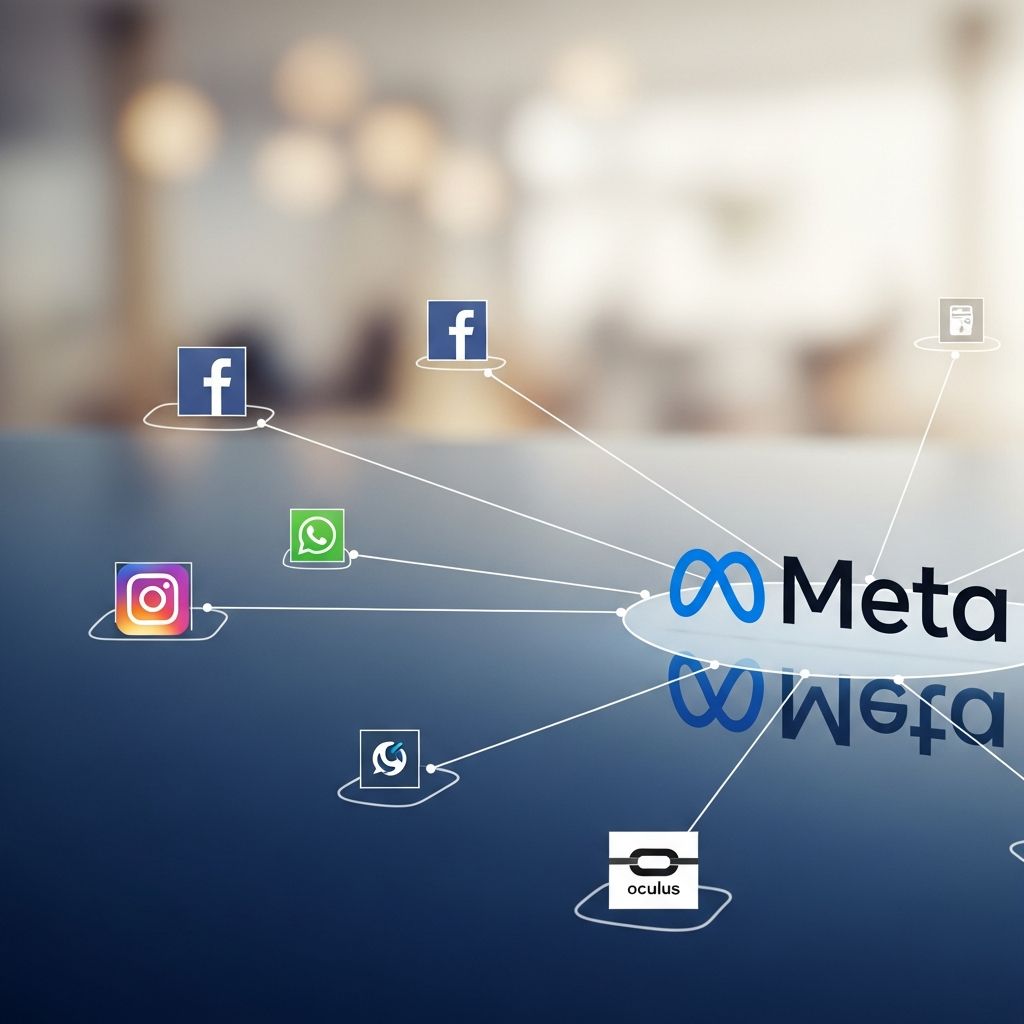
Understanding Meta’s Corporate Empire
Meta Platforms, Inc., formerly known as Facebook, Inc., has evolved far beyond a simple social networking website. Today, the company operates as a multinational technology conglomerate headquartered in Menlo Park, California, with ownership stakes in dozens of companies worldwide. What began as a college networking site has transformed into one of the most influential technology companies in the world, commanding billions in revenue and shaping how billions of people communicate, share content, and interact online.
The strategy behind Meta’s acquisition spree is straightforward: rather than competing directly with emerging platforms and technologies, the company identifies promising startups and established players, then acquires them to integrate their technologies, user bases, and talent into the Meta ecosystem. This approach has proven remarkably successful, though it has also drawn significant regulatory scrutiny and antitrust concerns from governments worldwide.
Instagram: The Photo-Sharing Phenomenon
One of Meta’s most iconic acquisitions is Instagram, which the company purchased in 2012 for $1 billion. At the time, many industry observers questioned the wisdom of this decision. Instagram had generated zero revenue and boasted only 50 million users—hardly the profile of a company worth a billion dollars. Skeptics argued that Zuckerberg had made a catastrophic blunder, overpaying dramatically for a photo-sharing application with an uncertain business model.
However, this acquisition proved to be one of the most prescient business decisions in technology history. Today, Instagram generates billions in annual revenue for Meta, primarily through advertising. The platform’s visual-first approach and younger user demographic made it the perfect complement to Facebook’s aging user base. Instagram’s integration into Meta’s advertising network transformed it from a cash-burning startup into a cash-generating machine that now rivals Facebook itself in terms of daily active users and engagement metrics.
The success of Instagram demonstrates Meta’s ability to identify and nurture emerging platforms. Rather than cannibalizing the original Facebook platform, Instagram flourished as a separate brand with distinct features and appeal to different demographics, allowing Meta to capture a broader audience across multiple platforms.
WhatsApp: Messaging at Scale
In 2014, Meta made another headline-grabbing acquisition by purchasing WhatsApp for $16 billion in cash and stock, plus up to $3 billion in additional payments contingent on performance metrics. This price tag shocked investors and critics alike, particularly given WhatsApp’s lean operational structure and lack of traditional advertising revenue. The acquisition meant Meta was paying more than $40 per user of the platform—an extraordinarily high valuation.
Nevertheless, WhatsApp possessed something invaluable: a rapidly growing user base of hundreds of millions of people worldwide who were using the platform for messaging and communications, particularly in international markets and developing nations where data plans were limited. WhatsApp’s cross-platform compatibility and end-to-end encryption made it the preferred messaging application for billions of users globally.
The strategic value of WhatsApp lay not just in its user base but in its international reach and the possibility of monetizing it through business solutions and advertising in the future. For Meta, acquiring WhatsApp was essentially about purchasing a gateway to billions of potential customers worldwide, particularly in markets where Facebook’s reach was limited.
Oculus VR: Betting on Virtual Reality
In 2014, Meta purchased Oculus VR for $2.3 billion in cash and stock, signaling the company’s serious bet on virtual reality technology. At the time, VR was largely considered a niche technology, the domain of gamers and tech enthusiasts. Many questioned whether Meta should be investing billions in what seemed like an unproven technology.
However, Zuckerberg and his team recognized that virtual reality could represent the next major computing platform after mobile devices. By acquiring Oculus, Meta gained control of the leading consumer VR headset manufacturer and positioned itself at the forefront of the VR revolution. This acquisition laid the groundwork for Meta’s later pivot toward the metaverse—a concept that would come to dominate the company’s strategic vision and investment priorities.
The Oculus acquisition also gave Meta a portfolio of VR-related technologies and talent that would prove essential as the company developed its Reality Labs division, investing billions annually into VR, augmented reality, and mixed reality technologies.
Beat Games and Beat Saber
In November 2019, Meta announced the acquisition of Beat Games, the Czech game developer responsible for Beat Saber, one of the most popular VR games of that era. Beat Saber, a rhythm game where players slash blocks to the beat of music using virtual lightsabers, became a flagship title for the Oculus VR platform and helped drive hardware sales.
This acquisition demonstrated Meta’s strategy of controlling the entire VR ecosystem—not just the hardware through Oculus but also the compelling content that would drive hardware adoption. By owning Beat Games, Meta ensured that one of VR’s killer applications remained exclusive to its platform.
Giphy: The GIF Platform Gamble
In May 2020, Meta announced the acquisition of Giphy, the popular GIF search and sharing platform, for a reported $400 million in cash. Giphy had become an essential part of internet culture, with billions of GIFs being shared across social media platforms, messaging applications, and websites daily.
However, this acquisition quickly encountered regulatory resistance. In August 2021, the UK’s Competition and Markets Authority (CMA) stated that Meta might be required to divest Giphy following an investigation that found the deal would harm competition in the display advertising market. The CMA was concerned that Meta already controlled a substantial portion of the UK advertising market and that integrating Giphy into Meta’s advertising network would further consolidate that power.
Meta initially resisted the divestment order but ultimately agreed to sell Giphy to Shutterstock in May 2023 for $53 million, a significant reduction from the original $400 million purchase price. This case illustrated the growing regulatory scrutiny facing Meta’s acquisition strategy and the company’s limited ability to pursue all acquisition targets without regulatory approval.
Kustomer: Enterprise Communications
In November 2020, Meta announced plans to acquire Kustomer, a customer-service platform and chatbot specialist startup, for a reported valuation slightly exceeding $1 billion. The acquisition was designed to help Meta expand its business solutions offerings and enable companies to use Kustomer’s platform for customer service purposes.
The deal closed in February 2022 after receiving the necessary regulatory approvals. Through Kustomer, Meta aimed to capture a share of the lucrative enterprise software market and provide businesses with tools to communicate with customers through Meta’s various platforms and messaging services.
Reality Labs and VR Expansion
Beyond Oculus and Beat Games, Meta has made numerous acquisitions to build out its Reality Labs division. These include companies focused on haptic technology, motion tracking, and VR game development. Notable acquisitions in this space include:
CTRL-labs, acquired in September 2019 for an estimated $500 million to $1 billion, developed technology for neural interfaces and brain-computer interaction—technology that could eventually allow users to control VR experiences through thought alone.
Lofelt, a Berlin-based haptic technology startup, was acquired in September 2022 to enhance the sensory experience of virtual reality by providing touch feedback.
Scape Technologies, acquired in February 2020 for approximately $40 million, specialized in augmented reality mapping and localization technology.
Game development studios including Sanzaru Games, Twisted Pixel Games, and Armature Studio were acquired to build exclusive content for Meta’s VR platforms.
Facebook Marketplace and E-Commerce Ventures
Meta’s acquisitions extend into e-commerce and online shopping. The company acquired Packagd in September 2019 to enhance Facebook Marketplace, Meta’s peer-to-peer buying and selling platform. Later, Meta acquired Presize in April 2022 for approximately $100 million to integrate augmented reality try-on technology into Facebook Shops and Instagram Shopping, allowing users to visualize products virtually before purchasing.
Blockchain and Web3 Initiatives
Demonstrating its interest in emerging technologies, Meta acquired Chainspace in February 2019, a blockchain research and development company based in London. This acquisition signaled Meta’s intention to explore blockchain technology and potentially integrate it into its platforms, though the company’s Web3 and blockchain initiatives have faced mixed results and significant regulatory uncertainty.
Recent AI and Machine Learning Acquisitions
In recent years, Meta has accelerated its acquisition pace in artificial intelligence and machine learning. The company acquired Play AI in July 2025 and WaveForms in August 2025, both directed toward Meta Superintelligence Labs. Additionally, Meta acquired Rivos in September 2025 to support Meta’s training and inference accelerator capabilities.
These recent acquisitions reflect Meta’s pivot toward AI as a core strategic focus, particularly as the company competes with other tech giants in developing advanced AI capabilities.
The Strategic Rationale Behind Meta’s Acquisitions
Meta’s acquisition strategy reflects several key business principles. First, the company acquires competitors and complementary platforms to expand its reach across different demographics and use cases. Instagram and WhatsApp serve different purposes than Facebook, allowing Meta to capture users who might not otherwise use the original Facebook platform.
Second, Meta acquires emerging technologies and talented teams. Companies like CTRL-labs and Scape Technologies brought specialized expertise that would take Meta years to develop internally. By acquiring established teams, Meta accelerates its innovation timeline.
Third, Meta uses acquisitions to preempt competition. By purchasing promising startups, Meta prevents potential competitors from challenging its dominance in key markets. This strategy has drawn significant antitrust scrutiny, with regulators questioning whether Meta is acquiring companies to eliminate competition rather than achieve genuine synergies.
Regulatory Challenges and Antitrust Concerns
Meta’s aggressive acquisition strategy has attracted the attention of antitrust regulators worldwide. The Giphy case demonstrated that regulators are increasingly willing to block or unwind Meta’s acquisitions if they believe they harm competition. The U.S. Federal Trade Commission has challenged Meta’s acquisitions and has even sought to force Meta to divest Instagram and WhatsApp, arguing that these companies should have remained independent competitors.
These regulatory pressures have constrained Meta’s ability to pursue certain acquisitions and have forced the company to divest assets like Giphy. Going forward, Meta’s acquisition strategy will likely face increasing scrutiny and regulatory limitations.
Geographic Distribution of Acquisitions
The majority of Meta’s acquisitions are based in the United States, with a particularly high concentration in and around the San Francisco Bay Area. This reflects the geographic clustering of technology talent and startup activity in Silicon Valley. However, Meta has also acquired companies from Europe, Israel, and other regions, demonstrating a global approach to identifying and acquiring promising technologies and teams.
Frequently Asked Questions
Q: How much has Meta spent on acquisitions?
A: Meta has spent tens of billions of dollars acquiring over 91 companies, with major acquisitions including WhatsApp ($16 billion), Instagram ($1 billion), and Oculus VR ($2.3 billion). The company’s total acquisition spending significantly exceeds $50 billion across all deals.
Q: Why does Meta acquire so many companies?
A: Meta acquires companies to expand its platform portfolio, acquire specialized technology and talent, preempt competition, and position itself in emerging technology spaces like VR and AI. This strategy allows Meta to grow faster than developing technologies internally.
Q: Has Meta been forced to divest any companies?
A: Yes, Meta was required to divest Giphy to Shutterstock in 2023 following a regulatory decision by the UK Competition and Markets Authority. The sale occurred at a significant loss from the original purchase price.
Q: What is Meta’s most successful acquisition?
A: Instagram is widely considered Meta’s most successful acquisition. Purchased for $1 billion in 2012 when it had no revenue, Instagram now generates billions in annual advertising revenue and serves billions of users worldwide.
Q: Does Meta own WhatsApp?
A: Yes, Meta has owned WhatsApp since 2014, when it acquired the messaging platform for $16 billion. WhatsApp remains a separate app and brand within Meta’s portfolio, serving over 2 billion users globally.
Q: What is Meta’s position on future acquisitions?
A: Meta continues to make acquisitions, particularly in AI and emerging technology spaces. However, increased regulatory scrutiny means future acquisitions will likely face greater regulatory review and may be subject to conditions or outright rejection.
Conclusion
Meta’s portfolio of acquisitions represents one of the most aggressive expansion strategies in technology history. From Instagram and WhatsApp to Oculus VR and emerging AI companies, Meta has systematically built a diverse empire spanning social media, messaging, virtual reality, e-commerce, and artificial intelligence. While this strategy has proven remarkably successful in generating shareholder value and expanding Meta’s market reach, it has also attracted significant regulatory opposition and antitrust scrutiny.
Going forward, Meta’s acquisition strategy will likely be constrained by regulatory limitations and public pressure. Nevertheless, the company’s existing portfolio of acquisitions positions it as a dominant force across multiple technology sectors and ensures its continued relevance as digital technology evolves. Whether you view Meta’s acquisitions as brilliant strategic moves or concerning monopolistic behavior likely depends on your perspective on corporate consolidation and technology regulation.
References
- List of mergers and acquisitions by Meta Platforms — Wikimedia Foundation. 2025-11-30. https://en.wikipedia.org/wiki/List_of_mergers_and_acquisitions_by_Meta_Platforms
- Meta Platforms — Wikimedia Foundation. 2025-11-30. https://en.wikipedia.org/wiki/Meta_Platforms
- Mark Zuckerberg Companies: A Comprehensive Overview of His Holdings — Plerdy. 2024. https://www.plerdy.com/blog/mark-zuckerberg-companies/
Similar Articles








Read full bio of medha deb