Top 10 Companies Owned By Amazon And What They Do In 2025
Explore Amazon's major acquisitions and subsidiaries shaping retail, tech, and entertainment.
Understanding Amazon’s Corporate Portfolio
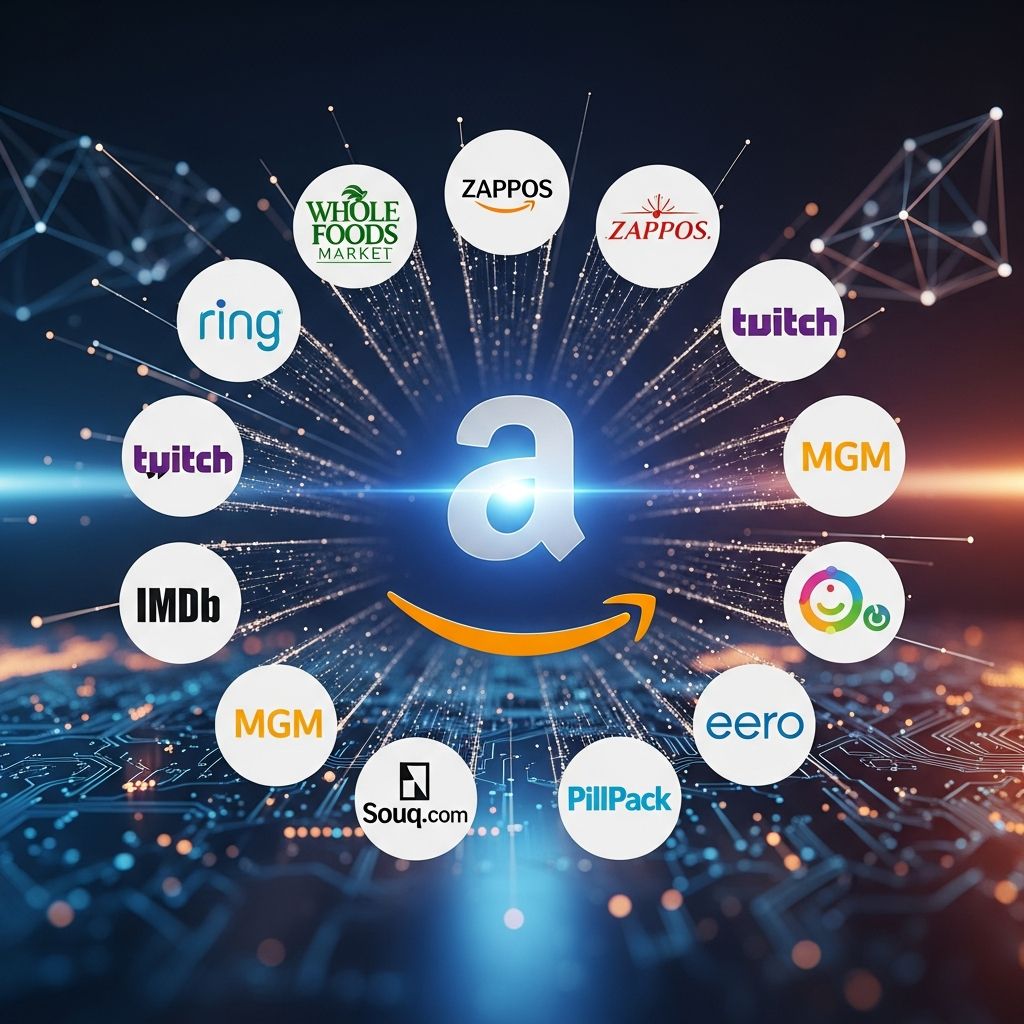
Amazon has evolved from an online bookstore into a global technology and retail powerhouse through strategic acquisitions and subsidiary development. The company’s portfolio spans multiple industries including e-commerce, cloud computing, entertainment, healthcare, and logistics. These acquisitions have not only expanded Amazon’s market reach but also integrated complementary services that enhance its core business operations. Understanding the major companies owned by Amazon provides insight into the company’s diversification strategy and long-term vision for global expansion.
The Strategic Importance of Amazon’s Acquisitions
Amazon’s approach to acquisitions differs from many large corporations. Rather than seeking quick financial returns, Amazon invests in companies that align with its long-term strategic goals and customer-centric philosophy. The company identifies businesses that either fill gaps in its existing ecosystem or provide access to new markets and technologies. This strategy has enabled Amazon to maintain competitive advantages across multiple industries and create synergies between its various business units.
Top 10 Companies Owned by Amazon
1. Amazon Web Services (AWS)
Amazon Web Services stands as Amazon’s most valuable subsidiary and a cornerstone of the company’s profitability. Launched in 2006, AWS provides comprehensive cloud computing solutions including storage, computing power, databases, and machine learning services. AWS serves millions of customers worldwide, from startups to Fortune 500 companies, generating substantial revenue for Amazon. The platform’s dominance in the cloud computing market has made it an essential component of modern digital infrastructure, and its profitability significantly exceeds that of Amazon’s retail operations.
2. Whole Foods Market
Amazon acquired Whole Foods Market in 2017 for approximately $13.7 billion, marking one of the largest acquisitions in e-commerce history. This acquisition provided Amazon with a substantial physical retail presence and integrated grocery operations into its ecosystem. Whole Foods operates hundreds of stores across North America, offering organic and specialty food products. The acquisition enabled Amazon to combine its online retail expertise with physical grocery retail, creating new opportunities for same-day delivery through Amazon Prime and introducing customers to grocery shopping innovations.
3. Zappos
Amazon purchased Zappos, the online shoe and apparel retailer, in 2009 for $1.2 billion. Zappos has maintained its independent brand and company culture while benefiting from Amazon’s infrastructure and logistics capabilities. The acquisition exemplified Amazon’s willingness to preserve successful company cultures and operational models while integrating them into its broader ecosystem. Zappos continues to operate as a distinct brand within Amazon, serving customers with its unique customer service approach.
4. Twitch Interactive
Amazon acquired Twitch Interactive in 2014 for $970 million, establishing its presence in the live-streaming and gaming entertainment space. Twitch operates the world’s leading live-streaming platform for gamers, with millions of daily users watching and broadcasting gameplay, creative content, and other entertainment. This acquisition positioned Amazon as a major player in gaming entertainment and opened new advertising and subscription revenue opportunities. Twitch’s integration with Amazon Prime has created additional value for both platforms.
5. Ring
Amazon acquired Ring, a smart home security company, in 2018 for $839 million. Ring’s video doorbell and home security products complement Amazon’s broader smart home ecosystem, which includes Alexa and other connected devices. The acquisition strengthened Amazon’s position in the Internet of Things market and provided customers with integrated security solutions accessible through their Alexa devices. Ring’s technology has become increasingly important as consumers seek comprehensive home automation and security solutions.
6. Kiva Systems (Amazon Robotics)
Amazon acquired Kiva Systems in 2012 for $775 million, which has since been rebranded as Amazon Robotics. This acquisition brought advanced robotic automation technology into Amazon’s fulfillment centers, dramatically improving warehouse efficiency and order processing speed. The robots work alongside human employees to move inventory more efficiently, reducing the time required to pick and pack orders. Amazon Robotics has become integral to Amazon’s logistics operations, enabling the company to fulfill millions of orders daily while maintaining competitive shipping speeds.
7. PillPack
Amazon acquired PillPack, an online pharmacy service, in 2018 for $753 million. This acquisition marked Amazon’s entry into the pharmaceutical and healthcare services sector. PillPack delivers prescription medications in pre-sorted packets organized by date and time, simplifying medication management for patients. The acquisition reflects Amazon’s strategy to expand into healthcare services and leverage its logistics infrastructure in the pharmaceutical industry, providing customers with convenient and efficient prescription delivery options.
8. MGM Holdings
Amazon acquired MGM Holdings in 2022, though specific financial details were not initially disclosed. This acquisition brought iconic film and television studios into Amazon’s entertainment division, providing access to extensive content libraries spanning decades. MGM’s production capabilities and catalog strengthen Amazon Prime Video’s competitive position against other streaming services like Netflix and Disney+. The acquisition reflects Amazon’s commitment to original content production and entertainment industry presence.
9. Audible
Amazon acquired Audible, a leading audiobook and digital audio content platform, in 2008. Audible operates the world’s largest selection of digital audiobooks with millions of titles available through subscription and purchase models. The acquisition has integrated audiobook services into Amazon’s broader media ecosystem, providing Kindle users with complementary audio options. Audible continues to grow as consumers increasingly adopt audio-based learning and entertainment.
10. Goodreads
Amazon acquired Goodreads, the popular social network for book readers, in 2013. Goodreads provides Amazon with valuable data about reader preferences and book discovery patterns, enhancing recommendations across Amazon’s publishing and retail platforms. The platform maintains its community-focused approach while being fully integrated into Amazon’s book ecosystem, combining reader social networks with Amazon’s commercial book distribution capabilities.
Additional Notable Subsidiaries and Acquisitions
Beyond the top 10, Amazon owns numerous other subsidiaries that contribute to its diversified portfolio:
| Category | Key Subsidiaries & Services |
|---|---|
| Media & Entertainment | IMDb, Box Office Mojo, Amazon Studios, ComiXology, Wondery, Brilliance Publishing |
| Technology & Innovation | Annapurna Labs, Body Labs, Digital Photography Review, CreateSpace |
| Smart Home & Devices | Blink Home, Eero, Zoox, Kuiper Systems |
| Retail & E-Commerce | AbeBooks, Woot, Book Depository, Shopbop |
| Healthcare & Services | One Medical Group, Iora Health, Amazon Pharmacy |
The Impact of Amazon’s Acquisition Strategy
Amazon’s acquisition strategy has fundamentally reshaped multiple industries and created unprecedented integration across previously separate markets. By acquiring complementary businesses, Amazon has built a comprehensive ecosystem where services reinforce each other. AWS provides the infrastructure for Amazon’s retail operations, streaming services, and other digital offerings. The acquisition of logistics companies and robotics firms has revolutionized e-commerce fulfillment. Entertainment acquisitions have strengthened Amazon Prime Video and expanded content offerings.
The company’s acquisitions also demonstrate a commitment to innovation and technological advancement. By acquiring companies like Annapurna Labs and Body Labs, Amazon gains access to cutting-edge technologies that might take years to develop internally. This approach accelerates Amazon’s innovation timeline and keeps the company at the forefront of technological advancement across multiple sectors.
Synergies Between Amazon’s Subsidiaries
A key advantage of Amazon’s acquisition strategy is the synergies created between its various subsidiaries. AWS infrastructure supports multiple Amazon services and subsidiary operations, creating economies of scale. Amazon Prime membership integrates benefits from entertainment (Prime Video, Music, Gaming), retail (free shipping, deals), and hardware (device discounts). The company’s logistics network benefits Whole Foods delivery, PillPack pharmacy services, and traditional e-commerce. These interconnected relationships create significant competitive advantages that are difficult for competitors to replicate.
Future Growth and Expansion
Amazon continues to evaluate acquisition opportunities that align with its strategic vision. Recent focus areas include autonomous vehicles (Zoox), satellite internet services (Kuiper Systems), and healthcare expansion. The company’s consistent investment in emerging technologies and markets suggests continued acquisition activity designed to expand its influence across multiple industries. Amazon’s long-term strategy appears focused on creating an integrated ecosystem where multiple services work seamlessly together for maximum customer benefit.
Frequently Asked Questions
Q: What is Amazon’s most profitable subsidiary?
A: Amazon Web Services (AWS) is Amazon’s most profitable subsidiary, generating substantial profit margins significantly higher than Amazon’s retail operations. AWS contributes a major portion of Amazon’s overall profitability and serves as a crucial income stream for the company.
Q: How much has Amazon spent on acquisitions?
A: Amazon has spent tens of billions of dollars on acquisitions throughout its corporate history. Major acquisitions include Whole Foods for approximately $13.7 billion, with hundreds of other smaller acquisitions collectively representing significant capital expenditure.
Q: Do Amazon’s subsidiaries operate independently?
A: Many Amazon subsidiaries maintain operational independence while benefiting from Amazon’s infrastructure, technology platform, and resources. Companies like Zappos and Audible preserve their brand identities and company cultures while being fully owned by Amazon.
Q: How do Amazon’s acquisitions benefit customers?
A: Amazon’s acquisitions create integrated services that enhance customer experience through unified accounts, improved delivery options, expanded content libraries, and innovative features. Customers benefit from seamless integration across multiple services and improved efficiency from technological advancements.
Q: What industries does Amazon’s portfolio cover?
A: Amazon’s subsidiaries span multiple industries including e-commerce, cloud computing, streaming entertainment, healthcare, pharmacy services, smart home technology, logistics, and autonomous vehicles, creating a highly diversified corporate portfolio.
References
- Amazon Subsidiaries and Acquisitions — GreyB Insights. 2025. https://insights.greyb.com/amazon-subsidiaries-and-acquisitions/
- Everything Owned by Amazon — SMB Compass. 2025. https://www.smbcompass.com/everything-owned-by-amazon/
- Amazon Subsidiaries [2025] — Lexchart. 2025. https://lexchart.com/amazon-subsidiaries-2025/
- Major Amazon Subsidiaries & Acquisitions — eBoost Partners. 2025. https://eboostpartners.com/resources/amazon-seller-guide/amazon-subsidiaries/
Similar Articles








Read full bio of medha deb