Today’s Mortgage Rates and Trends: June 15, 2022
Expert analysis of June 2022 mortgage rates, market trends, and what they mean for homebuyers.

As we approach the middle of June 2022, the mortgage market continues to reflect the broader economic pressures facing the nation. With inflation concerns persisting and the Federal Reserve maintaining its aggressive stance on interest rates, homebuyers and refinancers face a challenging landscape. Understanding the current mortgage rate environment and what it means for your financial future is essential for anyone considering a home purchase or refinancing option.
Current Mortgage Rates on June 15, 2022
The mortgage rate landscape in mid-June presents a complex picture for borrowers. Current rates have stabilized somewhat after the sharp increases experienced in the spring months, though they remain substantially elevated compared to 2021 levels.
30-Year Fixed-Rate Mortgages
The 30-year fixed-rate mortgage, the most popular home loan product in America, is averaging around 5.60% as of mid-June 2022. This represents a significant jump from just one year earlier, when the same loan product carried a rate of approximately 3.03%. The 30-year fixed mortgage offers borrowers the advantage of predictable monthly payments spread over a lengthy period, making home ownership more accessible from a monthly cash flow perspective. However, this longer repayment timeline means significantly higher total interest paid over the life of the loan.
15-Year Fixed-Rate Mortgages
For borrowers seeking to pay off their mortgages faster, the 15-year fixed-rate mortgage is averaging approximately 4.77% in mid-June. These shorter-term loans typically feature lower interest rates than their 30-year counterparts, though the monthly payments are correspondingly higher. Borrowers choosing this option benefit from substantially lower total interest costs and faster equity building in their homes.
Adjustable-Rate Mortgages (ARMs)
Adjustable-rate mortgage options continue to offer lower initial rates for those willing to accept future rate variability. The 5/1 ARM is averaging around 4.47%, the 7/1 ARM is at approximately 4.91%, and the 10/1 ARM stands near 5.07%. These products can appeal to buyers who plan to sell or refinance within the initial fixed-rate period, though they carry inherent risk if rates spike during the adjustment phase.
Specialty Loan Programs
Government-backed loan programs continue to serve specific borrower demographics. FHA loans are averaging around 5.65%, while VA loans for eligible veterans average approximately 5.68%. Jumbo loans, which exceed standard conforming loan limits, are averaging near 5.06%. These specialty programs remain important tools for expanding homeownership access to underserved populations.
Rate Trends and Market Analysis
Recent Rate Movement
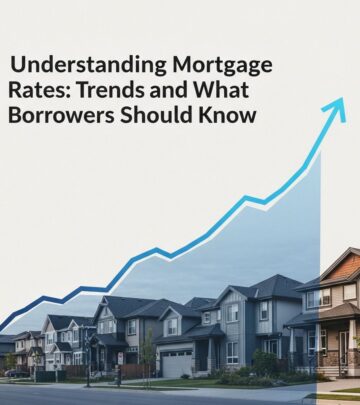
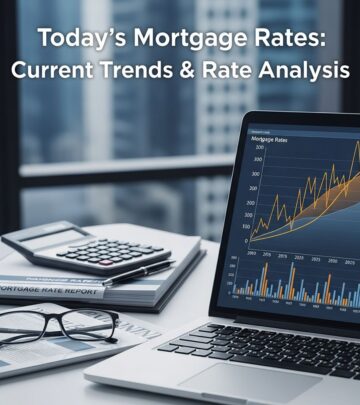
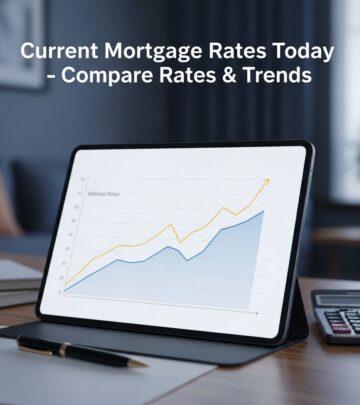
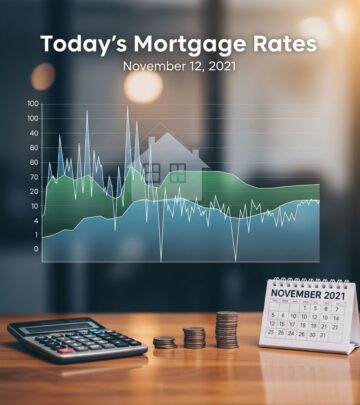
June mortgage rates show a slight moderation from May’s levels, declining from approximately 5.27% to around 5.09-5.60% depending on the source and exact date of measurement. However, this modest cooling should be viewed in context: rates have climbed more than 250 basis points in just twelve months. The tension between recession fears and persistent inflation concerns appears to be creating a temporary equilibrium that’s keeping rates relatively stable rather than continuing their upward trajectory from spring.
Comparison to Earlier 2022 Trends
The mortgage rate trajectory throughout 2022 demonstrates the magnitude of change in the housing finance market. Rates remained relatively stable in early 2022, hovering between 2.80% and 3.80% through February. The dramatic inflection point arrived in March 2022, when rates surged to the 5.00% level. April saw rates rise to 5.22%, followed by May’s 5.27%. The current plateau near 5.60% suggests the market may be finding temporary stability, though experts remain divided on whether this represents a genuine pause or merely a slower pace of increases.
Year-Over-Year Comparison
Perhaps nothing illustrates the dramatic shift in the mortgage market more starkly than year-over-year comparisons. In June 2021, the 30-year fixed-rate mortgage averaged just 2.99%. Twelve months later, that same product commands rates near 5.60%, representing an 87% increase in borrowing costs. This dramatic acceleration has fundamentally altered the economics of home purchase and refinancing decisions across the nation.
Housing Affordability Crisis
Monthly Payment Increases
The combined impact of rising mortgage rates and climbing home prices has created an unprecedented affordability crisis. According to the National Association of Realtors, the median existing-home sales price rose 13.3% year-over-year in June 2022. More significantly, the monthly mortgage payment increased by 53.7% compared to June 2021, climbing from $1,265 to $1,944. This represents a monthly increase of $679 in mortgage payments within just twelve months, a dramatic change that has pushed many potential buyers out of the market.
Affordability Index Hits 33-Year Low
The National Association of Realtors’ Housing Affordability Index registered 98.5 in June 2022, the lowest reading since June 1989. This metric quantifies the relationship between home prices, mortgage rates, and median family income. An index value below 100 indicates that the median family income is insufficient to qualify for a mortgage on the median-priced home in that area. This represents a critical threshold that signals fundamental affordability problems.
Income Growth Lags Behind Payment Increases
While monthly mortgage payments surged 5.3% in June compared to May, median family income increased by only 1.4% during the same period. Over the full year, mortgage payments climbed 53.7% while median family income rose just 5.8%. This dramatic divergence illustrates how wage growth remains woefully inadequate to keep pace with housing cost inflation.
Regional Variations in Affordability
Housing affordability challenges are not evenly distributed across the nation. The West region faces the most acute affordability crisis, with mortgage payments consuming 35.9% of median family income. The South follows with 25.2%, the Northeast at 24.4%, and the Midwest offers the most favorable affordability conditions at 18.9% of income devoted to mortgage payments. Financial advisors typically recommend that mortgage payments not exceed 25% of household income, a threshold exceeded in three of four major regions.
Market Drivers and Economic Context
Federal Reserve Policy Impact
The primary driver of rising mortgage rates remains the Federal Reserve’s aggressive monetary policy tightening. The Fed has increased the federal funds rate multiple times in 2022, with additional hikes signaled for the remainder of the year. Additionally, the central bank has begun tapering its purchase of mortgage-backed securities, removing a source of demand that had artificially suppressed rates. These policy actions represent a dramatic reversal from the pandemic-era stimulus that kept rates near historic lows.
Inflation Concerns
Persistent inflation remains the underlying justification for rate increases. Supply chain disruptions, geopolitical tensions, and strong consumer demand have combined to push price increases across the economy. Mortgage rates have risen in tandem with these broader inflation pressures, as lenders demand higher returns to compensate for eroding purchasing power. Freddie Mac’s chief economist has emphasized that current rate levels are materially affecting both housing affordability and purchase demand.
Recession Worries and Economic Slowdown
Paradoxically, even as the Fed raises rates to combat inflation, recession concerns have intensified. Economic growth has slowed, leading some observers to suggest that rate increases may be overdone. This tension between inflation and slowdown concerns has created a complex dynamic where rates stabilize near current levels rather than continuing their relentless upward march. Some market observers believe that economic weakness will eventually force the Fed to pause rate increases, potentially providing some relief to the mortgage market.
Expert Forecasts and Outlook
Near-Term Rate Projections
Mortgage rate experts are increasingly suggesting that rates may plateau near current levels rather than continuing to climb through year-end 2022. This represents a meaningful revision from earlier forecasts predicting rates would continue rising throughout the year. The hypothesis suggests that the tug-of-war between inflation concerns and economic slowdown fears will keep rates relatively stable, creating a holding pattern in the mortgage market.
Potential Rate Spikes
Despite optimism about rate stabilization, some experts caution that further spikes remain possible. Should inflation prove more persistent than expected, or should Fed policy shift toward even more aggressive tightening, mortgage rates could resume climbing. Conversely, if recession fears intensify materially, the Fed might be forced to pivot toward rate cuts, potentially providing meaningful relief to borrowers.
Long-Term Market Dynamics
Looking beyond the immediate near-term, mortgage rates will ultimately be determined by fundamental economic factors including long-term inflation expectations, economic growth, labor market conditions, and Fed policy. The current environment represents a significant shock to a housing market that had grown accustomed to near-historic-low rates. Market participants are still adjusting to this new reality.
Implications for Homebuyers and Refinancers
Challenges for Home Purchasers
Prospective homebuyers face a particularly challenging environment in mid-June 2022. The combination of elevated mortgage rates and rising home prices has dramatically reduced purchasing power. A buyer with a fixed budget is now able to afford substantially less home than they could have just twelve months earlier. This has begun to dampen demand, potentially providing some price relief in overheated markets, though such relief has been modest thus far.
Refinancing Considerations
The refinancing market has essentially collapsed under current rate conditions. With mortgage rates at 5.60% and higher, homeowners with existing mortgages below 4% have little incentive to refinance. The rate improvement necessary to offset refinancing costs and fees is simply not available in the current market. This creates a lock-in effect where existing low-rate borrowers remain in place, unable to benefit from rate reductions if they eventually materialize.
Still a Viable Time for Some Borrowers
Despite the challenging conditions, mortgage experts note that financing or refinancing may still make sense for some borrowers. Those with substantially higher rates, those requiring cash-out refinancing for home improvements or debt consolidation, and borrowers willing to accept ARM products for their lower initial rates may find opportunities. Additionally, first-time homebuyers without existing mortgages remain the primary market participants.
The Bright Side: Inventory Relief
Increasing Housing Supply
One positive development for the housing market is an increasing supply of inventory. After years of constrained supply supporting rapid price appreciation, more homes are coming to market. This increased supply reflects several factors including rising rates reducing purchase demand, existing homeowners deciding to sell in response to higher prices, and new construction adding units to the market. Increased inventory provides some negotiating leverage to buyers and may help moderate price appreciation.
Reduced Competition Among Buyers
The sharp decline in purchase demand resulting from higher rates has eliminated the ultra-competitive bidding wars that characterized the 2020-2021 housing market. Buyers with reasonable offers now stand a better chance of success than they did just six months ago. While home prices remain elevated, the ferocity of competition has abated substantially, potentially creating windows of opportunity for well-positioned buyers.
Long-Term Wealth Building Through Homeownership
Despite near-term affordability challenges, housing professionals note that homeownership remains an important vehicle for long-term wealth building. Even as rates rise and prices remain elevated, homes continue to represent tangible assets with intrinsic value. Homeowners build equity through mortgage principal repayment and potentially benefit from long-term price appreciation. For those able to navigate the affordability challenges of the current market, home purchase remains a sound long-term financial decision.
Frequently Asked Questions
Q: Why have mortgage rates increased so dramatically in 2022?
A: Mortgage rates have risen primarily due to the Federal Reserve’s aggressive interest rate increases aimed at combating persistent inflation. The Fed has also stopped its mortgage-backed securities purchase program, removing artificial demand support. Higher rates reflect both Fed policy and market expectations for sustained inflation.
Q: Are mortgage rates expected to continue rising?
A: Experts are divided on near-term rate direction. Many suggest rates may plateau near current levels as the economy shows signs of slowdown. However, if inflation persists or the Fed signals additional tightening, rates could spike higher. Conversely, severe recession concerns could eventually prompt rate cuts.
Q: Should I wait for rates to decline before buying a home?
A: Timing the mortgage market is extremely difficult. While rates could decline if the economy enters recession, predicting this with certainty is impossible. For those with stable employment and housing needs, the long-term benefits of homeownership often outweigh near-term rate fluctuations. Consult with a financial advisor about your specific situation.
Q: Is refinancing worthwhile at current rates?
A: For most homeowners with existing mortgages below 4%, refinancing at current rates does not make economic sense. The rate improvement necessary to recoup refinancing costs is simply not available. However, cash-out refinances for home improvements or debt consolidation may still be worthwhile despite higher rates.
Q: What is an ARM and should I consider one?
A: An adjustable-rate mortgage offers lower initial rates but includes rate increases after a fixed period. ARMs can be appropriate for borrowers planning to sell or refinance within the initial period, or those believing rates will decline. However, they carry significant risk if rates spike during the adjustment phase.
Q: How do current mortgage rates compare to historical averages?
A: Current rates near 5.60% remain below the long-term historical average of approximately 7.70%, but dramatically above the pandemic-era lows near 2.70%. Rates are moderate from a historical perspective but elevated compared to the recent past.
References
- Mortgage Rates Watch: June 2022 — Mashvisor. 2022. https://www.mashvisor.com/blog/june-mortgage-rates/
- Today’s Mortgage Rates Ease Lower | June 6, 2022 — Money.com. 2022. https://money.com/todays-mortgage-rates-june-6-2022/
- Housing Affordability Conditions Fade as Mortgage Rates Push Monthly Payments Higher in June 2022 — National Association of Realtors. 2022. https://www.nar.realtor/blogs/economists-outlook/housing-affordability-conditions-fade-as-mortgage-rates-push-monthly-payments-higher-in-june-2022
- 30-Year Fixed Rate Mortgage Average in the United States — Federal Reserve Economic Data (FRED). 2022. https://fred.stlouisfed.org/series/MORTGAGE30US
- Mortgage Rate History: 1970s To 2025 — Bankrate. 2025. https://www.bankrate.com/mortgages/historical-mortgage-rates/
Similar Articles








Read full bio of medha deb