Today’s Mortgage Rates: Current Trends & Rate Analysis
Track today's mortgage rates, refinance options, and market trends to make informed lending decisions.
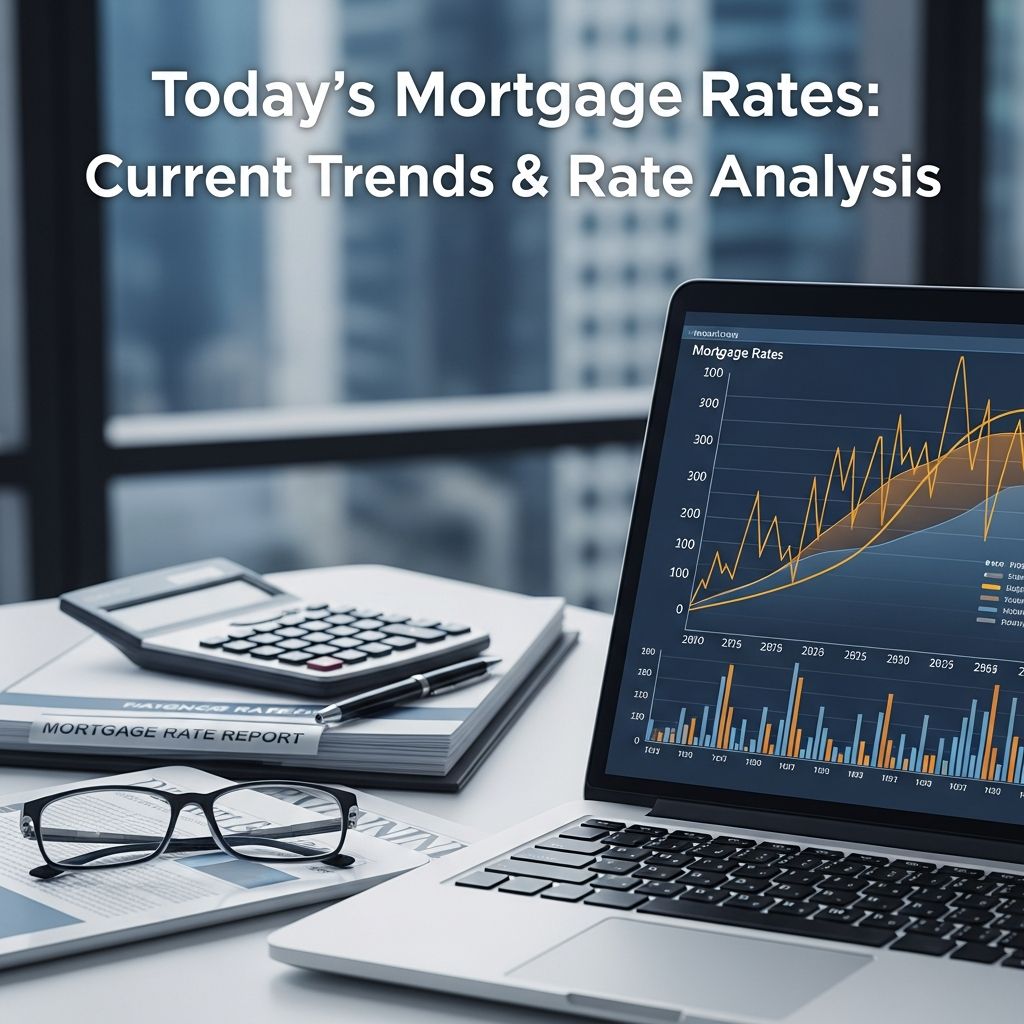
The mortgage market continues to evolve as borrowers seek the best rates for purchasing homes or refinancing existing loans. Understanding current mortgage rates and market trends is essential for making informed financial decisions. This comprehensive guide provides detailed information about today’s mortgage rates, recent market movements, and factors influencing the lending landscape.
Current Mortgage Purchase Rates
National mortgage rates have shown modest movement recently, reflecting broader economic conditions and Federal Reserve policy considerations. The mortgage market remains relatively stable, with most loan products exhibiting minimal fluctuations week-over-week. Understanding the different mortgage products available helps borrowers select options aligned with their financial goals and risk tolerance.
30-Year Fixed-Rate Mortgages
The benchmark 30-year fixed-rate mortgage represents the most popular choice among homebuyers. As of late November 2025, the average rate for a 30-year fixed mortgage stands at 6.25 percent, representing a decline of 0.06 percent from the previous week. This downward movement reflects ongoing market adjustments and Federal Reserve communications regarding potential rate cuts. Compared to historical averages of 7.2 percent over the past 40 years, current rates remain favorable for borrowers. Year-to-date, the 30-year mortgage rate has averaged 6.72 percent, indicating relative stability within the current market environment.
The 30-year fixed mortgage appeals to borrowers seeking payment predictability and long-term security. With a fixed interest rate throughout the loan term, monthly payments remain constant, providing budgeting certainty and protection against future rate increases. This mortgage type suits homebuyers planning to remain in their properties for extended periods and those prioritizing payment stability over short-term rate advantages.
15-Year Fixed-Rate Mortgages
The 15-year fixed-rate mortgage offers accelerated equity building and reduced total interest costs compared to longer-term mortgages. Currently trading at 5.58 percent, the 15-year fixed rate has declined 0.04 percent from the previous week. This mortgage product appeals to borrowers with stronger financial positions who can afford higher monthly payments in exchange for faster loan payoff and significant long-term interest savings.
Choosing a 15-year mortgage versus a 30-year option represents a strategic financial decision. While 15-year mortgages feature higher monthly payments, they typically carry lower interest rates and result in substantially less total interest paid over the loan’s lifetime. Borrowers considering this option should ensure their income reliably supports the elevated monthly obligations without compromising other financial goals.
5/1 Adjustable-Rate Mortgages (ARMs)
Adjustable-rate mortgages offer initial rate advantages through introductory periods before rates adjust based on market conditions. The 5/1 ARM, featuring a fixed rate for five years followed by annual adjustments, currently averages 5.58 percent, down 0.07 percent from the previous week. This rate decline positions ARMs competitively against fixed-rate alternatives for borrowers with appropriate financial profiles and market expectations.
ARMs function with floating interest rates that adjust periodically throughout the loan’s life, unlike fixed-rate mortgages. Interest rate changes occur after the initial fixed period, typically annually thereafter, based on specified indexes plus lender margins. These mortgage products suit borrowers expecting to sell or refinance before rate adjustments occur, or those anticipating income growth supporting higher future payments. Borrowers must understand that adjustment periods may result in materially higher rates, potentially significantly increasing monthly obligations.
Jumbo Mortgages
Jumbo mortgages finance properties exceeding conventional loan limits, serving affluent borrowers in high-cost real estate markets. The average jumbo mortgage rate stands at 6.39 percent, reflecting a 0.06 percent decline from the previous week. Despite this recent decrease, jumbo rates remain elevated compared to a month ago when they averaged 6.30 percent, indicating recent upward pressure in this market segment.
Jumbo loans typically require stronger credit profiles, larger down payments, and more stringent documentation compared to conventional mortgages. Lenders mitigate increased risk exposure through enhanced underwriting requirements and rate premiums. Borrowers seeking jumbo financing should prepare comprehensive financial documentation and understand the specialized requirements associated with larger loan amounts.
Mortgage Refinance Rates
Refinancing existing mortgages allows borrowers to potentially reduce interest rates, shorten loan terms, or modify loan structures. Refinance rates typically exceed purchase rates, reflecting additional lender risk and administrative costs associated with loan modifications.
30-Year Fixed-Rate Refinancing
The average 30-year fixed-refinance rate currently stands at 6.74 percent, reflecting an increase of 0.13 basis points from the previous week. This recent upward movement contrasts with broader market softening, potentially indicating sector-specific dynamics or temporary rate volatility. Month-over-month analysis shows refinance rates have risen from 6.53 percent, suggesting headwinds for refinancing borrowers seeking rate improvements.
Borrowers considering refinancing should evaluate whether rate reductions sufficiently offset refinancing costs, including loan origination fees, appraisal charges, and title insurance. Breakeven analysis comparing monthly savings against refinancing expenses determines financial viability. Borrowers planning extended property ownership with improved rates may find refinancing advantageous, while short-term owners may face unfavorable economics.
Market Rate Volatility and Trends
Mortgage Rate Variability Index
Bankrate’s Mortgage Rate Variability Index measures rate fluctuation magnitude across lender offerings. For the week of November 26, the index registered 5 out of 10, indicating average deviation in mortgage offers across Bankrate. This moderate volatility level suggests reasonably stable market conditions without extreme rate swings. Borrowers should monitor this index when timing rate locks, as elevated volatility may favor securing rates before potential increases.
Recent Rate Movements and Economic Drivers
Mortgage rate movements reflect broader economic conditions, Federal Reserve policy communications, and bond market dynamics. Recent rate decreases correspond with Federal Open Market Committee signals regarding potential December rate cuts. New York Federal Reserve President John Williams’ communications about cooling job market conditions and policy flexibility have influenced investor expectations, supporting downward pressure on bond yields and mortgage rates.
The mortgage market remains sensitive to employment data, inflation indicators, and monetary policy signals. Stronger-than-expected job reports may elevate rates as inflation concerns rise, while weaker labor market data typically supports lower rates. Borrowers should remain informed about economic developments and Federal Reserve guidance affecting rate trajectories.
Historical Rate Comparisons
Today’s mortgage rates are substantially lower than the 40-year average of 7.2 percent, reflecting current market conditions favorable to borrowers seeking financing. This historical context demonstrates that contemporary rates, while elevated compared to pandemic-era lows, remain advantageous relative to long-term averages. Understanding historical context helps borrowers evaluate current market positioning and make informed decisions about timing versus rate locking.
Year-to-date 2025 analysis reveals the 30-year mortgage rate has averaged 6.72 percent, indicating relatively stable conditions within a narrow band. This consistency suggests market equilibrium around prevailing economic fundamentals, with rate movements reflecting incremental adjustments rather than dramatic shifts.
Understanding Mortgage Rate Data
Bankrate compiles mortgage rate information through multiple methodologies ensuring comprehensive market representation:
National Rate and APR Averages
Bankrate displays daily and weekly average rates collected primarily from five largest banks and thrifts across hundreds of U.S. markets. These comprehensive surveys capture pricing from major lenders serving diverse borrower populations and geographic regions. National averages provide reliable benchmarks for comparing individual lender offers against broader market conditions.
Bankrate Monitor (BRM) National Index
The BRM National Index represents a long-standing weekly survey collecting rates from banks and thrifts across hundreds of markets nationwide. This established methodology provides consistent historical comparisons and trends analysis spanning extended periods. The BRM Index serves as a reliable reference point for understanding rate evolution and market dynamics.
Top Offers
Bankrate displays top offers daily and weekly, representing averages of rates listed first on rate tables as advertised by lending partners. These highly competitive offers reflect the lowest rates available from participating lenders, providing borrowers with benchmark rates for aggressive shopping. Top offers typically represent rates available to well-qualified borrowers with excellent credit and strong financial profiles.
Frequently Asked Questions
Q: Why do mortgage rates vary between lenders?
A: Mortgage rates vary between lenders due to differences in funding costs, risk assessments, loan processing expenses, and competitive positioning. Lenders adjust rates based on their cost of capital, overhead expenses, and desired profit margins. Shopping multiple lenders helps borrowers identify the most competitive rates for their specific financial profiles and loan characteristics.
Q: How frequently do mortgage rates change?
A: Mortgage rates can change daily or even multiple times within single days as bond markets fluctuate. Changes respond to economic data releases, Federal Reserve communications, geopolitical developments, and market sentiment shifts. Volatile markets may produce significant daily movements, while stable periods show minimal changes. Borrowers should monitor rates regularly when considering loan timing.
Q: What factors influence mortgage rate movements?
A: Mortgage rates respond to Federal Reserve policy, inflation indicators, employment data, bond market yields, and economic growth expectations. Federal Reserve decisions regarding interest rates directly impact lending costs, while inflation concerns influence long-term rate expectations. Strong employment growth may support higher rates due to inflation worries, while job market weakness typically results in lower rates as recession risks increase.
Q: Is now a good time to lock in a mortgage rate?
A: Rate-locking decisions depend on individual circumstances, market expectations, and personal financial situations. When rates appear favorable relative to historical averages and near-term economic outlooks, locking rates may provide security. Conversely, if rates appear likely to decline further based on economic indicators, waiting might yield better outcomes. Professional financial advisors can help evaluate personal situations.
Q: What is the difference between purchase rates and refinance rates?
A: Purchase rates apply to new mortgage loans for property acquisitions, while refinance rates apply to replacing existing mortgages. Refinance rates typically exceed purchase rates because lenders assume additional risks and incur extra administrative costs when modifying existing loans. Rate differentials vary based on market conditions, typically ranging from 0.25 to 0.75 percent higher for refinances.
Q: How do ARMs compare to fixed-rate mortgages?
A: ARMs feature lower introductory rates during fixed periods, typically 3-7 years, then adjust periodically based on market indexes. Fixed-rate mortgages maintain constant rates throughout loan terms, providing payment certainty but typically higher initial rates. ARMs suit borrowers expecting to sell or refinance before adjustment periods occur, while fixed-rate mortgages benefit those prioritizing payment stability.
Q: What credit score is needed for favorable mortgage rates?
A: Favorable mortgage rates typically require credit scores of 740 or above, with scores exceeding 760 accessing the most competitive offers. Lower credit scores result in rate premiums reflecting increased lender risk. Substantial score improvements may justify delaying mortgage applications while borrowers enhance credit profiles through bill payment improvements and debt reduction.
Q: Should I choose a 15-year or 30-year mortgage?
A: Fifteen-year mortgages feature higher monthly payments but significantly lower total interest costs and faster equity building. Thirty-year mortgages offer lower monthly payments, providing greater flexibility and freeing capital for other investments. The decision depends on income stability, long-term plans, and preferences regarding payment levels versus interest savings. Financial analysis comparing both options assists decision-making.
Conclusion
Today’s mortgage market offers diverse products addressing varied borrower needs and financial situations. Current rates remain favorable relative to historical averages, though elevated compared to pandemic-era lows. Whether choosing 30-year fixed-rate mortgages for payment stability, 15-year options for accelerated payoff, ARMs for introductory rate advantages, or jumbo loans for high-cost markets, borrowers should evaluate options carefully based on personal circumstances. Monitoring rate trends, comparing lender offers, and understanding market drivers enables informed decisions supporting long-term financial success. Regular rate shopping and professional guidance help borrowers secure optimal financing aligned with their goals and financial capabilities.
References
- Daily Mortgage Rates Archive — Bankrate. 2025-11-28. https://www.bankrate.com/mortgages/todays-rates/
- Mortgage Rates for Friday, November 28, 2025 — Bankrate. 2025-11-28. https://www.bankrate.com/mortgages/todays-rates/mortgage-rates-for-friday-november-28-2025/
- Mortgage Rate Trends And Predictions For Nov. 26 – Dec. 3, 2025 — Bankrate. 2025-11-26. https://www.bankrate.com/mortgages/rate-trends/
- Mortgage Rates Fall Amid Economic Volatility — Bankrate. 2025-11-25. https://www.bankrate.com/mortgages/analysis/mortgage-rates-november-25-2025/
- Federal Reserve System — Board of Governors of the Federal Reserve System. 2025. https://www.federalreserve.gov/
Similar Articles








Read full bio of medha deb