Today’s Mortgage Rates – September 21, 2021
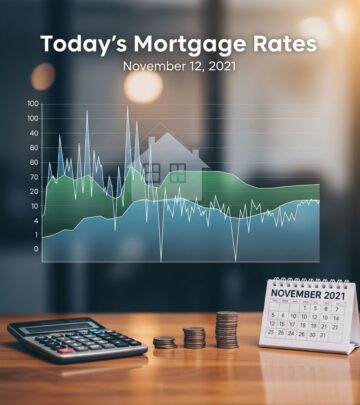
Track current mortgage rates and refinance options for September 21, 2021.

Understanding Today’s Mortgage Rates for September 21, 2021
The mortgage market continues to show fascinating dynamics as we navigate through late summer 2021. Homebuyers and refinancers are closely watching rate movements, as mortgage rates have experienced subtle shifts while remaining historically competitive. On September 21, 2021, the mortgage landscape presents both opportunities and considerations for those looking to purchase a home or refinance an existing loan.
The Federal Reserve’s recent policy decisions and economic data releases have significantly influenced mortgage rate trajectories. Understanding these rates and what they mean for your financial situation is crucial whether you’re a first-time homebuyer or an experienced investor.
Current 30-Year Fixed Rate Mortgage
The 30-year fixed-rate mortgage remains the most popular loan product for home purchases in the United States. This loan type provides borrowers with payment stability over three decades, making budgeting predictable and manageable. The consistency of a fixed rate shields homeowners from potential interest rate increases in the future, offering peace of mind during uncertain economic times.
As of September 21, 2021, the 30-year fixed-rate mortgage demonstrates the ongoing low-rate environment that has characterized much of 2021. These rates remain well below historical averages, creating an advantageous time for qualified borrowers to secure financing.
Mortgage Refinance Rates and Opportunities
Refinancing continues to present compelling opportunities for homeowners with existing mortgages. The refinance market has remained active throughout 2021, with many borrowers taking advantage of favorable rate environments to lower their monthly payments or adjust loan terms.
On September 21, 2021, refinance rates showed slight increases compared to previous weeks, though they continue to represent attractive opportunities for homeowners seeking to reduce their interest expenses. Refinancing can provide several benefits, including lower monthly payments, shortened loan terms, or the ability to switch from adjustable-rate to fixed-rate mortgages.
Key Benefits of Refinancing
Homeowners considering refinancing should understand the various advantages available in the current market:
- Monthly payment reductions through lower interest rates
- Loan term adjustments to pay off mortgages faster
- Cash-out refinancing for home improvements or debt consolidation
- Rate type conversion from adjustable to fixed-rate mortgages
- Improved credit profile utilization with better terms
Market Conditions and Economic Factors
The mortgage market operates within a complex web of economic factors, Federal Reserve policies, and market sentiment. In September 2021, several key economic indicators influenced mortgage rate movements and lending conditions.
Inflation data released around this period showed consumer price increases, with the 12-month change in the Consumer Price Index reaching 5.3 percent in August 2021, while core CPI rose 4.0 percent over the same period. These inflation readings contributed to market expectations regarding future Federal Reserve actions and interest rate trajectories.
Supply chain constraints and production bottlenecks continued to influence the broader economy, affecting consumer confidence and spending patterns. Housing demand remained robust, though residential construction faced challenges from material shortages and limited available lots for development.
Credit Availability and Borrower Qualifications
Financing conditions for residential mortgages remained accommodative on September 21, 2021, particularly for borrowers meeting standard conforming loan criteria. Credit availability showed signs of improvement, especially for jumbo loans and lower-credit-score Federal Housing Administration borrowers.
Lenders continued to tighten credit standards in some areas while relaxing them in others, creating a mixed landscape for different borrower profiles. Mortgage originations for home purchases and refinancing maintained solid levels through August 2021, suggesting continued consumer interest in both purchasing and refinancing activities.
Borrower Categories and Rate Variations
Different borrower categories experience varying mortgage rates based on credit scores, loan-to-value ratios, and employment verification. Here’s how rates typically vary across borrower segments:
- Prime borrowers: Those with credit scores above 740 typically receive the most favorable rates
- Near-prime borrowers: Scores between 680-740 may experience slightly higher rates
- Subprime borrowers: Those below 680 face significantly elevated rates
- Government-backed loans: FHA, VA, and USDA loans offer specialized rates for qualified borrowers
- Jumbo loans: Mortgages exceeding conforming loan limits command different rate structures
The Role of the Federal Reserve
The Federal Reserve’s monetary policy decisions significantly impact mortgage rates through their influence on broader interest rate benchmarks and market expectations. The Federal Open Market Committee (FOMC) met on September 21-22, 2021, to discuss economic conditions and policy direction.
The Fed’s assessment of inflation dynamics proved particularly relevant to mortgage rate movements. While the staff continued to expect inflation increases during 2021 to prove transitory, they revised their near-term inflation outlook upward in response to incoming data. Supply constraints were interpreted as putting larger upward pressure on prices than previously anticipated, with resolution expected to take longer than initially projected.
These inflation assessments influenced market expectations regarding future rate policy, which in turn affected mortgage rate pricing. Bond markets, which heavily influence mortgage rates, respond to changing inflation expectations and Fed policy signals.
Historical Rate Context
To fully appreciate the mortgage rate environment on September 21, 2021, it’s important to recognize how these rates compare to historical averages and recent past trends. The rates available in mid-September 2021 remained substantially below long-term historical averages, which typically hover around 6 to 7 percent for 30-year fixed mortgages.
The extended period of historically low rates has created unprecedented opportunities for home buyers and refinancers. However, rates do fluctuate based on market conditions, and the slight upward movement observed around September 2021 suggested that the ultra-low rate environment of 2020-2021 may be gradually normalizing.
Expert Forecasts and Market Predictions
Industry experts provided varying forecasts for mortgage rate movements in the weeks following September 21, 2021. A Bankrate expert poll conducted around this time indicated that 66 percent of mortgage experts predicted rates would remain stable, while 33 percent forecast declining rates. No experts predicted rising rates in their near-term forecasts.
These expert predictions reflected the consensus view that despite slight recent increases, mortgage rates would likely stabilize rather than climb dramatically. The stabilization view was supported by expectations that economic growth would continue, though at a potentially moderated pace.
Factors to Consider Before Locking Your Rate
Borrowers facing mortgage rate decisions should evaluate several key factors before committing to a specific rate:
- Loan type selection (conventional, FHA, VA, USDA)
- Loan term determination (15-year, 30-year, or other options)
- Fixed versus adjustable-rate considerations
- Points and fees evaluation
- Credit score impact from rate shopping
- Timeline for locking rates
- Current personal financial situation stability
Rate Locking Strategies
Rate locks protect borrowers from rate increases during the loan approval process. Typical lock periods range from 15 to 60 days, with longer locks sometimes available at higher rates. Borrowers must balance the security of a rate lock against the potential cost of paying for that protection.
On September 21, 2021, the decision to lock rates required assessing whether rates appeared likely to move higher or lower. The slight upward trend observed suggested that locking might provide valuable protection against further increases.
The Refinancing Decision Framework
Homeowners evaluating refinancing should employ a structured decision framework. The basic calculation involves comparing current loan terms and rates against available refinance options, accounting for refinancing costs including origination fees, appraisal costs, and title insurance.
The break-even analysis determines how many months of payment savings are required to offset refinancing costs. If refinancing costs amount to $3,000 and monthly savings equal $100, the break-even point occurs at 30 months. For homeowners planning to remain in their homes beyond the break-even point, refinancing typically makes financial sense.
Frequently Asked Questions
Q: What is the difference between mortgage rates and annual percentage rate (APR)?
A: The mortgage rate reflects the interest charged on the loan balance, while the APR includes the rate plus other costs and fees expressed as an annual percentage. The APR provides a more complete picture of the true cost of borrowing.
Q: How often do mortgage rates change?
A: Mortgage rates change daily, sometimes multiple times within a single day, based on bond market movements, economic data releases, and Fed policy signals. Rates can shift between the time you receive a quote and when you lock a rate.
Q: Should I refinance with today’s rates?
A: Refinancing makes sense if the rate reduction produces monthly savings exceeding refinancing costs within your expected holding period. Compare quotes from multiple lenders and calculate your specific break-even point.
Q: What credit score do I need to qualify for today’s best rates?
A: Most lenders offer their best rates to borrowers with credit scores above 740. Those with scores between 680-740 typically receive slightly higher rates, while scores below 680 face materially higher rates or potential qualification challenges.
Q: What does rate locking mean?
A: Rate locking guarantees a specific interest rate for a set period, typically 15 to 60 days, during your loan approval process. This protection prevents rate increases while your loan processes, though you typically cannot benefit from rate decreases during the lock period.
Q: Are FHA loans available at competitive rates on September 21, 2021?
A: Yes, FHA loans remained available at competitive rates, with credit availability improving particularly for lower-credit-score FHA borrowers. FHA loans typically carry mortgage insurance requirements affecting their overall cost.
Q: How do jumbo loans compare to conforming loans on today’s rates?
A: Jumbo loans exceed conforming loan limits and typically carry higher interest rates due to increased lender risk. On September 21, 2021, credit availability for jumbo loans continued improving, though rate premiums typically applied.
Conclusion
The mortgage rate environment on September 21, 2021, reflected an economy navigating inflation concerns, supply chain challenges, and persistent consumer demand. For qualified borrowers, rates remained historically attractive despite slight recent increases. Whether purchasing a new home or refinancing an existing mortgage, borrowers should carefully evaluate their personal circumstances, compare quotes from multiple lenders, and make decisions aligned with their long-term financial objectives. The combination of solid credit fundamentals, accommodative lending conditions, and historically competitive rates created meaningful opportunities for well-qualified borrowers throughout September 2021.
References
- FOMC Minutes, September 21-22, 2021 — Federal Reserve Board. 2021-09-29. https://www.federalreserve.gov/monetarypolicy/fomcminutes20210922.htm
- Primary Mortgage Market Survey Archive — Freddie Mac. 2021. https://www.freddiemac.com/pmms/archive
- 30-Year Fixed Rate Mortgage Average in the United States — Federal Reserve Economic Data (FRED). 2025-11-26. https://fred.stlouisfed.org/series/MORTGAGE30US
- Expert Poll: Mortgage Rate Trend Predictions For Sept. 23-29, 2021 — Bankrate. 2021-09-23. https://business.fau.edu/images/business/newsroom/files/2021-09-23-bankrate-expert-predictions.pdf
Similar Articles








Read full bio of Sneha Tete