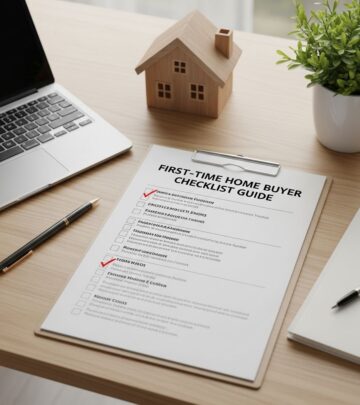
Tips For Buying A Home: 2025 Essential Checklist
Essential tips for first-time homebuyers to navigate the buying process confidently and avoid costly mistakes.

Buying a home is a major milestone, but it can feel overwhelming for first-time buyers. With rising interest rates and competitive markets, preparation is key to securing your dream home without financial strain. This guide covers essential steps, from improving your credit to closing the deal, drawing from proven strategies to help you succeed.
Calculating Your Budget
Understanding your financial limits is the foundation of smart home buying. Many overlook hidden costs beyond the down payment, leading to surprises at closing. Aim to spend no more than three times your annual salary, but prioritize comfort over maximum affordability.
- Down payment and closing costs: Expect 3-20% for the down payment. Closing costs can add $5,000-$10,000, including fees for appraisals, title insurance, and lender charges. Budget extra for a home inspection, averaging $300-$400.
- Moving expenses: Factor in truck rentals, packing supplies, and potential storage—often $1,000-$3,000 for local moves.
- Monthly payments beyond principal and interest: Include property taxes (1-2% of home value annually), homeowners insurance ($1,000-$2,000/year), HOA fees if applicable, and maintenance (1% of home value yearly).
- Income considerations: Use stable income only. If juggling jobs or planning life changes like parenthood, base calculations on one reliable source.
- Debt-to-income ratio: Lenders prefer under 36%; calculate by dividing monthly debts (including proposed mortgage) by gross income.
Tools like online mortgage calculators help simulate scenarios. For a $300,000 home with 10% down at 6.5% interest, expect $1,800+ monthly principal/interest alone, plus taxes and insurance pushing it to $2,500+.
Whip Your Credit Score Into Shape
A strong credit score unlocks better rates and larger loans. Scores above 740 often secure the lowest rates; below 620 may limit options or raise costs significantly.
- Check your score free via AnnualCreditReport.com or services like Credit Karma.
- Pay down debts to lower utilization below 30%.
- Dispute errors on reports from Equifax, Experian, TransUnion.
- Avoid new credit applications pre-purchase to prevent hard inquiries.
Improving from 650 to 700 could save thousands over 30 years. For instance, on a $250,000 loan, 0.5% rate drop saves ~$100/month.
Save for a Down Payment
Target 20% to avoid private mortgage insurance (PMI), which adds $50-$200/month. Programs like FHA allow 3.5% down for qualified buyers.
- Open a high-yield savings account for dedicated funds.
- Automate transfers; cut non-essentials like dining out.
- Explore grants: First-time buyer programs from HUD or state housing agencies offer assistance.
Average down payment is 6-13%; saving $20,000 takes 2-3 years at $700/month.
Get Preapproved for a Mortgage
Preapproval shows sellers you’re serious and clarifies your budget. Shop multiple lenders—rates vary.
- Gather docs: pay stubs, tax returns, bank statements.
- Compare APRs, not just rates; it includes fees.
- A 0.25% difference on $200,000 over 30 years costs $10,000+ extra.
Preapproval letters expire in 60-90 days; renew as needed.
Hire a Real Estate Agent
Opt for a buyer’s agent who represents only you, not sellers. They access MLS listings, negotiate, and spot issues—for free, as sellers pay commissions.
- Interview 2-3; check reviews, experience in your area.
- Confirm buyer’s agency agreement.
| Agent Type | Pros | Cons |
|---|---|---|
| Buyer’s Agent | Fiduciary duty to you; negotiation expertise | None for buyers |
| Dual Agent | One agent for both | Potential conflicts |
| Seller’s Agent | May show home | Prioritizes seller |
Shop for Your Dream Home
Balance wants/needs with future plans. Visit 10-15 homes; use Zillow/Realtor.com for virtual tours.
- Location check: Proximity to work/schools, crime rates (via CrimeGrade.org), noise/traffic, amenities.
- Home inspection points: Plumbing pressure, HVAC age (10-15 years ideal), foundation cracks, roof condition (20-30 year lifespan), appliances, water damage, septic/well if rural.
- Future-proof: Space for family/pets, resale potential.
How long will you stay? Experts advise 5+ years to recoup costs.
Making an Offer
Work with your agent; base on comps (comparable sales). In hot markets, escalate clauses help.
- Offer 1-5% below asking if motivated seller; full price or over in competition.
- Negotiate repairs/credits post-inspection.
- Include contingencies: financing, inspection, appraisal.
Escalation example: Offer $300k, auto-increase $2k over competing bids up to $320k.
Get an Appraisal and Home Inspection
Appraisal (~$500, lender-paid) confirms value; low appraisal may require renegotiation.
Inspection uncovers issues; attend to ask questions. Cost: $300-$500; negotiate fixes or walk away.
Close on Your New Home
Final step: Review closing disclosure 3 days prior. Bring ID, cashier’s check for closing costs/down payment balance.
- Timeline: 40-50 days from offer.
- Walkthrough day-of to confirm condition.
Celebrate responsibly—budget for furnishings/maintenance.
4 Mistakes to Avoid When Buying a House
- Skipping a buyer’s agent: Limits access/negotiations.
- Ignoring total costs: Leads to stretched budgets.
- Waiving inspections: Risks expensive surprises.
- Overbuying: Chasing max preapproval sacrifices lifestyle.
Frequently Asked Questions
Q: How much should I save for a down payment?
A: Ideally 20% to skip PMI, but 3-10% works with good credit; factor closing costs too.
Q: Is a home inspection required?
A: Not legally, but essential—costs $300-$400, reveals issues worth thousands.
Q: How long does buying take?
A: 40-60 days from offer to close, plus months prepping.
Q: Can I buy without perfect credit?
A: Yes, FHA loans accept 580+; improve score for better terms.
Q: What’s the 28/36 rule?
A: Housing costs ≤28% income; total debt ≤36%.
Q: Should I get preapproved before house hunting?
A: Absolutely—shows seriousness, sets realistic budget.
References
- Mortgage Qualification Guidelines — Federal Housing Finance Agency (FHFA). 2025-01-01. https://www.fhfa.gov/DataTools/Downloads/Pages/Mortgage-Qualification.aspx
- Homeownership Data — U.S. Census Bureau. 2024-12-15. https://www.census.gov/housing/hvs/data/index.html
- Consumer Financial Protection: Home Buying — Consumer Financial Protection Bureau (CFPB). 2025-06-01. https://www.consumerfinance.gov/owning-a-home/
- Real Estate Trends Report — National Association of Realtors (NAR). 2025-11-10. https://www.nar.realtor/research-and-statistics/research-reports
- First-Time Homebuyer Guidelines — U.S. Department of Housing and Urban Development (HUD). 2024-09-20. https://www.hud.gov/program_offices/housing/sfh/handbook_4000-1
Similar Articles








Read full bio of Sneha Tete