Tiny Homes vs Renting: Financial & Lifestyle Comparison
Explore key financial and lifestyle factors when deciding between tiny home ownership and renting.
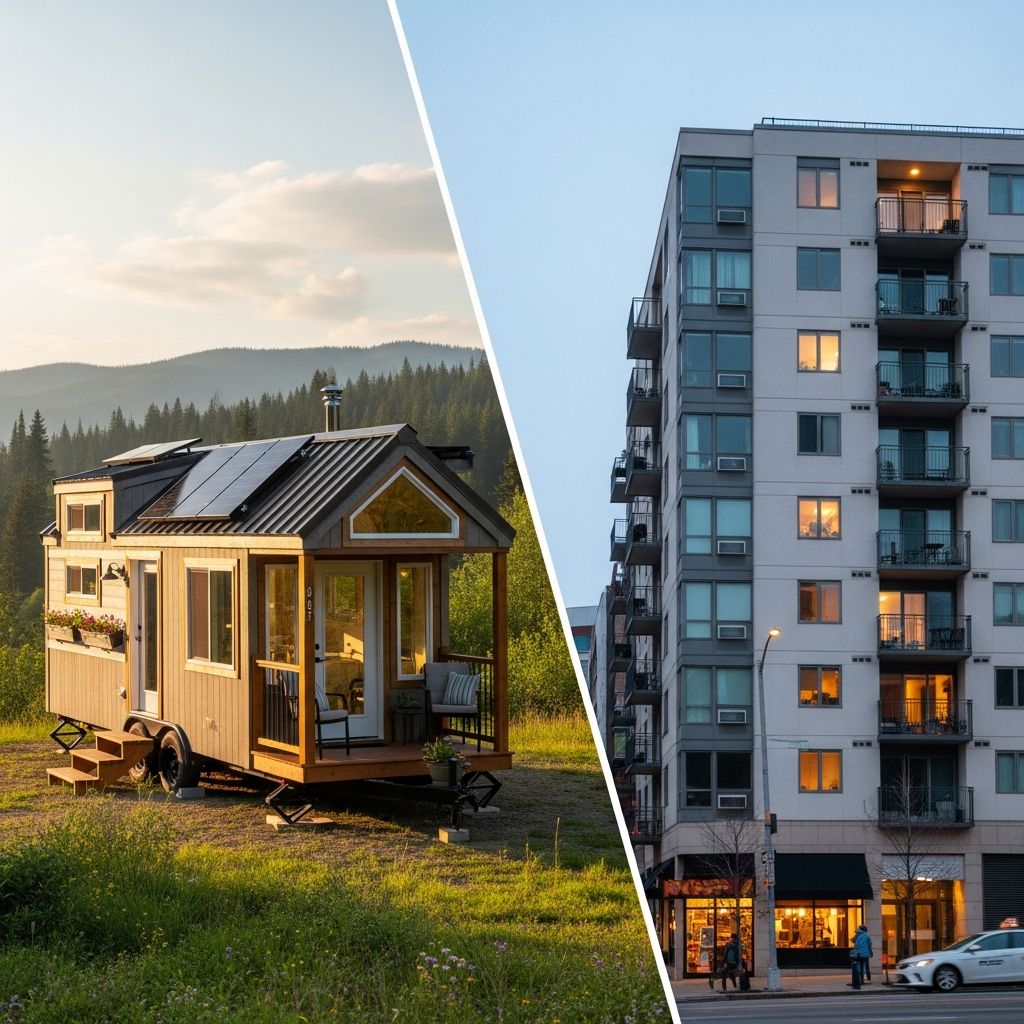
The decision between purchasing a tiny home and renting represents one of the most significant financial choices a person can make. Both options come with distinct advantages and disadvantages that extend beyond simple monthly payment comparisons. Understanding the full scope of what each option entails is essential for making a decision aligned with your financial goals, lifestyle preferences, and long-term plans.
Understanding the Scale and Space Implications
One of the most immediate differences between tiny homes and traditional rental apartments lies in the physical dimensions and the lifestyle adjustments required. Tiny homes typically occupy significantly less square footage than conventional apartments, which creates cascading effects on multiple aspects of daily living.
The reduced footprint of tiny homes directly translates into lower energy consumption for heating and cooling systems. This efficiency gain occurs because there is simply less volume to condition, resulting in lower utility bills throughout the year. However, this space advantage comes with meaningful tradeoffs that prospective buyers should carefully evaluate.
Most tiny homes feature fewer built-in amenities compared to modern rental apartments. Washer and dryer units, dishwashers, and other household appliances may be absent or difficult to accommodate within the compact layout. This absence requires residents to either forgo these conveniences or make separate arrangements, potentially offsetting any cost savings achieved through reduced energy expenses.
Storage represents another critical consideration. The minimalist approach that tiny home living necessitates requires significant lifestyle adjustment for those accustomed to accumulating possessions. Unless you are genuinely committed to a minimalist philosophy, the need for off-site storage solutions will emerge, adding unexpected monthly expenses that can diminish the financial advantages of tiny home ownership.
Initial Capital Requirements and Financing Obligations
The path to tiny home ownership differs substantially from renting in terms of upfront financial commitment. Regardless of whether you construct a tiny home or purchase one prefabricated, the acquisition process demands significant capital deployment.
Land acquisition represents the first major hurdle. Even securing a small parcel suitable for a tiny home construction can demand substantial financial resources, particularly in desirable locations. This expense operates independently of the actual structure cost, creating a two-part financial burden that many prospective buyers underestimate.
Once land is secured, construction or purchase of the tiny home itself requires either a substantial cash payment or financing through loans. While tiny homes generally cost less than traditional homes to build or purchase, the total investment remains considerable. Financing options typically require monthly mortgage payments that persist over many years, meaning that despite lower upfront costs than conventional home purchases, tiny home ownership still demands long-term financial commitment.
Renting, by contrast, requires minimal upfront capital beyond security deposits and initial rent payments. This accessibility makes renting attractive for those with limited liquid assets or preference for financial flexibility.
Geographic Location and Its Cost Multiplier Effect
Location decisions carry profound implications for the total cost of living comparison between tiny homes and rentals. The geographic choice fundamentally shapes the financial equation in unexpected ways.
Rural and suburban areas typically offer significantly lower land costs, making tiny home acquisition more financially feasible in these regions. A tiny home constructed in a rural setting may cost substantially less than the same structure in an urban environment. However, this geographic choice introduces secondary costs that can offset or exceed the initial savings.
Rural living commonly involves reduced access to employment opportunities, limiting career advancement possibilities and potentially reducing household income. The absence of robust public transportation systems means that residents must own personal vehicles, incurring ongoing costs for fuel, maintenance, and insurance. Shopping, healthcare, entertainment, and social activities often require substantial travel distances, multiplying transportation expenses over time.
Urban and suburban rental apartments, despite commanding higher monthly rent, can paradoxically prove more economical when transportation costs are calculated. Walkable neighborhoods with accessible public transportation eliminate or dramatically reduce vehicle expenses. The financial premium paid for convenient urban location may be completely offset by eliminated transportation costs, particularly for households without children or with single-vehicle households.
Comparative Cost Analysis Table
| Cost Category | Tiny Home (Rural) | Rental Apartment (Urban) |
|---|---|---|
| Monthly Housing Payment | $600-$1,000 | $1,200-$1,800 |
| Utilities | $80-$120 | $120-$180 |
| Transportation | $400-$600 | $100-$200 |
| Maintenance/Repairs | $100-$200 | $0 |
| Property Taxes/Insurance | $150-$250 | Included in rent |
| Total Monthly Cost | $1,330-$2,170 | $1,420-$2,180 |
Property Ownership Responsibilities and Hidden Costs
Transitioning from renting to tiny home ownership transforms the financial equation through the introduction of ownership responsibilities. Renters typically benefit from landlord-managed maintenance and repairs, with these costs embedded within rental payments. Tiny home owners assume complete responsibility for all maintenance, repairs, and eventual replacements of major systems.
Roofing, plumbing, electrical systems, and structural components all eventually require attention. The compact nature of tiny homes, while offering initial cost advantages, does not exempt these systems from normal wear and deterioration. A failed septic system or roof leak in a tiny home carries the same financial impact as in a traditional home, but the owner cannot negotiate or shift responsibility to another party.
Property insurance and real estate taxes add further monthly obligations unique to homeownership. While mortgage payments eventually cease upon loan completion, property taxes and insurance continue indefinitely. These obligations represent permanent financial commitments that rental residents completely avoid.
The Flexibility and Lifestyle Considerations
Beyond pure financial calculations, the comparison between tiny homes and rentals must encompass lifestyle flexibility and personal circumstances. Renting provides unparalleled flexibility for those whose life situations may shift. Job relocations, relationship changes, family size adjustments, or evolving lifestyle preferences can be accommodated simply by allowing leases to expire and relocating.
Tiny home ownership anchors residents to a specific location through property ties, financing obligations, and the logistical complexity of selling a property. While this stability appeals to those seeking permanent community roots, it constrains options for those whose lives remain in flux.
The minimalist lifestyle required for tiny home living represents a significant psychological and practical adjustment. Individuals who accumulate possessions, maintain hobbies requiring storage, or have large families may experience genuine frustration with space constraints. These lifestyle incompatibilities cannot be resolved through financial adjustment—they represent fundamental misalignment between the housing type and personal needs.
Long-Term Wealth Building Through Homeownership
A critical advantage of tiny home ownership deserves careful consideration: the potential for long-term wealth accumulation through property appreciation and equity building. Unlike rental payments, which generate no equity or asset accumulation for tenants, mortgage payments build ownership stake in an appreciating asset.
Over decades, property values typically increase, and mortgage balances decrease through regular payments. This dual dynamic creates significant wealth for disciplined homeowners who maintain their properties and remain in their homes long-term. Renters, regardless of rent paid, accumulate no financial assets through their housing expenditures.
For those planning to remain in a location for ten or more years, tiny home ownership may generate substantially greater financial security and net worth than renting. The time horizon matters critically—short-term residents rarely benefit from appreciation, while long-term residents can accumulate meaningful wealth through property ownership.
Frequently Asked Questions
Are tiny homes always cheaper than renting?
Not necessarily. While tiny homes may offer lower monthly payments in some situations, total costs including property taxes, insurance, maintenance, and transportation can exceed rental expenses, particularly in urban areas where rental apartments provide transportation advantages.
Can you rent a tiny home instead of buying?
Yes, rental markets for tiny homes exist in some areas, offering a middle ground that provides the tiny home experience without ownership responsibilities. This option allows experience with the lifestyle before committing to purchase.
What happens to tiny home values over time?
Like traditional real estate, tiny home values generally appreciate over time, though appreciation rates may vary by location and market conditions. However, some specialized tiny home markets show less predictable value trajectories than traditional residential real estate.
Is financing available for tiny home purchases?
Financing options have expanded for tiny homes, though rates and terms may differ from traditional mortgages. Lenders increasingly recognize tiny homes as viable collateral, making purchase more accessible than in previous years.
What personal factors should guide this decision?
Career stability, family plans, location preferences, lifestyle values, financial goals, and personal risk tolerance all influence the optimal choice. No single answer applies universally—the best option depends on individual circumstances and priorities.
Making Your Personal Decision
The choice between tiny home ownership and renting ultimately hinges on your unique circumstances, priorities, and life trajectory. Financial analysis provides essential information, but should not drive the decision independently. Your career prospects, family situation, geographic preferences, lifestyle philosophy, and financial goals must all factor into this significant choice.
Prospective tiny home owners should conduct thorough financial modeling specific to their intended location, factoring in all costs beyond mortgage payments. Prospective renters should calculate true housing costs including transportation expenses rather than viewing rent in isolation. Both groups should honestly assess whether their lifestyle preferences align with the chosen housing type.
The most financially successful housing choice is the one that aligns with your authentic circumstances and preferences, not the option that theoretically appears cheapest on spreadsheets. Take time to visit tiny homes and rental apartments in your target location, speak with residents in both types of housing, and run detailed financial projections specific to your situation before deciding.
References
- Is it Cheaper to Rent or Buy a Tiny Home? — RPM Magic Valley. Accessed 2026. https://www.rpmmagicvalley.com/filer-tiny-home-vs-rental-661
- Is it Cheaper to Rent or Buy a Tiny Home? — Real Property Providence. Accessed 2026. https://www.realpropertyprovidence.com/warwick-tiny-home-vs-rental-661
- Comparing Tiny Homes vs Traditional Rentals: 2026 Investment Guide — Freedom Room. Accessed 2026. https://freedomroom.com/blogs/news/comparing-tiny-homes-vs-traditional-rentals
- Should You Consider Renting a Tiny House? — RentCafe. Accessed 2026. https://www.rentcafe.com/blog/renting/should-you-consider-renting-a-tiny-house/
- Is it Cheaper to Rent or Buy a Tiny Home? — RPM Clarity. Accessed 2026. https://www.rpmclarity.com/findlay-tiny-home-vs-rental-661
- Is it Cheaper to Rent or Buy a Tiny Home? — RPM Silverstone. Accessed 2026. https://www.rpmsilverstone.com/shelby-township-tiny-home-vs-rental-661
Similar Articles








Read full bio of medha deb