Mortgage Rate Lock Timing: Expert Tips For 2025
Master the art of locking in your mortgage rate at the perfect moment to secure savings and minimize risks in a volatile market.
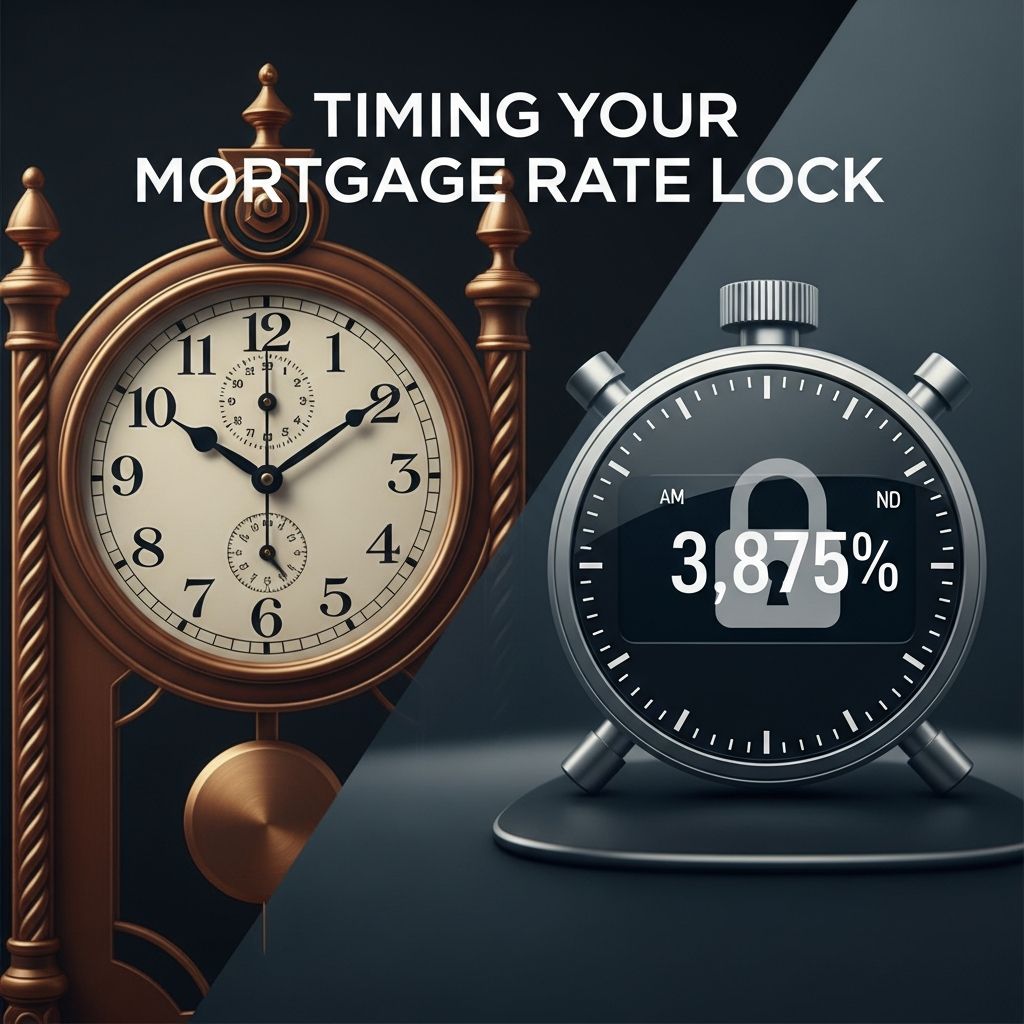
Securing a mortgage rate lock at the right moment can safeguard your finances against unexpected interest rate hikes, potentially saving thousands over the loan’s life. This guide explores the intricacies of rate locks, from ideal timing to managing extensions and costs, empowering homebuyers to make informed decisions.
Understanding the Basics of a Mortgage Rate Lock
A mortgage rate lock is a lender’s commitment to hold a specific interest rate for your loan for a defined period, shielding you from market fluctuations until closing. This agreement typically activates after loan approval and ensures your rate remains fixed even if broader rates climb.
Rate locks are crucial in unpredictable markets where daily shifts can alter monthly payments significantly. For instance, a 0.25% rate increase on a $300,000 loan adds roughly $50 monthly or $18,000 over 30 years. By locking early in rising markets, borrowers transfer rate risk to the lender.
Factors Influencing the Perfect Lock Timing
Deciding when to lock involves balancing market conditions, your closing timeline, and personal risk tolerance. Most experts recommend locking after preapproval and property selection, when the closing date is clearer.
- Market Trends: In rising rate environments, lock immediately post-approval to capture lower rates. Conversely, if rates are falling, consider floating—but this carries risks as predictions are unreliable.
- Closing Timeline: Align the lock period with your expected close; average purchase closings take 46 days.
- Risk Appetite: Conservative buyers lock early to eliminate uncertainty, especially if budgets are tight.
Shop multiple lenders first to secure the best baseline rate before locking, as this step doesn’t commit you yet.
Common Rate Lock Periods and Their Implications
Lenders offer various lock durations to match different transaction speeds. Shorter locks are often free or cheaper, while longer ones may incur fees or slightly higher rates.
| Lock Period | Typical Use Case | Pros | Cons |
|---|---|---|---|
| 30 Days | Fast closings, refinances | Usually free; lower risk of changes | May expire if delays occur |
| 45-60 Days | Standard purchases | Matches average timelines; balanced cost | Potential fees for extensions |
| 90+ Days | Construction, competitive markets | Extra buffer for complexities | Higher upfront costs or rates |
Select a period with a 5-10 day cushion beyond your estimated close to account for surprises.
Costs Associated with Rate Locks
Many lenders provide free 30-45 day locks, but extensions or longer periods often cost 0.25%-1% of the loan amount. For a $400,000 loan, a 0.25% extension fee equals $1,000—far less than a 0.5% rate hike’s long-term impact.
Float-down options, allowing one rate reduction if markets drop, add fees but offer downside protection. Weigh these against potential savings carefully.
Strategies for Extending Your Rate Lock
If delays push past your lock expiration, extensions are common but costly. Fees scale with duration and market conditions; negotiate with your lender early.
- Monitor progress weekly with your loan officer to preempt issues.
- Opt for initial longer locks in uncertain timelines.
- Avoid major application changes, like job shifts, that could void the lock.
Post-expiration, you’ll revert to prevailing rates, which could be higher.
Navigating Rate Locks in Different Loan Scenarios
Purchase Loans
For home purchases, lock after contract acceptance when closing is 30-60 days out. This timing protects against rises while allowing shopping flexibility.
Refinances
Refi locks are shorter (15-30 days) due to faster processing. Lock upon appraisal order if rates are favorable.
Construction Loans
These demand 12+ month locks to cover build phases, often at premium rates.
Pros and Cons of Locking Versus Floating
| Approach | Advantages | Disadvantages | Best For |
|---|---|---|---|
| Lock Early | Rate certainty; protection from hikes | Miss potential drops; tie-up capital | Rising markets, risk-averse buyers |
| Float | Chance for lower rates | Exposure to increases; stress | Falling markets, flexible timelines |
No strategy guarantees perfection; economists struggle with forecasts due to economic variables.
Expert Tips for Maximizing Your Rate Lock
- Track daily rates via Freddie Mac reports for trends.
- Compare lender lock policies upfront.
- Build relationships with officers for flexible extensions.
- Consider points (prepaid interest) for permanent rate reductions alongside locks.
Frequently Asked Questions
What happens if rates drop after I lock?
Standard locks hold you to the agreed rate. Float-down addendums allow one adjustment, typically for a fee.
Can I lock before finding a home?
Some lenders permit it post-preapproval, but most advise waiting for a property to align timelines accurately.
Is a rate lock guaranteed?
Yes, provided you meet conditions like timely closing and no application changes.
How do I know if rates are rising or falling?
Monitor sources like the Federal Reserve or Mortgage News Daily; consult your lender for personalized advice.
What’s the average lock cost?
Free for short periods; extensions average 0.25%-0.5% of loan amount.
Real-World Impact of Rate Lock Decisions
Consider a $350,000 loan: Locking at 6.5% versus floating to 7% costs an extra $23,000 over 30 years. In 2025, with averages around 46-day closings, a 60-day lock proved ideal for most.
Physicians or high earners in competitive markets benefit from longer locks to secure homes without rate worries.
Steps to Lock Your Rate Effectively
- Get preapproved and shop rates.
- Sign a purchase contract.
- Request a lock matching your close date plus buffer.
- Confirm terms in writing, including float-down if desired.
- Track progress to avoid expiration.
Partnering with a knowledgeable lender streamlines this process.
References
- Mortgage rate lock: A guide to protect you from rate fluctuations — Rocket Mortgage. 2025. https://www.rocketmortgage.com/learn/mortgage-rate-lock
- Guide to mortgage rate locks: Definition, how it works — Bankrate. 2025. https://www.bankrate.com/mortgages/what-is-mortgage-rate-lock/
- Physicians Guide to Mortgage Rate Lock — Physician Bank. 2025. https://www.physicianbank.com/physician-loan/physicians-guide-to-mortgage-rate-lock/
- Mortgage Rate Lock: When Do I Lock In My Interest Rate? — NerdWallet. 2025-01. https://www.nerdwallet.com/mortgages/learn/what-is-mortgage-rate-lock
- When Should I Lock my Mortgage Rate? — Nehm Loans. 2025. https://www.nehmloans.com/post/when-should-i-lock-my-mortgage-rate
- Know When to Lock-In a Mortgage Rate — Northwest Bank. 2025. https://financialwellnesscenter.northwest.bank/home-ownership/mortgage/article/know-when-to-lock-in-a-mortgage-rate
- What’s a lock-in or a rate lock on a mortgage? — Consumer Financial Protection Bureau. 2025. https://www.consumerfinance.gov/ask-cfpb/whats-a-lock-in-or-a-rate-lock-en-143/
Similar Articles








Read full bio of medha deb