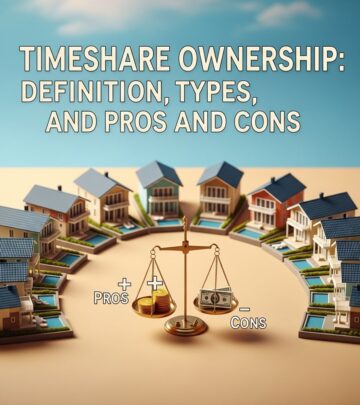
Timeshare Ownership: Financial Reality and Decision Framework
Evaluate whether fractional vacation property ownership aligns with your financial goals

Understanding Fractional Vacation Property Ownership
A timeshare represents a shared ownership model where multiple individuals collectively own rights to a vacation property, typically a resort condominium or residential unit within a larger hospitality complex. Rather than purchasing an entire property outright, owners acquire deeded or contractual rights to occupy the residence during designated periods, usually spanning one to two weeks annually. This structure allows property developers to distribute acquisition costs across numerous buyers while providing each participant with guaranteed access to premium accommodations.
The fundamental premise of timeshare arrangements centers on converting vacation experiences into predictable, structured financial commitments. Owners contribute an initial purchase price alongside perpetual annual maintenance fees that cover property upkeep, amenities management, and administrative operations. Understanding this bifurcated cost structure—immediate outlays combined with indefinite recurring expenses—forms the foundation for evaluating whether fractional ownership suits your vacation patterns and financial capacity.
Structural Models and Ownership Configurations
Timeshare properties operate through several distinct ownership frameworks, each presenting different flexibility profiles and financial implications. The traditional fixed-week model assigns owners to identical calendar weeks annually, guaranteeing the same dates regardless of external circumstances. This arrangement appeals to individuals maintaining consistent vacation schedules, as it eliminates annual booking uncertainty.
Floating-week systems provide greater temporal flexibility by permitting owners to select from designated seasonal windows—such as any week during summer months or winter holidays—though popular periods often require early reservations to secure preferred dates. Points-based systems represent the most contemporary approach, converting vacation time into accumulated credits redeemable across multiple properties within affiliated resort networks. Members utilize accumulated points to customize vacation duration and destination selection, though premium locations and peak seasons typically command higher point expenditures.
Exchange programs supplement ownership flexibility by enabling proprietors to swap their allotted time for accommodations at partner resorts within national or international networks. However, these exchanges frequently involve supplementary fees and booking competition that can diminish the promised flexibility advantage.
Financial Architecture: Initial and Perpetual Costs
The financial commitment associated with timeshare acquisition extends far beyond the initial purchase price, requiring comprehensive evaluation of the complete economic obligation. Most timeshare purchases involve substantial upfront capital expenditures—frequently ranging between $10,000 and $25,000 depending on property location, season designation, and ownership rights classification. This lump-sum investment represents the baseline entry cost for fractional ownership participation.
Beyond the acquisition price, annual maintenance fees constitute ongoing obligations that persist regardless of property utilization. These assessments typically range from $500 to $2,000 yearly and generally increase steadily throughout the ownership tenure as properties age and operational costs escalate. Property owners cannot escape these obligations even during years when personal circumstances prevent vacation travel, creating the potential for substantial cumulative expenses across decades-long ownership periods.
Special assessments represent an additional financial vulnerability within timeshare structures. When major renovations, infrastructure repairs, or facility improvements become necessary, property management may levy extraordinary charges distributed among all owners. These unexpected costs can substantially exceed routine maintenance projections, straining owner budgets and complicating long-term financial planning.
Cost Comparison Framework
To contextualize timeshare financial obligations, consider a hypothetical analysis comparing vacation acquisition costs across different models:
| Vacation Model | Initial Investment | Annual Costs | 20-Year Total |
|---|---|---|---|
| Timeshare Ownership | $20,000 | $1,200 | $44,000 |
| Annual Hotel Stays | $0 | $3,500 | $70,000 |
| Vacation Rental Properties | $35,000 | $800 | $51,000 |
This illustrative comparison demonstrates that timeshare economics become favorable primarily for individuals vacationing consistently at substantial annual expenditures. For occasional vacationers or those with variable travel schedules, alternative accommodation arrangements typically prove more cost-effective.
Advantages for Committed Vacation Planners
Timeshare ownership delivers demonstrable benefits for specific demographic segments maintaining predictable vacation patterns. The mechanism of advance purchase effectively locks in accommodation costs at contemporary price levels, providing inflation protection. Owners secure guaranteed access to their selected property during designated periods without confronting annual rate escalations common in conventional hospitality sectors.
The predictability inherent in timeshare arrangements eliminates research and reservation stress accompanying traditional vacation planning. Rather than conducting annual searches for suitable accommodations, negotiating availability, and managing booking logistics, timeshare owners enjoy pre-established arrangements requiring minimal intervention. This psychological benefit resonates particularly with individuals valuing simplicity and certainty in vacation preparation.
Timeshare resorts typically feature residential-scale accommodations exceeding standard hotel configurations. Properties commonly include separate bedrooms, full kitchen facilities, washing machines, and dining areas—amenities enabling extended stays and family gatherings impossible within conventional hotel environments. Larger groups benefit from substantial cost reductions when distributing accommodation expenses across multiple occupants, a dynamic unavailable in per-room hotel pricing models.
Resort communities surrounding timeshare properties furnish premium amenities including fitness facilities, recreational programming, social events, and networking opportunities. Owners develop connections with fellow vacationers following similar annual patterns, creating community dimensions absent from transient hotel experiences.
Flexibility Constraints and Scheduling Limitations
The inflexibility imposed by timeshare contracts represents perhaps the most significant drawback for contemporary vacation consumers. Fixed-week arrangements anchor owners to identical calendar weeks annually, creating substantial inconvenience when personal circumstances change. Life events including job transitions, health complications, family obligations, or evolving travel preferences cannot easily modify contractual vacation timing without penalty.
Even putatively flexible points-based and floating-week systems encounter practical limitations. Popular vacation periods—Christmas holidays, summer breaks, spring holidays—become intensely competitive environments where premium dates disappear months or years in advance. Owners must monitor booking systems vigilantly, set calendar reminders, and act immediately upon availability windows or forgo preferred travel timing.
Exchange programs ostensibly offering destination variety often involve prohibitive supplementary fees, limited availability at desirable properties, and substantial booking complications. The theoretical flexibility frequently marketed during sales presentations encounters practical barriers restricting genuine destination options.
Life circumstances inevitably create vacation conflicts for owners maintaining timeshare contracts spanning multiple decades. Medical conditions, career demands, caregiving responsibilities, and personal circumstances may render dedicated vacation weeks impossible or inadvisable during particular years. Unlike traditional hotel accommodations purchased solely when vacation plans solidify, timeshare owners bear financial obligations regardless of actual utilization capacity.
Investment Potential and Resale Challenges
A critical consideration distinguishing timeshares from genuine real estate investments involves their minimal appreciation potential and challenging resale dynamics. Unlike traditional vacation property purchases offering realistic equity building through property appreciation and potential rental income generation, timeshare contracts typically depreciate immediately following acquisition. The secondary market for timeshare interests demonstrates weak demand and severely depressed pricing, with resale values frequently reaching only 50-60% of original purchase prices within initial years.
The absence of meaningful investment potential means timeshare expenditures should be evaluated exclusively as vacation consumption costs rather than financial assets. Prospective buyers cannot realistically anticipate equity recovery or appreciation benefits that justify extended financial commitments. The financial trajectory resembles automobile purchases—substantial immediate depreciation combined with perpetual operating expenses and minimal residual value.
Evaluating Personal Suitability
Determining whether timeshare ownership aligns with your vacation requirements and financial circumstances requires honest self-assessment across multiple dimensions:
Vacation Pattern Consistency: Examine your historical travel patterns across the preceding five years. If you consistently vacation during identical seasons at comparable destinations and durations, timeshare economics potentially favor ownership. Conversely, if vacation timing varies substantially by year or destinations change frequently, the inflexibility will create frustration and financial waste.
Financial Capacity: Calculate total projected costs across your expected ownership duration. If accumulated annual maintenance fees combined with initial purchase prices exceed your comfortable vacation budget, the financial burden will produce stress rather than vacation enjoyment. Consider whether unexpected assessments would create significant hardship.
Long-Term Commitment Tolerance: Timeshare contracts typically span 20-40 years, extending well beyond typical vacation planning horizons. Evaluate whether you can responsibly commit to financial obligations across potentially dramatic life changes. Divorce, relocation, health complications, or family circumstances may render decades-long vacation commitments deeply inconvenient.
Flexibility Requirements: Assess whether your professional and personal circumstances permit consistent annual vacation scheduling. If career demands, caregiving responsibilities, or unpredictable health conditions create uncertain availability, rigid vacation commitments will generate frustration.
Frequently Asked Questions
Can timeshare owners easily exit their contracts if circumstances change?
Exiting timeshare contracts typically proves extremely difficult and often financially devastating. Resale markets exhibit weak demand, and timeshare companies often impose substantial penalties or restrictions on contract transfers. Some owners discover they cannot relinquish obligations without significant losses.
Do timeshare maintenance fees actually remain stable, or do they increase unpredictably?
Maintenance fees characteristically increase annually, often exceeding general inflation rates. Owners should anticipate 3-5% annual increases as a conservative estimate, with special assessments potentially triggering substantial unexpected expenses.
How does timeshare safety compare to conventional hotel accommodations?
Timeshare communities provide enhanced security through restricted member access, controlled entry systems, and management familiarity with occupants. This configuration offers greater security than conventional hotels accommodating transient populations.
Can timeshares function as legitimate investment vehicles?
Timeshares fundamentally operate as vacation consumption products rather than investment vehicles. Unlike vacation property ownership offering appreciation potential and rental income, timeshares typically depreciate immediately and generate no income, rendering them unsuitable for investment-focused buyers.
Strategic Decision Recommendations
Timeshare ownership merits serious consideration exclusively for individuals satisfying multiple specific criteria: predictable vacation patterns maintained consistently across decades, genuine comfort with designated calendar constraints, and financial capacity accommodating perpetually escalating annual fees without budgetary strain. This demographic remains relatively narrow within the broader vacation consumer population.
Prospective buyers should demand complete contract transparency, including explicit documentation of fee escalation histories, special assessment processes, and exit provisions. Consulting financial advisors and legal professionals before committing to decades-long contracts provides essential protection against unforeseen complications.
For individuals lacking the specific prerequisites favoring timeshare economics, alternative vacation strategies—including vacation rental properties, points-based hotel programs, or annual hotel bookings—typically deliver superior flexibility, financial performance, and peace of mind. Carefully evaluating your authentic vacation priorities and financial circumstances will guide you toward the arrangement genuinely optimizing your vacation experiences and financial wellbeing.
References
- The Pros and Cons of Timeshare Ownership — Plymouth Rock Travel Partners. Accessed February 2026. https://plymouthrocktravelpartners.com/timeshare-ownership-pros-cons/
- Advantages & Disadvantages of Timeshare Business — HM Hub. Accessed February 2026. https://hmhub.in/6th-sem-front-office-management-notes/advantages-disadvantages-timeshare-business/
- Buying a Timeshare: Pros, Cons, and Form of Ownership — Nolo Legal Encyclopedia. Accessed February 2026. https://www.nolo.com/legal-encyclopedia/buying-timeshare-pros-cons-form-ownership.html
- Are Timeshares Worth It? Asset or Liability Explained — White Cloud Wealth Management. Accessed February 2026. https://whitecloudwm.com/are-timeshares-worth-it-asset-or-liability/
- The Pros and Cons of Timeshares vs. Vacation Rentals — Vacasa. Accessed February 2026. https://www.vacasa.com/homeowner-guides/timeshare-vs-vacation-rental
- What Is a Timeshare and Is It Worth the Cost? — Chase. Accessed February 2026. https://www.chase.com/personal/investments/learning-and-insights/article/what-is-a-timeshare-and-is-it-worth-the-cost
- What Is a Timeshare and How Does It Work? — KOALA. Accessed February 2026. https://www.go-koala.com/timeshare/resources/what-is-a-timeshare-and-how-does-it-work
Similar Articles








Read full bio of Sneha Tete