Timeshare Ownership: Definition, Types, and Pros and Cons
Understand timeshare ownership: how it works, types available, and critical advantages and disadvantages.
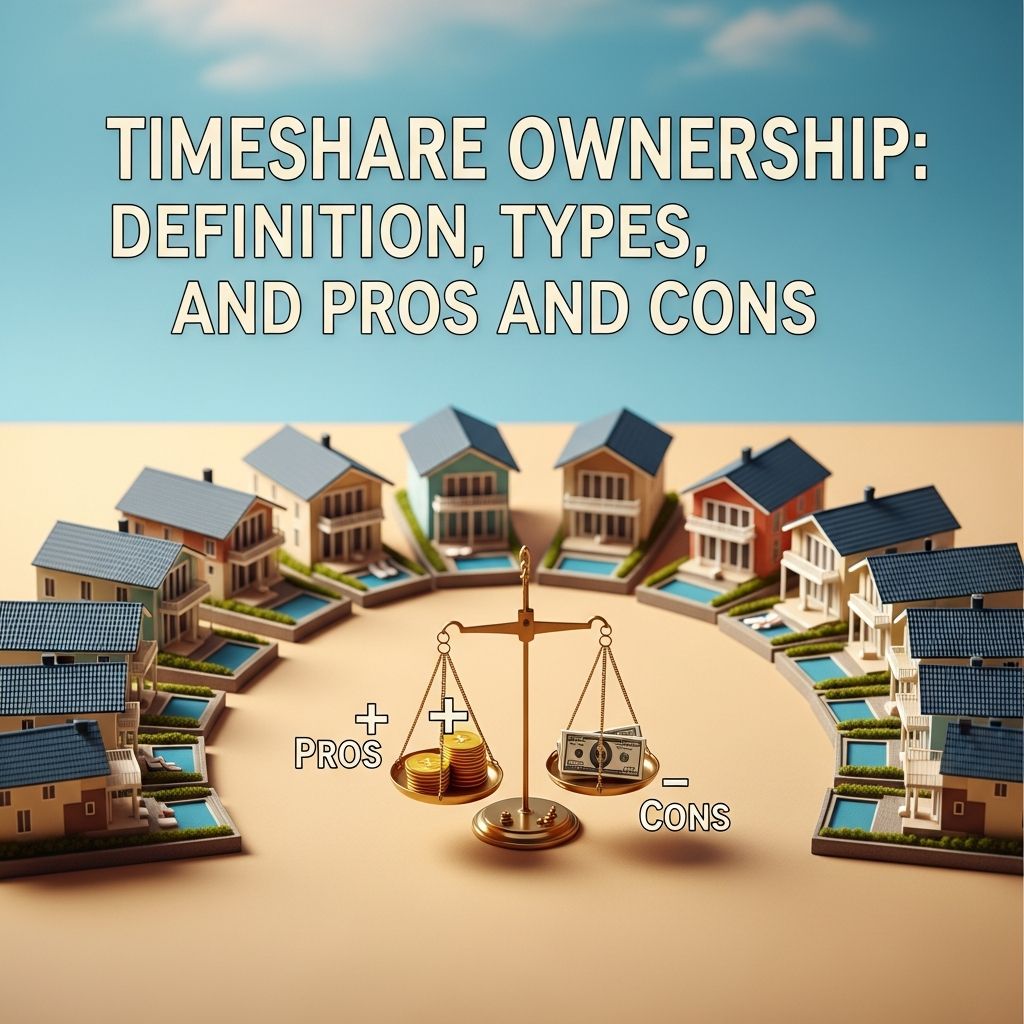
Understanding Timeshare Ownership
A timeshare is a vacation property ownership arrangement where multiple individuals purchase the rights to use a single property for designated periods throughout the year. This model allows owners to share both the costs and enjoyment of a property, which can range from large resort complexes to smaller, standalone homes, often located in popular travel destinations. Unlike traditional property ownership where one person owns an entire home, timeshare ownership divides the property and its usage rights among numerous parties, creating a shared investment model that has evolved significantly since its introduction to the market.
The timeshare industry originated in Europe during the 1960s and made its debut in the United States with the construction of the first hotel-condominium timeshare in Hawaii. Since then, the industry has grown to encompass vacation properties worldwide, attracting millions of owners seeking predictable vacation experiences and cost-sharing arrangements. At its core, timeshare ownership is a form of fractional ownership, meaning the buyer shares ownership of a property with other people. For example, if a person purchases one week at a given timeshare property, they technically own a 1/52 share of that property, with each week representing an equivalent fractional stake in the entire resort or property.
How Timeshares Work
In most timeshare schemes, a management company builds, maintains, and sells shares in a property to buyers who wish to spend a given amount of time at that property. The management company handles all maintenance responsibilities, property management, and other associated operational expenses, which are typically shared among all co-owners through annual maintenance fees. This arrangement relieves individual owners from the burden of hiring groundskeepers, coordinating repairs, or handling property tax obligations directly.
Timeshare owners typically receive guaranteed vacation times at their designated properties, allowing them to plan vacations well in advance with predictability. Additionally, many timeshare properties offer resort-like facilities and amenities—such as pools, fitness centers, restaurants, and recreational activities—that enhance the vacation experience. The predictable nature of timeshare ownership appeals to those who value consistency in their vacation arrangements and desire access to well-maintained, fully-equipped properties without assuming direct management responsibilities.
Types of Timeshare Ownership
Timeshare ownership comes in several distinct models, each offering different levels of flexibility and usage rights. Understanding these variations is essential for potential buyers evaluating which model best suits their vacation needs and financial circumstances.
Deeded vs. Non-Deeded Ownership
There are two primary forms of timeshare ownership: deeded and non-deeded. With deeded ownership, the buyer physically owns a fraction of their timeshare property. In this case, the buyer retains property ownership even if the developer goes bankrupt, providing greater security and legal protection. The deeded interest is recorded on the property deed, establishing a genuine legal ownership stake.
With non-deeded ownership, the buyer only leases the rights to use the timeshare for a certain amount of time each year for a specified number of years. This arrangement does not convey actual property ownership; instead, it grants usage privileges for a defined duration. In the event the developer declares bankruptcy, the buyer would automatically lose the right to use their timeshare, as they hold no legal claim to the underlying property. Non-deeded ownership typically involves lower initial costs but offers less legal protection and ownership security.
Usage Models
Beyond ownership structure, timeshares are categorized by how and when owners can use their vacation time. The three primary models include fixed-week, floating, and points-based systems.
Fixed-Week Timeshares: With a fixed-week timeshare, the owner only holds the right to use the property for the same week every year. For instance, an owner might have exclusive rights to use their unit during the first week of August annually. This model provides predictability and consistency but offers limited scheduling flexibility. Owners committed to using their property at the same time each year benefit from this arrangement, but those with varying schedules may find it restrictive.
Floating Timeshares: In a floating timeshare, the buyer can use their property at any time within a specified period, typically during a particular season or throughout the year, depending on availability and resort policies. This model offers greater flexibility than fixed-week arrangements, allowing owners to adjust their vacation timing based on personal circumstances. However, popular periods may be subject to availability constraints, and owners must coordinate booking in advance.
Points Club Timeshares: Points club timeshares allow the buyer to stay at different properties by using points they purchase from the club or accumulate from buying into a particular property. Owners receive an annual allocation of points that can be used flexibly across the network of affiliated resorts. This model provides the most flexibility, enabling owners to customize vacation length and location based on available points and preferences. Points that go unused may be carried over to the following year or banked for future use, adding an additional layer of flexibility.
Exchange Programs and Flexibility
Many timeshare companies offer exchange programs, allowing owners to trade their allocated time for stays at different locations within affiliated networks. These exchange options vary depending on the timeshare company and the specific agreement terms. Some popular exchange networks enable owners to access properties worldwide, significantly expanding vacation destination options beyond their home resort.
Additionally, fractional ownership programs—which are distinct from but related to timeshares—often grant owners more flexibility in terms of usage. Owners can frequently rent out their allotted time, share it with family and friends, or sell their share if they choose to divest. Timeshare usage, however, is generally more restrictive, with limited options for renting out or selling the designated time. Flexibility is primarily confined within the agreed-upon schedule and exchange program rules.
Advantages of Timeshare Ownership
Timeshare ownership offers several compelling benefits for those seeking reliable vacation accommodations and managed properties.
Guaranteed Vacation Time
One of the primary advantages of timeshare ownership is the assurance of vacation time. Owners secure their vacation dates well in advance, eliminating uncertainty about availability during peak seasons. This predictability is particularly valuable for families with school-age children or those with rigid work schedules who cannot afford last-minute booking uncertainties.
Access to Premium Amenities
Timeshare properties typically feature resort-quality amenities and facilities including pools, fitness centers, restaurants, spas, recreational facilities, and concierge services. These amenities are maintained by professional management companies, ensuring consistent quality and availability. Owners enjoy access to these facilities as part of their ownership stake, often at a lower cost than booking comparable hotel accommodations annually.
Shared Maintenance Responsibilities
Timeshare owners share maintenance responsibilities and costs, relieving them of the burden of individual property upkeep. The management company handles routine maintenance, repairs, housekeeping, and property management tasks. This arrangement eliminates the need for owners to hire contractors, coordinate repairs, or manage property taxes directly, substantially reducing administrative burdens.
Potential Cost Savings
For those who take annual vacations at the same destination, timeshares can offer long-term cost savings compared to renting hotel rooms year after year. The shared cost structure distributes expenses—including maintenance, utilities, property taxes, and staffing—among all owners, potentially resulting in lower per-week vacation costs than comparable hotel stays over multiple years.
Exchange Opportunities
Exchange programs enable owners to explore different destinations without purchasing additional properties. By trading vacation time with other timeshare owners through established exchange networks, owners can experience variety in their vacation locations while maintaining the benefits of timeshare ownership.
Disadvantages of Timeshare Ownership
Despite their benefits, timeshares present significant drawbacks that potential buyers should carefully consider before committing to ownership.
Limited Scheduling Flexibility
Fixed-week timeshares can be highly restrictive, limiting owners to a specific timeframe each year. This lack of flexibility can prove challenging for those with varying schedules, career demands, or family circumstances that change year to year. Even floating and points-based options are constrained by availability windows and may require booking well in advance during high-demand periods.
Substantial Annual Fees
Owners must pay annual maintenance fees covering property management, repairs, utilities, and staffing costs. These fees, combined with special assessments for major repairs or renovations, can accumulate significantly over time. The initial purchase price, coupled with these ongoing annual fees, often results in total costs exceeding what owners would spend renting comparable properties annually, particularly if they skip vacation years or circumstances change.
Resale Challenges and Low Market Value
Resale of timeshares can be extraordinarily challenging, and owners may find it extremely difficult to exit their contracts. The resale market is saturated with timeshare owners seeking to divest, while demand from new buyers has declined. Many timeshares have minimal resale value—often selling for a fraction of the original purchase price or not selling at all. Sellers frequently must offer substantial discounts or accept nominal offers to successfully exit their ownership.
Difficulty Exiting Contracts
Timeshare contracts typically involve long-term commitments, sometimes spanning decades. Even when owners wish to terminate ownership due to changed circumstances, financial hardship, or dissatisfaction, exiting these agreements can be legally and financially complicated. Some developers may pursue legal action to enforce payment obligations, while others may refuse to accept contract terminations without substantial penalties.
Hidden Costs and Predatory Practices
Potential buyers should be aware that predatory timeshare companies may use aggressive sales tactics, including free dinner offers, misleading claims about investment value, and artificial urgency through limited-time deals. Initial presentations frequently underestimate true costs and overstate investment potential. These practices can lead unsuspecting vacationers to make hasty purchasing decisions they later regret.
Timeshares vs. Modern Alternatives
The timeshare market faces increasing competition from modern vacation rental platforms such as Airbnb, VRBO, and other home-sharing services. While sharing platforms have gained significant traction with consumers seeking flexibility and variety, the timeshare market has managed to maintain its presence. Timeshares still attract certain buyers due to their predictable nature, guaranteed amenities, and maintenance-free arrangements—aspects that aren’t always consistent with services like Airbnb, where property quality and availability can vary considerably.
However, the rise of these alternative platforms has dampened timeshare market growth and presented challenges for the traditional timeshare industry. Consumers increasingly recognize that short-term vacation rentals often provide greater flexibility, potentially lower costs, and more diverse property options than timeshare ownership.
Financial Considerations for Potential Buyers
The economic implications of owning a timeshare are significant and warrant careful financial analysis. The initial purchase price varies widely depending on location, property quality, and usage rights—typically ranging from several thousand to tens of thousands of dollars. Combined with annual maintenance fees (often $500 to $2,000 or more annually), special assessments, and property taxes in some jurisdictions, the total financial commitment can become substantial.
Over a typical 30-year ownership period, a timeshare purchased at $15,000 with $1,000 annual maintenance fees generates total costs exceeding $45,000 before considering special assessments. This expense structure must be evaluated against the value of guaranteed vacation time and amenities to determine whether timeshare ownership aligns with individual vacation habits and financial goals.
Key Comparison: Fractional Ownership vs. Timeshare
| Aspect | Fractional Ownership | Timeshare |
|---|---|---|
| Ownership Type | Actual property share | Usage rights only |
| Usage Duration | Weeks to months annually | One or more weeks annually |
| Flexibility | High (rent, gift, or sell) | Limited (fixed or floating) |
| Initial Investment | Higher | Lower to moderate |
| Ongoing Costs | Shared and potentially lower | Annual maintenance fees |
| Resale Value | Moderate | Very low |
Frequently Asked Questions (FAQs)
Q: What exactly is a timeshare?
A: A timeshare is a vacation property ownership arrangement where multiple individuals purchase the rights to use a single property for designated periods each year. Owners share both costs and property maintenance responsibilities through management companies.
Q: Is a timeshare a good investment?
A: Timeshares are primarily considered lifestyle purchases rather than investments. While they can provide guaranteed vacation time and cost savings for frequent travelers to the same destination, their poor resale value, high annual fees, and difficulty exiting contracts make them questionable as financial investments.
Q: What’s the difference between deeded and non-deeded timeshares?
A: Deeded timeshares convey actual property ownership—even if recorded as a fractional interest—and protect owners if developers go bankrupt. Non-deeded timeshares grant only usage rights for a specified period and provide no ownership protection if the developer fails financially.
Q: Can I sell my timeshare if I no longer want it?
A: Selling a timeshare is extremely challenging. The resale market is oversaturated, and most timeshares sell for significantly less than the original purchase price, if they sell at all. Many owners struggle to find buyers even when offering substantial discounts.
Q: What are typical annual maintenance fees?
A: Annual maintenance fees typically range from $500 to $2,000 or more, depending on property location, amenities, and condition. These fees cover property management, repairs, utilities, staffing, and other operational costs, and they frequently increase annually.
Q: How do exchange programs work?
A: Exchange programs allow timeshare owners to trade their allocated vacation time for stays at different affiliated properties in other locations. These programs vary by timeshare company and network, with some offering worldwide exchange opportunities and others limited to specific regions.
Q: Are there alternatives to traditional timeshare ownership?
A: Yes, alternatives include fractional real estate ownership, vacation rental platforms like Airbnb and VRBO, and hotel reward programs. These alternatives often provide greater flexibility, lower costs, and more diverse property options than traditional timeshares.
Final Considerations
Timeshare ownership can provide predictable vacation accommodations and access to well-maintained resort properties for those committed to regular vacations at consistent destinations. However, potential buyers must carefully weigh the substantial disadvantages—including limited flexibility, high ongoing costs, poor resale value, and difficulty exiting contracts—against perceived benefits.
Before purchasing a timeshare, individuals should thoroughly evaluate their vacation habits, financial circumstances, and long-term plans. They should carefully review all contract terms, understand total costs including annual fees and special assessments, and consider alternative vacation ownership or rental options. Consulting with legal and financial professionals before signing timeshare agreements can help protect against predatory sales practices and ensure purchasing decisions align with genuine vacation needs and financial goals.
References
- Fractional Real Estate vs. Timeshare Ownership — Ark7. 2025. https://ark7.com/blog/learn/fundamentals/fractional-real-estate-vs-timeshare-ownership/
- Timeshare — EBSCO Research Starters. 2025. https://www.ebsco.com/research-starters/business-and-management/timeshare
- Types Of Timeshare Ownership Reviewed — Finn Law Group. 2025. https://finnlawgroup.com/types-of-timeshare-ownership-reviewed/
- How Predatory Timeshare Companies Tempt Unsuspecting Vacationers — Morning Brew. 2023-08-10. https://www.morningbrew.com/stories/2023/08/10/an-offer-you-cant-refuse
Similar Articles








Read full bio of Sneha Tete