Time Value of Money: Definition, Formula & Examples
Understand why money today is worth more than money tomorrow and how to calculate it.

The time value of money is one of the most fundamental concepts in finance, influencing virtually every financial decision you make whether you realize it or not. At its core, this principle states that a dollar received today is worth more than a dollar received in the future. Understanding this concept is essential for anyone involved in investing, financial planning, business valuation, or personal wealth management.
What Is the Time Value of Money?
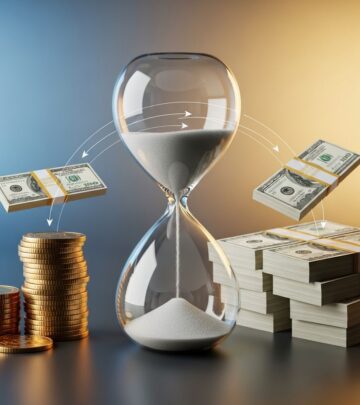
The time value of money refers to the fact that there is normally a greater benefit to receiving a sum of money now rather than an identical sum later. This concept reflects the reality that money has earning potential. When you have money today, you can invest it, put it in a savings account, or use it to generate additional income. Over time, this money grows through interest, investment returns, or other means.
The fundamental principle is straightforward: a dollar today is worth more than a dollar tomorrow. This isn’t simply a preference for having money sooner, though that plays a role. Rather, it’s rooted in the economic reality that money can be put to productive use immediately. Money held in the future loses this opportunity for growth.
Why Does the Time Value of Money Matter?
Understanding the time value of money is critical for several reasons. First, it explains why interest exists in the financial system. Banks and lenders compensate depositors and borrowers for the use of their money over time. When you deposit money in a savings account, the bank pays you interest because they’re using your money and you’re forgoing the opportunity to use it yourself.
Second, this concept helps explain why investors demand higher returns for taking on greater risk or waiting longer periods. If you’re going to forgo spending money today, you need to believe that the return you’ll receive in the future will be sufficiently high to offset your preference for immediate spending plus any inflation that might occur.
Third, the time value of money is essential for making sound financial decisions. It provides a framework for comparing different financial opportunities, evaluating investments, and determining whether a particular use of money today makes sense given expected future returns.
Key Components of Time Value Calculations
When working with the time value of money, several variables typically come into play:
- Principal or Balance: The initial amount of money, representing the real or nominal value of a debt or financial asset
- Interest Rate: The periodic rate at which money grows, typically expressed as a percentage
- Time Period: The number of periods over which the money will grow, usually measured in years
- Cash Flows: Payments or deposits made at various intervals, which could represent contributions, withdrawals, or investment returns
Present Value: Understanding Future Money in Today’s Terms
Present value is one of the most important applications of the time value of money concept. It answers the question: How much is a sum of money to be received in the future worth in today’s dollars?
Present value calculations involve discounting future cash flows back to the present using an appropriate discount rate. The discount rate reflects the rate of return you could earn on alternative investments. The higher the discount rate, the lower the present value of future cash flows becomes.
For example, if you expect to receive $1,000 one year from now and the appropriate discount rate is 5%, the present value of that $1,000 is approximately $952.38. This means that receiving $952.38 today and investing it at 5% interest would leave you with $1,000 in one year, making the two options economically equivalent.
Determining the appropriate discount rate is crucial for properly valuing future cash flows, whether they represent future earnings, investment returns, or financial obligations.
Future Value: Calculating Money’s Worth Tomorrow
While present value asks what future money is worth today, future value asks the opposite question: How much will money invested today be worth at a specified point in the future?
Future value calculations compound money forward through time at a given rate of interest. A simple example illustrates this: if you invest £100 (or $100) for one year at 5% interest, assuming zero inflation, that money will grow to £105 (or $105). The additional £5 represents the interest earned on your investment.
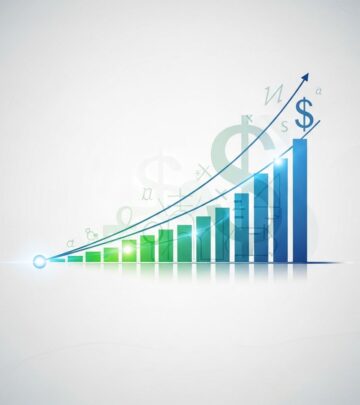
This principle becomes more powerful over longer time horizons. The same £100 invested at 5% annually for 10 years grows to approximately £162.89. For 20 years, it becomes approximately £265.33. This demonstrates the power of compound interest, where earnings generate their own earnings over time.
Future Value of an Annuity
An annuity is a series of equal payments made at regular intervals. The future value of an annuity calculation determines how much a stream of regular investments will be worth at a specified future date, assuming those payments are invested at a given rate of interest.
For example, if you invest $1,000 annually for 10 years at 6% interest, your future value would be approximately $13,180.79. This demonstrates how regular contributions combined with compound interest can significantly grow wealth over time. Annuity calculations are particularly useful for retirement planning, college savings plans, and other long-term investment strategies.
The Mathematics Behind Time Value of Money
The time value of money is formalized through several mathematical expressions. The most basic formula for present value is:
PV = FV / (1 + r)^n
Where:
- PV = Present Value
- FV = Future Value
- r = Interest rate per period
- n = Number of periods
For continuous compounding scenarios, the formula becomes:
PV = FV × e^(-rt)
Where e represents the mathematical constant approximately equal to 2.71828.
These formulas can be adapted to handle varying discount rates over time, where the discount rate changes from period to period. When discount rates vary, the calculation becomes more complex but provides greater accuracy in real-world scenarios where interest rates fluctuate.
Real-World Applications and Examples
Understanding the time value of money has numerous practical applications in personal and business finance.
Investment Decisions
When evaluating investment opportunities, the time value of money helps you compare different options objectively. If one investment offers $10,000 in five years and another offers $8,000 today, you can calculate which is more valuable using present value calculations.
Loan and Mortgage Analysis
Banks and lenders use time value of money calculations to determine interest rates and payment schedules. When you take out a mortgage, the lender calculates what future payments are worth today to determine an appropriate interest rate that compensates them for providing the money now.
Business Valuation
Companies are often valued based on their expected future cash flows. Financial analysts discount these future earnings back to the present to determine what the company is worth today. This is fundamental to stock valuation and merger and acquisition analysis.
Retirement Planning
Time value of money concepts are essential for retirement planning. Financial advisors use these calculations to determine how much you need to save today to have a desired amount of money available during retirement, accounting for investment returns and inflation.
The Impact of Inflation
While our examples have often assumed zero inflation, real-world applications must account for inflation’s effects. Inflation reduces the purchasing power of money over time. If inflation averages 3% annually while your investment returns 5%, your real return (adjusted for inflation) is only about 2%.
This distinction between nominal returns (stated return) and real returns (inflation-adjusted) is crucial for accurate time value calculations. A 5% return might seem attractive until you realize that 3% inflation means your actual purchasing power only increased by 2%.
Discount Rates and Required Returns
The discount rate used in present value calculations is closely related to your required rate of return. This represents the minimum return you need to justify forgoing the use of money today. Factors affecting the required rate of return include:
- Risk level of the investment
- Current interest rates in the economy
- Your personal time preference for money
- Inflation expectations
- Opportunity costs of alternative investments
Higher-risk investments typically require higher expected returns to compensate investors for taking on additional risk. Similarly, in a high-inflation environment, investors require higher returns to maintain purchasing power.
Common Time Value of Money Calculations
Several standard calculations are built on time value of money principles:
- Present Value of a Lump Sum: What a single future payment is worth today
- Future Value of a Lump Sum: What a current investment will be worth at a future date
- Present Value of an Annuity: What a series of future payments is worth today
- Future Value of an Annuity: What regular investments will accumulate to in the future
- Internal Rate of Return (IRR): The discount rate that makes the present value of cash inflows equal to cash outflows
- Net Present Value (NPV): The difference between the present value of cash inflows and outflows for an investment
Frequently Asked Questions
Q: Why is the time value of money important?
A: The time value of money is important because it explains why money today is worth more than money in the future, which influences investment decisions, loan pricing, business valuations, and financial planning. It provides a framework for comparing different financial opportunities and making sound economic decisions.
Q: How does inflation affect the time value of money?
A: Inflation reduces the purchasing power of money over time. When inflation is present, the real return on an investment (adjusted for inflation) is lower than the nominal return. This means investors need higher returns to offset the erosion of purchasing power caused by inflation.
Q: What is the difference between present value and future value?
A: Present value calculates what a future sum of money is worth in today’s dollars, while future value calculates what a current investment will be worth at a specified future date. Present value works backward in time, while future value works forward.
Q: How does the discount rate affect present value calculations?
A: The discount rate and present value have an inverse relationship. A higher discount rate results in a lower present value because future cash flows are considered less valuable. A lower discount rate results in a higher present value. The appropriate discount rate should reflect the risk and opportunity cost of the investment.
Q: Can the time value of money concept be used for personal financial planning?
A: Yes, absolutely. The time value of money is essential for personal financial planning, including retirement savings, college funding, mortgage planning, and investment decisions. Understanding this concept helps individuals make better decisions about saving and investing for future goals.
References
- Time Value of Money — Wikipedia. Accessed 2025-11-29. https://en.wikipedia.org/wiki/Time_value_of_money
- Time Value Of Money Explained — Investopedia. August 08, 2013. https://www.youtube.com/watch?v=MdK-A1VQJls
Similar Articles








Read full bio of medha deb