Time To First Credit Score: Timeline And Starter Strategies
Discover the real timeline for building your first credit score and key steps to accelerate the process for better financial opportunities.

Your credit score is a vital three-digit number, typically ranging from 300 to 850, that lenders use to gauge your likelihood of repaying debts on time. It influences everything from loan approvals to interest rates on mortgages and credit cards. But for those new to credit—such as recent graduates or immigrants—understanding when your first score appears is crucial for financial planning.
Understanding Credit Scores and Their Foundations
Credit scores are derived from data in your credit reports, compiled by major bureaus like Equifax, Experian, and TransUnion. These reports detail your borrowing history, including payment records, debts, and account ages. Without sufficient activity, no score is generated, as models require a baseline of information to predict credit behavior.
Popular models include FICO, which dominates lending decisions, and VantageScore, an alternative used by some issuers. Both assess similar elements but may yield slightly different results based on report data and algorithms. Payment history weighs heaviest at about 35%, followed by amounts owed at 30%, underscoring the need for prompt account activity.
The Minimum Timeline for Generating a Credit Score
Most credit bureaus need at least six months of credit history before issuing a score. This period allows enough data accumulation on payment patterns and account management. For instance, FICO requires an account open for no less than six months, while VantageScore mandates two years of history in some cases, though it can score thinner files sooner.
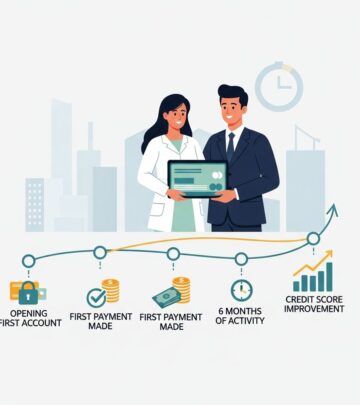
Opening your first credit account—be it a card, loan, or authorized user status—triggers the clock. Data from that account must be reported to bureaus, typically monthly, before scoring algorithms activate. Expect 6 to 12 months on average for newcomers, depending on reporting diligence.
- Month 1: Account opens; initial data like limit and balance reported.
- Months 2-5: Payment history builds with on-time reports.
- Month 6+: Score generation possible if other criteria met.
Factors That Speed Up or Delay Score Creation
Several variables determine how quickly your score emerges. Consistent reporting from creditors is paramount; not all report monthly or to all three bureaus, potentially fragmenting your file.
| Factor | Impact on Timeline | Examples |
|---|---|---|
| Account Type | Secured cards or student loans report faster | Credit-builder loans vs. retail cards |
| Reporting Frequency | Monthly updates accelerate scoring | Creditors reporting bi-weekly |
| Bureau Coverage | Multiple bureau reports unify data | Equifax vs. all three CRAs |
| Negative Marks | Delays or prevents early scoring | Late payments in first months |
Positive habits like low utilization—keeping balances under 30% of limits—bolster early scores once generated. Conversely, high inquiries or maxed accounts can hinder progress.
Proven Strategies to Build Credit from Scratch
Starting without history? Opt for beginner-friendly options. Secured credit cards require a refundable deposit as your limit, mimicking unsecured cards in reporting. Credit-builder loans, offered by some banks, hold funds in savings while you make payments, building positive history rapidly.
Become an authorized user on a trusted family member’s card with a long, low-utilization history. Their positive data transfers to your report, potentially yielding a score in weeks if the account reports immediately. Retail or student cards suit those with income proof.
- Choose products reporting to all bureaus.
- Make small purchases and pay in full monthly.
- Monitor progress via free weekly reports at AnnualCreditReport.com.
Common Myths About Credit Score Timelines
Myth: Scores appear instantly upon account approval. Reality: Reporting lags 30-45 days, plus history buildup.
Myth: Bank accounts build credit. Reality: Only credit products count; checking accounts do not.
Myth: Immigrants start at zero. Reality: Global transfers or ITIN-based products can initiate scoring quickly.
Monitoring and Maintaining Your Emerging Score
Once generated, check scores via free tools from banks or Credit Karma (VantageScore-focused). Banks like Discover or Capital One offer free FICO tracking. Regular reviews catch errors, like unreported payments, which affect 1 in 5 reports.
To sustain growth: Aim for utilization below 10%, diversify with installment loans later, and limit inquiries. Scores rise 20-50 points in the first year with discipline.
Implications of No Credit Score Yet
A “no score” status—termed credit invisible—affects 26 million Americans, limiting access to favorable terms. Lenders may deny applications or charge higher rates. Building early unlocks apartments, jobs, and utilities requiring checks.
FAQs: Credit Score Timeline Essentials
Q: Can I get a score with one credit card?
A: Yes, after 6 months of activity, provided payments are on-time.
Q: What’s the fastest way for a teen to build credit?
A: Authorized user status or secured cards at 18 with income.
Q: Do all bureaus score at the same time?
A: No; variances occur due to reporting differences.
Q: How does utilization affect new scores?
A: Keep under 30% for optimal early impact.
Q: Can rent or utilities build credit?
A: Only via services like Experian Boost; traditional reports exclude them.
Long-Term Benefits of Early Credit Building
Establishing credit young compounds advantages. A strong score by 25 correlates with 100+ point higher lifetime averages, slashing interest costs by thousands on homes and cars. Employers check scores for finance roles; landlords favor 700+.
Diversify post-score: Add auto loans or mortgages. Avoid payday loans, which rarely report positively. Use apps like Self or Kikoff for automated building.
Global context: Non-U.S. residents leverage services like Nova Credit for foreign history translation, shortening timelines.
References
- Know the Score: Credit Scores Explained — Union State Bank. 2023. https://www.myunionstate.bank/credit-scores-explained
- How Credit Scores Work Explained — VantageScore. 2024-01-15. https://vantagescore.com/consumers/how-credit-scores-work
- What is a credit score? — Consumer Financial Protection Bureau. 2025-02-01. https://www.consumerfinance.gov/ask-cfpb/what-is-a-credit-score-en-315/
- What Is a Credit Score & Why Is It Important? — Equifax. 2024-11-20. https://www.equifax.com/personal/education/credit/score/articles/-/learn/what-is-a-credit-score/
- Credit Score Basics: Everything You Need to Know — Experian. 2025-01-10. https://www.experian.com/blogs/ask-experian/credit-education/score-basics/understanding-credit-scores/
- Credit scores explained: A guide to understanding your credit score — Ameriprise. 2024-09-05. https://www.ameriprise.com/financial-goals-priorities/personal-finance/credit-scores-explained
- Understanding Your Credit — Federal Trade Commission. 2024-03-12. https://consumer.ftc.gov/articles/understanding-your-credit
Similar Articles








Read full bio of medha deb