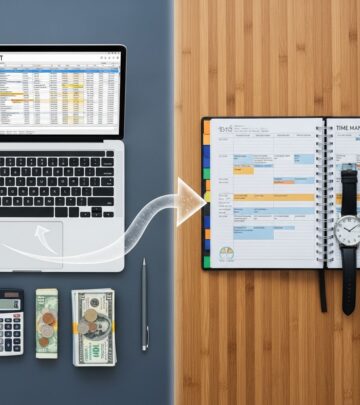
Create a Time Management Plan That Supports Your Money Goals
Learn how to build a simple, realistic time management plan that reduces stress and keeps your financial goals on track.

Time is one of your most valuable resources, and how you manage it directly affects your stress levels, productivity, and financial results. A thoughtful time management plan connects your daily actions to your long-term goals, including how you earn, spend, and grow your money. When your time has a clear purpose, you are more likely to stick with financial habits like budgeting, saving, and debt payoff.
This guide walks you through how to build a realistic time management plan that supports both your life and your finances. You will learn how to define your priorities, choose a planning method, create a weekly routine, and stay flexible when life changes.
Why a Time Management Plan Matters for Your Life and Finances
A time management plan is simply a structured way of deciding how you will spend your time in advance. It gives every hour a job so that your days reflect what matters most to you instead of constant reacting and multitasking.
Effective time management is strongly linked to better performance, lower stress, and higher overall life satisfaction according to research in organizational psychology. It also supports your financial health because you need focused time to plan, track, and adjust your money decisions.
Benefits of having a time management plan
- Lower stress and overwhelm because you know what to focus on and when.
- Improved productivity through clearer priorities and fewer distractions.
- More progress on financial goals like saving, investing, or paying off debt, because you set aside time to work on them.
- Reduced decision fatigue since many daily choices are made ahead of time.
- Better work-life balance by intentionally building in rest, relationships, and self-care.
How time management supports your money goals
Your money habits do not happen in a vacuum. They rely on the time and attention you give them. For example, creating a spending plan, refinancing a loan, or learning a new skill to increase your income all require focused time.
People who regularly set goals and monitor progress tend to have better financial outcomes, including higher savings rates and more consistent debt repayment. A time management plan ensures those goal-related tasks actually appear in your schedule instead of living only on a wish list.
| Without a Time Plan | With a Time Management Plan |
|---|---|
| Pay bills at the last minute and risk late fees. | Have a weekly money check-in time where bills are reviewed and scheduled. |
| Impulse online shopping when bored or stressed. | Use planned shopping windows and a list aligned with your budget. |
| Constantly feel behind on work and home responsibilities. | Batch similar tasks and protect focus blocks to finish priority work. |
| Little time for learning new skills or career growth. | Dedicated weekly learning time that can lead to higher income over time. |
Step 1: Get Clear on Your Priorities and Goals
Your time management plan should start with what matters most, not with the tool or app you use. Before you create a schedule, you need to decide which areas of your life and money deserve your best time and energy.
Identify your core life priorities
Begin by listing the life areas that are most important to you. Common categories include:
- Health and well-being
- Family, partner, and close relationships
- Career or business
- Money and long-term security
- Personal growth and learning
- Rest, hobbies, and fun
Rank these categories in order of importance for the next 6–12 months. This does not mean you ignore the lower-ranked areas, but it helps you decide where your limited time should go first when you have to choose.
Clarify your financial goals
Next, define what you want your time management plan to support financially. Examples include:
- Building a starter emergency fund.
- Paying off high-interest credit card debt.
- Saving for a home deposit or relocation.
- Improving your credit score.
- Learning about investing and retirement accounts.
Set specific, measurable goals with timelines, such as: “Save the first $1,000 in my emergency fund in four months” or “Pay an extra $100 per month toward my highest-interest card.” Clear goals make it easier to decide how much time you need to allocate to financial tasks each week.
Connect goals to daily and weekly actions
Translate each major goal into small, recurring actions. For example:
- Goal: Build an emergency fund.
Actions: Schedule weekly budget review; set an auto-transfer; dedicate 30 minutes a week to finding small expenses to cut. - Goal: Increase income.
Actions: Reserve two 1-hour blocks per week for job search, networking, skills training, or side hustle work.
When you know the actions, you can give them specific time slots in your plan.
Step 2: Choose a Time Management Method That Fits You
There is no single “best” time management method. The best one is the one you will consistently use. Below are commonly used approaches that you can adapt to your life and finances.
Time blocking
Time blocking means dividing your day into blocks of time, each with a clear purpose. Instead of a long to-do list, you assign tasks to specific blocks, like 8:00–10:00 for deep work, 12:30–13:00 for a money check-in, and 18:00–19:00 for family time.
- Reduces multitasking and context switching, which can lower productivity.
- Makes room for financial tasks by giving them dedicated blocks.
- Works well for people with relatively predictable schedules.
Task batching
Task batching means grouping similar tasks together and doing them in one session, such as answering all emails in two daily batches instead of all day long. You can batch money tasks like:
- Paying bills once a week.
- Updating your budget and expense tracker in one sitting.
- Reviewing all subscriptions once a month to spot savings.
This reduces mental load and saves time because you are not constantly switching between unrelated tasks.
Priority-based planning (e.g., Ivy Lee method)
With priority-based planning, you focus on a small number of important tasks each day. One classic approach is the Ivy Lee method: at the end of each workday, write down the six most important tasks for the next day in order of importance and work on them in that order.
For finances, this might mean:
- Choosing the one or two most impactful money tasks for the day.
- Doing those tasks early, before low-value activities like scrolling social media.
Digital vs paper planning
Some people prefer digital tools like calendar apps, project managers, or reminders; others find handwritten planners more intuitive. Both can be effective as long as you:
- Use one primary system you trust.
- Review it daily and weekly.
- Include both time commitments and financial tasks.
Step 3: Audit How You Currently Spend Your Time
Before changing your schedule, it helps to understand how you use your time now. A short time audit can reveal where hours are leaking away and where you can make room for your priorities.
How to run a simple time audit
- Choose a 3–7 day period where you track your time in 15–30 minute increments.
- Write down what you are doing in each block as honestly as possible (including social media, TV, and “just checking” tasks).
- At the end of the period, categorize each block (work, commute, family, chores, money tasks, entertainment, etc.).
- Highlight any blocks that feel wasted, misaligned with your priorities, or longer than you expected.
Research on time use shows that people often underestimate time spent on passive leisure activities like TV or social media and overestimate time spent on active tasks. A time audit replaces assumptions with facts so you can make better decisions.
Link your time audit to your finances
As you analyze your time, ask:
- How much time did I dedicate to managing my money this week?
- Did I have time scheduled for financial tasks, or were they squeezed in?
- How much time went to activities that directly or indirectly cost money (shopping, browsing stores, paid entertainment)?
- Where could a small shift in time create space for actions that improve my money situation?
Step 4: Build Your Weekly Time Management Plan
Now you can create a weekly plan that reflects your priorities, your goals, and what you learned from your time audit. Think of your plan as a template that you can repeat and adjust, not a rigid schedule that must be perfect.
Start with fixed commitments
First, block out the non-negotiable items in your week:
- Work hours or school schedule.
- Commute time if applicable.
- Essential caregiving or family responsibilities.
- Sleep and basic self-care.
These blocks show how much flexible time you actually have to work with.
Add time for financial tasks
Next, intentionally reserve time for money-related actions. For example:
- Weekly money check-in (30–60 minutes): Review your accounts, update your budget, schedule bill payments, and plan spending for the week.
- Monthly review (60–90 minutes): Look at progress toward goals, track net worth if relevant, and decide any adjustments.
- Learning and income time (1–3 hours/week): Learn about investing, take a free course, or work on a side project that can increase your income.
Many households that use regular budgeting and review routines experience better financial stability and fewer late fees or overdrafts. Scheduling these routines gives them a permanent home in your week.
Protect focus blocks for deep work
Deep work is the kind of focused effort that moves your most important projects forward, including those related to your career or business (which ultimately affects your income). To protect deep work blocks:
- Choose times of day when your energy is highest.
- Silence non-essential notifications.
- Keep a simple notepad nearby for non-urgent thoughts or tasks that pop into your mind.
Include rest and buffer time
A realistic time management plan includes margin. Overloading your schedule often backfires and leads to burnout, missed tasks, and stress. Research indicates that chronic lack of recovery time can impair decision-making and self-control, which can spill over into impulsive spending and poor financial choices.
Build in:
- Short breaks between demanding tasks.
- At least one block of free time each week for unplanned rest or enjoyment.
- Buffer time before and after appointments, commutes, or big tasks.
Step 5: Use Tools, Systems, and Boundaries
Once your weekly structure is in place, tools and systems can help you follow through. These do not need to be complicated or expensive. The goal is to reduce friction and make the desired behavior easier than the alternative.
Simple tools to support your plan
- Calendar (digital or paper): For time blocks, appointments, and reminders.
- Task manager or notebook: For daily to-do lists tied to your goals.
- Budgeting app or spreadsheet: To plan and track your money.
- Automatic transfers: To send money to savings and investments on a schedule, reducing the need for willpower.
Set boundaries around your time
To protect your time management plan, you will need clear boundaries. These might include:
- Limiting social media to set windows of time.
- Turning off work notifications outside of agreed hours when possible.
- Saying no to invitations that conflict with your priorities or money goals.
- Communicating your focus times to family or housemates so they know when interruptions should be minimized.
Step 6: Review, Adjust, and Stay Flexible
No time management plan stays perfect forever. Life events, job changes, health issues, and family needs will shift your schedule. The key is to treat your plan as a living document and review it regularly.
Weekly review questions
At the end of each week, spend 15–30 minutes reflecting. Ask yourself:
- What worked well in my schedule this week?
- Where did I feel rushed, stressed, or constantly behind?
- Which time blocks did I skip and why?
- Did I follow through on my financial tasks?
- What one change would make next week easier?
Regular reflection helps you learn from your experience and adjust your plan instead of abandoning it when things get tough.
Stay realistic and kind to yourself
It is normal to underestimate how long tasks take or to overfill a day when you first start planning. Over time, you will get better at estimating and saying no. When you miss a block or fall behind, resist the urge to give up altogether. Instead, pick the next best step and keep going.
Putting It All Together: A Simple Example Week
Below is a very simplified example to show how time and finances can live in one weekly plan. Adjust the times and activities to your reality.
| Day | Morning | Afternoon | Evening |
|---|---|---|---|
| Monday | Deep work (career) + short walk | Meetings, email batching | Family time + 15-min financial check-in |
| Wednesday | Skill building / professional course | Project work | Side hustle or job search block |
| Friday | Admin tasks | Wrap up work + plan next week | Weekly money review and budget update |
| Sunday | Rest / personal time | Meal prep, household planning | Set goals for the week, adjust time blocks |
Frequently Asked Questions (FAQs)
Q: How detailed should my time management plan be?
Your plan should be detailed enough that you know what to work on in each block, but not so rigid that a small change ruins your entire day. Many people find that planning in 60–90 minute blocks with 15-minute buffers is enough structure without feeling trapped.
Q: How much time per week should I dedicate to my finances?
For many people, 60–90 minutes per week is enough for basic tasks like budgeting, paying bills, and monitoring accounts, plus an additional 1–2 hours per month for deeper reviews and learning. If you are working aggressively on goals like debt payoff or career change, you may choose to allocate more time.
Q: What if my schedule is unpredictable?
If your schedule changes often, focus on identifying a few flexible blocks instead of fixed times every day. For instance, you might aim for three 30-minute financial blocks per week and complete them whenever you see an opening, using a simple checklist to guide what you do in each block.
Q: How do I stay motivated to follow my time plan?
Connect your time blocks to meaningful reasons, such as becoming debt-free, having more freedom, or reducing money stress. Track small wins, like consecutive weeks of completing your money check-in, and celebrate them. Research suggests that progress toward personally meaningful goals boosts motivation and well-being.
Q: Can time management really improve my financial situation?
Yes. Good time management supports better financial decisions in several ways: it gives you space to plan and review, reduces stress (which is linked to impulsive spending), and creates room for skill building and income growth. Studies on financial literacy and planning behavior show that people who plan ahead and monitor their finances tend to have higher savings and lower debt levels.
References
- Financial literacy, financial education and economic outcomes — Annamaria Lusardi. 2019-01-01. https://www.oecd.org/finance/financial-education/Financial-literacy-financial-education-and-economic-outcomes.htm
- Time management and academic performance — Britton, Bruce K., and Abraham Tesser (Journal of Educational Psychology). 1991-09-01. https://doi.org/10.1037/0022-0663.83.3.405
- American Time Use Survey — 2023 Results — U.S. Bureau of Labor Statistics. 2024-06-20. https://www.bls.gov/news.release/atus.nr0.htm
- Stress in America 2023 — American Psychological Association. 2023-11-01. https://www.apa.org/news/press/releases/stress/2023/report
Similar Articles








Read full bio of Sneha Tete