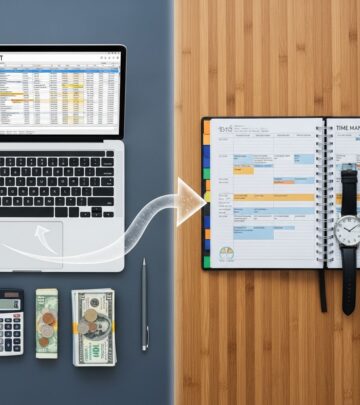
Time And Money: How To Value Both In Your Life
Learn how to balance your time and money so you can reach your financial goals without sacrificing your well-being.

People often say, “time is money,” but in reality, time and money are two different resources that work closely together. Understanding how they relate—and how to manage both—can transform your finances, your stress levels, and your overall quality of life.
This guide breaks down what the time vs money concept means, why both are valuable, how it shows up in your daily life, and practical ways to use your time and money more intentionally.
What Does The Time And Money Concept Mean?
Time and money are deeply connected. You typically spend time to earn money, and you often spend money to save time. When you choose to do one activity, you give up the chance to do something else with that same time—just like spending a dollar on one item means you cannot use that same dollar for something else.
Economists call this trade-off opportunity cost: the value of the next best alternative you give up when you make a choice. Every decision about your schedule and your spending has an opportunity cost, even if you don’t consciously think about it.
| Resource | Can you get more? | How you use it | Key risk |
|---|---|---|---|
| Time | No, it is finite | Allocated through your daily choices and habits | Spending it on low-value activities |
| Money | Yes, you can earn more | Allocated through your income, spending, saving, and investing | Overspending and not aligning with your goals |
To use both well, you want to:
- Maximize how you spend your time so it supports your income, health, and relationships.
- Maximize how you use your money so it supports your values and buys back time where it makes sense.
Time vs Money: Why Both Are Valuable
Most people are trained to watch their bank accounts, budget, and think about financial goals. It’s less common to treat time with the same level of attention, even though time is usually the more limited resource.
Why Time Is Often More Valuable Than Money
Time is a strictly finite resource: you cannot pause it, store it, or buy more of it later. Once a day is gone, it is gone permanently. Money, on the other hand, can be lost and regained; you can earn more income, adjust your spending, and grow savings or investments over time.
Research on well-being consistently finds that how people spend their time—especially on sleep, social connection, and meaningful work—is strongly linked to life satisfaction and health. That means a high income does not automatically equal a high quality of life if your time is completely consumed by work and stress.
Why Money Still Matters A Lot
Money is not everything, but it has a powerful impact on security and stress. Studies show that financial strain is associated with higher stress and can worsen mental and physical health. Using your money wisely can reduce that strain and give you options, such as:
- Living in a safer, more convenient area
- Accessing better healthcare or education
- Outsourcing tasks you dislike to free up time
- Taking breaks, vacations, or shorter work hours when needed
So, while you cannot use money to literally buy more time, you can use it to change how your time feels—less rushed, less stressful, and more aligned with what you care about.
Thinking About Time Like You Think About Money
You may already budget your money, but you can apply a similar mindset to your time. Instead of letting each day fill itself, you can:
- Plan your days and weeks in advance
- Set limits on activities that drain you
- Delegate tasks where possible
- Protect time for rest, growth, and relationships
These habits mirror financial skills like budgeting, tracking spending, and aligning money with your priorities.
Where You See The Time And Money Concept In Your Life
You already make time–money trade-offs constantly, whether you notice them or not. Recognizing them helps you make better decisions.
Financial Impact Of Time And Money Choices
Any purchase you make has both a financial cost and a time cost. You spend time working to earn the money, then you spend the money on the item. Looking at both sides can help you decide if something is truly worth it.
To connect time and money more clearly, you can translate purchases into work hours. For example:
- If you earn $20 per hour after taxes and want to buy a $100 item, it costs you 5 hours of work.
- If you regularly spend $50 a week on small extras, that’s $2,600 a year—130 hours of work at the same rate.
Doing this math can be eye-opening and can naturally reduce impulse spending, because you are no longer only thinking in dollars—you are also thinking in hours of your life.
Everyday Examples Of Time vs Money Trade-offs
- Cooking vs takeout: Cooking at home costs time but usually saves money. Ordering takeout costs more money but may save time and stress on busy days.
- DIY vs hiring help: Doing repairs, cleaning, or admin tasks yourself saves money but may cost a lot of time. Paying someone else can free time for work, rest, or family.
- Commute choices: A cheaper place to live far from work may cost more commuting time. A more expensive place closer to work may save hours each week.
- Overtime work: Extra hours may increase income, but the trade-off might be less sleep, less time with loved ones, or delayed health habits.
There is no one “right” answer. The key is being intentional: choosing how you spend your time and money instead of drifting into patterns that don’t match your values.
7 Ways To Maximize Your Time And Money
Once you understand how closely time and money are linked, you can start to make small, practical changes. Here are seven powerful ways to get more value from both.
1. Know How To Say “No”
Saying “yes” to everything—social events, extra projects, volunteer work—can drain both your time and your wallet. Learning to say “no” is one of the most effective ways to protect your resources.
Before agreeing to something, ask yourself:
- Does this align with my current priorities or goals?
- How much time will this realistically take, including preparation and follow-up?
- What will it cost me in money, energy, and focus?
If the answer doesn’t support your goals or well-being, it is okay to decline politely. Every “no” creates space for a more meaningful “yes.”
2. Plan Your Time Intentionally
Without a plan, days tend to fill up with urgent tasks and distractions. Taking a little time to plan your time can dramatically increase how much you get done and how you feel while doing it.
Try these strategies:
- Weekly planning: Spend 15–30 minutes each week mapping out appointments, work, errands, and personal time.
- Daily top three: Choose the three most important tasks for each day and focus on completing those first.
- Time blocking: Group similar tasks (emails, calls, errands) into dedicated time blocks to reduce switching and distraction.
Planning your time is similar to creating a budget for your money: you are deciding in advance what matters and giving it space.
3. Set Up And Use A Budget
A budget is simply a plan for how you will use your money. It helps you make sure your spending reflects your priorities instead of your impulses. Many financial experts emphasize that budgeting is foundational for building savings, paying down debt, and reaching long-term goals.
To start budgeting:
- List your monthly income (after taxes).
- List your essential expenses (housing, food, utilities, insurance, debt payments).
- Set target amounts for saving and investing, even if they are small at first.
- Assign the remaining money to flexible categories like entertainment, dining out, or shopping.
Track your spending during the month and adjust as needed. Think of your budget as a living document, not a rigid rule. Its job is to help you tell your money what to do so it supports your life, not the other way around.
4. Watch Your Spending Carefully
Unplanned, frequent small purchases can quietly add up and steal both your money and the time you spent earning it. Monitoring your spending helps you see patterns and decide what really matters.
Use these tips:
- Pause before buying: For non-essential items, wait 24 hours before purchasing.
- Translate cost into hours: Ask, “How many hours do I need to work to afford this?”
- Review regular bills: Once a month, check subscriptions, fees, and services for anything you no longer need.
Over time, this awareness can naturally shift your spending toward what brings real value, reducing financial stress and freeing resources for savings or time-saving services.
5. Delegate To Family And Co-workers
Trying to do everything yourself can lead to burnout and inefficiency. Delegating tasks—at home and at work—can free time for higher-value activities, such as learning, earning, resting, or connecting with loved ones.
Consider delegating:
- Household chores among family members
- Simple tasks at work to colleagues or team members when appropriate
- Occasional services, like deep cleaning or yard work, if the cost is worth the time saved
Think of delegation like outsourcing in a business: you are using your resources to focus more on what only you can uniquely do.
6. Use Money To Buy Back High-Value Time
In some situations, spending money thoughtfully can give you back time that is worth far more than the dollars you spent. Research suggests that people who use money to buy time—such as paying for help with chores—often report higher life satisfaction.
Examples include:
- Paying for occasional childcare to get focused time for rest or important projects
- Using grocery delivery when your schedule is packed
- Paying for tools, software, or services that significantly speed up your work
The key is being selective. You do not need to outsource everything—focus on tasks that drain you, take a lot of time, and do not match your strengths or goals.
7. Invest Time In Learning About Money
Spending time to build financial knowledge can have a surprisingly high payoff. Understanding topics like saving, investing, credit, and retirement planning can help you make better decisions for years to come.
Consider investing a small amount of time each week to:
- Read about basic investing concepts and how compound interest works
- Learn strategies for paying down high-interest debt
- Understand your workplace retirement plan or other investment options
- Review your credit report and learn how credit scores are calculated
Even 30–60 minutes a week can build your confidence and help your money work harder for you over time.
Time vs Money: Which Should You Focus On?
It can be tempting to think you must choose between focusing on time or money. In reality, they work best when you pay attention to both together.
Ask yourself regularly:
- Are my money decisions supporting the kind of life and schedule I want?
- Are my time decisions helping me build the financial stability I need?
When you respect both time and money—treating time as the finite resource it is and money as a tool—you can move toward your financial, work, and life goals more quickly and with less stress.
Frequently Asked Questions (FAQs)
Q: Is time really more valuable than money?
A: Time is often considered more valuable because it is finite—you can lose money and earn it back, but you can never recover lost time. However, money remains essential for security and opportunity, so the goal is to balance and respect both.
Q: How can I start valuing my time more?
A: Start by tracking how you spend your time for a few days, just like you would track your spending. Then plan your days more intentionally, set boundaries around low-value activities, and look for tasks you can delegate, reduce, or eliminate.
Q: What is the best way to connect my spending to my time?
A: Convert purchases into hours of work. Divide the price of an item by your hourly net pay to see how many hours it costs. This simple step often makes you think more carefully about non-essential purchases.
Q: How much time should I spend managing my money?
A: For most people, 30–60 minutes a week is enough to review the budget, check accounts, plan savings, and look ahead to upcoming expenses. Once your system is set up, this routine can prevent problems and help you stay on track.
Q: When does it make sense to spend money to save time?
A: It can make sense when the time saved lets you do something more valuable—such as earning more income, protecting your health, or spending quality time with loved ones—and when the cost fits comfortably within your budget.
References
- Principles of Economics — N. Gregory Mankiw. 2014-01-01. https://www.cengage.com/c/principles-of-economics-7e-mankiw/9781285165875/
- Buying Time Promotes Happiness — Ashley V. Whillans et al., Proceedings of the National Academy of Sciences. 2017-07-24. https://www.pnas.org/doi/10.1073/pnas.1706541114
- Financial Stress and Health: A Review of the Literature — American Psychological Association. 2019-03-01. https://www.apa.org/news/press/releases/stress/2019/stress-affects-body
- Personal Finance Basics — Consumer Financial Protection Bureau. 2024-01-15. https://www.consumerfinance.gov/consumer-tools/
- Investing Basics — U.S. Securities and Exchange Commission, Office of Investor Education and Advocacy. 2023-06-01. https://www.sec.gov/investor/education
Similar Articles








Read full bio of Sneha Tete