The 3 S’s of Simple Investing: Start, Stay, and Stick
Master the fundamentals of investing with the 3 S framework: Start now, Stay invested, and Stick with your strategy.
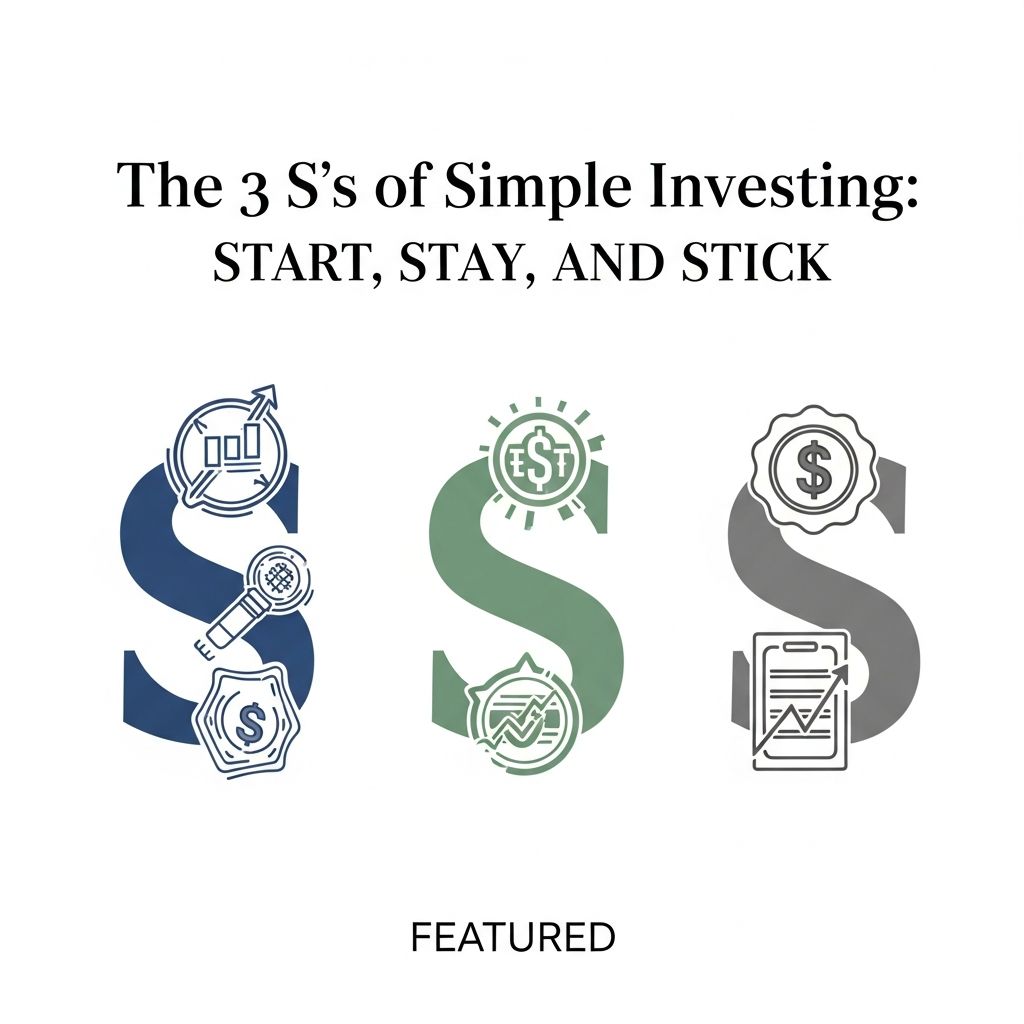
The 3 S’s of Simple Investing: A Beginner’s Guide to Building Wealth
Investing can seem intimidating to beginners, but the fundamentals are surprisingly straightforward. Financial experts have distilled successful investing into three core principles—often referred to as the “3 S’s of Simple Investing”: Start, Stay, and Stick. These three principles form the foundation of a sound investment strategy that can help you build significant wealth over time. Whether you’re just beginning your investment journey or looking to refine your approach, understanding these core concepts is essential for long-term financial success.
The First S: Start Now
The most critical step in investing is simply beginning. Many people delay starting their investment journey waiting for the “perfect” time or until they have accumulated more money. However, financial experts emphasize that the timing of when you start matters far less than actually taking action. The power of compound growth—where your earnings generate their own earnings—becomes increasingly dramatic the earlier you begin.
Understanding Compound Growth
Compound growth is one of the most powerful forces in investing. When you invest money, the returns you earn can be reinvested, allowing your principal investment to grow exponentially. The longer your money remains invested and compounding, the more substantial your wealth accumulation becomes. This phenomenon is often described as earning “interest on your interest.” Even relatively small initial investments can grow into substantial sums over decades, making time your greatest ally in building wealth.
Consider this: an investor who begins investing at age 25 will have significantly more wealth at retirement than someone who starts at age 35, assuming similar investment amounts and returns. The extra decade of compounding can make a profound difference in your final portfolio value. Financial planners consistently advise investors to prioritize starting their investment journey as early as possible, regardless of the amount they can initially invest.
Dollar-Cost Averaging: Investing Consistently
If you’re uncertain about market timing, dollar-cost averaging provides a practical solution. This strategy involves investing the same amount of money at regular intervals, regardless of market conditions. By doing so, you automatically purchase more shares when prices are low and fewer shares when prices are high, thereby reducing your average cost per share over time.
Dollar-cost averaging accomplishes several important objectives. First, it removes the pressure and difficulty of trying to time the market perfectly—a task that even professional investors struggle with consistently. Second, it helps you take advantage of favorable share prices without requiring you to predict market movements in advance. Third, it enforces disciplined, consistent investing habits that are crucial for long-term wealth building. Whether through automatic payroll deductions into a 401(k) or regular transfers to a brokerage account, dollar-cost averaging transforms investing from an intimidating guessing game into a manageable, systematic process.
The Second S: Stay Invested
Once you’ve started investing, the next critical principle is to remain invested through the inevitable ups and downs of market cycles. Market volatility can be unsettling, but attempting to escape it through market timing typically backfires. Investors who panic during downturns and sell their positions often lock in losses and miss the subsequent recovery. The key to successful investing is maintaining a long-term perspective and resisting the emotional urge to react to short-term market movements.
Managing Market Volatility
Market fluctuations are a normal part of investing. Over any given three-month period, markets may decline significantly, causing investor anxiety. However, when viewed over a three-year period, a three-month market dip has minimal impact on overall returns. The goal is to continue investing long enough to experience both market lows and market highs, allowing your portfolio to benefit from slow and steady gains over time. By staying the course, you give your investments the opportunity to recover from downturns and capitalize on subsequent growth periods.
Historical data demonstrates that investors who remained invested through market downturns achieved superior long-term returns compared to those who attempted to time the market. Even during the most severe market corrections, investors with adequate time horizons eventually recovered and achieved positive returns. This reality underscores the importance of emotional discipline and maintaining your investment strategy regardless of short-term market movements.
Playing the Long Game
Successful investing requires patience and a commitment to the long term. Financial advisors consistently recommend “staying invested through” market cycles and focusing on building significant assets through constant, steady contributions. This approach prioritizes wealth accumulation over time rather than seeking quick profits or attempting to outmaneuver market movements. The mentality of playing the long game means accepting that some months or years will bring losses, but over decades, well-diversified portfolios have historically delivered substantial positive returns.
The Third S: Stick With Your Strategy
The final principle emphasizes the importance of maintaining consistency and discipline with your investment strategy. Once you’ve developed a sound investment plan, the most important action is to stick with it. This means resisting the temptation to constantly adjust your portfolio based on market news, hot tips, or emotional reactions to market movements. Successful investors remain “constant and steady” regardless of what’s happening in the market or economy.
Building a Diversified Portfolio
An essential component of sticking with your strategy is maintaining a diversified portfolio. Diversification involves spreading your investments across different asset classes—including stocks, bonds, mutual funds, and exchange-traded funds (ETFs)—to reduce overall portfolio volatility. The principle behind diversification is straightforward: avoid putting all your money into one investment.
Asset Allocation Strategies
A common starting point for asset allocation is the 60/40 portfolio, which consists of 60% stocks and 40% bonds. This conventional combination offers a balanced approach that provides growth potential while managing risk through fixed-income investments. From this foundation, investors can adjust allocations based on their risk tolerance, time horizon, and financial goals.
Consider diversifying across different geographic regions as well. While the U.S. market represents a significant portion of most portfolios, allocating a smaller percentage to international markets can provide diversification benefits. Some Asian markets, for example, may experience different growth cycles than U.S. markets, potentially offering opportunities for above-average returns during certain periods. However, the principle of not concentrating too heavily in any single geographic region remains important.
The Importance of Portfolio Rebalancing
Maintaining your investment strategy also involves periodically reviewing your portfolio and rebalancing when necessary. Over time, different asset classes experience different returns, causing your portfolio allocation to drift from your target percentages. Rebalancing—selling some positions that have grown too large and purchasing others that have underperformed—ensures your portfolio remains aligned with your intended strategy and risk tolerance.
Researching and Selecting Investments
Understanding what you own requires knowledge of how to research stocks and investments. Several data points prove helpful when making investment decisions. Start by examining the market’s general direction using indicators like the moving average of the S&P 500 Index. When the market is trending upward overall, this typically bodes well for individual stocks you’re considering.
Growth vs. Value Investing
Investors can pursue different stock selection strategies. Growth stocks represent shares of newer companies expected to outperform the market over time, offering higher return potential but typically carrying greater risk. Value stocks, by contrast, represent established companies trading below their intrinsic value, potentially offering more stability with moderate growth prospects. Your choice between these approaches should align with your risk tolerance and investment objectives.
Tax Considerations in Investing
Understanding tax implications is crucial for maximizing investment returns. Different investment types and distributions have varying tax consequences. Capital gains taxes apply to profits from selling investments, while dividend income affects annual tax liability. One effective tax management strategy is tax-loss harvesting—selling underperforming investments at a loss to offset capital gains from other investments, thereby reducing your overall tax liability.
Assessing Your Risk Tolerance
Before implementing any investment strategy, honestly assess how much investment volatility you can tolerate. Consider questions like: “If I invest this money and it drops 45%, what impact will that have on my lifestyle?” Your answer should inform your asset allocation decisions. If a significant portfolio decline would substantially disrupt your life, you should maintain a more conservative allocation with higher bond percentages. Conversely, if you have a long time horizon and can emotionally handle volatility, you might maintain a higher stock allocation.
Frequently Asked Questions
Q: When should I start investing?
A: The best time to start investing is as soon as possible. Even small amounts invested early benefit tremendously from compound growth over decades. Delaying your start significantly reduces your wealth-building potential.
Q: How do I handle market downturns?
A: Stay invested and continue making regular contributions through market downturns. Panic selling locks in losses and prevents you from benefiting from market recoveries. Historical data shows that patient investors achieve superior long-term returns.
Q: What’s the ideal portfolio allocation?
A: A 60% stocks and 40% bonds allocation serves as a conventional starting point for most investors. Adjust this based on your risk tolerance, time horizon, and financial goals. Younger investors with longer time horizons can typically tolerate higher stock allocations.
Q: How often should I rebalance my portfolio?
A: Most financial advisors recommend reviewing and rebalancing your portfolio annually or when allocations drift significantly from targets (typically 5-10% from intended allocations).
Q: Is dollar-cost averaging effective?
A: Yes, dollar-cost averaging reduces average share costs over time, removes market-timing pressure, and enforces disciplined investing habits. It’s particularly effective for long-term investors contributing regularly.
Q: How can I minimize investment taxes?
A: Use tax-loss harvesting to offset capital gains, consider holding investments in tax-advantaged accounts like 401(k)s and IRAs, and be mindful of investment turnover rates, which generate taxable events.
References
- The 10 Rules of Investing — Harvard Business School. https://www.hbs.edu/ris/Publication%20Files/10%20Rules%20of%20Investing_f11afeb6-bffd-410c-becc-5d89c6a02ec2.pdf
- Investopedia Financial Review Board — Investopedia. https://www.investopedia.com
Similar Articles








Read full bio of medha deb