Understanding the Three Major Credit Bureaus
Complete guide to Equifax, Experian, and TransUnion credit reporting agencies.
Who Are the Three Major Credit Bureaus?
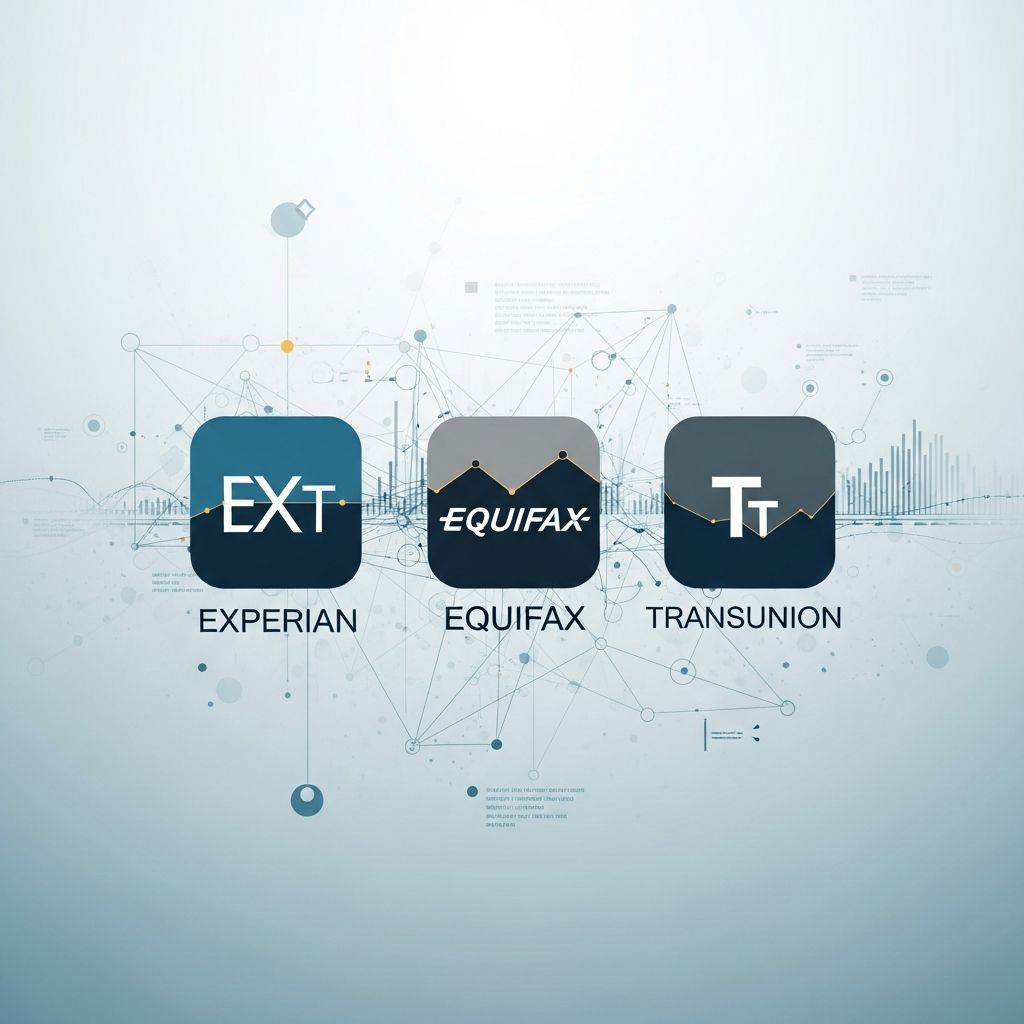
The three major credit bureaus are Equifax, Experian, and TransUnion. These companies are also known as nationwide credit reporting agencies (NCRAs) or consumer reporting companies. They play a fundamental role in the financial system by collecting, compiling, and distributing credit information about millions of consumers. Understanding what these organizations do and how they operate is essential for anyone who borrows money, applies for credit, or wants to maintain good financial health.
Credit bureaus serve as information intermediaries between lenders and consumers. They gather data about your borrowing and payment history, organize it into credit reports, and sell these reports to lenders, creditors, and other authorized entities who use them to make decisions about lending and credit terms. While many people think of these three companies as the only credit bureaus, they are specifically the nationwide credit bureaus that maintain comprehensive credit files on most U.S. consumers.
What Do Credit Bureaus Do?
Credit bureaus perform several critical functions in the financial ecosystem. Their primary responsibility is to compile and maintain credit reports that contain detailed information about consumers’ credit histories and financial behaviors. These reports serve as a financial report card of sorts, summarizing how you manage credit and debt.
The main functions of credit bureaus include:
- Collecting credit information from financial institutions and lenders
- Organizing and maintaining consumer credit files
- Distributing credit reports to authorized entities such as lenders, creditors, and employers
- Providing credit reports to consumers upon request
- Offering dispute resolution services for inaccuracies
- Maintaining public record information such as bankruptcy filings and court judgments
Lenders use credit reports to assess the creditworthiness of applicants and make lending decisions. They rely on the information compiled by credit bureaus to determine whether to approve a loan application, what interest rates to offer, and what credit limits to extend. Credit scoring companies like FICO and VantageScore use the information in credit bureau reports to calculate credit scores, but the bureaus themselves do not calculate these scores.
Credit Bureaus vs. Credit Scoring Companies
A common misconception is that credit bureaus calculate credit scores. This is incorrect. Credit bureaus compile information and maintain credit reports, while separate companies use that information to calculate scores. FICO and VantageScore are among the most well-known credit scoring companies. They use mathematical formulas and algorithms to analyze the data in your credit report and produce a numerical score that represents your creditworthiness.
The distinction is important: credit bureaus collect and report information, while credit scoring companies analyze that information to produce scores. Additionally, credit bureaus do not make lending decisions. That responsibility belongs entirely to lenders and creditors, who use credit reports and scores as tools to make their own determinations about who qualifies for credit and under what terms.
What Information Do Credit Bureaus Collect?
Credit bureaus gather information from multiple sources to create comprehensive credit profiles. The information in your credit report typically includes:
- Personal identifying information such as your name, address, and Social Security number
- Credit account history including credit cards, loans, and lines of credit
- Payment history showing whether payments were made on time
- Current account balances and credit limits
- Public records including bankruptcy filings, tax liens, and court judgments
- Inquiries from lenders and creditors who have requested your credit report
The three credit bureaus gather this information from several voluntary sources. Banks, credit card issuers, credit unions, auto lenders, mortgage lenders, and debt collection agencies regularly send account information to the credit bureaus. Most creditors update this information monthly, ensuring that credit reports reflect recent account activity. Additionally, credit bureaus obtain information from public records maintained by courts and government agencies, particularly regarding bankruptcies, liens, and wage garnishments.
It’s important to note that not all creditors report to all three bureaus. This means your credit reports from Equifax, Experian, and TransUnion may contain slightly different information, which can result in different credit scores from each bureau.
How to Access Your Credit Reports
Under federal law, you are entitled to receive a free copy of your credit report from each of the three major credit bureaus once every 12 months. The most convenient way to request your free annual credit reports is through AnnualCreditReport.com, the centralized website established by the three bureaus specifically for this purpose. You can also call the toll-free number or mail a request to the centralized address.
When obtaining your free annual reports, you should not contact the credit bureaus individually. Instead, use the centralized service to request reports from all three bureaus at once. This approach ensures you receive legitimate reports and avoid fraudulent websites that may charge fees or compromise your personal information.
In addition to your free annual reports, many financial institutions and credit monitoring services offer free access to your credit reports and scores. Capital One’s CreditWise, for example, allows you to access your credit report and monitor your credit score without any cost, even if you’re not a Capital One customer.
Contact Information for the Three Credit Bureaus
If you need to contact the credit bureaus directly regarding disputes, fraud alerts, or credit freezes, here is their contact information:
| Credit Bureau | Phone Number | Website | Mailing Address |
|---|---|---|---|
| Equifax | 800-685-1111 | www.equifax.com | P.O. Box 740241, Atlanta, GA 30374-0241 |
| Experian | 888-397-3742 | www.experian.com | P.O. Box 2104, Allen, TX 75013-0949 |
| TransUnion | 888-909-8872 | www.transunion.com | P.O. Box 1000, Chester, PA 19022 |
Other Types of Credit Reporting Agencies
Beyond the three major nationwide credit bureaus, there are specialty credit reporting agencies that focus on specific types of financial information. These agencies collect and maintain data about rental payments, insurance claims, medical payments, utility payments, and other specialized financial activities. You may not be aware of these specialty reports unless they affect your ability to obtain credit, housing, or employment.
The Consumer Financial Protection Bureau (CFPB) maintains information about various specialty reporting agencies and the types of information they collect. These alternative credit data sources are becoming increasingly important in the financial system, especially for individuals who have limited traditional credit history.
Comparing the Three Major Credit Bureaus
| Aspect | Equifax | Experian | TransUnion |
|---|---|---|---|
| Establishment | Major nationwide credit bureau | Major nationwide credit bureau | Major nationwide credit bureau |
| Primary Function | Compile and maintain credit reports | Compile and maintain credit reports | Compile and maintain credit reports |
| Information Sources | Banks, lenders, creditors, public records | Banks, lenders, creditors, public records | Banks, lenders, creditors, public records |
| Report Availability | Free annually via AnnualCreditReport.com | Free annually via AnnualCreditReport.com | Free annually via AnnualCreditReport.com |
| Accuracy | Generally accurate, but errors possible | Generally accurate, but errors possible | Generally accurate, but errors possible |
All three major credit bureaus perform essentially the same functions and maintain similar types of information. Each bureau has its own processes and procedures, and each may receive information from different creditors, which can result in variations among your three credit reports. However, all three are equally important, and none should be considered more authoritative than another.
Frequently Asked Questions About Credit Bureaus
Q: Is one credit bureau more important than the others?
A: No, all three credit bureaus are equally important. Your financial profile depends on all three bureaus, as they may contain different information from various creditors. Reviewing reports from all three bureaus helps you understand your complete credit picture.
Q: Which credit bureau is the most accurate?
A: All three credit bureaus generally provide accurate credit reports, and no bureau is objectively “better” than another. However, credit reporting errors do occur, so it’s advisable to check your credit reports from all three bureaus regularly for mistakes or inaccuracies.
Q: Do all creditors report to all three bureaus?
A: No, not all creditors report to all three bureaus. Some may report to one or two bureaus but not all three, which is why your credit reports may vary slightly from bureau to bureau.
Q: How often should I check my credit reports?
A: You can check your credit reports from all three bureaus once per year for free through AnnualCreditReport.com. Many experts recommend checking at least annually, though some suggest staggering your requests throughout the year to monitor your credit more frequently.
Q: Can I dispute errors on my credit reports?
A: Yes, you can dispute errors by contacting the credit bureau directly. Each bureau has procedures for disputing inaccurate information. You have the right under federal law to dispute any information you believe is incorrect.
Q: Do the credit bureaus make lending decisions?
A: No, credit bureaus do not make lending decisions. Lenders and creditors use information from credit reports to make their own lending decisions. The decision to approve or deny an application rests with the lender.
Key Takeaways
Understanding the three major credit bureaus—Equifax, Experian, and TransUnion—is essential for managing your financial life. These nationwide credit reporting agencies collect and compile credit information that lenders use to make decisions about approving loans, setting interest rates, and establishing credit limits. While the bureaus maintain similar types of information, the specific data they contain may vary because not all creditors report to all three bureaus. By accessing your free annual credit reports from all three bureaus through AnnualCreditReport.com, monitoring your credit regularly, and disputing any inaccuracies you find, you can ensure that your credit reports accurately reflect your financial behavior and creditworthiness.
References
- What are the three major credit reporting agencies? — U.S. Courts, Law and Bankruptcy. https://www.lawb.uscourts.gov/content/what-are-three-major-credit-reporting-agencies
- The 3 credit bureaus: Equifax, Experian and TransUnion — Capital One. April 17, 2025. https://www.capitalone.com/learn-grow/money-management/three-credit-bureaus/
- What are the names and numbers for the three main credit bureaus? — Nebraska Family Cooperative. November 2014. https://www.nefamily.coop
- What is a Credit Bureau and What Do They Do? — Equifax. https://www.equifax.com/personal/education/credit/report/articles/-/learn/what-is-a-credit-bureau/
- Free Credit Reports — Federal Trade Commission, Consumer Advice. https://consumer.ftc.gov/free-credit-reports
- Learn about your credit report and how to get a copy — USA.gov. https://www.usa.gov/credit-reports
Similar Articles








Read full bio of medha deb