The Founder: Fact vs. Fiction in McDonald’s Origin Story
Exploring how accurately The Founder depicts the true history of McDonald's and Ray Kroc's rise to power.
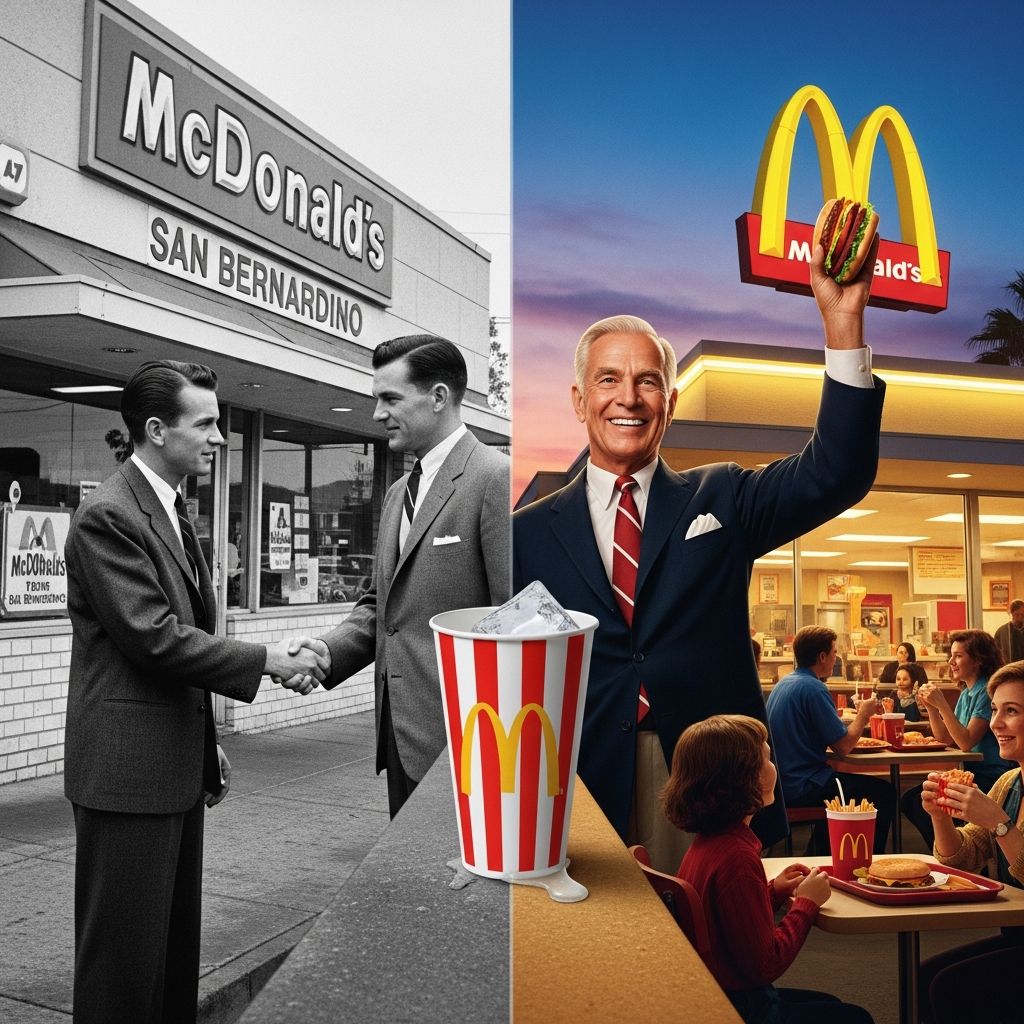
The Founder: Separating Hollywood from History
The Founder stands as one of the most intriguing biographical films to emerge from Hollywood in recent years, presenting a compelling narrative about how Ray Kroc transformed a small burger operation into a global empire. Director John Lee Hancock crafted the film not merely as a traditional biopic of a single individual, but rather as a character study of McDonald’s itself as the central protagonist. This unique approach raises important questions about historical accuracy and the creative freedoms filmmakers take when adapting real events for the screen.
The film chronicles the dramatic story between the men who built McDonald’s into the enormous corporation it is today. What makes this particular story so challenging to adapt accurately is that conflicting accounts exist among the major players involved. The narrative centers on Ray Kroc, an enterprising salesman who encounters Dick and Mac McDonald’s successful burger stand and transforms it into a worldwide sensation—though not without creating significant tension and ultimately making enemies of the brothers who started it all.
Ray Kroc’s Journey: The Accurate Biographical Elements
The biographical details surrounding Ray Kroc presented in The Founder are largely factual. The film accurately depicts Kroc as a business-minded, highly driven milkshake mixer salesman who had not yet achieved significant success when, in 1954, he encountered the McDonald brothers. The pivotal moment occurs when Dick and Mac McDonald place an unusually large order for eight Multimixers—milkshake machines that Kroc supplied—for a single restaurant. This extraordinary order prompts Kroc to travel to California to investigate what kind of business could possibly require so many milkshake machines.
Upon arriving in California, Kroc discovers the McDonald brothers’ innovative restaurant operation. He recognizes the potential in their business model and enters into a partnership with them. The film accurately shows Kroc franchising McDonald’s with remarkable success and eventually purchasing the company and the McDonald’s name from the brothers for $2.7 million, though he does not receive the rights to the original location. This transaction becomes a crucial turning point in the narrative, as Kroc subsequently begins a controversial process of cutting the brothers out of McDonald’s history and claiming the founder title for himself.
Kroc’s personal jealousy regarding the McDonald’s surname is also accurately portrayed. The film captures Kroc’s frustration with his own name, a sentiment he expressed in a 1973 TIME magazine interview when he asked, “What are you going to do with a name like Kroc?” This detail underscores his motivation for wanting to distance himself from the McDonald brothers and establish his own legacy.
Where The Founder Takes Creative License
While many core elements of The Founder remain historically accurate, several significant details diverge from established fact. One of the most notable inaccuracies involves the origin of McDonald’s franchising model. The film suggests that Kroc himself conceived the idea of franchising McDonald’s, yet historical records indicate that the McDonald brothers had already begun franchising operations before they ever met Kroc. By 1954, the brothers had established approximately six franchise locations, demonstrating they possessed entrepreneurial vision independent of Kroc’s involvement.
Similarly, the movie incorrectly attributes the iconic golden arches to Kroc’s imagination. In reality, the McDonald brothers commissioned architect Stanley Clark Meston to design the distinctive golden arches in 1952, well before Kroc’s entry into their business. The film falsely suggests that Kroc contributed this revolutionary design element, overstating his creative role in establishing McDonald’s visual identity.
The initial deal between Kroc and the brothers also requires clarification. According to historical accounts, Kroc agreed to pay the brothers 0.5% of all future sales from the franchises he would establish. Over the subsequent five years, Kroc’s franchising efforts proved extraordinarily successful, resulting in a chain of 228 McDonald’s restaurants strategically located in suburbs populated with families—the target demographic McDonald’s aimed to serve. By 1960, these restaurants were generating an impressive $56 million annually in gross revenue.
The Challenge of Multiple Historical Accounts
One fundamental issue that complicated the filmmakers’ efforts to maintain historical accuracy was the existence of conflicting narratives about various events. The 1973 TIME magazine cover story about McDonald’s revealed that the details of what really happened depended significantly on whom you asked. Ray Kroc’s autobiography, “Grinding it Out: The Making of McDonald’s,” provides one version of events, while accounts from the McDonald brothers offer different perspectives on the same occurrences.
Kroc’s biography, for instance, claims that his McDonald’s franchise location in Des Plaines, Illinois, was the first McDonald’s restaurant ever opened, directly contradicting the established timeline and the brothers’ accounts. These historical disagreements meant that screenwriters faced a genuine dilemma when deciding which version of events to prioritize and how to represent contested facts in a manner that would resonate with audiences while maintaining narrative integrity.
Production Design and Visual Accuracy
One area where The Founder maintained absolute fidelity to historical reality was in its representation of McDonald’s itself, including all branding, iconography, and restaurant designs. McDonald’s Corporation granted filmmakers permission to use its trademark imagery and design elements, provided that these representations remained accurate and did not misrepresent the company. This requirement necessitated meticulous attention to historical detail.
Production designer Michael Corenblith approached this challenge with exceptional rigor, consulting “old photographs, blueprints and other archival material” to ensure authenticity. The team conducted under-the-radar visits to older McDonald’s restaurants to obtain exact measurements and design specifications. The result was the construction of two full-sized, working McDonald’s restaurants that maintained what filmmakers describe as “absolute high fidelity” to the restaurants of the 1950s and early 1960s.
After a month of searching for an appropriate location, Corenblith’s team constructed an old-style McDonald’s building complete with golden arches in a church parking lot in Douglasville, Georgia. The entire set was built in just seven working days and included period-accurate kitchen equipment brought up to current code requirements. The construction was cleverly designed to be modular, with removable countertops and wall-sized glass panes that could be taken out to accommodate cameras and other filming equipment. Through rearrangement of exterior features such as parking lot striping, this single set effectively served as each franchise location depicted throughout the film, demonstrating the filmmakers’ commitment to both authenticity and practical efficiency.
The Franchise Strategy and Market Expansion
The Founder accurately depicts Kroc’s strategic approach to franchise location selection. Rather than opening McDonald’s restaurants randomly throughout the country, Kroc deliberately targeted suburban areas populated by families with children. This demographic-focused strategy proved instrumental to McDonald’s explosive growth during the 1950s. As part of this family-oriented marketing approach, McDonald’s developed Ronald McDonald, a character designed to appeal to children and appear in television advertisements and at restaurant locations.
This strategic positioning in family-friendly suburbs represented a fundamental shift in fast-food industry practices and contributed significantly to McDonald’s unprecedented success. The company’s early franchises became community gathering places where families felt comfortable bringing their children, establishing McDonald’s not merely as a food vendor but as a cultural institution.
The Deal and Its Aftermath
The film portrays the eventual buyout of the McDonald brothers’ interests as a contentious affair. While the basic narrative—that Kroc purchased the company and name for $2.7 million—remains accurate, the circumstances surrounding this transaction and its aftermath warrant examination. Kroc’s subsequent efforts to rewrite McDonald’s history and claim the founder title for himself represent one of the most controversial aspects of his legacy, though The Founder depicts these actions with considerable accuracy.
The brothers’ decision to sell their interests for $2.7 million, comprising $1 million each plus $700,000 to cover taxes, reflected their recognition that Kroc controlled the franchise expansion and held substantial leverage in negotiations. Following the sale, Kroc systematically worked to diminish the McDonald brothers’ role in founding the company, a process that involved controlling the narrative through various media outlets and official company histories.
Critical Reception and Historical Assessment
Despite taking certain creative liberties with specific historical details, The Founder has earned recognition for being substantially accurate in its portrayal of events. The film’s approach of allowing drama to emerge from reality rather than imposing fictionalized narratives onto actual events contributes to its credibility. Viewers often struggle to distinguish between actual documentary footage and dramatized scenes, a testament to the filmmakers’ commitment to historical authenticity.
The screenplay, while informed by Ray Kroc’s autobiography and other available sources, demonstrates research extending beyond these primary texts. The production quality and attention to detail throughout the film reflect a filmmaker’s determination to honor the genuine historical narrative while crafting an engaging cinematic experience.
Key Differences: A Comparative Overview
| Element | The Founder Portrayal | Historical Fact | Accuracy |
|---|---|---|---|
| Kroc’s Role in Franchising | Kroc conceived the franchising idea | McDonald brothers already had 6 franchises before meeting Kroc | Inaccurate |
| Golden Arches Design | Kroc is credited with the design concept | Architect Stanley Clark Meston designed them in 1952 | Inaccurate |
| Initial Deal Terms | Kroc and brothers form partnership | Kroc agreed to pay brothers 0.5% of all future sales | Accurate |
| Kroc’s Personal Background | Milkshake mixer salesman with limited success | Accurate description of his pre-McDonald’s career | Accurate |
| 1954 Encounter | Brothers order eight Multimixers | Historically accurate pivotal moment | Accurate |
| Franchise Expansion Strategy | Targets suburban family-oriented communities | 228 restaurants by 1960 in strategic suburban locations | Accurate |
| Buyout Amount | $2.7 million purchase of company and name | $2.7 million transaction confirmed | Accurate |
| Kroc’s Name Concerns | Expresses dissatisfaction with surname “Kroc” | Confirmed by 1973 TIME magazine interview | Accurate |
Frequently Asked Questions
Q: Is The Founder considered historically accurate?
A: The Founder is substantially accurate in its core narrative and biographical details about Ray Kroc, though it takes some creative liberties regarding specific contributions and timeline elements. The majority of major events and character motivations are historically grounded.
Q: Did Ray Kroc actually invent the McDonald’s franchise system?
A: No. The McDonald brothers had already established six franchise locations before meeting Kroc. However, Kroc dramatically expanded the franchising model and built it into a national and international operation.
Q: Who actually designed the golden arches?
A: Architect Stanley Clark Meston designed the iconic golden arches in 1952 for the McDonald brothers, years before Kroc’s involvement with the company.
Q: How much did Kroc pay the brothers for McDonald’s?
A: Kroc purchased McDonald’s and the company name from the brothers for $2.7 million, which included $1 million for each brother and $700,000 to cover taxes.
Q: Were the McDonald’s restaurants in the film accurate?
A: Yes. The production designers used archival photographs, blueprints, and measurements from actual McDonald’s restaurants to create period-accurate sets that maintained absolute fidelity to 1950s-era restaurant designs.
Q: How many McDonald’s franchises did Kroc establish in five years?
A: Kroc created a chain of 228 McDonald’s restaurants within five years, strategically positioned in suburban areas populated by families.
Q: Did McDonald’s revenue really reach $56 million by 1960?
A: Yes. By 1960, McDonald’s restaurants were generating $56 million annually in gross revenue, demonstrating the remarkable success of Kroc’s expansion strategy.
Q: Was the film authorized by McDonald’s Corporation?
A: No. The Founder was produced without official McDonald’s Corporation authorization, though the company did allow use of its trademarks and branding provided they were represented accurately.
References
- The Founder Movie: True Story of the McDonald’s Brothers — Money. 2016. https://money.com/the-founder-mcdonalds-movie-accuracy/
- How Accurate Is The Founder? The True Facts About McDonald’s Will Surprise You — Bustle. https://www.bustle.com/p/how-accurate-is-the-founder-the-true-facts-about-mcdonalds-will-surprise-you-30010
- The Founder Movie vs True Story of Real Ray Kroc, Dick McDonald — History vs. Hollywood. https://www.historyvshollywood.com/reelfaces/founder/
- The True Origin Story Behind McDonald’s — Marketplace. 2017-02-09. https://www.marketplace.org/story/2017/02/09/ray-kroc-mcdonalds-fast-food
- The Founder — Wikipedia. https://en.wikipedia.org/wiki/The_Founder
- Grinding it Out: The Making of McDonald’s — Ray Kroc. 1977. St. Martin’s Press.
Similar Articles








Read full bio of Sneha Tete