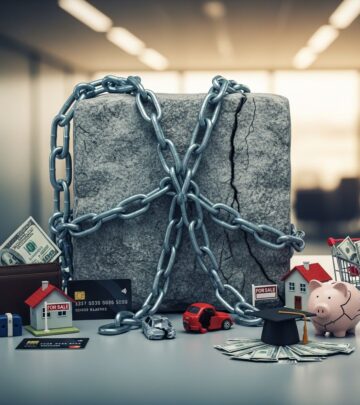
The Debt Trap: Factors That Have Led Us to Our Debt
Uncover the key factors trapping Americans in debt: easy credit, societal pressures, and personal habits that fuel the borrowing cycle.

America has become a nation defined by borrowing. Personal stories in media like The New York Times series on debt reveal the struggles of everyday people drowning in consumer debt, prompting a deeper look at what led us here.
Common threads emerge in these narratives: finger-pointing at lenders, banks, and credit card companies for crafting products that encourage over-borrowing. Yet, a balanced view reveals shared responsibility between borrowers and the financial system. This article dissects the key factors—easy credit access, societal pressures, lack of accountability, mindset issues, and the debt spiral—that have ballooned national debt levels.
Easy Access to Credit
In the 2000s, credit was astonishingly easy to obtain. Mailboxes overflowed with 0% interest credit card offers, tempting consumers to exploit rewards and balance transfers.
Many engaged in credit card arbitrage, taking cash advances or transfers to invest in a booming stock market, aiming to profit from the interest differential. This was a hallmark of the era, but it fueled debt growth as markets crashed.
Subprime loans, jumbo mortgages, and other high-risk products proliferated. These capitalist innovations allowed high-risk borrowers to gamble on homes and assets, often leading to foreclosure and financial ruin. Banks aggressively marketed these, lowering standards to expand lending.
- 0% APR introductory offers lured users into carrying balances post-promo.
- Balance transfer fees were overlooked in pursuit of rewards.
- Subprime lending exploded, contributing to the 2008 housing crisis.
Today, regulations have tightened, but the legacy persists: a culture accustomed to instant credit.
Keeping Up with the Joneses
Consumerism drives debt like few other forces. The mantra of “more, more, more” diverts savings into status symbols—luxury cars, designer clothes, lavish vacations—instead of high-yield accounts.
This keeping up with the Joneses syndrome pressures households to match neighbors’ lifestyles, even beyond their means. Social media amplifies it, showcasing curated perfection that fuels spending envy.
Statistics from the Federal Reserve show household debt hit $17.5 trillion in 2023, much tied to non-essential consumption[10]. Rather than prioritizing financial security, many finance lifestyles on credit.
- Annual vacations funded by cards, accruing interest.
- New gadgets replacing functional ones for prestige.
- Dining out and entertainment eclipsing emergency funds.
Breaking this cycle requires redefining success beyond material displays.
Lack of Personal Accountability
We often procrastinate on finances, deny problems, or blame external forces. Government and banks take heat for economic woes, but consumers share blame in the subprime boom and bust.
Reader comments echo this: one family traded a $1,500 car repair for a $40,000 new vehicle with rolled-over negative equity, deeming church childcare too pricey. This highlights misplaced priorities.
Selfishness underpins much debt: the attitude of “I deserve it now, pay later.” Commenters argue debt stems not from ignorance but entitlement. Banks’ junk mail exacerbates, but personal discipline is key.
| Excuse for Debt | Reality Check |
|---|---|
| “Banks made me do it” | Individuals choose to apply and spend. |
| “I deserve a break” | Living within means requires sacrifice. |
| “It’s too hard to budget” | Tools exist; discipline is the barrier. |
Accountability starts with tracking spending and owning choices.
Mindset and the Debt Gene
Some posit a “debt gene” predisposing overspending, but environment trumps genetics. Childhood lessons glorifying borrowing—instant gratification over saving—set lifelong patterns.
A healthy mindset fears bad debt (high-interest consumer loans) while embracing good debt (low-rate mortgages for appreciating assets). Upbringing shapes this: if parents financed everything, children repeat it.
Adjusting requires intentional discomfort with debt. Education counters: teach delayed gratification, value of saving. Studies from the Consumer Financial Protection Bureau show financial literacy reduces debt incidence[11].
- Cultivate fear of interest accrual.
- Prioritize needs over wants.
- Model frugality for future generations.
The Debt Spiral
Debt’s danger lies in its compounding nature. Mismanagement leads deeper: student loans prompt credit card use for living expenses, birthing chronic balances.
One wage earner graduates into job market with loans, marries, buys a house—each adding debt layers. Unexpected expenses (car repairs) trigger more borrowing. Related article “Wage Slave, Debt Slave” details this trap: debt and wages chain most, escapable only via aggressive payoff.
Examples abound: law grads with massive loans enter flooded job markets, spiraling further. Nickel-and-diming—small impulse buys—snowballs unnoticed.
To escape:
- Assess total debt and income.
- Slash non-essentials ruthlessly.
- Accelerate payments, avoiding new debt.
Frequently Asked Questions (FAQs)
Q: Is debt always bad?
A: No, good debt like low-interest mortgages for homes can build wealth. Bad debt—high-interest consumer loans—erodes it.
Q: How did easy credit contribute to the crisis?
A: 0% offers and subprime loans encouraged over-borrowing, inflating bubbles that burst in 2008.
Q: Can I blame banks entirely?
A: No, shared responsibility: banks marketed aggressively, but consumers chose to borrow beyond means.
Q: What’s the first step out of debt?
A: Track spending, create a budget, and commit to living below your means.
Q: How to teach kids to avoid debt traps?
A: Model saving, delay gratification, and discuss financial decisions openly.
Escaping the Trap
Understanding these factors empowers change. Prioritize frugality, education, and accountability. Success stories abound: one cleared $60k debt in 18 months on $65k income via tracking and minimalism. Another paid off home quickly by buying affordably.
Avoid the American Dream pitfalls—oversized homes, new cars—that demand debt. Aim for financial independence: low expenses, savings, investments.
Debt traps aren’t inevitable. With awareness, most escape, building wealth instead.
References
- The Debt Trap: Factors That Have Led Us to Our Debt — Wise Bread. 2009-10-15. https://www.wisebread.com/the-debt-trap-factors-that-have-led-us-to-our-debt
- Wage Slave, Debt Slave — Wise Bread. 2010-05-20. https://www.wisebread.com/wage-slave-debt-slave
- Household Debt and Credit Report — Federal Reserve Bank of New York. 2024-02-05. https://www.newyorkfed.org/microeconomics/hhdc.html
- Consumer Credit – G.19 — Board of Governors of the Federal Reserve System. 2025-01-08. https://www.federalreserve.gov/releases/g19/current/
- Financial Well-Being in America — Consumer Financial Protection Bureau. 2024-10-01. https://www.consumerfinance.gov/data-research/research-reports/financial-well-being-america/
Similar Articles








Read full bio of medha deb