The Debt Ceiling Crisis in Everyday English
Demystifying the U.S. debt ceiling crisis: What it means for your wallet, the economy, and why lawmakers must act before it's too late.

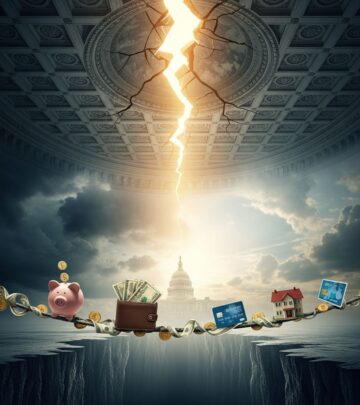
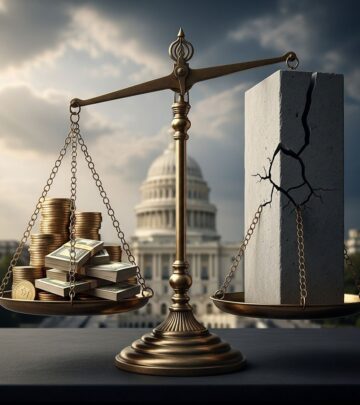
Imagine maxing out your credit card because you’ve already spent the money Congress approved, but you can’t borrow more to pay the bill. That’s the U.S. debt ceiling in a nutshell. The debt ceiling is a legal cap on how much the federal government can borrow to cover spending already authorized by lawmakers. As of recent projections, the limit was raised to $41.1 trillion in July 2025, but ongoing deficits mean it could hit again soon. This isn’t about new spending—it’s about paying for commitments like Social Security, veterans’ benefits, Medicare, and interest on existing debt. Failure to raise it risks default, market turmoil, and recession, affecting everyday Americans from delayed checks to higher borrowing costs.
What Is the Debt Ceiling?
The debt ceiling, enacted in 1917, limits Treasury borrowing to finance Congress-approved expenditures when revenues fall short. The U.S. runs deficits, spending more than it collects—about 80 cents in revenue per dollar spent—so 20% must be borrowed. Hitting the ceiling doesn’t stop spending; it halts new borrowing, forcing tough choices on payments. Unlike a household budget, the government prints money and issues bonds considered the world’s safest asset, but the ceiling creates artificial crises.
- Key Fact: It’s not a spending cap but a borrowing limit after spending is approved.
- Congress sets the limit; Treasury manages within it using cash flows and maneuvers.
- Debt has grown from wars, recessions, pandemics, and entitlements like Social Security and Medicare.
Why Are We Talking About This Now?
Deficits accumulate from mandatory programs (70% of budget) and interest payments, pushing debt toward the ceiling repeatedly. In 2023, a June 1 standoff loomed with partisan demands for spending cuts. By July 2025, it reached $41.1 trillion via P.L. 119-21. Without raises, Treasury exhausts options, risking ‘X-date’—when cash runs dry. Brinkmanship disrupts markets, as seen in past impasses weakening expansions via lower confidence and wider spreads.
Politics amplify it: Republicans often demand cuts; Democrats resist without revenue hikes. This isn’t new—over 100 raises since 1917—but polarization heightens risks.
Has the U.S. Ever Defaulted Before?
No technical default has occurred, but close calls exist. In 1979, delays cost $122 million extra in interest. The 2011 impasse led to S&P downgrade, spiking yields by 0.2% and costing billions. 2013 brinkmanship slowed growth via market stress. Extraordinary measures bought time, but untested limits loom. A true default would be unprecedented, shattering ‘full faith and credit’.
| Year | Event | Impact |
|---|---|---|
| 1979 | Technical delay | $122M extra interest |
| 2011 | S&P downgrade | Higher yields, market drop |
| 2013 | 16-day impasse | Weakened GDP growth |
| 2023 | Near-miss | Market volatility |
What’s Going to Happen on [Deadline, e.g., August 2nd]?
Deadlines like August 2, 2011, aren’t ironclad—cash inflows continue post-date, prioritizing payments. Treasury uses ‘extraordinary measures’: suspending investments in federal funds, redeeming securities early. These delay crisis weeks to months but can’t avert it indefinitely. Joshi noted in 2011: post-deadline cash covers bills briefly. Today, similar tools apply until measures exhaust.
Who’s Joshi and Why Should I Care?
Ashish Joshi, then-Treasury spokesperson, clarified 2011 dynamics: cash flows provide buffer, countering doomsday hype. His insight underscores nuance—crises build gradually, not overnight. Care because misperceptions fuel panic, hurting markets and your savings.
Why Can’t We Just Print More Money?
Technically possible via Federal Reserve, but disastrous. Printing inflates currency, eroding value—hyperinflation like Weimar Germany or Zimbabwe. U.S. dollar’s reserve status relies on discipline; monetizing debt spikes rates long-term. Fed independence prevents this; it’s not a fix, but a catastrophe.
Is This a Real Crisis or Political Posturing?
Both. Self-inflicted via partisan games, but real risks: liquidity crunches, credit freezes. Unlike shutdowns (discretionary spending halt), default hits mandatory payments, bonds. Harvard’s Howell Jackson warns it’s unlike shutdowns—untested, could recession-trigger. Brinkmanship already costs via uncertainty. Long-term, unchecked debt courts true crisis.
What Happens If We Hit the Debt Ceiling?
Treasury prioritizes: likely bonds first (protect credit), then seniors/veterans, delaying others like Social Security. But legal chaos ensues—no clear priority law.
- Immediate: Payment delays for millions.
- Markets: Treasury sell-off, stock plunge, credit freeze.
- Economy: Recession via hesitant lending, business halts.
- Global: Dollar wobble, as Treasuries underpin finance.
Who Gets Paid, Who Doesn’t?
Prioritization: interest/principal (4% budget, default core), then entitlements (50%), defense (10%). Delays hit contractors, grants. CBO: 4M Social Security checks at risk monthly. Hunger crisis possible for food aid. Unconstitutional ‘money bill’ violation debated.
Market Impacts: Stocks, Bonds, Your 401(k)
Past crises dropped stocks 17% (2011), widened spreads. Yields rise on risk, costing billions. 401(k)s tank; mortgages, loans costlier. Recession odds jump.
| Asset | Potential Impact |
|---|---|
| Stocks | 10-20% drop |
| Bonds | Yields spike |
| 401(k) | Sharp losses |
Everyday Effects: Gas, Groceries, Mortgages
Higher rates raise mortgage/car costs; recession hikes unemployment, cuts spending. Grocery/fuel volatility from dollar weakness. Delays in benefits strain families.
Historical Context: Lessons from Past Crises
Since 1960, 78 raises; post-2001, 20 under both parties. 2011 cost $1.3B in higher interest. Use as reform lever.
Political Standoff: Demands and Negotiations
Republicans seek cuts (entitlements); Democrats want clean raise. Biden era echoed this. Reforms needed for sustainability.
Extraordinary Measures Explained
Treasury delays pension investments, shifts funds—buys months. Not infinite.
Long-Term Debt Crisis vs. Ceiling Drama
Ceiling is symptom; $41T+ debt unsustainable without entitlement reforms. Growth outpaces GDP.
Frequently Asked Questions (FAQs)
Q: Will default stop Social Security checks?
A: Possible delays if cash short; prioritization uncertain but risky for 67M recipients.
Q: How does debt ceiling affect my mortgage rates?
Q: Rates rise on Treasury turmoil, increasing borrowing costs.
Q: Can President bypass Congress?
A: 14th Amendment debated, but politically explosive; measures temporary.
Q: Is U.S. debt like household debt?
A: No—government borrows in own currency, but mismanagement risks inflation/recession.
Q: When is next X-date?
A: Varies; post-2025 raise, monitor Treasury reports.
Protecting Your Finances During Brinkmanship
Diversify portfolio, build emergency fund, avoid panic selling. Long-term: advocate fiscal reform.
References
- The US Debt Ceiling Crisis Explained: What You Need to Know — Noah Zerbe, California State Polytechnic University, Humboldt. 2023-05-09. https://www.youtube.com/watch?v=2-1WdxxCH5o
- The Debt Ceiling Crisis in Everyday English — Wise Bread. 2011. https://www.wisebread.com/the-debt-ceiling-crisis-in-everyday-english
- A genuine debt ceiling crisis? — Harvard Law School. Recent. https://hls.harvard.edu/today/a-genuine-debt-ceiling-crisis/
- From Debt Ceiling Crisis to Debt Crisis — Cato Institute. Recent. https://www.cato.org/blog/debt-ceiling-crisis-debt-crisis
- Macroeconomic Effect of Debt Ceiling Brinkmanship — U.S. Department of the Treasury. Recent. https://home.treasury.gov/system/files/276/POTENTIAL-MACROECONOMIC-IMPACT-OF-DEBT-CEILING-BRINKMANSHIP.pdf
- The Debt Limit — Congress.gov. 2025. https://www.congress.gov/crs-product/IF10292
Similar Articles








Read full bio of medha deb