The 9 Types of Horrible Bosses and How to Manage Them
Identify the 9 most common horrible boss types and discover practical strategies to manage them effectively for career success.
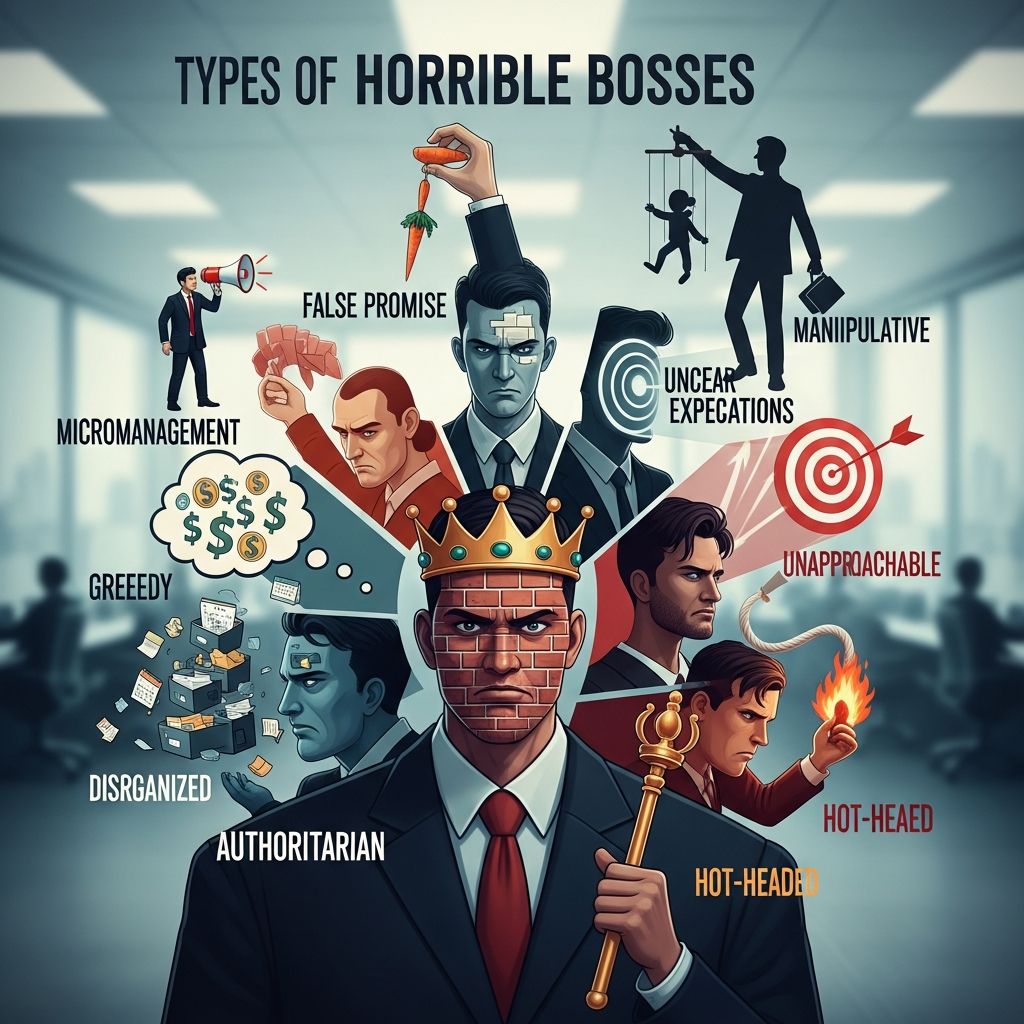
Unless you work for yourself, you answer to a boss — who may be doing more harm to your career than you realize. A bad boss can tank your productivity, morale, and even your long-term professional growth. Surveys show that traits like greed, sloth, and wrath are common among poor leaders, with 27% of employees citing their boss’s greed as a top issue. But the good news? You can often “manage up” with smart strategies. This article breaks down the nine most common horrible boss archetypes and provides actionable advice to deal with each one.
1. The Micromanager
The micromanager hovers over every detail, dictating emails, schedules, and even mundane tasks like replacing toner. They undermine your autonomy, leading to frustration and burnout. This type stems from insecurity or lack of trust, but it stifles creativity and efficiency.
- Signs: Constant check-ins, rewriting your work, refusing to delegate.
- Impact: Kills motivation; employees feel infantilized.
How to Manage the Micromanager
Anticipate their needs. Provide frequent, concise updates before they ask—use tools like shared dashboards or daily stand-up emails. Frame it as efficiency: “I’ve prepared this report to save us both time.” Gradually build trust by delivering flawless results, reducing their need to intervene. If it persists, request a private chat: “I appreciate your guidance; how can I earn more autonomy?”
2. The Incompetent Boss
This boss lacks basic skills in your field or management. They give wrong advice, can’t lead meetings, or make embarrassing gaffes like confusing email with Twitter. Despite this, they got hired somehow—perhaps through connections—and now they’re alienating everyone.
- Signs: Poor decisions, inability to use tools, vague or incorrect feedback.
- Impact: Team failures, low morale, customer loss.
How to Manage the Incompetent Boss
Become their ally. Stroke their ego subtly: “I love how you empower the team on deadlines.” Identify their strengths (e.g., networking) and learn from them. Diplomatically correct errors by offering “helpful suggestions” backed by data. Document everything to protect yourself.
3. The Disconnected Boss
Out of touch with daily operations, this boss spouts vague platitudes or irrelevant ideas. They don’t grasp your role or company realities, leaving you directionless.
- Signs: Ignores specifics, gives generic advice, unaware of team challenges.
- Impact: Misaligned priorities, wasted effort.
How to Manage the Disconnected Boss
Educate them gently. Schedule regular one-on-ones with clear agendas and visuals (charts, demos) explaining your work. Ask pointed questions: “Based on this, what’s our top priority?” Bridge the gap by translating business goals into your terms.
4. The Unrealistic Boss
They pile on impossible deadlines and tasks, expecting you to “fit it in” without resources. New ideas from above become your emergency, overriding everything else.
- Signs: Overloaded schedules, ignoring constraints, perpetual fire drills.
- Impact: Burnout, errors from rushing.
How to Manage the Unrealistic Boss
Prioritize with them. Use a table of tasks with time estimates:
| Task | Estimated Time | Priority |
|---|---|---|
| New Project | 40 hours | High |
| Ongoing Work | 30 hours | Medium |
Say, “To hit this deadline, we’ll deprioritize X—does that align?” Negotiate resources or timelines proactively.
5. The Mean Boss
A bully who belittles publicly, remembers every mistake, and creates a toxic environment. Stress leads to health issues and high turnover.
- Signs: Yelling, shaming, unfair criticism.
- Impact: Ulcers, fear-based culture.
How to Manage the Mean Boss
Confront calmly: “I’ve noticed tension in meetings; can we align on project direction?” Act as a peer—show confidence. If abusive, escalate to HR with documentation. Some respond to directness, preferring equals.
6. The Buddy Boss
Too friendly, avoiding tough feedback or discipline. Slackers thrive, while you lack growth direction, risking surprise poor reviews.
- Signs: Over-praise, no accountability, blurred boundaries.
- Impact: Uneven performance, resentment.
How to Manage the Buddy Boss
Seek feedback explicitly: “What can I improve for my review?” Point out how leniency hurts the team: “Cracking down on delays would help morale.” Frame it as mutual benefit.
7. The Absent Boss
Rarely around, leaving you without guidance. Emails go unanswered; decisions stall.
How to Manage
Operate independently but loop them in via summaries. Request structured check-ins. Fill voids by leading your team.
8. The Credit Stealer
Takes praise for your wins, blames you for losses. Demoralizing and unfair.
How to Manage
Document contributions. CC others on successes. Build alliances; present wins publicly with “team” language that highlights your role.
9. The Know-It-All
Dismisses ideas, insists on their way despite evidence. Stifles innovation.
How to Manage
Appeal to their ego: “Building on your idea…” Provide data-backed pitches. Find allies to validate your input.
General Tips for Dealing with Any Horrible Boss
- Document everything: Emails, meetings, achievements.
- Build a network outside your chain for support and opportunities.
- Know when to exit: If toxic persists, polish your resume.
- Focus on your growth: Use the situation to build resilience and skills.
Bad bosses are common—surveys rank incompetence and emotional instability high among traits that drive quits. But with strategy, you can turn adversity into advantage.
Frequently Asked Questions (FAQs)
What makes a boss truly horrible?
Traits like micromanaging, incompetence, meanness, and disconnection top lists, harming careers and morale.
Can you fix a bad boss relationship?
Often yes, by managing up—providing what they need while protecting yourself.
When should you report a boss to HR?
For harassment, bullying, or illegal behavior; always document first.
How do horrible bosses affect companies?
They increase turnover, reduce productivity, and ruin culture—leading to quits and losses.
Final Thoughts
Navigating horrible bosses tests your mettle but hones irreplaceable skills. Stay professional, strategic, and proactive. Your career is in your hands.
References
- Survey ranks the different types of horrible bosses — YouTube. 2023. https://www.youtube.com/watch?v=nAA5wu0bS8g
- 6 Types of Horrible Bosses (and How to Handle Them All Like a Pro) — The Muse. Accessed 2026. https://www.themuse.com/advice/6-types-of-horrible-bosses-and-how-to-handle-them-all-like-a-pro
- Horrible Bosses — Comstock’s Magazine. Accessed 2026. http://www.comstocksmag.com/article/horrible-bosses
- Hot Today | Wise Bread — Wise Bread. Accessed 2026. https://www.wisebread.com/popular/img+src?page=162
- 21 Things Horrible Bosses Do That Ruin Companies — The Street. 2023-10-01. https://www.thestreet.com/personal-finance/21-things-horrible-bosses-do-that-ruin-companies-and-make-people-quit-13055456
Similar Articles








Read full bio of medha deb