Thank You Letter Closing Examples: Professional And Personal
Master the art of closing thank you letters with professional and appropriate sign-offs.
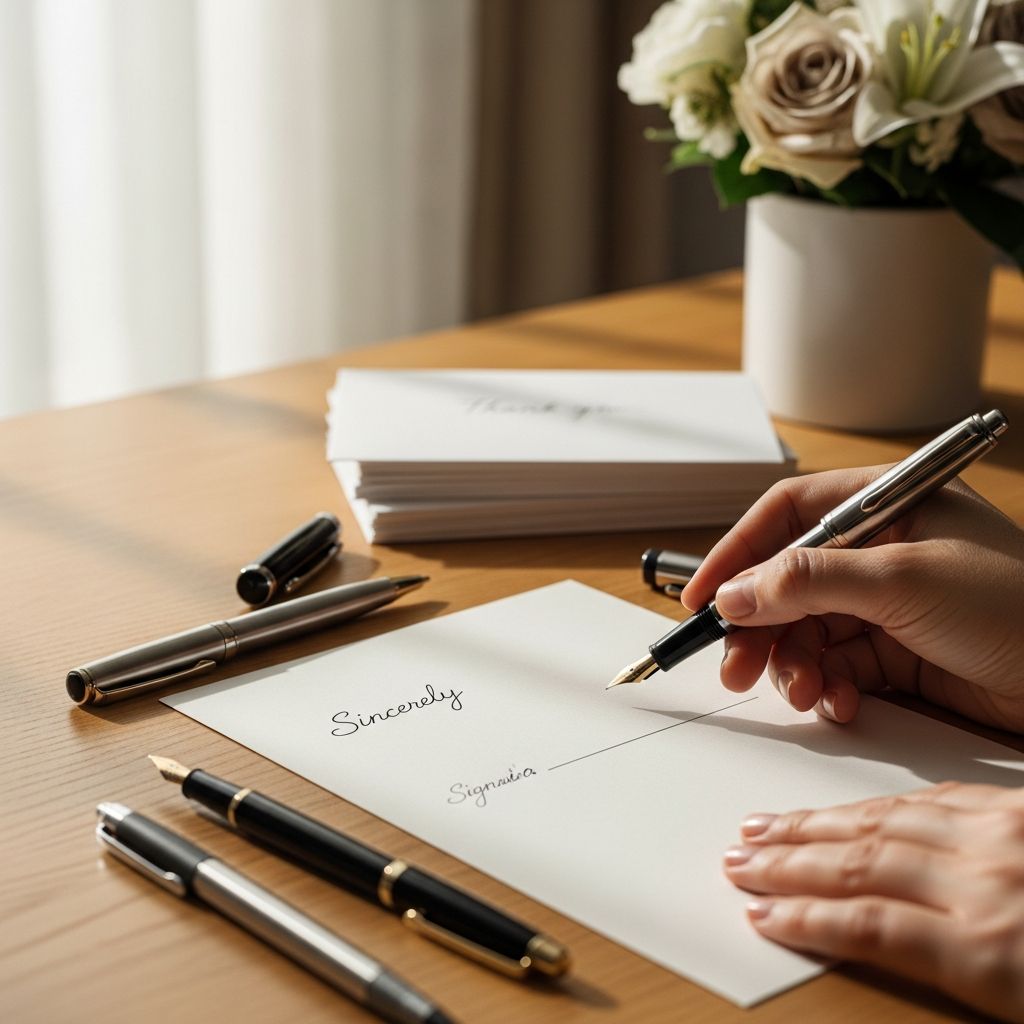
Closing a thank you letter might seem like a small detail, but it carries significant weight in how your message is received and remembered. The right closing reinforces your gratitude, maintains the appropriate tone for your relationship with the recipient, and leaves a lasting positive impression. Whether you’re thanking a colleague for their support, expressing appreciation to a mentor, or acknowledging a gift from a friend, the way you sign off your letter matters tremendously.
A well-chosen closing statement serves as the final touchpoint in your communication. It wraps up your message gracefully and signals to the reader that your letter is complete. The closing you select should align with the formality level of your letter, the nature of your relationship with the recipient, and the context of your gratitude. Understanding the nuances between different closing options empowers you to communicate more effectively and authentically.
Why the Right Closing Matters
The closing of a thank you letter is more than just a formality—it’s an opportunity to reinforce your message and leave the reader with a positive final impression. A professional and appropriate closing demonstrates that you understand business etiquette and respect the recipient’s time and efforts. It shows that you’ve put thought into your communication and that your gratitude is sincere and well-considered.
The wrong closing, conversely, can undermine your entire message. An overly casual sign-off in a formal business context might suggest that you don’t take the relationship seriously, while an excessively formal closing in a personal note could create unnecessary distance. By selecting the appropriate closing for your specific situation, you ensure that your thank you letter achieves its intended purpose and strengthens your relationship with the recipient.
Professional Thank You Letter Closings
Professional closings are ideal for business contexts, formal relationships, and situations where you want to maintain a respectful distance. These closings work well when you’re thanking supervisors, clients, business partners, or people you don’t know well. They convey respect, gratitude, and professionalism without crossing into overly familiar territory.
Classic Professional Closings
The most traditional and widely accepted professional closings include options that have stood the test of time in business communication:
- Sincerely, — The gold standard of professional correspondence, this closing is appropriate for virtually any business context and conveys genuine respect and appreciation.
- Respectfully, — This closing emphasizes deference and is particularly suitable when thanking someone in a position of authority or higher status.
- Regards, — A straightforward and professional option that works well in formal business settings and initial professional relationships.
- Best regards, — Slightly warmer than “Regards” alone, this closing adds a touch of goodwill while maintaining professionalism.
- Kind regards, — This option strikes a balance between formality and friendliness, making it suitable for professional relationships with some established rapport.
Gratitude-Focused Professional Closings
When your primary purpose is to express thanks, consider these closings that emphasize appreciation while maintaining professional standards:
- With appreciation, — Directly expresses your gratitude while remaining formal and professional.
- Gratefully, — A concise option that clearly communicates appreciation without excessive elaboration.
- With sincere thanks, — This closing combines formality with explicit expression of gratitude, making it ideal for thank you correspondence.
- With gratitude, — A warm yet professional way to conclude your message of thanks.
- In appreciation, — This closing emphasizes recognition and acknowledgment of the recipient’s contributions or efforts.
- Most appreciatively, — A more emphatic version that conveys deep gratitude in a professional manner.
Formal Letter Closings for Official Correspondence
Certain situations demand the highest level of formality, particularly when writing to dignitaries, senior executives, or in legal and official contexts. These closings reflect the gravity and importance of your communication.
- Respectfully yours, — Highly formal and dignified, this closing is appropriate for official correspondence and communications with high-ranking individuals.
- Yours respectfully, — An alternative arrangement that conveys the same level of formal respect and deference.
- Yours truly, — A classic formal closing that maintains professional distance while expressing sincerity.
- Yours faithfully, — Often used in British business correspondence, this closing emphasizes loyalty and dependability.
- Professionally yours, — This closing reinforces the professional nature of your relationship and correspondence.
Warm Professional Closings
These options maintain professionalism while conveying warmth and personability. They’re suitable for relationships where you’ve established some rapport but still want to remain professionally appropriate.
- Warmly, — Adds personal warmth while retaining professional appropriateness.
- With warm regards, — Combines professional distance with genuine friendliness.
- Best wishes, — Expresses goodwill and positive sentiment while remaining professional.
- All the best, — A friendly yet professional option that works well for ongoing professional relationships.
- Cordially, — Conveys warmth and courtesy in a formally appropriate manner.
Casual and Informal Thank You Letter Closings
When writing to close friends, family members, or colleagues with whom you have an established casual relationship, you can adopt a more relaxed tone. However, even casual closings should remain respectful and appropriate.
Friendly Yet Appropriate Closings
- Thanks, — Simple and direct, perfect for informal thank you notes to people you know well.
- Many thanks, — Emphasizes gratitude in a friendly, approachable manner.
- Thank you, — A straightforward expression of appreciation that works across most contexts.
- Thanks a bunch, — Casual and friendly, appropriate for close colleagues and friends.
- Have a great day, — A warm closing that expresses goodwill and positivity.
Very Casual Closings
Reserve these options for very close relationships where formality would be inappropriate or unwelcome:
- Cheers, — Informal and upbeat, suitable for casual personal notes.
- Take care, — Friendly and caring, appropriate for close personal relationships.
- Until next time, — Casual and forward-looking, suggesting ongoing connection.
- Talk soon, — Implies continued communication and closeness.
- With a smile, — Personal and warm, ideal for close friends and family.
Specialized Thank You Closings for Specific Situations
Different circumstances call for different approaches. Consider these specialized closings tailored to particular types of thank you letters.
For Job Interview Thank You Letters
- Thank you for the opportunity, — Emphasizes your appreciation for being considered.
- With sincere appreciation, — Conveys genuine gratitude for the interviewer’s time.
- Looking forward, — Forward-looking and positive, expressing enthusiasm about potential next steps.
- Eagerly awaiting your response, — Demonstrates genuine interest in the position.
- With continued interest, — Shows ongoing enthusiasm for the opportunity.
For Thank You Letters to Mentors or Teachers
- With deep appreciation, — Acknowledges the significant impact of their guidance.
- With endless gratitude, — Emphasizes the lasting value of their mentorship.
- Appreciative of your mentorship, — Directly acknowledges their role in your development.
- Grateful for your guidance, — Thanks them specifically for their direction and advice.
For Personal Thank You Letters
- With a grateful heart, — Emphasizes the emotional depth of your appreciation.
- Forever grateful, — Suggests lasting appreciation and remembrance.
- With heartfelt thanks, — Conveys sincere, genuine appreciation.
- Feeling blessed, — Acknowledges the positive impact of their actions or gift.
Closings for Different Relationship Levels
The intimacy and duration of your relationship with the recipient should influence your closing choice. Here’s a breakdown of appropriate closings by relationship level:
| Relationship Type | Recommended Closings | Closings to Avoid |
|---|---|---|
| Formal/New Professional Contact | Sincerely, Regards, Respectfully, With appreciation | Love, Always, Cheers, Take care |
| Established Professional Relationship | Best regards, Kind regards, Warmly, With sincere thanks | Love, Your friend, Talk soon |
| Close Colleague or Friend | Best, All the best, Thanks, Talk soon | Respectfully, Professionally yours, In sympathy |
| Family or Close Friend | Many thanks, Take care, With love, Talk soon | Professionally yours, Respectfully, Formally yours |
Creative and Enthusiastic Closings
When appropriate for your context, these creative options can add personality and memorable impact to your thank you letter:
- With genuine excitement, — Perfect for expressing enthusiasm about future opportunities.
- Excited about next steps, — Conveys optimism and forward momentum.
- Motivated by your mission, — Shows alignment with organizational values.
- Ready to make an impact, — Demonstrates commitment and eagerness.
- Energized by this opportunity, — Expresses enthusiasm in a professional manner.
Tips for Choosing the Right Closing
Selecting the appropriate closing requires consideration of several factors. First, assess the formality level of your letter and your relationship with the recipient. Your closing should be consistent with the tone you’ve established throughout your message. If your letter has been formal and professional, your closing should match that tone. Conversely, if you’ve adopted a friendly, casual tone, your closing should reflect that as well.
Second, consider the purpose of your thank you letter. If you’re primarily expressing appreciation for a significant contribution or favor, you might choose a closing that emphasizes gratitude, such as “With sincere thanks” or “Gratefully.” If you’re thanking someone for an opportunity or expressing interest in future collaboration, a forward-looking closing like “Looking forward” or “With continued interest” might be more appropriate.
Third, think about your intended impression. Professional closings like “Sincerely” and “Respectfully” convey traditional business professionalism, while warmer options like “With appreciation” or “Best regards” suggest a more personable approach. Choose a closing that represents how you want to be perceived by the recipient.
What to Avoid in Thank You Letter Closings
Certain closings are generally inappropriate for thank you letters in business or formal contexts. Overly casual closings like “Love,” “Always,” “Cheers,” or “Take care” can seem too familiar or dismissive in professional correspondence. These closings undermine the formality and sincerity of your message and may damage your professional image.
Additionally, avoid closings that are too vague or don’t clearly communicate your intended message. Generic phrases that don’t relate to your specific thank you can feel impersonal and reduce the impact of your letter. Make sure your closing reinforces the gratitude or appreciation expressed in your letter’s body.
Formatting Your Letter Closing
Proper formatting is essential for presenting a professional appearance. Your closing should be placed on its own line, separate from the body of your letter. Include proper spacing between your message and your closing phrase. For handwritten letters, sign your name below the closing phrase, leaving space for your signature. For digital correspondence, type your name directly below the closing.
When sending an email, include your full contact information below your name, including your email address, phone number, and any relevant professional titles or affiliations. For formal business letters, consider including your company name and website as well.
Frequently Asked Questions About Thank You Letter Closings
Q: Can I use “Thank you” as my only closing?
A: Yes, “Thank you” works as a standalone closing for thank you letters, particularly in casual contexts or emails. However, for more formal correspondence, you may want to use a closing phrase followed by your signature for a more complete and professional appearance.
Q: Is “Best regards” appropriate for all professional situations?
A: “Best regards” is suitable for most professional contexts, though it may be slightly informal for the most formal business letters. For very formal correspondence, “Sincerely,” “Respectfully,” or “Yours truly” may be more appropriate.
Q: How do I know if my closing is too casual?
A: If your closing wouldn’t be appropriate in a conversation with the recipient, it’s likely too casual for your letter. Ask yourself whether you would actually say your closing phrase aloud in the context of your relationship with the recipient.
Q: Should I include my title or position in my signature?
A: Including your title or position is appropriate for formal business correspondence, particularly if you’re writing to someone outside your immediate organization. For casual or informal thank you letters, a simple name signature is sufficient.
Q: Can I use a closing I haven’t seen before?
A: While creative closings can be memorable, it’s generally best to use established, recognized closing phrases for professional correspondence. Custom closings may confuse the recipient or seem unprofessional. Save creative expressions for very casual, personal notes.
Q: What’s the difference between “Sincerely” and “Sincerely yours”?
A: Both are appropriate and convey similar levels of formality. “Sincerely” is slightly more concise and modern, while “Sincerely yours” has a more traditional feel. Either is acceptable for professional thank you letters.
Q: How many closing options should I consider?
A: Rather than considering multiple options for each letter, it’s helpful to establish a few closings you’re comfortable with for different contexts. This consistency helps maintain your professional brand while allowing for appropriate variation based on circumstances.
Conclusion
The closing of your thank you letter deserves careful consideration. It’s the final opportunity to reinforce your appreciation and leave a lasting positive impression on the recipient. Whether you choose a classic professional closing like “Sincerely,” a gratitude-focused option like “With appreciation,” or a more casual phrase appropriate to your relationship, ensure your closing aligns with the tone of your letter and the nature of your relationship with the recipient.
By selecting an appropriate closing that reflects your genuine appreciation and maintains professional standards, you ensure that your thank you letter achieves its intended purpose and strengthens your relationship with the recipient. Take time to choose a closing that feels authentic to you and appropriate to the context, and your thank you letter will make a memorable and positive impact.
References
- Thank You Letter Closings — Status.net. Accessed November 29, 2025. https://status.net/articles/thank-you-letter-closings/
- How To End a Letter (With 20 Closing Examples) — Indeed Career Advice. Accessed November 29, 2025. https://www.indeed.com/career-advice/career-development/how-to-end-a-letter
- How to End a Letter: 10 Formal Letter Closings — Grammarly. Accessed November 29, 2025. https://www.grammarly.com/blog/writing-tips/how-to-end-a-letter/
- How to Write a Thank You Letter (+Templates) — LiveAgent. Accessed November 29, 2025. https://www.liveagent.com/academy/thank-you-letter/
Similar Articles








Read full bio of Sneha Tete