Texas Closing Costs Guide 2025: Complete Breakdown
Master Texas closing costs: Understand buyer and seller expenses, breakdowns, and strategies to reduce fees.
Understanding Texas Closing Costs: A Complete Guide for 2025
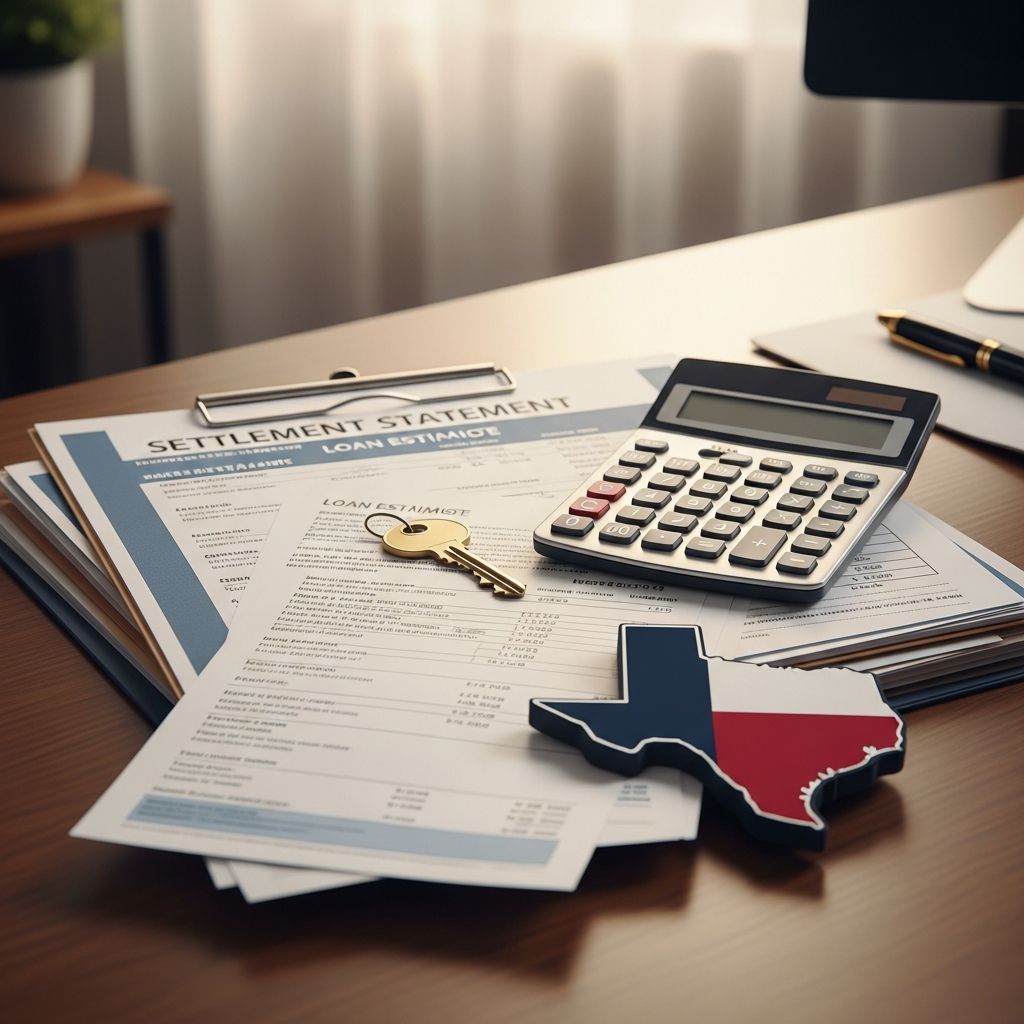
When buying or selling a home in Texas, closing costs represent a significant portion of the real estate transaction. These fees cover various services required to finalize the property transfer, from title searches to loan processing. Whether you’re a first-time homebuyer or an experienced seller, understanding these costs is essential for accurate budgeting and informed financial planning.
Closing costs in Texas typically range from 2% to 6% of the purchase price for buyers, while sellers generally pay between 6% to 10% of the sale price. For a median-priced Texas home valued at approximately $315,000, buyers can expect closing costs between $6,300 and $16,000, while sellers might pay $18,900 to $31,500. The specific amount varies based on location, loan type, property value, and individual circumstances.
Buyer Closing Costs in Texas
Buyers in Texas typically bear the responsibility for mortgage-related closing costs and various service fees associated with the purchase. Understanding these expenses helps you prepare financially and identify potential savings opportunities.
Typical Buyer Closing Cost Range
Buyer closing costs in Texas average between 2% to 6% of the home’s purchase price. For a $250,000 home, this translates to $5,000 to $15,000 in total fees. The variation in this range depends on several factors including the type of mortgage, the lender selected, local market conditions, and specific property characteristics.
Major Components of Buyer Closing Costs
The three primary buyer closing costs include:
– Loan Origination Fees: Charged by the lender for processing and underwriting your mortgage, typically ranging from 0.5% to 1% of the loan amount- Appraisal Fees: Required to determine the property’s market value, usually costing between $300 to $500- Title Insurance and Title Services: Protect against ownership disputes and typically cost $1,000 to $2,000
Additional Buyer Expenses
Beyond the primary costs, buyers should anticipate several additional fees:
– Credit report fees ($25 to $75)- Property survey costs ($150 to $400)- Home inspection ($300 to $500)- Homeowner’s insurance prepayment (varies by policy)- Private mortgage insurance (PMI) if down payment is less than 20%- Property taxes and homeowner’s insurance escrow deposits- Flood certification fees ($20 to $30) for properties in flood zones- HOA fees if applicable to the community
Seller Closing Costs in Texas
Sellers in Texas face substantial closing costs, averaging 3.52% of the home’s sale price, though this figure excludes real estate commission. When combined with realtor fees, sellers typically pay 8% to 15% of the sale price.
Average Seller Closing Costs by Home Price
Here are typical seller closing cost examples based on different home values:
– $7,900 for a $223,000 home- $15,700 for a $446,000 home- $26,200 for a $743,000 home- $18,900 to $31,500 for a $315,000 median-priced home
Breakdown of Seller Closing Costs
Seller closing costs typically include the following components:
| Closing Cost Component | Typical Amount ||—|—|| Realtor Commission | 5.85% of sale price (~$17,374 on $315,000 home) || Buyer Incentives | 2.00% of sale price (~$5,940 on $315,000 home) || Title Service Fees | $1,963 || Owner’s Title Insurance | $1,715 || Recording Fees | $750 || Prorated Property Taxes | 1.44% of assessed value || Transfer Tax | 0.00% (Texas does not charge transfer tax) || Attorney Fees | Up to $278 per hour (optional) |
Real Estate Agent Commission
The largest expense for most sellers is real estate agent commission, typically 5.76% to 5.85% of the sale price in Texas. On a median $315,000 home, this amounts to approximately $17,374. This fee is split between the listing agent and the buyer’s agent and represents the most significant single cost for sellers.
Buyer Incentives
To attract buyers in competitive or slow markets, sellers often provide buyer incentives averaging 2% of the home’s sale price. These incentives may include paying some of the buyer’s closing costs, offering repair credits, or including valuable items in the sale.
Title and Recording Services
Title service fees average $1,963 in Texas, while recording fees typically amount to $750. Owner’s title insurance, which protects the seller and subsequent owners from title defects, costs approximately $1,715.
Attorney Fees
While hiring a real estate attorney for closing is optional in Texas, many sellers choose this protection. Attorneys typically charge $278 per hour on average, though many offer flat fees ranging from $750 to $1,250 for straightforward transactions. Attorney costs vary based on location, services required, and closing complexity.
Why Closing Costs Vary in Texas
Several factors influence the final closing cost amount in Texas transactions. Location significantly impacts costs, as different counties may have varying fees and taxes. The type of loan selected by the buyer affects lender fees and insurance requirements. Home value directly influences percentage-based costs like realtor commission and transfer taxes. Market conditions may also play a role, with competitive markets sometimes leading to higher buyer incentives.
Texas-Specific Closing Cost Considerations
Texas offers unique advantages when it comes to closing costs. The state does not charge a real estate transfer tax, saving both buyers and sellers significant expense. Texas is an attorney-optional state for closings, allowing flexibility in whether to hire legal representation. Real estate transactions can be finalized through either a real estate attorney or a title company, providing options for closing services.
How to Reduce Closing Costs in Texas
Both buyers and sellers can implement several strategies to minimize closing costs. Buyers should shop around and compare loan offers from multiple lenders, as origination fees and rates vary considerably. Negotiating with sellers for closing cost credits or concessions can reduce your out-of-pocket expenses. Exploring no-closing-cost mortgage options, though typically resulting in higher interest rates, may benefit those planning to stay in the home long-term. Reviewing the loan estimate carefully and questioning each fee helps identify unnecessary charges.
Sellers can negotiate realtor commissions, particularly in strong markets, as the standard rate is not fixed. Offering a competitive buyer incentive upfront may reduce buyer requests for closing cost concessions later. Shopping around for title insurance and services can uncover better rates. Sellers should also request an itemized list of all closing costs to identify any unnecessary or inflated fees.
Getting an Accurate Closing Cost Estimate
The Loan Estimate, required by federal law, provides buyers with a detailed breakdown of expected closing costs within three business days of applying for a mortgage. This document outlines loan terms, monthly payments, and itemized closing costs. Request a closing cost estimate early in the process to budget accurately and compare offers from different lenders.
For sellers, ask your real estate agent to provide a comparative market analysis and detailed list of projected closing costs before listing your home. This helps you understand your net proceeds and set an appropriate asking price.
Frequently Asked Questions About Texas Closing Costs
Q: What is the average closing cost percentage in Texas?
A: Average closing costs in Texas are approximately 2% to 5% for buyers and 3.52% for sellers (excluding realtor commission). When including real estate commission, sellers typically pay 8% to 15% of the sale price.
Q: Who pays closing costs in Texas?
A: Closing costs are typically shared between buyers and sellers. Buyers generally pay mortgage-related costs and service fees, while sellers cover realtor commission, title insurance, and transfer-related expenses. However, these responsibilities can be negotiated based on market conditions and individual circumstances.
Q: Does Texas charge a real estate transfer tax?
A: No, Texas does not charge a real estate transfer tax, which is a significant advantage compared to many other states. This saves both buyers and sellers considerable expense.
Q: Can closing costs be negotiated?
A: Yes, many closing costs can be negotiated. Realtor commission is often negotiable, particularly in favorable market conditions. Buyers can shop around for better lender rates and title insurance quotes. Sellers and buyers can negotiate who pays for certain services or request closing cost concessions.
Q: What is included in the Loan Estimate?
A: The Loan Estimate includes loan terms, interest rate, monthly payment amount, and itemized closing costs divided into categories such as loan costs, property-related costs, and other costs. This document helps borrowers compare offers and understand all charges before closing.
Q: Do I need an attorney to close a real estate transaction in Texas?
A: No, hiring an attorney is optional in Texas. Real estate transactions can be finalized through either a real estate attorney or a title company. Many choose to hire an attorney for added legal protection, while others work directly with title companies to reduce costs.
Q: What fees can I expect as a buyer in Texas?
A: Typical buyer fees include loan origination fees (0.5% to 1% of loan amount), appraisal fees ($300 to $500), title insurance and services ($1,000 to $2,000), credit report fees ($25 to $75), home inspection ($300 to $500), homeowner’s insurance prepayment, and property tax/insurance escrow deposits.
Q: How can I reduce my closing costs as a buyer?
A: Compare loan offers from multiple lenders, negotiate closing cost credits with the seller, ask about no-closing-cost mortgage options, shop for title insurance, review the Loan Estimate carefully to question unnecessary fees, and consider working with a discount broker or online lender.
Q: What is a typical realtor commission in Texas?
A: The standard realtor commission in Texas is approximately 5.76% to 5.85% of the sale price, though this rate is not fixed and can be negotiated. This commission is typically split between the listing agent and buyer’s agent.
Conclusion
Understanding Texas closing costs is crucial for anyone buying or selling property in the state. Buyers should anticipate 2% to 6% of the purchase price in closing costs, while sellers should budget for 6% to 10% including realtor commission. By shopping around, negotiating strategically, and understanding each fee’s purpose, both parties can work toward more favorable terms. Texas’s lack of transfer tax and optional attorney requirement provide some cost advantages compared to other states. Obtaining accurate estimates early in the process, reviewing all documentation carefully, and consulting with trusted professionals will help ensure a smooth closing with fewer financial surprises.
References
- Seller’s Closing Cost Calculator for Texas (2025 Update) — Anytime Estimate. 2025. https://anytimeestimate.com/home-seller-costs/texas-closing-cost-calculator/
- How Much are Closing Costs in Texas in 2025? — Houzeo. 2025. https://www.houzeo.com/blog/how-much-are-closing-costs-in-texas/
- Seller Closing Costs in Texas: 2025 Update — Clever Real Estate. 2025. https://listwithclever.com/real-estate-blog/seller-closing-costs-in-texas/
- Typical Closing Costs in Texas for Buyers and Sellers — Herring Bank. 2024. https://www.herringbank.com/learn/typical-closing-costs-in-texas-for-buyers-and-sellers/
- Buyer Closing Costs in Texas: Estimated Costs in 2025 — iBuyer.com. 2025. https://ibuyer.com/blog/buyer-closing-costs-texas/
- Average Closing Costs By State In 2025 — Bankrate. 2025. https://www.bankrate.com/real-estate/average-closing-costs-by-state/
Similar Articles








Read full bio of Sneha Tete